Best Accelerated BSN (ABSN) Programs in Massachusetts
Compare 15 accredited Accelerated BSN (ABSN) programs in Massachusetts at 14 colleges, with net price after aid, graduation rates, earnings and debt from IPEDS and the U.S. College Scorecard.
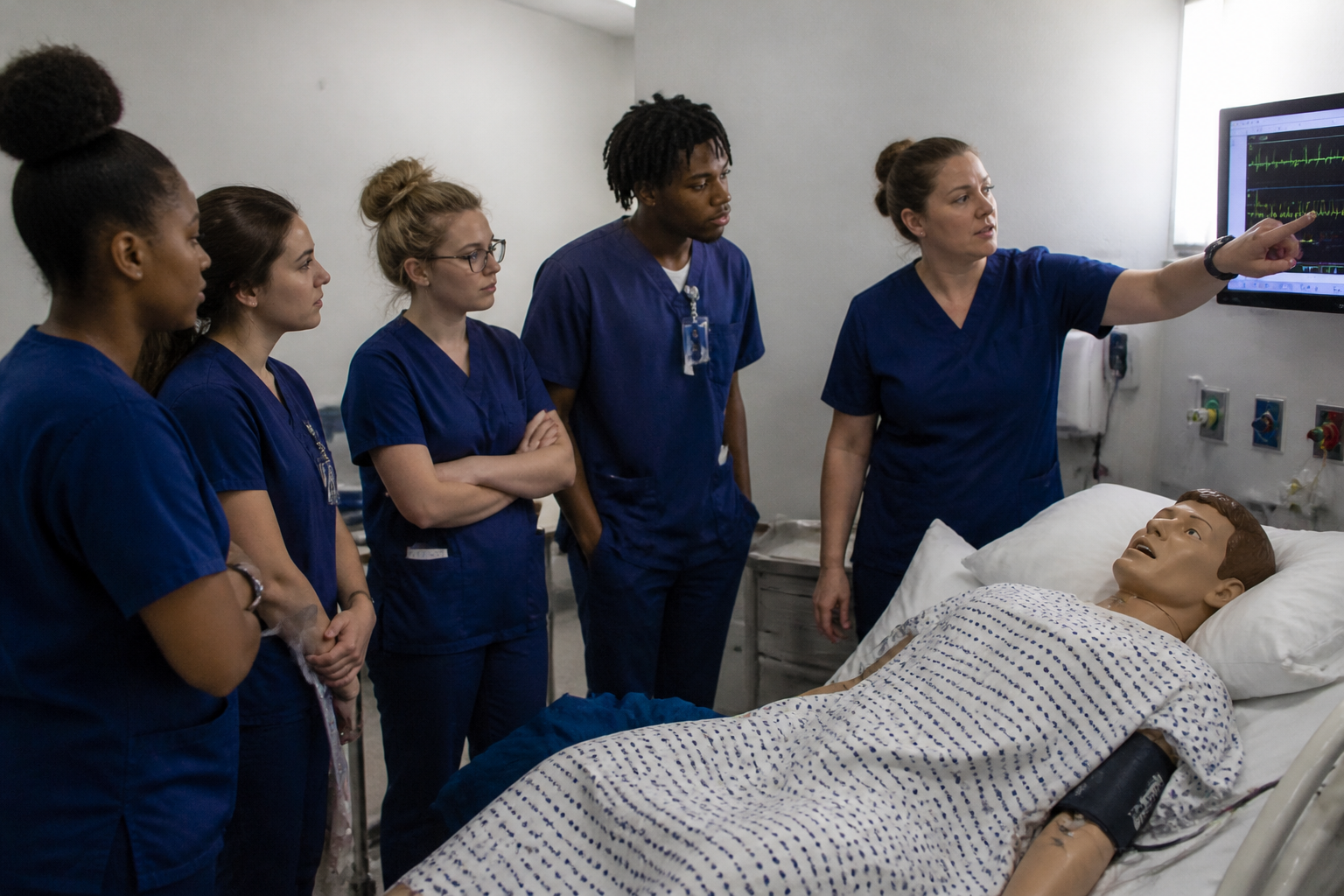
How fast can someone with a bachelor's in history or business become a registered nurse in Massachusetts? Among the second degree nursing programs here, accelerated BSN (ABSN) timelines run 16 months at the University of Massachusetts-Amherst and Northeastern University, and 24 months at Regis College. Each ends with eligibility for the NCLEX-RN.
Speed is not the only variable. Net price runs from about $16,000 at Salem State University to roughly $40,700 at Endicott College. These rankings rest on public outcomes and cost data rather than school marketing claims.
Cohorts are small and several programs require a 3.0 GPA plus completed science prerequisites, so the cheapest route is rarely the easiest to enter.
Key Points
- Salem State University posts the lowest net price here at $15,996.
- Simmons University graduates report the highest median pay one year out.
- Massachusetts Board of Registration in Nursing licenses ABSN graduates after the NCLEX-RN.
10 Best Accelerated BSN Programs in Massachusetts, Ranked
Each school earned its place on what matters most to a second-degree applicant: what the program costs after aid, how many nursing graduates the school actually turns out, and what those graduates earn once they are working. Every entry below is in Massachusetts and open to people who already hold a bachelor's in another field, and the timelines run from 12 months at UMass Boston to 24 months at Regis.
University of Massachusetts-Amherst
#1Amherst, MA · $20,000 – $25,000/yr (est.)
Best for: Second-degree students wanting a large clinical network
UMass Amherst is the flagship public campus in the Pioneer Valley, and the nursing school reports more than 100 clinical partnerships with regional providers. The accelerated BSN is a 16-month, in-person second bachelor's taught through simulation labs and faculty who serve as mentors. The curriculum is being revised, with the next entry point targeted for fall 2027, so confirm the timeline before you build an application calendar.
- 16-month full-time program for students who already hold a bachelor's degree
- CCNE accredited and approved by the Massachusetts Board of Registration in Nursing
- Clinical placements at leading healthcare facilities
- Simulation labs built around real-life scenarios
- Faculty serve as mentors and facilitators
- Volunteer at wellness fairs and the Boston Marathon
- Financial aid available
Simmons University
#2Boston, MA · $25,000 – $30,000/yr (est.)
Best for: Boston career changers wanting a capstone practicum
Simmons University is a private Boston university whose ABSN runs 46 credits across four terms on campus and closes with a required clinical capstone practicum. Lab and clinical hours are laid out in detail: 56 laboratory hours in fundamentals, 84 clinical hours in medical-surgical nursing and 168 hours in advanced care. It suits career changers who want a compact, tightly sequenced program in the city.
- 46 credits over four terms, ending in a clinical capstone practicum
- Campus-based, full-time path for career changers
- 56 laboratory hours in fundamental skills
- 84 clinical hours in medical-surgical nursing
- 168 clinical hours in advanced care
College of Our Lady of the Elms
#3Chicopee, MA · ~$18,000/yr (est.)
Best for: Western Massachusetts learners preferring small cohorts
Elms College is a small private college in Chicopee, in western Massachusetts, and it keeps accelerated cohorts to roughly 24 students. The 20-month, 72-credit curriculum runs the full nursing sequence from health assessment through community health, with service trips to Jamaica for intercultural experience. Rolling admissions means you are applying for a specific seat in a small group rather than a large general pool.
- 20-month program, 72 total credit hours
- Cohorts of about 24 students with rolling admissions
- Mission trips to Jamaica for intercultural experience
- Coursework covers health assessment through community health
- Requires a prior non-nursing degree
Assumption University
#4Worcester, MA · ~$29,000/yr (est.)
Assumption University is a private Worcester campus that runs its ABSN as a hybrid: asynchronous online classes paired with on-campus labs one or two days a week. It is a single summer-start cohort of 56 credits with flat-rate tuition that bundles an iPad and testing tools. Clinical placements run through UMass Memorial and St. Vincent's, and the school also has an affiliation agreement with Stonehill College for eligible graduates.
- 16-month hybrid: online classes plus on-campus labs one to two days a week
- 56 total credit hours
- Flat-rate program tuition of $61,500 includes an iPad
- Clinical affiliates include UMass Memorial and St. Vincent's
- Summer start with clinicals beginning in the third week
- 3.0 GPA minimum and prerequisite courses required
Regis College
#5Weston, MA · $25,000 – $30,000/yr (est.)
Regis College in Weston runs two accelerated tracks for people who already hold a bachelor's degree: a 16-month campus option and a 24-month largely online option, both 60 credits. Clinical placements land at Boston hospitals such as Massachusetts General and Brigham and Women's, and NCLEX-style testing is built into every clinical course. Rolling admissions with fall and spring starts gives you more than one entry point each year.
- 16-month, 60-credit path for non-nurse college graduates
- Clinical placements at Boston hospitals including Mass General and Brigham and Women's
- High-fidelity simulation and standardized patient scenarios
- NCLEX-style exams embedded in every clinical course
- Fall and spring starts with rolling admissions
- $1,285 per credit, $77,100 total program tuition
- 24-month, 60-credit track finished in under two years
- 100% online coursework with 12-week semesters
- Clinical preceptorship in the final semester at Boston hospitals
- Simulation labs on campus
- Fall start with rolling admissions
University of Massachusetts-Dartmouth
#6North Dartmouth, MA · ~$21,000/yr (est.)
UMass Dartmouth is the public campus for southeastern Massachusetts, and its second degree BSN is a 17-month hybrid of 59 credits built around online coursework plus face-to-face labs and clinicals. Admission is cohort-based with one fall start, a required TEAS exam and three letters of recommendation. Support is a selling point here, with one-on-one advising, free tutoring and accepted military benefits.
- 17-month hybrid program, 59 total credit hours
- Online coursework plus face-to-face lab and clinical experiences
- TEAS entrance exam required
- 3.0 GPA minimum and three letters of recommendation
- Single fall start each year, cohort-based
- One-on-one advising and free online and in-person tutoring
- Military benefits accepted
Endicott College
#7Beverly, MA · $40,000 – $45,000/yr (est.)
Endicott College is a private campus in Beverly, on the North Shore, and its ABSN is a 16-month, 62-credit program open to holders of any bachelor's degree. Clinical experiences begin in the first semester rather than after a year of theory, and the curriculum adds a senior thesis on top of the standard nursing sequence. Small cohorts, personalized advising and job placement networking round out the offer.
- 16-month, 62-credit campus program open to any bachelor's degree
- Clinical experiences begin in the first semester
- 3.0 GPA minimum and two letters of recommendation
- Senior thesis required
- Small class sizes with personalized advising
- $50 application fee, waived for alumni and military
University of Massachusetts-Boston
#8Boston, MA · $18,000/yr (est. net price)
UMass Boston runs the shortest accelerated route on this list: a 12-month, 54-credit hybrid program with three start dates a year. Online concept-based coursework is paired with in-person simulation and clinical placements across greater Boston, in cohorts of roughly 48 students. The university and Mass General Brigham have committed $20 million to a clinical leadership collaborative that supports nursing students from underrepresented communities.
- 12-month, 54-credit hybrid program with three start dates a year
- Online concept-based coursework plus in-person simulation and clinicals
- $700 per credit
- Cohort of about 48 students
- 3.0 GPA minimum and prerequisite courses required
- Clinical placements across greater Boston
Massachusetts College of Pharmacy and Health Sciences
#9Boston, MA · ~$40,000/yr (est.)
MCPHS is a health sciences university in Boston's Longwood Medical Area, which puts its ABSN students next to major teaching hospitals. The accelerated program is CCNE accredited, starts in fall, and centers on simulation and patient assessment labs plus clinical rotations at institutions across New England. Because the campus is health-focused, nursing students take classes alongside pharmacy and allied health students.
- CCNE accredited with a fall start
- Located in Boston's Longwood Medical Area
- Onsite simulation and patient assessment labs
- Clinical rotations at hospitals across New England
- Interdisciplinary coursework with pharmacy and allied health students
- Scholarships and financial aid available
Salem State University
#10Salem, MA · $15,000 – $20,000/yr (est.)
Salem State University is a public campus on the North Shore whose ABSN is a 15-month, full-time cohort starting in May. Courses run during day, evening and weekend hours, clinical training stretches from the North Shore into Boston, and the final semester ends with a one-on-one preceptorship. Financial aid here is limited to federal loans with no grants, so budget for the full sticker cost.
- 15-month full-time cohort that starts in May
- Courses scheduled during day, evening and weekend hours
- Clinical training across the North Shore and Boston
- One-on-one preceptorship in the final semester
- Designed for graduates of non-nursing bachelor's programs
- Federal loans only; no federal or state grants
Cost & outcomes by school
Federal data for the highest-earning Accelerated BSN (ABSN) programs, independent of the ranking above. Earnings are this field's bachelor's graduates four years after completing where the Scorecard reports them, else the school's undergraduate median.
| School | Net price / yr | Grad rate | Earnings | Debt | Grads/yr | Format |
|---|---|---|---|---|---|---|
| Massachusetts College of Pharmacy and Health Sciences MA | $39,545 | 62% | $125,557 | $25,000 | 1,676 | Campus |
| Northeastern University MA | $30,915 | 91% | $92,538 | $24,250 | 12,086 | Hybrid |
| Northeastern University MA | — | — | $92,538 | $24,250 | 1,084 | Hybrid |
| MGH Institute of Health Professions MA | — | — | $87,130 | $24,961 | 324 | Campus |
| Assumption University MA | $29,498 | 75% | $74,895 | $27,000 | 868 | Hybrid |
| University of Massachusetts-Amherst MA | $22,383 | 83% | $71,631 | $22,763 | 13,682 | Campus |
| University of Massachusetts-Dartmouth MA | $20,927 | 52% | $68,804 | $25,000 | 2,260 | Hybrid |
| University of Massachusetts-Boston MA | $17,707 | 49% | $65,865 | $21,974 | 5,042 | Hybrid |
| Simmons University MA | $25,265 | 72% | $63,494 | $24,840 | 1,026 | Campus |
| Endicott College MA | $40,654 | 76% | $58,336 | $27,000 | 1,516 | Campus |
| Salem State University MA | $15,996 | 50% | $56,662 | $25,000 | 2,198 | Campus |
| Curry College MA | $29,207 | 51% | $54,400 | $25,000 | 858 | Campus |
Sources: U.S. Department of Education. Net price, graduation rate, earnings and debt: College Scorecard (earnings and debt for this field's bachelor's graduates where reported, else school-wide); graduates: IPEDS. A dash means no figure is reported.
Cost, debt & payoff
Median earnings of this field's bachelor's graduates (4 yrs after completing, else the school's undergraduate median) vs. their median federal loan debt · U.S. College Scorecard
Across these programs the median graduate earns about $65,865 and finishes with roughly $25,000 in debt — a ratio that clears a common rule of thumb (keep debt below first-year salary). Net price and debt vary widely school to school, so check the per-school figures in the table above before you shortlist.
Behind the List: The Data That Ordered These ABSN Schools
Three federal sources ordered the list above: College Scorecard institution and program-level outcomes, IPEDS tuition and net price, and reported program completions. Those are public, verifiable records rather than editorial impressions. No competing roundup of Massachusetts accelerated BSN programs publishes a methodology you can check, so the reasoning here is laid out instead of implied.
What each factor tells you
- Net price: What a household actually pays after grant aid, which is a far better planning number than the sticker tuition figure.
- Completions: How many nursing graduates a school produces, a rough but useful read on program scale and whether the track is stable rather than experimental.
- Program-level earnings: The payoff signal, tied to nursing graduates specifically rather than to the university as a whole.
- Median debt: The risk side of the same equation, since a second bachelor's draws on narrower grant aid.
- Format: Whether coursework runs on campus or in a hybrid structure, which decides who can realistically attend.
Where the numbers stop short
Graduation rates are institution-wide, not specific to the accelerated nursing track, so read them as a measure of the school's general student support. Net price averages aid across the students who receive it, so your own award letter may land well above or below that figure. Earnings windows also differ by school, which is why any figure quoted on this page carries its measurement window with it.
The data cannot tell you which science prerequisites a school will accept, when cohorts start, or how recent classes performed on the licensure exam. The admissions section below covers prerequisites and GPA expectations, and the licensure section covers Massachusetts Board of Registration in Nursing approval and the NCLEX-RN exam.
Cheapest Accelerated BSN Options in Massachusetts by Net Price
If you are searching for the cheapest accelerated BSN in Massachusetts, public campuses dominate the low end: Salem State University leads at $15,996, and three UMass campuses also appear here, while Elms College is the lone private school, landing second at $17,545. These figures come from IPEDS and College Scorecard (2024) data and are institution-wide averages for undergraduates receiving aid, not the price of the ABSN itself. Accelerated programs often bill by the credit (UMass Boston, for example, lists $700 per credit), so check the cost breakdown later on this page for program tuition before comparing schools.
| School | City | Sector | Format | Program Length | Average Net Price After Aid |
|---|---|---|---|---|---|
| Salem State University | Salem | Public | On campus | 15 months | $15,996 |
| College of Our Lady of the Elms | Chicopee | Private | On campus | 20 months | $17,545 |
| University of Massachusetts-Boston | Boston | Public | Hybrid | 12 months | $17,707 |
| University of Massachusetts-Dartmouth | North Dartmouth | Public | Hybrid | 17 months | $20,927 |
| University of Massachusetts-Amherst | Amherst | Public | On campus | 16 months | $22,383 |
Accelerated BSN Admissions: Prior Bachelor's, Prerequisites, and GPA
Entrance exam rules are loose at several Massachusetts ABSN programs, so your prerequisite grades carry more weight. The non-negotiable is a prior bachelor's degree in a non-nursing field, typically from a regionally accredited college. UMass Amherst requires a non-nursing bachelor's. UMass Boston requires a bachelor's and 68 credits from it. Elms College requires a prior non-nursing degree, and Endicott is open to any bachelor's. No school's page gave a clear rule on how recent the degree must be, so ask admissions directly.
GPA and Grade Floors
Published figures vary, and not every school states a separate science GPA.
- UMass Boston: 3.0 cumulative, a 3.3 prerequisite GPA, and C+ or better in most prerequisites, with C accepted in statistics and social science.
- UMass Amherst: a 3.0 on completed prerequisites, with C or better in each course. No separate cumulative or science minimum is stated.
- Assumption, UMass Dartmouth, and Endicott: each lists a 3.0 minimum GPA.
On the numbers available, UMass Boston is the strictest. UMass Amherst waives the entrance exam, but Curry College's 2.7 GPA minimum is the lowest published here1. Simmons, Regis, MCPHS, Salem State, and MGH Institute did not have confirmed figures here, so check their admissions pages before assuming anything.
Tests and Prerequisite Recency
UMass Amherst requires no entrance exam. UMass Boston makes the TEAS optional, recommends a 68 overall and science score if you submit one, and says competitive applicants land around 75 to 80. UMass Dartmouth lists the TEAS as required.
Science courses age out. At UMass Boston, Anatomy and Physiology I and II and Microbiology (with labs) must be within 10 years. At UMass Amherst, Nutrition and Microbiology must be within five years, while Anatomy and Physiology, Statistics, and Human Growth and Development have a 10-year limit. If your science credits are older, plan on retaking them.
Selectivity Versus Cohort Competition
Institution-wide admission rates give a rough signal only. UMass Amherst admits about 60 percent of applicants overall, Simmons and Regis about 70 percent, and Endicott about 71 percent. UMass Dartmouth (about 91 percent) and Salem State (about 96 percent) are far more open. These rates cover all undergraduates, not the ABSN.
ABSN cohorts are a different story. Seats are fixed and small. UMass Boston lists a cohort of 48 students, and Elms lists 24. A school that admits most of its general applicants can still turn away qualified second-degree candidates, so aim above the posted minimums.
ABSN Prerequisites Checklist: What to Finish Before You Apply
Most Massachusetts accelerated BSN programs expect a core set of science and social science courses on your transcript before you apply. UMass Boston publishes the most detailed list among the schools here, so it serves as the benchmark below. Confirm each item against every program you plan to apply to.
- Anatomy & Physiology I and II, with labUMass Boston requires both courses with a C+ or higher, completed within 10 years of program start. It accepts courses from any regionally accredited community college or university. Ask each school whether online labs count.
- Microbiology, with labUMass Boston requires a C+ or higher and applies the same 10-year recency rule as A&P. Community college credit is accepted there.
- StatisticsUMass Boston requires a C or higher, with no time limit on when you took it.
- ChemistryUMass Boston's published list does not include chemistry. Check each other program's admissions page, because some ABSN programs do require it.
- Growth and Development / Lifespan PsychologyUMass Boston requires Growth and Development through the Lifespan with a C+ or higher and no time limit.
- NutritionUMass Boston requires a C+ or higher, with no time limit.
- Social/behavioral science electiveUMass Boston requires a C or higher in one social or behavioral science course.
- Minimum grades and completion timingMCPHS's 2026–2027 catalog sets a C+ minimum in all prerequisites. UMass Boston requires a C+ in most courses and a 3.3 prerequisite GPA. It also requires every prerequisite to be finished by the application deadline, so don't plan on having courses still in progress there.
Related Articles
What Does a Massachusetts ABSN Actually Cost, Line by Line?
First-Year Pay for Massachusetts Nursing Graduates
Among the ranked schools, Simmons University posts the highest program-level median pay one year after graduates finish.
Massachusetts RN Licensure at a Glance
Accelerated BSN Massachusetts FAQ: Cost, Length, and Online Options
These answers cover the questions second-degree students ask most often about ABSN programs in Massachusetts. Details differ by school, so confirm current terms on each program page before you apply.
What is the best accelerated BSN program in Massachusetts?
How much does an accelerated BSN program cost in Massachusetts?
How long does an accelerated BSN take in Massachusetts?
Can you complete an accelerated BSN online in Massachusetts?
Can I take ABSN prerequisites at a community college or online before applying?
Are graduates of Massachusetts ABSN programs eligible for the NCLEX-RN?
Compare Accelerated BSN (ABSN) programs on the data that matters
Explore more Nursing majors or browse every field of study.
All Nursing programs Browse every field of study