Best Accelerated BSN (ABSN) Programs in New Jersey
Compare 18 accredited Accelerated BSN (ABSN) programs in New Jersey at 17 colleges, with net price after aid, graduation rates, earnings and debt from IPEDS and the U.S. College Scorecard.
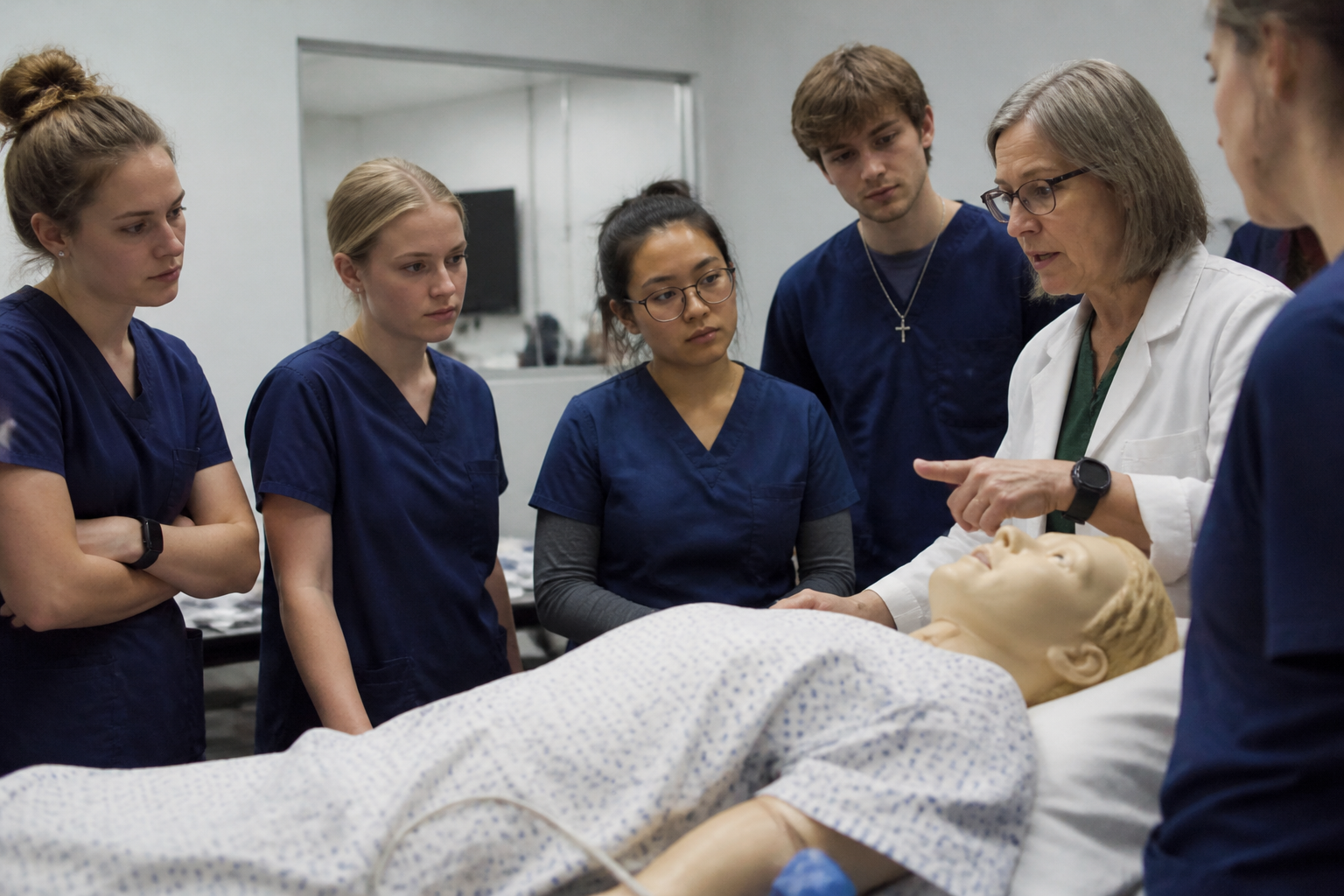
A bachelor's degree in a non-nursing field is the entry requirement for an accelerated BSN in New Jersey, and it buys back time: most programs here compress nursing school into 12 to 18 months instead of four years.
Those tracks run mostly on campus, with a few, including The College of New Jersey and both Fairleigh Dickinson campuses, mixing hybrid coursework with in-person clinicals. The gatekeeping is consistent: a prior degree, science prerequisites, a GPA minimum, and for some, a TEAS score.
Seat capacity is the real constraint. Cohorts are fixed and start dates are few, so a program's length matters less than whether you can claim a seat at all.
Key Points
- Saint Peter's University posts the lowest average net price: $12,199 a year.
- New Jersey ABSN tracks typically demand 12 to 18 months full time.
- Budget $400 combined for New Jersey's application, initial license and NCLEX-RN fees.
The 10 Best Accelerated BSN Schools in New Jersey, Ranked
These ten New Jersey schools all run accelerated BSN tracks built for people who already hold a bachelor's degree in another field, so you are comparing second-degree pathways rather than a standard four-year nursing major. Each card pairs the program's delivery format and in-state tuition with the average net price students actually pay after aid, plus the institution-wide graduation rate so you can read the wider campus, not just the nursing department. The scoring that produced this order is explained in the methodology section at the end of the article.
Ramapo College of New Jersey
#1Mahwah, NJ · $15,000 – $20,000/yr (est.)
Best for: Career changers still finishing prerequisites
A public college in northern New Jersey, Ramapo built its ABSN with state support aimed at easing the state's nursing shortage, and the college reports more than 100 graduates since the program launched in 2024. It is the unusual New Jersey option that admits students who have not yet finished a bachelor's degree: applicants may enter with a non-nursing degree or at least 60 college credits, and a 24-month bridge track serves those still completing prerequisites. A new nursing laboratory is in development to expand training capacity.
- 16-month, full-time, in-person cohort program
- ACEN accredited
- Starts in summer and fall terms
- 24-month bridge option for students short on prerequisites
- All prerequisites must be completed before admission
- Small class sizes with dedicated nursing faculty
- Curriculum prepares graduates for the NCLEX-RN
Rutgers University-Newark
#2Newark, NJ · $20,000/yr (est. net price)
Best for: City learners wanting research university scale
One of three Rutgers campuses running a second-degree nursing path, Newark delivers a tight four-semester program inside a large public research university, which puts students close to urban health systems and a deep clinical network. The cohort model keeps classes small within a big institution, and coursework leans on patient-centered care, clinical reasoning and evidence-based practice. Students who want a research university's resources without starting a second bachelor's degree from scratch tend to land here.
- 14-month accelerated program across four semesters
- CCNE accredited
- Builds on prior bachelor's coursework in a non-nursing field
- Close-knit cohort experience within a large research university
- Clinical practice integrated throughout the curriculum
- Offered on the Newark campus
The College of New Jersey
#3Ewing, NJ · $20,000 – $26,000/yr (est.)
Best for: Hybrid learners juggling coursework online
The College of New Jersey pairs the highest six-year graduation rate in this group with a hybrid ABSN that moves most classroom work online while keeping labs and clinicals in person. Students rotate through 12-hour clinical shifts at sites in New Jersey and Pennsylvania, and the campus high-fidelity simulation lab anchors hands-on practice. It has the most selective admissions profile among the public options here and is one of two programs on this list that requires an entrance exam.
- 14-month program starting each May
- Hybrid format with synchronous or asynchronous online coursework
- Clinicals in 12-hour shifts, one to two days a week across NJ and PA
- Seven prerequisites include anatomy, microbiology, chemistry and statistics
- 3.0 cumulative GPA minimum and TEAS score of Proficient or better
- December 10 application deadline; $75 application fee
- $34,000 total program tuition plus fees; $600 seat deposit
- High-fidelity simulation lab on campus
Rutgers University-Camden
#4Camden, NJ · $15,000 – $20,000/yr (est.)
Rutgers-Camden offers the same accelerated nursing credential as its Newark sibling in a smaller, more intimate campus setting, which suits students who want a major university name with more faculty attention. The curriculum mirrors the traditional BSN's clinical practice and builds on prerequisites in chemistry, anatomy, physiology, microbiology, statistics and nutrition. Small classes and financial aid availability make it a practical pick for career changers in the southern part of the state.
- 15-month fast-track for non-nursing bachelor's degree holders
- CCNE accredited
- Prerequisites span chemistry, anatomy, physiology, microbiology, statistics
- Same clinical practice hours as the traditional BSN
- Small class sizes with dedicated faculty
- Financial aid available
Stockton University
#5Galloway, NJ · $21,000/yr (est. net price)
Stockton combines an accelerated BSN with a public-university price and a 3.5 GPA bar that makes it one of the stricter admits in the state system. The program is accredited by both CCNE and the New Jersey Board of Nursing, and students enter in fall or spring. Clinical placements can sit up to an hour and a half from campus, so reliable transportation and some schedule flexibility matter here.
- Two start dates per year, fall and spring
- CCNE and New Jersey Board of Nursing accredited
- 3.5 GPA minimum for admission
- Clinical placements may be up to 1.5 hours from campus
- Criminal background check and urine drug screening required
- Emphasizes health promotion, disease prevention and global health
Rowan University
#6Glassboro, NJ · $22,000/yr (est. net price)
Rowan runs its accelerated pathway inside a large public research university with a substantial health sciences presence in southern New Jersey. The track is built for BA and BS holders and publishes its prerequisite list up front, including two terms of anatomy and physiology with labs plus microbiology, nutrition, lifespan development and ethics. Students who want a public option with a clear, well-documented admission path tend to shortlist it.
- Accelerated pathway for BA and BS degree holders
- CCNE accredited
- Common prerequisites include anatomy and physiology I and II with labs
- Also requires microbiology, nutrition, lifespan development and ethics
- Presented as the fastest, most cost-effective route to a BSN
Saint Peter's University
#7Jersey City, NJ · ~$12,000/yr (est.)
A private Jesuit university, Saint Peter's runs a campus-based ABSN taught largely by practicing clinicians, which gives students a direct read on how hospitals actually operate. The program is compact at 64 credits, and coursework covers pharmacology, health assessment, pathophysiology and nursing care across the lifespan. Institutional scholarships are not available to this cohort, so applicants should plan financing around federal loans and outside aid.
- 15-month, 64-credit campus program
- CCNE accredited
- $450 per credit, about $28,800 total program tuition
- Two start dates per year, January and August
- 3.0 GPA minimum and TEAS score of 78%
- Taught by practicing professionals
- Simulation and clinical experiences across the lifespan
- Institutional scholarships not offered; federal loans available
Fairleigh Dickinson University
#8Madison, NJ · ~$23,000/yr (est.)
Fairleigh Dickinson's Madison campus hosts a hyflex ABSN that lets students take didactic classes online while coming to campus for labs and clinicals, a format built for commuters and working adults. The 56-credit program runs on rolling admissions with a summer start and asks for roughly 40 hours a week of commitment. FDU also runs a second accelerated site at its Metropolitan Campus, so applicants effectively get two campuses to weigh within one university.
- 15-month, 56-credit accelerated BSN
- Hyflex class options with in-person clinicals and labs
- Rolling admissions with a summer start
- 3.0 GPA minimum; prerequisites completed within 10 years
- Recommended application deadline of December 1
- Full-time commitment of roughly 40 hours per week
- 120 total credits required for the BSN degree
Seton Hall University
#9South Orange, NJ · $31,000/yr (est. net price)
Seton Hall is the established name in New Jersey accelerated nursing, having launched the state's first BSN program, and it runs its second-degree track at Freehold and Nutley. Cohorts are small, the faculty is heavily doctoral-prepared, and clinical placements span hospitals, hospice, nursing homes and community agencies. It carries the highest sticker price on this list and the most traditional, campus-centered culture.
- 14-month, 62-credit second degree program
- Offered at Freehold and Nutley campuses
- 97.4% NCLEX pass rate reported for graduates
- Cohort-based structure with fall and spring start terms
- Clinical placements in hospitals, hospice, nursing homes and community agencies
- 90% of faculty hold doctoral degrees
- First BSN program established in New Jersey
Fairleigh Dickinson University-Metropolitan Campus
#10Teaneck, NJ · $15,000/yr (est. net price)
The Metropolitan Campus in Teaneck runs the same 56-credit accelerated BSN as FDU's Madison site, with hyflex classes and in-person labs, so the two FDU entries differ mainly by location and campus culture. Its institution-wide graduation rate is lower than the Madison campus figure, which is worth reading as a whole-school number rather than a program outcome. Applicants who want a Bergen County setting and rolling admissions can treat the two FDU sites as parallel applications.
- 15-month, 56-credit accelerated BSN
- Online Hyflex classes paired with in-person labs and clinicals
- Rolling admissions with a summer start
- 3.0 GPA minimum; prerequisites completed within 10 years
- Recommended application deadline of December 1
- Full-time commitment of roughly 40 hours per week
- 120 total credits required for the BSN degree
Cost & outcomes by school
Federal data for the highest-earning Accelerated BSN (ABSN) programs, independent of the ranking above. Earnings are this field's bachelor's graduates four years after completing where the Scorecard reports them, else the school's undergraduate median.
| School | Net price / yr | Grad rate | Earnings | Debt | Grads/yr | Format |
|---|---|---|---|---|---|---|
| Rutgers University-Camden NJ | $18,745 | 67% | $74,479 | $21,500 | 2,100 | Campus |
| Rutgers University-Newark NJ | $19,703 | 64% | $74,479 | $21,500 | 3,260 | Campus |
| The College of New Jersey NJ | $27,646 | 86% | $73,323 | $23,250 | 3,204 | Hybrid |
| Seton Hall University NJ | $31,446 | 70% | $70,196 | $22,750 | 3,112 | Campus |
| Thomas Edison State University NJ | — | — | $69,331 | $12,500 | 2,522 | Hybrid |
| Ramapo College of New Jersey NJ | $18,173 | 70% | $67,541 | $21,000 | 2,318 | Campus |
| Rowan University NJ | $22,408 | 67% | $59,988 | $20,500 | 8,132 | Campus |
| Saint Peter's University NJ | $12,199 | 58% | $57,815 | $20,500 | 1,116 | Campus |
| William Paterson University of New Jersey NJ | $18,745 | 44% | $57,780 | $22,334 | 4,212 | Campus |
| Stockton University NJ | $20,670 | 69% | $57,602 | $20,500 | 3,718 | Campus |
| Felician University NJ | $40,045 | 47% | $57,602 | $25,000 | 836 | Hybrid |
| Fairleigh Dickinson University NJ | $22,829 | 67% | $57,273 | $25,000 | 956 | Hybrid |
Sources: U.S. Department of Education. Net price, graduation rate, earnings and debt: College Scorecard (earnings and debt for this field's bachelor's graduates where reported, else school-wide); graduates: IPEDS. A dash means no figure is reported.
Cost, debt & payoff
Median earnings of this field's bachelor's graduates (4 yrs after completing, else the school's undergraduate median) vs. their median federal loan debt · U.S. College Scorecard
Across these programs the median graduate earns about $57,691 and finishes with roughly $22,075 in debt — a ratio that clears a common rule of thumb (keep debt below first-year salary). Net price and debt vary widely school to school, so check the per-school figures in the table above before you shortlist.
Cheapest Accelerated BSN Programs in New Jersey
Saint Peter's University in Jersey City has the lowest average net price of the ranked New Jersey ABSN programs at $12,199 a year, with Kean University close behind at $12,447, based on 2024 IPEDS and College Scorecard data from the U.S. Department of Education. Average net price is an institution-wide figure: it is what aided students pay on average after grants and scholarships, not a quote for any one accelerated nursing student, so your own cost will depend on your aid package and the program's per-credit charges. Sector drives most of the spread: public Kean, New Jersey City University and Ramapo carry far lower sticker tuition than private Saint Peter's and Fairleigh Dickinson, though institutional aid narrows that gap considerably.
| School | City | Sector | Format | Program Length | Annual In-State Tuition and Fees | Annual Out-of-State Tuition and Fees | Average Net Price |
|---|---|---|---|---|---|---|---|
| Saint Peter's University | Jersey City | Private | On campus | 15 months | $42,552 | $42,552 | $12,199 |
| Kean University | Union | Public | On campus | 12 months | $14,299 | $22,446 | $12,447 |
| Fairleigh Dickinson University-Metropolitan Campus | Teaneck | Private | Hybrid (in-person clinicals) | 15 months | $38,004 | $38,004 | $15,404 |
| New Jersey City University | Jersey City | Public | On campus | 12 months | $14,460 | $14,460 | $16,053 |
| Ramapo College of New Jersey | Mahwah | Public | On campus | 16 months | $16,777 | $27,708 | $18,173 |
Questions to Ask Yourself
Can you step away from full-time work for 12 to 18 months?
Would you rather commute to a campus or learn theory online?
Will your science prerequisites be finished before your intended start date?
Is the lowest sticker price worth a longer drive to clinical sites?
What New Jersey ABSN Programs Ask of Applicants: Degree, Science Prerequisites, GPA and Tests
Do you need a bachelor's degree to enter an accelerated BSN in New Jersey? Usually yes, but not always. Most programs here are built for second-degree students, and several say so in their titles: Seton Hall, Kean, New Jersey City University, The College of New Jersey and Rutgers University-Newark. Ramapo College of New Jersey also accepts roughly 60 credits instead. Use the checklist below, then confirm each detail on the school's own admissions page.
- A prior degree, or about 60 credits at RamapoExpect to need a non-nursing bachelor's from an accredited institution. Ramapo accepts either that degree or 60 credits from a regionally accredited school. One exception applies: current or former Ramapo students who hold no non-nursing bachelor's or associate degree are not eligible at this time.
- Science and general prerequisitesRamapo's list shows what to plan for: Anatomy and Physiology I and II with lab, Microbiology with lab, chemistry with lab (General Chemistry I and II, Organic Chemistry, or Principles of Chemistry), Statistics, and Introduction to Psychology or Developmental Psychology. You need a C+ or better on the first attempt. Repeated science courses are not accepted, and science prerequisites must be from the last five years.
- Minimum GPARamapo requires at least a 3.0 cumulative GPA. Treat 3.0 as a realistic planning floor for a competitive application, and check each school for any separate science GPA rule.
- Entrance examRamapo's 16-month track requires a 'Proficient' score on ATI TEAS Version 7 before enrollment. You can test in person or online through ATI. Bridge to ABSN applicants can skip the TEAS at application, but they must reach 'Proficient' while finishing prerequisites and before starting the 16-month track.
- Online prerequisite labsRamapo accepts only in-person lectures and labs. Before you enroll in an online science course, confirm that your target school will count it.
- Application timingRamapo's Summer and Fall 2026 cycle is closed. One Ramapo page lists December 1, 2026 for the Summer/Fall 2027 cycle, and another says late fall, so check the current date directly with the school.
Pace, Format and Cost: What 12 to 18 Months in a NJ ABSN Program Looks Like
An accelerated BSN in New Jersey is a full-time job with tuition attached, and the calendar you pick shapes the next year of your life.
How long the program actually runs
Twelve months is the shortest timeline in this set, at New Jersey City University, which admits once a year for a fall start. Several programs land in the 15- to 16-month range. Ramapo College runs a 16-month ABSN on a full-time, daytime, in-person schedule, plus a separate 24-month bridge that spreads part-time evening and Saturday work before the full-time clinical phase. Saint Peter's University uses a 15-month, 64-credit sequence across four consecutive terms. Start dates cluster around January, May and September, but not every school offers all three, so the application calendar often decides your start date for you.
What a week feels like
Plan on a full-time workload. Lecture, lab, simulation and clinical hours, plus study time, can consume most of a 40-hour week, and clinical shifts can be long and start early. Times vary by placement site. Most programs discourage outside employment, and fixed cohorts make that advice practical: class, lab and clinical times are assigned, not chosen. If you must work, ask admissions which terms are least rigid before you accept.
Hybrid versus fully on-ground
Hybrid programs move much of the theory online but keep skills labs, simulation and clinical rotations in person. Fully on-ground cohorts put coursework on campus as well. Hybrid saves commute time on lecture days, not on clinical days; you still need reliable transportation and a schedule that can flex around placement sites.
Cost and aid realities
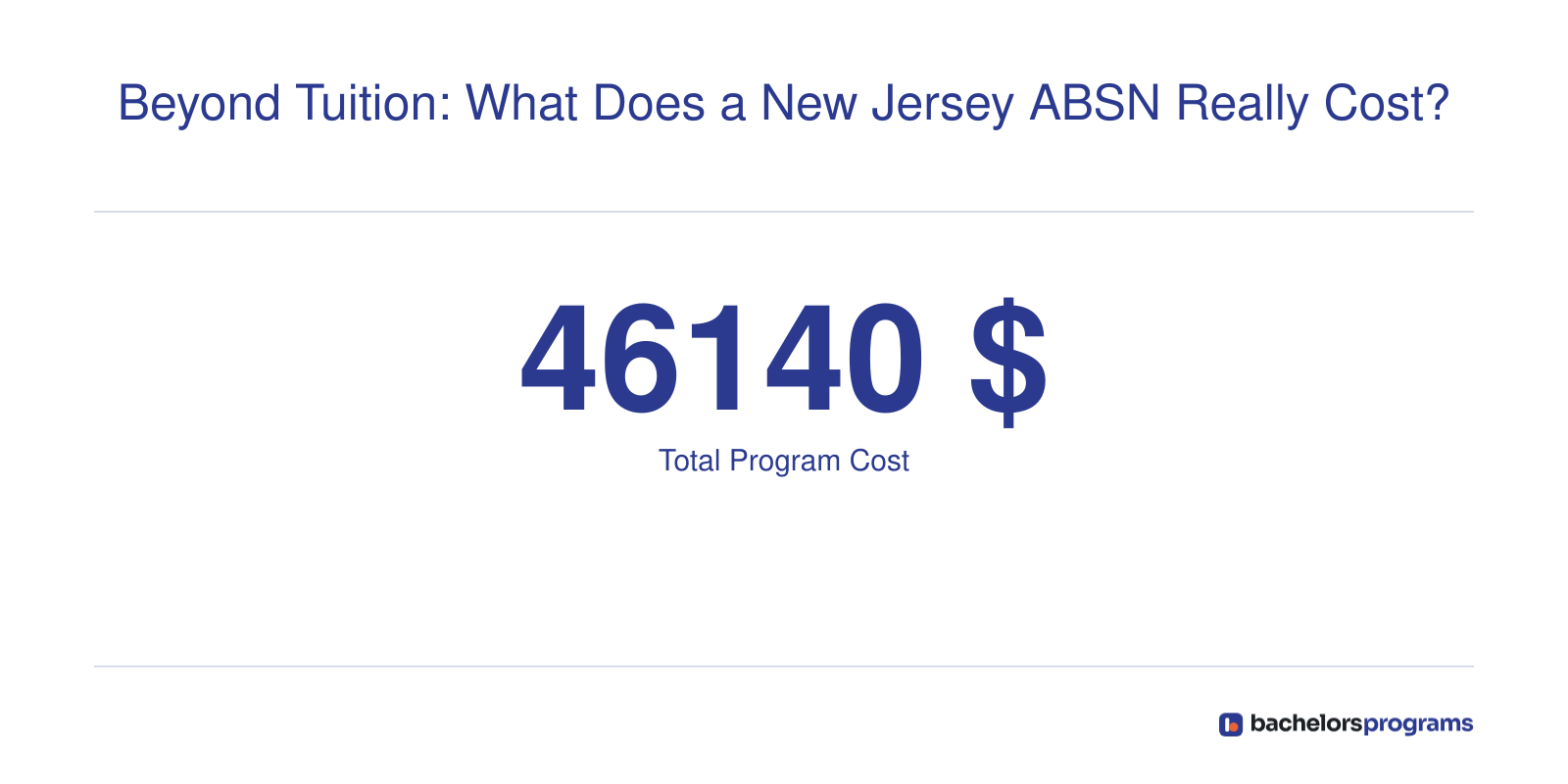
Tuition is the headline, not the whole bill. Budget for a standardized-testing or course package, a separate program fee, uniforms, background checks, CPR certification and travel to clinical sites. Aid for second-degree students is narrower than for first-time undergraduates. You are generally treated as an undergraduate for federal Direct Loans, but annual and aggregate limits depend on dependency status, prior borrowing and the school's Title IV eligibility. Pell Grants are usually closed off by prior-degree and lifetime limits. Grad PLUS requires graduate enrollment, so it is not a route for a second bachelor's. New Jersey's nursing loan redemption aid is built around practicing nurses in specific roles, not students entering an ABSN; check HESAA for current rules. Ask each school about ABSN scholarships and hospital tuition partnerships, because terms vary.
- Shortest and longest: 12 months at New Jersey City University; 16 months at Ramapo College and Felician University.
- Fixed schedule: assigned class, lab and clinical times make outside work hard.
- Hybrid reality: online theory does not shorten clinical days.
- Aid: plan on Unsubsidized loans rather than Pell, and verify state and school programs.
Beyond Tuition: What Does a New Jersey ABSN Really Cost?
Related Articles
Felician vs Seton Hall vs TESU vs Ramapo: Accelerated BSN Head-to-Head
Felician University and Seton Hall University are the pairing most New Jersey career changers weigh first, and the clearest difference is how much each school spells out up front. Felician lays out a detailed structure for its accelerated BSN: 16 months, four 14-week semesters and 67 credits under the curriculum effective Fall 2026. It runs two tracks. The on-ground track meets in Rutherford and Lodi. The hybrid track pairs online coursework with in-person labs, testing and clinicals at its Parsippany site. Hybrid students can start in January, May or September, while on-ground students start in September only. An admissions counselor supplies the deadline for each start date. Seton Hall's Second Degree Accelerated B.S.N. in South Orange is built, as its name indicates, for applicants who already hold a bachelor's degree. Get its length, format, start terms and cost directly from the university before you set it beside Felician. Thomas Edison State University in Trenton and Ramapo College of New Jersey in Mahwah give applicants in central and northern New Jersey two more accelerated BSN options to measure against those two. Where a cell points you to admissions, treat that as your next call rather than a missing feature.
| Program | Length | Delivery format | Class and clinical locations | Start terms | Total program tuition | Entry pathway | Best fit |
|---|---|---|---|---|---|---|---|
| Felician University: Accelerated Bachelor of Science in Nursing (ABSN) | 16 months; four 14-week semesters; 67 credits (Fall 2026 curriculum) | Two tracks: on-ground (in-person coursework and labs) or hybrid (online coursework plus in-person labs, testing and clinicals) | On-ground: Rutherford and Lodi; hybrid: Parsippany; clinical rotations at local healthcare facilities | Hybrid: January, May, September; on-ground: September only; deadlines set by an admissions counselor per start date | Ask admissions for the 2026 total for your chosen track | Confirm prior-degree and credit requirements with admissions | Strong for applicants who need a start date outside the fall or want online coursework, since the hybrid track opens three times a year. The on-ground track suits students who prefer every class and lab in person near Rutherford or Lodi. |
| Seton Hall University: Second Degree Accelerated B.S.N. | Confirm with Seton Hall admissions | Confirm with Seton Hall admissions | South Orange campus; ask about clinical placements | Confirm with Seton Hall admissions | Request the current total from Seton Hall | Second-degree program for applicants who already hold a bachelor's degree | Fits career changers who already hold a bachelor's degree and want to study in South Orange. Request its schedule and total cost so you can compare it fairly against Felician's published structure. |
| Thomas Edison State University: Accelerated Bachelor of Science in Nursing | Confirm with TESU admissions | Confirm with TESU admissions | Trenton; ask about clinical placements | Confirm with TESU admissions | Request the current total from TESU | Confirm prior-degree or credit requirements with admissions | A logical option to investigate if you live in or near Mercer County and want an accelerated BSN close to home. Ask how its format and start terms compare with Felician's hybrid calendar before you commit. |
| Ramapo College of New Jersey: Accelerated Bachelor of Science in Nursing | Confirm with Ramapo admissions | Confirm with Ramapo admissions | Mahwah; ask about clinical placements | Confirm with Ramapo admissions | Request the current total from Ramapo | Confirm prior-degree or credit requirements with admissions | Worth a close look for northern New Jersey applicants who want a public college option in Bergen County. Get its length and total cost in writing so you can weigh it against the private programs at Felician and Seton Hall. |
New Jersey Board of Nursing Approval and NCLEX-RN Licensure for ABSN Graduates
Does an accelerated BSN program in New Jersey need state board approval before its graduates can sit for the NCLEX-RN? It does, and the answer separates two credentials that sound alike but do different jobs.
Approval and Accreditation Are Not the Same Check
New Jersey Board of Nursing approval is the legal gate. To apply for licensure by examination in New Jersey, you must graduate from a nursing program the Board approves, so confirm that status before you commit any money. Accreditation from CCNE or ACEN is a separate national review. It follows you past licensure: graduate nursing programs generally require it, some employers and scholarship programs look for it, and it smooths credit transfer if you later pursue an MSN or DNP. Ask each school for both, and check that neither is probationary.
Which New Jersey ABSN Program Has the Best NCLEX-RN Rate?
Of the programs here that publish an attributable figure, The College of New Jersey reports the highest, 99.3% as a three-year average, and holds CCNE accreditation. Saint Peter's reports 96.7% and holds both CCNE and ACEN accreditation; Seton Hall reports 93.0% across roughly 27 RN test takers a year. Treat those as three-year averages from a 2026 compilation, not as the Board's latest single-year results. The New Jersey Board of Nursing's 2025 Q4 NCLEX-RN report, dated February 20, 2026, is the controlling source for single-year program data and should be checked school by school.
For scale, 88% of New Jersey BSN candidates passed on the first attempt in 2024, with 2,268 first-time candidates and 1,998 passers. That figure is BSN-wide, not ABSN-specific. Board reports often combine a school's traditional and accelerated BSN candidates, so a headline rate can describe a larger group than your cohort, and in a small cohort a few failures can swing the number.
From Diploma to License: The Exam Path
- Board application: File for licensure by examination with the New Jersey Board of Nursing and submit your official transcript showing the degree conferred.
- Background check: Complete the state fingerprinting and criminal history review through an approved vendor.
- Pearson VUE registration: Register for the NCLEX-RN and pay the exam fee once the Board confirms eligibility.
- Authorization to Test: The ATT arrives by email; schedule your appointment inside its validity window, and do not test before it is issued.
New Jersey RN Licensure by Examination at a Glance
Inside Our Scoring: How These New Jersey ABSN Programs Earned Their Spots
Scoring here answers one practical question: for a career changer spending 12 to 18 months and tens of thousands of dollars, which New Jersey accelerated BSN programs return the most? Marketing language about being "top-ranked" plays no part. What counts is money in and career out, weighed against how the program actually runs.
The Inputs That Count
- In-state tuition and net price: published tuition for New Jersey residents, plus average net price after federal, state and institutional aid, so sticker price and what students actually pay both register.
- Graduation rate: institution-wide completion, used as a rough signal that students finish what they start.
- Program earnings and debt: College Scorecard figures for nursing graduates where a school reports them, including median earnings a few years past graduation and median debt carried.
- Delivery format: campus, hybrid or online, because format decides how much driving, parking and shift work a program demands.
Each program carries a composite score, and the order reflects how those measures stack up together rather than any single figure.
Where the Numbers Thin Out
Graduation rates describe the whole institution, not the ABSN cohort, so a school with a demanding nursing program can post an unremarkable overall figure. The net price figure averages aided undergraduates, and a second-degree student paying largely out of pocket may land somewhere else entirely. NCLEX-RN pass rates inform the licensure section but do not feed the score.
Verify Before You Apply
Costs and deadlines shift every cycle. Tuition, start dates and prerequisite windows get revised, and last year's catalog figure can miss by thousands. Contact each admissions office for the current total, the seat deposit and the application cut-off before you build a timeline around it.
Compare Accelerated BSN (ABSN) programs on the data that matters
Explore more Nursing majors or browse every field of study.
All Nursing programs Browse every field of study