Best Accelerated BSN (ABSN) Programs in Tennessee
Compare 14 accredited Accelerated BSN (ABSN) programs in Tennessee, with net price after aid, graduation rates, earnings and debt from IPEDS and the U.S. College Scorecard.
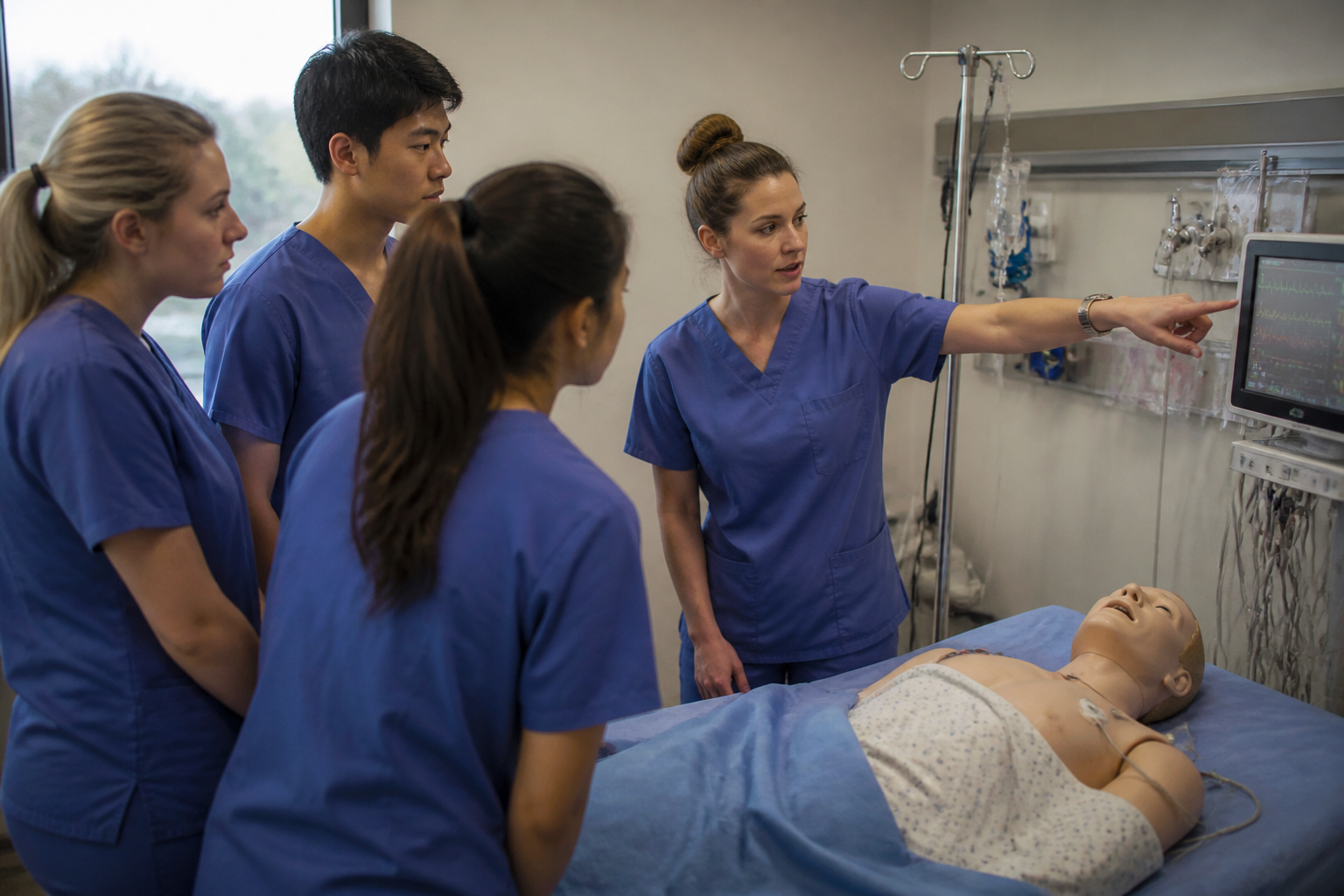
A bachelor's degree in another field spares you freshman-year general education, but not the nursing curriculum itself, and the trade is time and income. Accelerated BSN (ABSN) programs are second-degree nursing programs for non-nurses, and most in Tennessee run roughly 10 to 18 months of full-time study. The University of Tennessee-Knoxville fits 47 credit hours into 12 months, while Lipscomb University's runs 16.
Coursework, labs and clinical rotations fill nearly every week, so most students cannot hold a job while enrolled. Savings, family support and aid often matter as much as admission, and every graduate must still pass the NCLEX-RN before practicing.
Key Points
- Lipscomb's accelerated BSN runs 16 months; Union University's takes 15.
- Science prerequisites, not your first degree, usually decide ABSN admission.
- Choose a Tennessee Board of Nursing approved program to sit for NCLEX-RN.
Tennessee's 10 Top-Ranked Second-Degree Nursing Programs
The University of Tennessee-Knoxville
#1Knoxville, TN · ~$19,000/yr (est.)
Best for: Career changers seeking academic medical center access
Tennessee's flagship public university pairs its 12-month accelerated BSN with clinical placements across Knoxville's major hospital systems, and the ABSN Scholars Program adds scholarship support for students who commit to working at UT Medical Center. The university graduates 74% of students and admits about 42% of applicants, so the institution sits in competitive but reachable territory. A simulation lab and technology-enhanced classrooms support the 47-credit curriculum.
- 12 months, 47 total credit hours
- Starts summer with rolling admissions
- Priority deadline November 1, final deadline December 1
- 3.0 GPA minimum plus anatomy, physiology, microbiology, human development
- ABSN Scholars Program scholarship tied to UT Medical Center
- Clinical experiences at major hospitals and community clinics
- Technology-enhanced simulation lab
- CCNE accredited
Tennessee Tech
#2Cookeville, TN · $10,000 – $15,000/yr (est.)
Best for: Budget-focused students wanting small cohorts
Tennessee Tech runs its second-degree BSN across four consecutive full-time semesters, summers included, so a cohort that begins in Maymester finishes the following August. Cohorts are deliberately small and admission is competitive, with a HESI A2 entrance exam and science prerequisites completed within the past ten years. The university graduates 58% of students, and the Cookeville campus keeps tuition among the lowest of the public options on this list.
- 15 months across four consecutive full-time semesters
- Starts each Maymester, graduates in August
- Science prerequisites within the past 10 years, C or better
- HESI A2 entrance exam required
- Applications due October 31 for the following Maymester
- Semester loads of 16, 15, 15 and 17 credits
- Small cohorts, full-time on-campus format
- CCNE accredited
Lipscomb University
#3Nashville, TN · ~$25,000/yr (est.)
Best for: Hybrid learners drawn to Nashville clinical sites
Lipscomb delivers its 16-month accelerated BSN in a hybrid format, pairing online coursework with in-person labs and clinicals placed across Nashville's healthcare corridor. The university also runs a rural workforce initiative that covers tuition, fees, supplies, and travel for a small cohort of students from northern Middle Tennessee counties who agree to practice in underserved areas. Lipscomb graduates 72% of students and admits about 68% of applicants, and class sizes stay small.
- 16 months, 62 credit hours at $899 per credit
- Hybrid format: online coursework with in-person labs and clinicals
- Fall start, priority deadline March 15
- 3.0 GPA minimum and prerequisite courses
- Clinical placements in Nashville's healthcare hub
- Rural workforce initiative covers tuition, fees, supplies and travel
- ACEN accredited
Union University
#4Jackson, TN · ~$27,000/yr (est.)
Union University runs its accelerated BSN from three Tennessee campuses, Jackson, Germantown, and Hendersonville, which gives students in West and Middle Tennessee several places to complete clinical hours. The program is cohort-based with rolling admissions and fall or spring starts, and a TEAS exam may be requested from applicants with a lower GPA. Union graduates 66% of students and admits about 60% of applicants.
- 15 months, 63 credit hours at $746 per credit
- Cohort model with rolling admissions
- Fall and spring starts
- 3.0 GPA minimum; TEAS may be required for lower GPAs
- Two letters of recommendation
- $0 application fee and $100 deposit to hold a seat
- Clinical rotations across Jackson, Germantown and Hendersonville
- CCNE accredited
East Tennessee State University
#5Johnson City, TN · ~$16,000/yr (est.)
East Tennessee State offers its accelerated BSN at three sites, Johnson City, Kingsport, and Sevierville, with start terms that vary by location. The curriculum totals 75 credit hours and includes a clinical practicum every semester, and the College of Nursing emphasizes evidence-based practice and interprofessional collaboration. ETSU graduates 53% of students and admits about 86% of applicants, making it one of the more accessible entries here.
- 75 total credit hours
- Start terms vary by location: summer, spring, fall
- Clinical practicum course every semester
- Three sites: Johnson City, Kingsport and Sevierville
- Emphasis on evidence-based practice and patient advocacy
- Prepares for NCLEX-RN licensure
- ACEN and CCNE accredited
Belmont University
#6Nashville, TN · ~$33,000/yr (est.)
Belmont packs 64 credits of nursing coursework into four semesters, ending with a senior capstone and a final-semester preceptorship. The Nashville campus puts students inside a dense hospital market, and the curriculum adds leadership and health equity coursework alongside the pathophysiology and pharmacology sequence. Belmont graduates 71% of students and admits about 95% of applicants at the institutional level.
- 64 credits of nursing coursework across four semesters
- Senior capstone experience
- Preceptorship in the final semester
- Pathophysiology and pharmacology sequence
- Course in diversity in health care
- Nurse as Leader and Nurse as Scholar coursework
- CCNE accredited
University of Memphis
#7Memphis, TN · $10,000 – $15,000/yr (est.)
The University of Memphis offers a four-semester, 60-credit accelerated BSN backed by more than 300 clinical affiliations across the Memphis medical district. Admission is a two-step process with a fall start only, and applicants need a minimum 2.75 overall GPA plus a 3.0 GPA across nursing prerequisites. Memphis graduates 51% of students and admits about 72% of applicants.
- Four semesters, 60 total credit hours
- Fall start only, two-step application process
- 2.75 overall GPA and 3.0 prerequisite GPA minimum
- Two letters of recommendation
- 300+ clinical affiliations
- Curriculum covers nursing across the lifespan
- CCNE and Tennessee Board of Nursing accredited
The University of Tennessee-Chattanooga
#8Chattanooga, TN · ~$14,000/yr (est.)
UT Chattanooga runs its accelerated BSN on campus with three start dates a year, fall, spring, and summer, the most frequent intake on this list. Applicants need prerequisite science, writing, psychology, and statistics coursework at a C or better plus a 2.75 prerequisite GPA, and only two prerequisites may be in progress when applying. UTC graduates 50% of students and admits about 81% of applicants.
- Three start dates per year: fall, spring, summer
- 2.75 prerequisite GPA with C or better in each course
- Only two prerequisites may be in progress
- Resume and essay required with the application
- ATI Launch Readiness certificate, background check and health insurance required
- Separate university and nursing applications
- CCNE accredited
Lincoln Memorial University
#9Harrogate, TN · ~$20,000/yr (est.)
Lincoln Memorial's 12-month ABSN is taught at the Cedar Bluff site in Knoxville rather than the main Harrogate campus, which suits students who want to train inside a larger metro. The program accepts rolling applications with summer, fall, and spring starts and caps the age of science prerequisites at eight years. LMU graduates 50% of students and admits about 63% of applicants.
- 12 months across summer, fall and spring terms
- 122 total credit hours, 47 of them in nursing
- Rolling admissions with year-round review
- 2.75 cumulative GPA minimum
- Science coursework no more than 8 years old
- Taught at the Knoxville Cedar Bluff campus
- Background check and drug screen required
- ACEN accredited
Tennessee Wesleyan University
#10Athens, TN · ~$15,000/yr (est.)
Tennessee Wesleyan runs its accelerated BSN on a three-year, campus-based schedule with a simulation lab and clinical placements at partner hospitals including Fort Sanders Regional Medical Center. Students log more than 1,000 hours of direct patient care across five specialties, and seniors work one-on-one with RNs during the practicum at the West Knoxville instructional site. The university graduates 48% of students and admits about 69% of applicants.
- Three-year campus-based program
- 3.0 GPA minimum plus prerequisite courses
- Over 1,000 clinical hours across five specialties
- At least 90 hours in each clinical specialty
- Simulation lab with Lifecast mannequins
- Clinical affiliation with Fort Sanders Regional Medical Center
- Senior practicum paired one-on-one with registered nurses
- West Knoxville instructional site
Cost & outcomes by school
Federal data for the highest-earning Accelerated BSN (ABSN) programs, independent of the ranking above. Earnings are this field's bachelor's graduates four years after completing where the Scorecard reports them, else the school's undergraduate median.
| School | Net price / yr | Grad rate | Earnings | Debt | Grads/yr | Format |
|---|---|---|---|---|---|---|
| The University of Tennessee Health Science Center TN | — | — | $66,318 | $12,500 | 730 | Campus |
| Galen Health Institutes-Nashville Campus TN | $27,267 | — | $61,480 | $24,166 | 74 | Campus |
| The University of Tennessee-Knoxville TN | $18,976 | 74% | $60,249 | $20,500 | 13,976 | Campus |
| Belmont University TN | $33,147 | 71% | $55,930 | $20,500 | 3,904 | Campus |
| Lipscomb University TN | $24,739 | 72% | $55,541 | $19,500 | 1,462 | Hybrid |
| Union University TN | $27,171 | 66% | $53,990 | $20,714 | 898 | Campus |
| The University of Tennessee-Chattanooga TN | $14,265 | 50% | $51,151 | $19,500 | 4,370 | Campus |
| Lincoln Memorial University TN | $20,406 | 50% | $49,956 | $20,000 | 618 | Campus |
| Tennessee Tech TN | $14,246 | 58% | $48,501 | $15,650 | 3,742 | Campus |
| University of Memphis TN | $12,397 | 51% | $48,458 | $23,300 | 6,022 | Campus |
| Tennessee Wesleyan University TN | $14,836 | 48% | $45,989 | $20,000 | 552 | Campus |
| East Tennessee State University TN | $15,983 | 53% | $44,859 | $19,442 | 4,484 | Campus |
Sources: U.S. Department of Education. Net price, graduation rate, earnings and debt: College Scorecard (earnings and debt for this field's bachelor's graduates where reported, else school-wide); graduates: IPEDS. A dash means no figure is reported.
Cost, debt & payoff
Median earnings of this field's bachelor's graduates (4 yrs after completing, else the school's undergraduate median) vs. their median federal loan debt · U.S. College Scorecard
Across these programs the median graduate earns about $50,554 and finishes with roughly $20,000 in debt — a ratio that clears a common rule of thumb (keep debt below first-year salary). Net price and debt vary widely school to school, so check the per-school figures in the table above before you shortlist.
Cheapest Accelerated BSN Options in Tennessee
These are the lowest-cost accelerated BSN options among the schools ranked here, ordered by average net price after aid from IPEDS and College Scorecard (2024). Net price averages are built mostly on undergraduate aid packages, and second-degree students often receive less grant aid, so treat these figures as a floor rather than your likely bill. ETSU publishes 2026-27 accelerated BSN rates of $508 per credit for residents and $653 for nonresidents. For any school, compare the total program cost (credits times the per-credit rate, plus fees) rather than annual tuition, because ABSN programs compress coursework into fewer, heavier terms.
| School | City | Sector | Average net price after aid | Undergraduate tuition and fees (in-state / out-of-state) | ABSN program notes |
|---|---|---|---|---|---|
| University of Memphis | Memphis | Public | $12,397 | $10,728 / $15,384 | 4 semesters, 60 total credit hours, fall start |
| Tennessee Tech | Cookeville | Public | $14,246 | $11,376 / $15,576 | 15 months over four consecutive full-time semesters, summer start, HESI entrance exam |
| The University of Tennessee-Chattanooga | Chattanooga | Public | $14,265 | $10,448 / $18,512 | Fall, spring and summer starts, 2.8 GPA minimum |
| Tennessee Wesleyan University | Athens | Private nonprofit | $14,836 | $30,814 / $30,814 | Same rate for in-state and out-of-state students, 3.0 GPA minimum |
| East Tennessee State University | Johnson City | Public | $15,983 | $10,472 / $14,522 | Five semesters, 75 total credit hours, 2026-27 rates of $508 per credit (resident) and $653 (nonresident), course fees vary |
Tennessee ABSN Schools Whose Nursing Graduates Earn the Most
These schools are ordered by the median earnings of their bachelor's nursing graduates five years after finishing, based on U.S. The figures cover each school's full bachelor's nursing credential, not only its accelerated track, and the debt column shows the median federal loan balance for those same graduates. The University of Tennessee Health Science Center and Union University stand out on return: both pair median debt of about $18,000 or less with five-year earnings near $80,000, which works out to a typical payment of under $200 a month on a 10-year plan.
| School | City | Median Earnings 5 Years After Finishing | Median Earnings 1 Year After Finishing | Median Debt at Graduation | Typical Monthly Payment (10-Year Plan) |
|---|---|---|---|---|---|
| Galen Health Institutes-Nashville Campus | Nashville | $89,101 | $76,234 | $36,303 | $385 |
| The University of Tennessee Health Science Center | Memphis | $81,386 | $70,619 | $18,000 | $191 |
| Union University | Jackson | $79,882 | $68,399 | $17,437 | $185 |
| University of Memphis | Memphis | $75,543 | $73,680 | $23,963 | $254 |
| East Tennessee State University | Johnson City | $74,304 | $64,459 | $19,558 | $207 |
ABSN Prerequisites in Tennessee: Science Courses, GPA, and Entrance Exams
Your first bachelor's degree makes you eligible, but the science prerequisites usually decide whether a Tennessee ABSN application moves forward. These programs are built for career changers who already hold a degree outside nursing, and their admissions details differ more than most applicants expect.
The Degree You Already Hold
Tennessee Tech accepts a bachelor's in any field, and Lipscomb University asks for a bachelor's in another discipline. The University of Tennessee Health Science Center (UTHSC) requires a non-nursing bachelor's from a regionally accredited institution.1 That degree must be complete by entry, which matters if you are still finishing it while you apply.
Core Science and Support Courses
Anatomy and Physiology I and II plus microbiology anchor each of these lists:
- UTHSC: A&P I, A&P II, and microbiology, each with a concurrent lab and a grade of C or better.
- Lipscomb: Four-credit microbiology, A&P I, and A&P II, plus a three-credit social science course and College Algebra or higher math. Chemistry, medical terminology, statistics, and nutrition are recommended, not required.
- Tennessee Tech: Chemistry, A&P I, A&P II, and microbiology, each with a C or better.
Recency Rules and GPA Minimums
Older science credits can expire. UTHSC wants A&P and microbiology completed within five years of your entry term, and a D or lower will not count.1 Tennessee Tech allows up to 10 years for its four science courses.
GPA thresholds cluster around 3.0. UTHSC sets a 3.0 cumulative minimum (or 3.2 in your most recent degree) and a 2.67 science-prerequisite GPA.1 Lipscomb requires a 3.0 cumulative GPA from your prior bachelor's, a B average across its three core sciences, and at least a C in the social science and math courses.
Entrance Exams and Screening
Tennessee Tech requires the HESI A2 with a composite score of at least 70, and the score report must be uploaded before you submit your application. Testing policies vary across the other schools ranked here, so confirm whether the TEAS, the HESI A2, or no exam applies, and ask when any background check or drug screen is due.
Verify Before You Enroll
If you plan to take prerequisites at a community college, send course descriptions to each admissions office first. A course that satisfies one school may not satisfy another, and confirming equivalency now can save you a semester of retakes.
Related Articles
Pace and Price: What 12 to 18 Months of Full-Time ABSN Study Looks Like
Lipscomb University's accelerated BSN runs 16 months and 62 credits, while Union University's takes 15 months and 63 credits. Both are continuous, full-time sequences. Expect year-round terms with no summer break. The University of Tennessee Health Science Center compresses its sequence to 12 months, with 17 credits in the first term and 15 in the second.1 East Tennessee State University calls its accelerated track one of the quickest routes to licensure, though it does not publish a month count in the material reviewed.
What the Price Tag Looks Like
Tuition at the private schools with published figures sits in the high $40,000s to mid $50,000s. Union lists 2026-27 tuition at $746 per credit, or $46,998 for the full program, and estimates the entire program at about $56,000 before housing, food, transportation, and personal expenses.3 Lipscomb charges $899 per credit, which works out to roughly $55,700 for 62 credits, plus $3,500 in student fees each semester. Public schools such as UTHSC and ETSU are generally less expensive for in-state students, but confirm current per-credit rates on each school's tuition page, because they were not established here.
UTHSC also offers Baptist Scholars. It covers in-state tuition and fees in exchange for a one-year post-graduation contract with Baptist Memorial Health Care at its Memphis, Collierville, or DeSoto locations.2
Costs Readers Forget
- Program fees: Clinical, lab, and technology fees often sit outside base tuition. Union's $1,050 general fee excludes nursing fees.
- Gear and testing: Uniforms, equipment, and ATI or HESI testing packages.
- Licensure: NCLEX registration and the state licensing application.
- Living expenses: A year or more with little or no income.
Hybrid Delivery and Clinical Travel
Lipscomb delivers coursework in a hybrid format, with online instruction plus 2 to 4 lab days per semester and about one clinical day per week. Labs and clinicals stay in person everywhere. Ask each school how far clinical placements can be from campus, since assignments may require driving to partner hospitals.
Can You Work?
Plan on not working, or on very little. Neither Lipscomb nor Union publishes a formal employment policy in the material reviewed, but Union is full-time only, and class, lab, clinical, and study time in accelerated nursing programs commonly reaches 40 to 60 hours a week. Budget as if outside income will not be available.
Start Terms, Deadlines, and Program Length by School
Tennessee ABSN timelines are not uniform, and the calendar often decides which programs are realistic for you. Published details for several schools on this list appear below; where a school has not posted a figure, confirm it directly rather than assuming a date.
Length and start terms at a glance
- UTHSC: 12 months; Spring 2027 and Fall 2027 starts; Sept. 15, 2026 deadline for Spring 2027; total credits not published.1
- Lipscomb University: 16 months; start terms, credit total, and deadline not published.
- Union University: 15 months; 63 credits; fall and spring starts; June 30 deadline for fall entry at Jackson.2
Union's Jackson campus admits once a year for fall, while its Memphis and Hendersonville locations admit twice a year, with a Nov. 30 spring deadline and a June 30 fall deadline.2 UTHSC's two entry points also give applicants a second window in the same year. Those multiple starts matter if you are finishing prerequisites now and want to begin sooner rather than waiting for a single annual cohort.
Confirm before you apply
Deadlines shift by cycle and by campus, and a date that applies to one intake may not carry over to the next. Check each school's admissions page for the current deadline, required deposit, and any earlier priority date. For ETSU and Belmont, confirm the next cohort's dates directly.
Program length is only part of the schedule question. A 12-month program compresses clinical hours into fewer terms, while a 15- or 16-month route may leave more room for prerequisite completion or work. Use the start terms above to map your own application year, then confirm every date with the school.
Paying for a Second Bachelor's: Aid Limits for Tennessee ABSN Students
Most aid rules are built around students who do not already hold a degree, which makes a second bachelor's in nursing largely self-funded. Find out which funding sources are closed to you before you apply, so you do not budget around money that will not arrive.
Federal Loans Remain, Pell Usually Does Not
Pell Grants are generally limited to undergraduates working toward a first bachelor's, so a prior degree typically ends eligibility for an accelerated BSN. The lifetime ceiling of 12 full-time semesters rarely leaves room anyway, and the maximum award for 2026-27 is $7,395 for students who qualify.
Federal Direct Loans do remain. The Department of Education still classifies a second bachelor's student as an undergraduate,3 which in 2026 means $9,500 in the first year ($3,500 of it subsidized), $10,500 in the second ($4,500 subsidized), and $12,500 from the third year on ($5,500 subsidized).1 Undergraduate borrowing caps at $57,500 in total, of which no more than $23,000 may be subsidized, and only loans from your first undergraduate program count toward that figure. A school may set a lower annual limit, provided it applies the same cap to every borrower in the program.2
Tennessee Grants Are Narrower Than They Look
TSAA and HOPE are structured around students pursuing an initial degree, and a prior bachelor's usually removes you from the pool. The details turn on prior HOPE use, remaining eligibility, residency, enrollment level, and the program itself, so confirm your own case with the Tennessee Student Assistance Corporation before you count on either one.
Where the Rest Comes From
- Institutional awards: some programs publish ABSN-specific scholarships, while others route second-degree students through general university aid. Ask each admissions office what exists for your cohort.
- Employer money: Tennessee health systems often offer tuition reimbursement or loan forgiveness if you agree to work for them for a set period. Ask how long you must stay before you sign.
- Private loans: the fallback once federal loans are exhausted; most require a creditworthy cosigner.
File the FAFSA regardless. Some institutional scholarships and hospital aid programs require it on record even when no federal grant is coming your way.
Tennessee Board of Nursing Approval, Accreditation, and Your Path to RN Licensure
Program approvals are the question nursing applicants most often ask last: does this program hold the right approvals, and from whom? The answer decides whether you can become a licensed RN at all.
Why Board of Nursing Approval Comes First
Under Tennessee law (TCA §63-7-117), any professional nursing program must be approved by the Tennessee Board of Nursing, including on-campus, distance, online, and electronic formats. Schools go through a two-step process: a letter of intent, then a full program application. Only graduates of approved programs are eligible to sit for the NCLEX-RN, and passing that exam is required for licensure. Before you apply anywhere, confirm the program appears on the Board's approved list.
The Board's materials describe approval at the school and program level. They do not clearly show whether an accelerated track carries its own separate designation, so ask each admissions office how its ABSN is covered.
State Approval Versus National Accreditation
Approval and accreditation are different things. The Board grants approval to operate in Tennessee. Accreditation comes from a national body, either the Commission on Collegiate Nursing Education (CCNE) or the Accreditation Commission for Education in Nursing (ACEN).
What the available sources confirm:
- UTHSC: Its Accelerated 2nd-Degree BSN runs 12 months for non-nursing bachelor's holders, and its baccalaureate nursing program is CCNE-accredited.1
- Lipscomb University: Its 16-month Accelerated BSN, open to those with a bachelor's or higher in another field, sits within a Nashville baccalaureate program accredited by ACEN. Lipscomb also states that its prelicensure BSN has full Board approval.
For the other schools here, including East Tennessee State, Belmont, and Union, check the current status directly with the school and the accrediting bodies rather than assuming it.
Accreditation matters later. Many MSN and DNP programs expect a degree from an accredited nursing program, and some employers screen for it when hiring.
Checking NCLEX Results and Licensing Across State Lines
The ranking does not quote school pass rates. The Board publishes them itself in its "NCLEX Results by Year and School" reports, which cover associate, baccalaureate, and master's programs and show three years of data. One caution: the baccalaureate-and-higher report groups a school's candidates together, so it may not isolate the accelerated cohort.
Tennessee is a member of the Nurse Licensure Compact. A multistate license issued with Tennessee as your primary state of residence lets you practice in other compact states without applying for a new license each time. That flexibility helps new graduates who relocate or take travel and telehealth roles. Confirm eligibility details with the Board before you plan a move.
How We Built This Tennessee ABSN Ranking
Published tuition comes from IPEDS, the federal postsecondary data system.
What the Numbers Mean, and Where They Stop
Treat each metric as a guide, not a guarantee.
- Graduation rate: It covers the whole institution, not the accelerated cohort. A school with a lower rate may still graduate nearly every ABSN student, and the reverse can also be true.
- Net price: This is also an institution-wide average of what students pay after grant aid. Your own cost depends on credit load, per-credit rates, and the aid you qualify for as a second-degree student.
- Earnings: The window differs by school. Some graduates are measured sooner after completing than others, so compare figures with that in mind, not as exact head-to-head results.
- Tuition: IPEDS rates reflect standard published pricing, which may not match how a given ABSN bills its credits.
What This Ranking Does Not Measure
The ranking does not capture clinical placement quality, cohort size, or NCLEX-RN outcomes. Those factors can matter more than any federal metric when you choose a program. Check each school's admissions page for placement partners, seat counts, and licensure results, and use the Tennessee Board of Nursing to confirm a program's approval status.
Checked Against School Websites
We reviewed program details, including length, start terms, GPA minimums, and prerequisites, against school websites in November 2026. Requirements change by admissions cycle, and deadlines shift. Confirm every detail with the school before you apply.
Compare Accelerated BSN (ABSN) programs on the data that matters
Explore more Nursing majors or browse every field of study.
All Nursing programs Browse every field of study