Best Digital Marketing Degree Programs
Compare 580+ accredited Digital Media programs at 570+ colleges, with net price after aid, graduation rates, earnings and debt from IPEDS and the U.S. College Scorecard.

A bachelor's degree in digital marketing costs $3,033 net at Baruch College and $26,780 at Notre Dame, and the cheaper one often delivers the better return. Entry-level marketing pay is modest enough that debt service consumes a real share of a first salary.
The schools ranked here run from public flagships such as Florida and Rutgers to small private colleges, with net prices for aided students spanning that $3,033 to $26,780 range.
Employers ask for platform fluency, Google Ads and analytics among them, so program cost and hands-on tooling tend to matter more than the name on the diploma.
Key Points
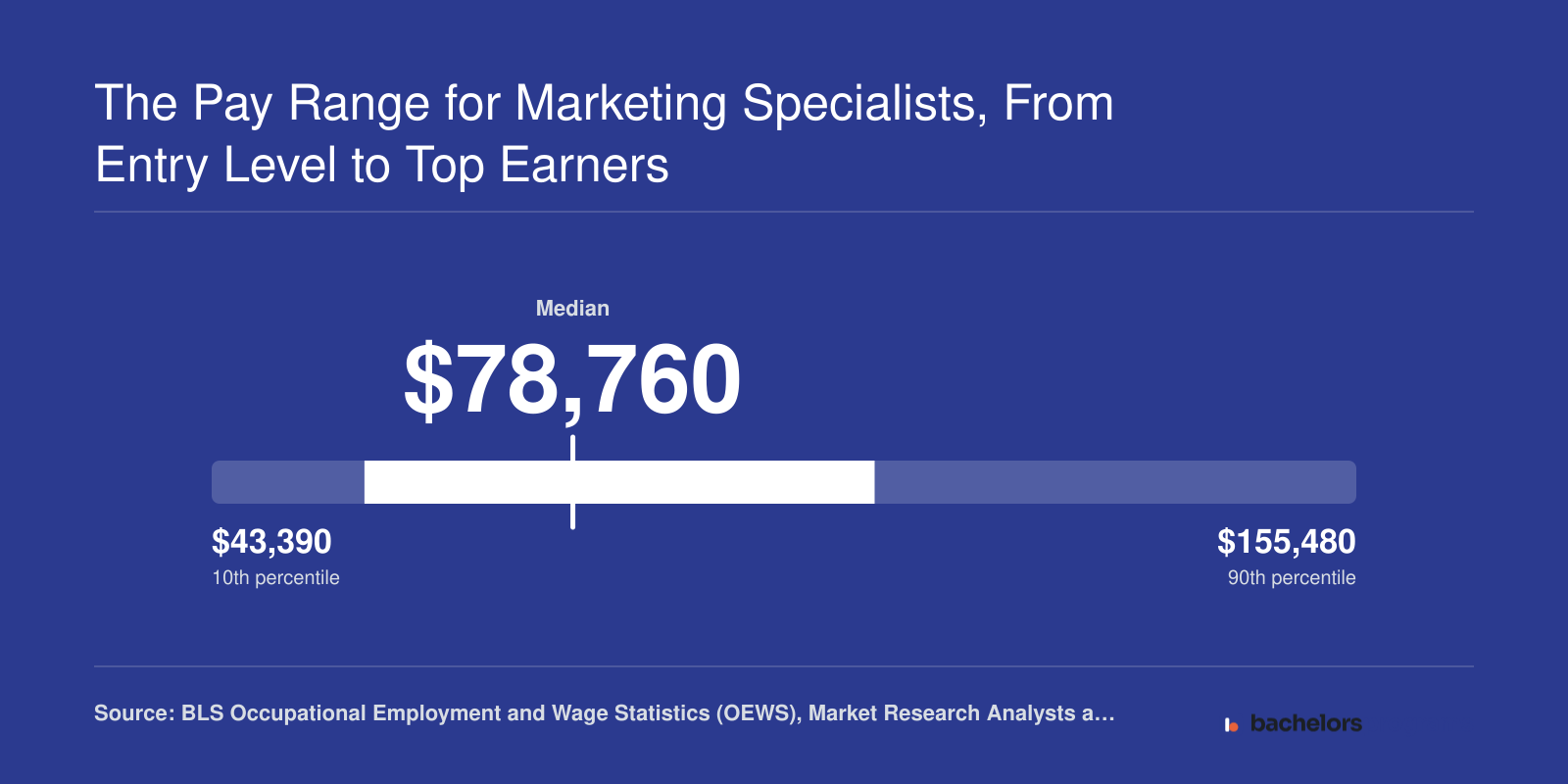
- The national median for marketing specialists is $78,760, with top earners clearing $155,480.
- Champlain College Online, CSU Global, and Avila offer fully online degrees.
- In WGU's 2026 survey, 46% of employers planned more skills-based hiring.
Best Digital Marketing Degree Schools Ranked
The ten schools below range from large public flagships to small private colleges, and each card shows the institution's net price, its graduation rate, and how the program is delivered. Read the notes on each for the concentration options, admissions rules, and earnings figures that separate one program from the next.
University of Florida
#1Gainesville, FL · ~$7,000/yr (est.)
Best for: In-state students seeking a large public campus
The University of Florida combines a large public research campus with production-heavy media training, and the school graduates 91% of its students. Digital media students work in a laboratory setting on projection design, sound, and the electronic and mechanical systems behind live performance, film, and television. Admission runs through a portfolio review, and the degree closes with a senior project and portfolio assessment. Program graduates reported median earnings of $56,454 one year after finishing and $92,626 four years out.
- 5 concentration options across costume, lighting, scenery, sound, and digital media
- 124 total credit hours
- Portfolio review required for admission
- 2.0 GPA minimum
- Capstone plus senior project and portfolio assessment
- Professional applications in theatre, film, and television
CUNY Bernard M Baruch College
#2New York, NY · $7,000 – $15,000/yr (est.)
Best for: New York City media and PR aspirants
Baruch College sits in Manhattan and applies a business-school mindset to communication studies, graduating 72% of its students. The Digital Communication and Culture concentration asks students to analyze how platforms shape identity and public conversation, with coursework in digital media literacy, ethics, and audience engagement. Internship pathways connect majors to New York City public-sector communications, graphic design, language access, and civic engagement roles, and the department enrolls more than 200 communication studies majors.
- 4 concentration options, including Digital Communication and Culture
- Coursework runs from spoken word to global media
- Appraises ethics and diversity in communication
- Prepares students for emerging digital communication careers
- Ideal springboard for graduate degrees
Florida State University
#3Tallahassee, FL · ~$11,000/yr (est.)
Best for: Visual storytellers pursuing competitive production training
Florida State's digital media production major is a limited-access program built around HD video, sound, and lighting, and the university graduates 86% of its students. Production classes are capped at 20 to 25 students, and students choose between a Documentary and Public Affairs track and a Sports Media track. Admission requires 52 completed college credits, a 3.0 GPA, and an application filed by December 31, 2026 for summer or fall 2027 entry. Graduates reported median earnings of $49,808 one year after finishing and $84,981 four years out.
- 2 tracks: Documentary and Public Affairs, Sports Media
- Limited-access major with competitive admission
- 3.0 GPA and 52 completed credits required to apply
- 120 total credit hours, typically completed in two years
- Production classes capped at 20 to 25 students
- Training in Adobe Premiere Pro, After Effects, and Photoshop
- VR and 360 video production coursework
- Apply by December 31, 2026 for the 2027 cohort
Florida International University
#4Miami, FL · ~$9,000/yr (est.)
FIU runs a bilingual media program on a Miami campus equipped with a broadcast TV studio and a virtual reality lab, and the university graduates 74% of its students. The digital and interactive media concentration mixes content production with interactive design and emerging platforms, taught by faculty who bring professional newsroom experience. Students graduate into journalism, media production, interactive design, gaming, and sports media roles. Median earnings were $40,839 one year after completion and $64,423 four years out.
- 7 concentration options
- 120 total credit hours over four years of full-time study
- Broadcast TV studio and virtual reality lab on campus
- Bilingual English and Spanish instruction
- Hands-on experiential learning with award-winning faculty
- Paths into interactive design, gaming, and sports media
Grove City College
#5Grove City, PA · ~$22,000/yr (est.)
Grove City College is a small Christian liberal arts campus in western Pennsylvania that graduates 83% of its students. The communication arts major with a digital media concentration pairs public speaking, media writing, and persuasion with screenwriting, photography, editing, and social media writing. Students can earn Hootsuite social media certifications, organize the Lux Mea Film Festival, and take part in applied research with outside partners. The college reports that 95% of its graduates land jobs or graduate school admission within six months.
- 8 concentration options
- 36 total credit hours in the major
- Hootsuite social media certifications available
- Christ-centered learning environment with industry-active faculty mentors
- Students organize the Lux Mea Film Festival
- Employers of graduates include National Geographic and Chick-fil-A
University of Central Florida
#6Orlando, FL · ~$10,000/yr (est.)
UCF's digital media BA blends art, storytelling, and technology, with tracks in game design and in web and interactive media, and the university graduates 78% of its students. Team-based projects and a two-course capstone build portfolio material in front-end web design, user-centered design, and immersive platforms. The program admits part-time students and bills per credit rather than by flat rate. Median earnings were $46,606 one year after completion and $72,440 four years out.
- 2 tracks: Game Design; Web and Interactive Media
- 120 total credit hours, full-time or part-time
- Two-course capstone sequence
- Coursework in front-end web design and user-centered design
- Honors in the Major available
- In-state tuition of $212.28 per credit
University of Notre Dame
#7Notre Dame, IN · ~$27,000/yr (est.)
Notre Dame's Mendoza College of Business houses the marketing major, and the university graduates 95% of its students. The digital marketing track covers managing digital engagement, social media strategy, and applied digital marketing, with 21 credit hours in the major and freedom to sample electives from the brand management and marketing analytics tracks. The curriculum leans on experiential learning and analytics, with attention to ethics and social impact. Median earnings were $63,906 one year after completing and $91,088 four years out.
- 3 elective tracks: Brand Management, Digital Marketing, Marketing Analytics
- 21 total credit hours in the major
- Digital Marketing track includes Social Media Strategy and Applied Digital Marketing
- Electives from any track allowed; no single track required
- Emphasis on experiential learning and analytics
Principia College
#8Elsah, IL · $30,000 – $35,000/yr (est.)
Principia College is a small campus in Elsah, Illinois, that graduates 74% of its students. The digital media and journalism major with a production emphasis blends reporting, photography, and digital literacy with media law and ethics, and every student completes a credit internship plus two semesters of practical experience. A final portfolio project sends graduates out with a professional reel they can show employers in newsrooms, production studios, agencies, or corporate media departments.
- 4 concentration options
- 17 total courses, including ten core courses
- Two semesters of practical experience
- Credit internship preferred
- Three advisor-approved courses plus two electives
- Final portfolio project
Clemson University
#9Clemson, SC · $20,000 – $25,000/yr (est.)
Clemson's digital art and design media emphasis sits inside the art department, mixing animation, graphic design, and new media with studio work in sound, installation, performance, and virtual spaces. The university graduates 87% of its students, and the degree requires a minor or second major, which suits students who want to pair creative training with a business or technical field. Median earnings were $47,606 one year after completing and $81,109 four years out.
- 3 concentration options
- Requires a minor or second major
- Explores sound, installation, performance, and virtual spaces
- Blends emerging technology with traditional art forms
- Final signature research assignment
- Serves as a first step toward new BFA degrees
Rutgers University
#10New Brunswick, NJ · $24,000/yr (est. net price)
Rutgers lists digital marketing as a standalone undergraduate major taught through its School of Business, one of more than 150 majors across the university system, and the university graduates 84% of its students. That makes it one of the few programs on this list where the degree title itself is digital marketing rather than a media or communication concentration. The major is offered at Rutgers-Camden rather than in New Brunswick. Median earnings were $48,645 one year after completing and $74,813 four years out.
- Standalone digital marketing major
- Offered through the School of Business
- Delivered at Rutgers-Camden
- One of more than 150 undergraduate majors at the university
Cost & outcomes by school
Federal data for the highest-earning Digital Media programs, independent of the ranking above. Earnings are this field's bachelor's graduates four years after completing where the Scorecard reports them, else the school's undergraduate median.
| School | Net price / yr | Grad rate | Earnings | Debt | Grads/yr | Format |
|---|---|---|---|---|---|---|
| Stanford University CA | $13,807 | 92% | $124,080 | $12,000 | — | Campus |
| Boston College MA | $41,704 | 91% | $106,353 | $18,000 | 97 | Campus |
| Villanova University PA | $43,756 | 92% | $102,222 | $26,747 | 62 | Campus |
| Tulane University of Louisiana LA | $39,949 | 86% | $98,503 | $19,375 | 166 | Hybrid |
| Elon University NC | $41,555 | 84% | $95,163 | $20,500 | 112 | Campus |
| Brown University RI | $25,184 | 96% | $93,487 | $11,428 | — | Campus |
| University of Florida FL | $6,541 | 91% | $92,626 | $15,250 | 185 | Campus |
| Northeastern University MA | $30,915 | 91% | $92,538 | $24,250 | — | Online |
| University of Southern California CA | $32,740 | 92% | $92,498 | $18,000 | — | Campus |
| University of Notre Dame IN | $26,780 | 95% | $91,088 | $19,000 | 50 | Campus |
| Michigan State University MI | $19,680 | 81% | $90,453 | $22,250 | 237 | Campus |
| University of Connecticut CT | $25,097 | 83% | $89,208 | $21,500 | 113 | Campus |
Sources: U.S. Department of Education. Net price, graduation rate, earnings and debt: College Scorecard (earnings and debt for this field's bachelor's graduates where reported, else school-wide); graduates: IPEDS. A dash means no figure is reported.
Cost, debt & payoff
Median earnings of this field's bachelor's graduates (4 yrs after completing, else the school's undergraduate median) vs. their median federal loan debt · U.S. College Scorecard
Across these programs the median graduate earns about $58,385 and finishes with roughly $23,250 in debt — a ratio that clears a common rule of thumb (keep debt below first-year salary). Net price and debt vary widely school to school, so check the per-school figures in the table above before you shortlist.
How We Ranked These Schools
The federal College Scorecard now publishes earnings by field of study, which lets you compare marketing programs on measured outcomes instead of reputation.
What Goes Into the Comparison
Each program is judged on a short set of measurable outcomes: median earnings for graduates a few years after finishing, typical federal student debt at graduation, and the average net price a family actually pays after grants and scholarships. We also weigh institution-wide graduation and retention rates and whether the degree can be completed online, on campus, or in both formats, since a program is only as strong as the support system around it.
What the Numbers Cannot Tell You
No dataset captures curriculum quality, whether faculty have actually run campaigns for real clients, or how reliably a school places interns at agencies and in-house marketing teams. Those factors often decide whether the degree pays off, and you have to vet them yourself. Ask for syllabi, look up professors' work histories, and request internship placement details before you commit.
Reading Net Price Correctly
The net price figures behind this list are sector-level averages after aid. They are not a quote for you. Your real cost depends on grants, state residency, transfer credits, and housing choices, so treat any published number as the opening line of a financial aid conversation rather than the final price.
That transparency is why a ranked list beats an unranked roundup. Rankings built on published outcomes can show you which digital marketing programs leave graduates with debt they can manage, and which ones simply market themselves well.
Online vs. Campus Digital Marketing Programs: Pacing, Transfer Credits, and Time to Degree
You can earn a digital marketing bachelor's degree entirely online, but the schools ranked above are listed as on-campus programs. If you need remote study, the online options come from universities such as Avila, Champlain College Online, CSU Global, Penn State World Campus, and Old Dominion.
Pacing: Online vs. Campus
Online programs are built for working adults. Coursework is typically asynchronous, so you log in on your own schedule. Many run 8-week terms, including Avila, CSU Global, UW-Madison Online, and Old Dominion. Avila offers multiple start dates per year.1 Penn State is the exception, with terms of roughly 12 to 15 weeks.2
Campus programs follow a semester calendar. The tradeoff is access: in-person agency work, student clubs, internships, and faculty face time are easier to reach when you live near the school.
Time to Degree
Expect about 120 credits, or four years of full-time study. Franklin University requires 124. Transfer credit is the fastest way to shorten that timeline:
- Higher caps: Avila, Champlain, Old Dominion, and Texas State accept up to 90 credits, though each evaluates your record individually.
- Lower caps: Northwest Missouri State caps at 82.3 Texas State limits community college credit to 72, and CSU Global to 64 (its 90 total can include military and career experience).
- Residency rules: Old Dominion and William Paterson require 30 credits completed at the school.4
Champlain's own example shows the effect. A student transferring the maximum 90 credits has about 10 courses left. At three courses per term, that is roughly 5 terms.
Combine a generous transfer policy with 8-week terms and year-round enrollment, and an adult with prior credit can finish well under four years. Your actual pace depends on how many credits the school accepts and applies to your major.
One Practical Tip
Request an unofficial transcript evaluation before you apply. Credit counts vary by program, and a tuition estimator will not guarantee what transfers. An early evaluation shows how many credits count toward your major, so you can compare real time to degree across schools.
Digital Marketing Degree Cost: Net Price, Debt, and Monthly Payments at the Most Affordable Schools
Published tuition is the sticker price, while net price is what the average aided student actually pays after grants and scholarships. Net price also includes housing, food, books, and other costs of attendance, which is why it can run higher than tuition at the University of Florida and Florida International University. Because it reflects real out-of-pocket cost, net price is the better number for comparing schools. Treat each figure as an approximate school-wide average from IPEDS and College Scorecard data (2024), not a quote for your own aid package. The debt and payment figures cover bachelor's completers in each school's marketing field. As a rule of thumb, keep the monthly loan payment small relative to likely entry-level pay. At UF, a $162 payment is roughly 3 percent of the $56,454 median first-year earnings for marketing graduates. At FIU, $166 is about 5 percent of $40,839.
| School | Program | Published In-State Tuition & Fees | Average Net Price After Aid | Median Federal Debt at Completion | Median Monthly Payment (10-Year Plan) | Cost Basis |
|---|---|---|---|---|---|---|
| CUNY Bernard M Baruch College (New York, NY) | Communication Studies: Digital Communication and Culture (BA, campus) | $7,464 | $3,033 | Not reported | Not reported | School-wide average net price for aided in-state undergraduates |
| University of Florida (Gainesville, FL) | Digital Media (BFA, campus) | $6,381 | $6,541 | $15,250 | $162 | School-wide average net price for aided in-state undergraduates |
| Florida International University (Miami, FL) | Digital Communication and Media: Digital and Interactive Media (BS, campus) | $6,565 | $9,288 | $15,650 | $166 | School-wide average net price for aided in-state undergraduates |
Related Articles
What Marketing Specialists Earn Nationally
Market research analysts and marketing specialists, the federal job category that covers many digital marketing roles, earn a national median of $78,760 a year, or $37.87 an hour.
Earnings and ROI: Is a Digital Marketing Degree Worth It?
Employers are loosening their grip on the degree as a default filter, and 46% told WGU's 2026 survey they plan more skills-based hiring next year. That makes the return on a digital marketing degree a fair question, and the answer depends on what you pay and what you build while enrolled.
What Graduates Earn
Scorecard earnings are reported by field of study, and the field behind these schools is broad digital media and digital marketing, so treat the figures as a guide rather than a promise. Five years after finishing, median earnings range from $77,028 at the University of Utah (marketing, digital marketing and analytics) to $90,154 at the University of Notre Dame (marketing, digital marketing track). Michigan State's marketing program reports $88,000, Florida's digital media program $80,633, and Florida State's digital media production program $78,277. Earlier in a career the picture is lower: one year after finishing, medians are $63,906 at Notre Dame, $57,275 at Michigan State, and $49,808 at Florida State.
Weighing Pay Against Debt
Median debt at these schools is modest next to those paychecks: $15,250 at Florida, $17,040 at Florida State, $19,000 at Notre Dame, and $25,000 at Penn State. My guidance is simple. The degree pays off most when total borrowing stays below your expected first-year earnings. Every school above clears that bar, and the in-state public options clear it comfortably. Borrowing beyond that, especially for a program with a thin internship pipeline, is where the math turns shaky.
What Employers Say
The research does not show that hiring managers prefer a digital marketing degree to a general marketing or communications degree. NACE's 2026 survey of 185 employers found communication, teamwork, and critical thinking most sought, without ranking majors. An analysis of 3,184 digital agency postings found that 32% asked for a bachelor's degree, a share that rises to 54% at entry level versus 27% for senior roles. It did not break requirements out by major. In HubSpot's marketer survey, 45% were pursuing certifications.
The Honest Downside
Some employers hire on demonstrated skills alone. In a small 2026 study of 12 marketing professionals, 88% ranked the interview among their top hiring signals, and 43% said a lack of relevant experience could disqualify a candidate. Treat that as directional, given the sample size. The degree helps most as an entry credential, since bachelor's requirements concentrate in junior postings. Its edge over a general marketing degree comes from what you add: internships, a portfolio of real campaigns, and analytics or platform certifications such as Google Analytics or HubSpot. Programs that build those in, as Michigan State's certification guidance does, give you more to show than a diploma alone.
The Pay Range for Marketing Specialists, From Entry Level to Top Earners
Pay for market research analysts and marketing specialists spans a wide range nationally, from about $43,390 at the 10th percentile to $155,480 at the 90th, with a median of $78,760 (about $37.87 an hour). New digital marketing graduates typically start near the lower percentiles. Skills in analytics, paid media and campaign measurement are what tend to move people up the range over time.
Digital Marketing vs. Digital Media vs. Marketing Degrees
The three degrees overlap, but they point toward different work. Digital marketing centers on analytics, SEO and SEM, and paid campaigns. Digital media centers on producing and designing content. General marketing covers broader strategy, with digital as one channel among many. Many schools fold digital marketing into a marketing BBA as a concentration, so check whether the program name reads "Marketing, Digital Marketing concentration" or "Marketing with a digital emphasis." Those labels usually mean a general marketing degree with a digital specialty rather than a standalone major.
| Factor | Digital Marketing | Digital Media | General Marketing |
|---|---|---|---|
| Core focus | Analytics, SEO/SEM, paid social and search campaigns, email and conversion work | Producing and managing digital content, design, video, and multimedia communication | Overall strategy, consumer behavior, pricing, branding, and research, with digital as one channel |
| Typical courses | Web analytics, search engine marketing, social media marketing, marketing technology | Digital storytelling, multimedia production, graphic design, web content, media writing | Principles of marketing, consumer behavior, market research, brand management, sales |
| Common job titles | Digital marketing specialist, SEO analyst, paid media specialist, social media marketer | Content producer, multimedia designer, social media content creator, digital communications specialist | Marketing coordinator, brand assistant, market research analyst, public relations specialist |
| Degree home | Usually a business school, often as a major or a concentration within a marketing BBA | Usually communications, media studies, or arts and design programs | Business school, typically a BBA or BS in marketing |
| Federal classification (NCES CIP code) | Digital Marketing, 52.1404 | Digital Communication and Media/Multimedia, 09.0702 | Marketing/Marketing Management, General, 52.1401 |
| Skills employers expect | Digital-marketing skills lead in entry-level social media job ads, alongside communication and problem-solving | Past work experience and a strong portfolio, plus technology and digital platform fluency | Communication, since 64% of employers rate oral communication very important for new hires |
| Related occupation and pay (BLS, May 2025) | Marketing managers, $166,790 median annual wage; typically need a bachelor's degree | Public relations specialists, $74,750 median annual wage; typically need a bachelor's degree | Public relations specialists, $74,750 median annual wage; typically need a bachelor's degree |
Digital Media programs by state
Frequently Asked Questions About Digital Marketing Degrees
Admission and transfer rules differ by school, so treat the details below as typical patterns and confirm specifics with each admissions office before you apply.
How long does it take to earn a bachelor's in digital marketing?
Can I transfer community college credits into an online digital marketing degree?
What are typical admission requirements for an online digital marketing bachelor's program?
Can I switch into digital marketing with a different bachelor's degree?
Compare Digital Media programs on the data that matters
Explore more Business & Management majors or browse every field of study.
All Business & Management programs Browse every field of study