Best Sports Management Schools in Washington
Compare 4 accredited Sports Management programs in Washington, with net price after aid, graduation rates, earnings and debt from IPEDS and the U.S. College Scorecard.
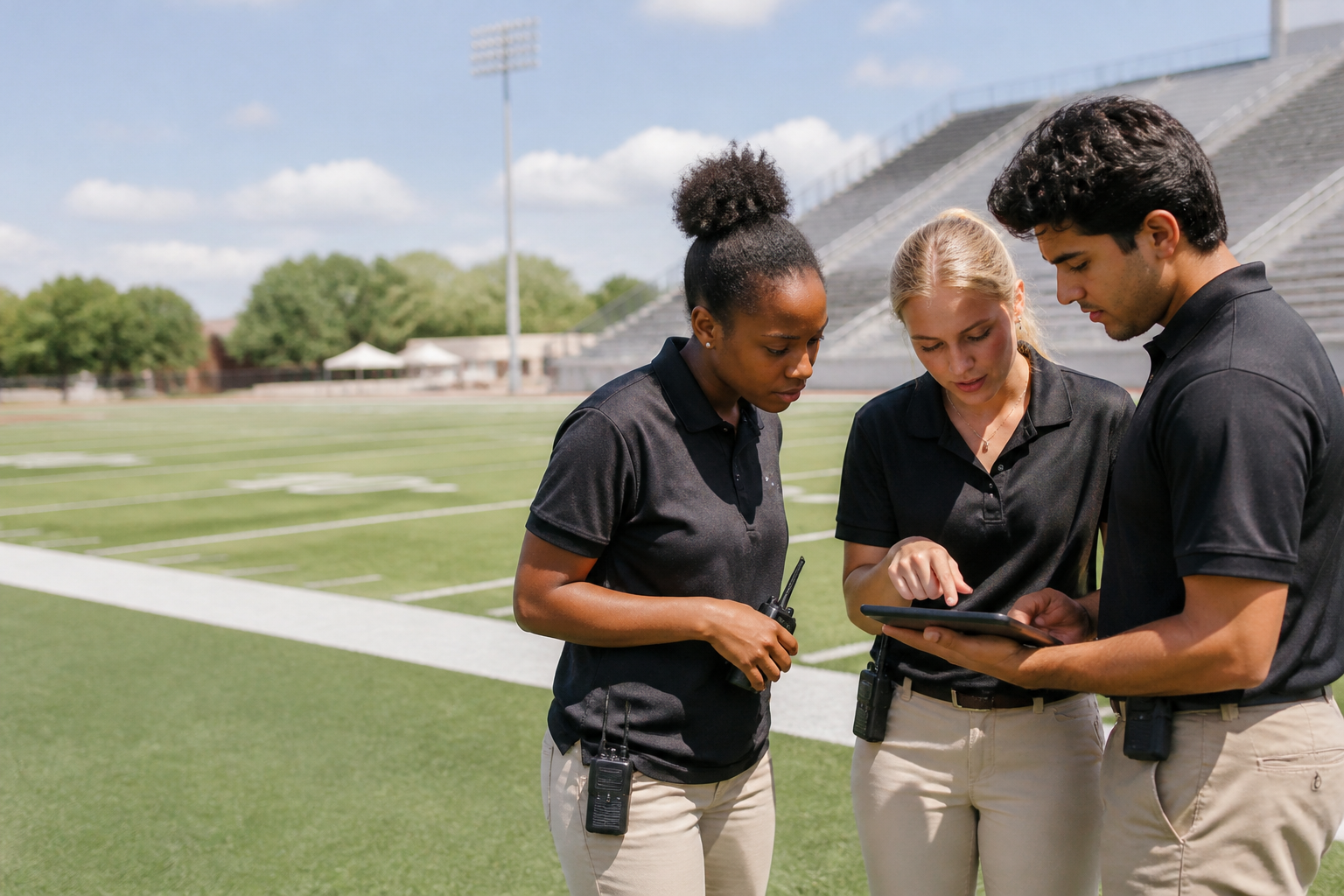
Studying sports management in Washington puts you inside a dense professional market: NFL, MLB, NHL and MLS franchises and major college athletic departments, all within a few hours' drive.
The typical credential is the Bachelor of Science (B.S.) in Sports Management, though titles and requirements diverge. Washington State University builds in 180 practicum hours; other programs lean on coursework. Price splits the field hardest: $9,417 in-state at Central Washington against $55,480 at Gonzaga. Entry-level athletics and event roles rarely close that gap fast, so internship access matters as much as the diploma.
Key Points
- Washington State University requires 180 practicum hours plus a culminating internship.
- In federal College Scorecard data, WSU shows the highest median earnings here.
- Expect on-campus study in Spokane, Pullman, College Place, or Ellensburg.
Best Schools for a Bachelor's Degree in Sports Management in Washington
Four Washington institutions currently award a bachelor's degree in sports management, and each takes a noticeably different approach: a private university built around required internships, a large public land-grant campus with a student-run event capstone, a small private college that pairs management with coaching, and a regional public university offering five distinct concentration tracks. The list below is ordered by our ranking, with the strongest overall combination of completion, cost, and program depth at the top.
Gonzaga University
#1Spokane, WA · ~$35,000/yr (est.)
Best for: Internship-focused learners at a private university
Gonzaga University is a private institution in Spokane with a nationally known athletics culture and an 86 percent graduation rate, one of the highest among Washington's private universities. Its sport management program sits within the School of Education and treats the business of sport as its organizing idea, covering marketing, branding, finance, and facility and event management rather than coaching alone. Students complete two required internships with athletic organizations, media outlets, or event teams, and can add a minor in sport management or spend time abroad.
- 45 credit hours of major coursework
- Two required internships in sport organizations
- Coursework in sport marketing, branding, finance, and event management
- Electives in esports, sport analytics, and global sport systems
- Study abroad options plus a sport management minor
- Covers legal and ethical issues in sport
Washington State University
#2Pullman, WA · ~$15,000/yr (est.)
Best for: In-state students wanting a large-campus experience
Washington State University is the state's land-grant research campus in Pullman, with roughly 20,000 students and a Pac-12 athletics tradition that gives sport management students regular access to major college operations. The undergraduate program blends required practicums with a capstone event management course in which students plan and run real events that raise tens of thousands of dollars for local causes each year. Upper-division classes stay small, and the Gordon-Enberg Speaker Series and student Sport Management Club give students direct contact with industry professionals.
- Capstone event management course raises $20,000+ yearly
- Practicum and culminating internship experiences
- Small upper-division classes
- Gordon-Enberg Speaker Series and Sport Management Club
- Prerequisite courses required before upper-division work
- Average scholarship funds of $24,575
Walla Walla University
#3College Place, WA · $20,000 – $25,000/yr (est.)
Best for: Future coaches and PE teachers
Walla Walla University is a small private Seventh-day Adventist college in College Place, south of Walla Walla, with a 14-to-1 student-faculty ratio and a close-knit academic environment. Its sports management program sits in the Department of Health and Physical Education alongside exercise science and health science, and it leans toward the coaching and instruction side of the field rather than the front office. Students follow a published four-year course plan and can add minors in athletic coaching, health, or physical education.
- Four-year course plan mapped from start to finish
- Paths toward PE teaching, coaching, or personal training
- Housed in the Health and Physical Education department
- Minors in athletic coaching, health, and physical education
- Groundwork for advanced study in sport management
Central Washington University
#4Ellensburg, WA · ~$18,000/yr (est.)
Central Washington University is a public university in Ellensburg with about 10,000 students and one of the most structured sport management degrees in the state. The major combines classroom instruction with required internships and offers five specialization tracks, so students can shape the degree toward coaching, business, communications, game-day operations, or law. The Northwest Center for Sport gives students applied project experience, and alumni have landed roles with professional franchises including the Seattle Seahawks and Denver Broncos.
- Five concentration options, from sport business to sport law
- Tracks in sport coaching, sports communication, and gameday operations
- Access to the Northwest Center for Sport
- Alumni work for the Seattle Seahawks and Denver Broncos
- Combines classroom instruction with hands-on internships
- Prepares students for youth through Olympic-level sport roles
Cost & outcomes by school
Federal data for the highest-earning Sports Management programs, independent of the ranking above. Earnings are this field's bachelor's graduates four years after completing where the Scorecard reports them, else the school's undergraduate median.
| School | Net price / yr | Grad rate | Earnings | Debt | Grads/yr | Format |
|---|---|---|---|---|---|---|
| Gonzaga University WA | $35,119 | 86% | $78,892 | $24,454 | 42 | Campus |
| Walla Walla University WA | $23,329 | 60% | $61,885 | $26,842 | 4 | Campus |
| Washington State University WA | $14,971 | 61% | $60,950 | $20,500 | 74 | Campus |
| Central Washington University WA | $18,476 | 54% | $47,979 | $13,000 | 81 | Campus |
Sources: U.S. Department of Education. Net price, graduation rate, earnings and debt: College Scorecard (earnings and debt for this field's bachelor's graduates where reported, else school-wide); graduates: IPEDS. A dash means no figure is reported.
Cost, debt & payoff
Median earnings of this field's bachelor's graduates (4 yrs after completing, else the school's undergraduate median) vs. their median federal loan debt · U.S. College Scorecard
Across these programs the median graduate earns about $61,418 and finishes with roughly $22,477 in debt — a ratio that clears a common rule of thumb (keep debt below first-year salary). Net price and debt vary widely school to school, so check the per-school figures in the table above before you shortlist.
How We Ranked Washington Sports Management Schools
Cost and payoff rarely line up neatly on the same campus. A program with a modest price tag can still send graduates out with heavier loan balances than a school that looks expensive up front, and that gap is exactly what this ranking is built to expose.
The Measures We Use
We read each Washington program through a short set of federal College Scorecard measures:
- Earnings: median pay for graduates of the program, measured a set number of years after completion. Every earnings figure on this page names its window, such as two years after finishing, so you always know what period you are looking at.
- Debt: median federal student loan debt carried at graduation.
- Net price: average yearly cost after grants and scholarships, rather than the published tuition rate.
- Completions and selectivity: how many students actually finish the program and how competitive admission is.
What the Numbers Cannot Tell You
The graduation rate and the net price cover the whole institution rather than the sports management major, and the net price is only an approximation. Your real cost moves with housing, aid packages, and transfer credit, so treat it as a starting point rather than a quote.
Because so few Washington schools currently list a bachelor's program in sports management, there is no deep pool to trim down. Every school in the state that offers one is ranked here, and none is dropped for size, format, or price.
Online and Hybrid Bachelor's Options at Washington Schools
Can you earn a bachelor's degree in sports management online from a Washington school? Based on the delivery format in our data, the programs here are campus-based. Confirm that against each school's current program page before you plan around any other format.
Format by School
- Washington State University (Pullman): On-campus only. Program pages place the Bachelor of Arts in Sport Management at the Pullman campus, not through Global Campus or another online campus. No fully online or hybrid option is established.
- Gonzaga University (Spokane): Listed as campus delivery for its Bachelor of Education in Sport Management. We found no online format.
- Walla Walla University (College Place): Listed as campus delivery for the Sports Management and Coaching Major. We found no online format.
- Central Washington University (Ellensburg): Listed as campus delivery for Sport Management, which combines classroom and experiential learning. We found no online format.
In-Person Requirements
Experiential work is built into these degrees. At WSU, the curriculum includes 180 hours of practicum experience and a final internship that requires a minimum of 400 hours in SPMGT 491. Gonzaga also highlights internships with athletic organizations. Even if a school adds an online option later, expect field-based hours you must complete in person.
Who Each Format Suits
Campus study fits students who can relocate or already live near Spokane, Pullman, College Place or Ellensburg. That matters if you live outside the Seattle area: every campus here sits in eastern or central Washington, and none of the programs is built around remote study. Transfer students can often slot into upper-division coursework on campus, though you should check each school's credit rules. Working adults who need a fully online bachelor's degree in sports management will find limited choices among these schools. Athletes should ask how practicum and internship hours fit around training and competition schedules.
Online Tuition
The WSU sources do not state a separate online tuition rate, and the other schools show no online pricing in our data. Compare standard on-campus costs in the cost section below.
Admissions at a Glance: GPA, Test Policy, and Transfer Credit
A private university with holistic review and a public university with published thresholds can feel very different at the application stage. Gonzaga University is private and reads applications as a whole. Washington State University and Central Washington University are public and tend to lean more on GPA and coursework. Walla Walla University, a private school in College Place, sits closer to the holistic end. Many Washington schools have moved toward test-optional admissions in recent years, but policies change, so verify each one before you apply.
What We Can Confirm by School
We show figures only where we could verify them for these schools. Anything else is marked "Not published" rather than guessed.
- Gonzaga University: Minimum GPA: Not published. Test policy: confirm on the admissions page. Transfer credit policy: Not published here.
- Washington State University: Minimum GPA: Not published here. Test policy: confirm on the admissions page. Transfer credit policy: Not published here.
- Walla Walla University: Minimum GPA: Not published. Test policy: confirm on the admissions page. Transfer credit policy: Not published here.
- Central Washington University: Minimum GPA: Not published here. Test policy: confirm on the admissions page. Transfer credit policy: Not published here.
Transfer Pathways
Starting at a Washington community college is a common way into a sports management bachelor's degree. Students often finish a transfer associate degree first, then move into the upper-division major. Public universities in the state generally accept credit from regionally accredited two-year colleges,1 and Washington's statewide transfer agreements are designed to make general education credits portable. Which of those credits count toward the sports management major itself is decided school by school.
Before enrolling in community college courses, ask the sports management department for a transfer equivalency list. Confirm whether prerequisites such as accounting, statistics, or economics are expected, and whether a minimum GPA applies to the major itself rather than the university.
Confirm Deadlines Directly
Application deadlines for first-year and transfer students shift from year to year, and some programs set separate dates for the major. Check each school's admissions page for current dates before building your timeline.
Related Articles
What a Sports Management Bachelor's Degree Costs in Washington
How much does a bachelor's degree in sports management cost in Washington? The answer depends mostly on whether you choose a public or a private school, and the sticker price is only part of the story.
Tuition and Net Price
In-state tuition and fees run from about $9,400 a year at Central Washington University and $13,400 at Washington State University to roughly $34,200 at Walla Walla University and $55,500 at Gonzaga University. Net price is the average cost after grants and scholarships, and it narrows the gap. It is an institution-wide average, not a figure for sports management students specifically, so treat it as a guide.
- Washington State University: about $14,971
- Central Washington University: about $18,476
- Walla Walla University: about $23,329
- Gonzaga University: about $35,119
Washington State comes in lower than Central Washington on net price despite higher tuition, so compare both numbers before you rule a school out.
Debt and Pell Share
Program-level median debt at completion is available for only some schools. It is about $20,500 for sport management graduates at Washington State and $13,000 at Central Washington. Comparable program figures are not reported for Walla Walla or Gonzaga, so ask their financial aid offices what graduates typically borrow.
Pell recipients make up roughly 59% of students at Washington State and 61% at Central Washington, compared with about 50% at Walla Walla and 29% at Gonzaga. A higher Pell share suggests a school serves many lower-income students, though it does not guarantee your own aid package.
Washington Aid Programs
The Washington College Grant is the main state program. You must be a Washington resident, have a high school diploma or equivalent, fall within the income limit, and not already hold a bachelor's degree.1 For 2026-27, a family of four earning up to $83,500 qualifies for a full award.1 Amounts vary with income, family size, and school cost.
College Bound is for students who meet its income limit (65% of state median family income) and graduate with at least a 2.0 GPA if heading straight to a four-year school.2 It covers tuition and required fees not already paid by the Washington College Grant or other state aid, plus a $500 annual books allowance, for up to four years.2 You must enroll within a year of graduation.3
For both programs, file the FAFSA or the Washington Application for State Financial Aid (WASFA) every year. Washington State also lists admission awards and additional university awards, so check its scholarship pages.4
One Way to Cut the Bill
Start at a community college and transfer. Two years of lower-division credit at community college rates can trim total tuition considerably. Confirm with your target school which courses transfer, since some programs require specific prerequisites.
Questions to Ask Yourself
Would the Washington College Grant or a transfer path change which school is affordable for you?
Do you need an online or hybrid format, or can you relocate for internships?
Are you aiming at sport business, coaching, or event operations?
Specializations, Accreditation, and Internships Compared
Washington State University's sport management bachelor's includes 180 hours of practicum plus a culminating internship, the most clearly defined hands-on requirement among the schools here. The details differ a lot from school to school, so it helps to compare them side by side.
Concentrations and Focus Areas
- Central Washington University: The Sport Management program page lists options including sport business, sport coaching, sport communication, sport event and gameday operations, sport law, and recreation management. It is the broadest menu here. Confirm the current list in the catalog before you plan your courses.
- Washington State University: The program does not name formal concentrations. Its materials describe a choice of specializations through a minor in business, leadership, or communications.
- Gonzaga University: The Bachelor of Education in Sport Management totals 45 credit hours, with emphasis on sport event management, marketing, and branding. A separate minor in sport management is also offered.
- Walla Walla University: The Sports Management and Coaching major pairs the field with coaching, and its listed careers include coaching, teaching PE, and personal training.
What Accreditation Means
COSMA, the Commission on Sport Management Accreditation, reviews sport management programs specifically. AACSB accredits business schools more broadly. Either one signals an outside review of curriculum and outcomes. We could not establish COSMA or AACSB status for any program in this group, so ask each admissions office directly instead of assuming.
Internship Requirements
CWU lists SPM 490 (Sport Management Internship) and SPM 492 (Practicum). SPM 490 carries 1 to 12 credits and requires senior status and director permission, but the program page does not say how many credits the degree requires. WSU requires 180 hours of practicum and a final internship of at least 400 hours. Gonzaga mentions internships with athletic organizations without a published hour requirement. Walla Walla University does not publish an internship requirement on the pages we reviewed.
A Quick Tip
Choose the program whose internship pipeline matches the teams and venues you want to work with. Ask each department which organizations took interns last year, and whether you can complete the placement near a pro franchise, a college athletic department, or a youth sports group.
Sports Management Careers and Salaries in Washington
Roles Graduates Pursue
Sports management graduates usually start in entry-level roles that can grow into management. Common roles include:
- Athletic department coordinator: compliance, scheduling, travel, and academic support at colleges and high schools.
- Event operations: game-day logistics, staffing, and tournament management.
- Ticket sales and fan services: inside sales, membership, and season-ticket accounts.
- Marketing and sponsorship: promotions, social media, and partner activation.
- Facility management: scheduling, maintenance, and operations at arenas and recreation centers.
Central Washington University lists alumni on Seattle Seahawks staff and as a Denver Broncos scout, which shows how far its graduates can reach.
What Program Graduates Earn
Scorecard reports earnings for the sports management program itself at two of the schools here. Five years after completion, Washington State University graduates had median earnings of $64,225, and Central Washington University graduates had median earnings of $43,355. These are program-level figures for students who worked and were not enrolled, and they reflect one cohort. Treat them as a rough guide, not a promise. Program-level earnings are not reported for Gonzaga University or Walla Walla University.
Washington Job Market
Seattle has the state's deepest pool of professional sports, venue, and media employers, including the Seahawks. Tacoma offers college athletics and event work, and Spokane has its own regional sports market, with Gonzaga athletics a visible local presence. We could not verify specific employer or venue lists, so check current openings on team and venue career pages before you plan around one.
Wages Beyond Graduate Earnings
Bureau of Labor Statistics data on related occupations gives a wider range.2 These are national medians for May 2025:
- Coaches and scouts: $47,320 (the mean is $60,160).1
- Meeting, convention, and event planners: $61,160.3
- Public relations specialists: $74,750.4
- Public relations and fundraising managers: $136,470.3
Washington pays more in at least one related field. The state's public relations specialists averaged $91,740 a year in May 2023.5 That is a mean, not a median, and it comes from an earlier year, so do not compare it directly with the national medians above. Current Washington median wages for the other occupations were not available to us.
Licensure
Washington does not require a state license to work in sports management. Employers set their own expectations, and some coaching or school-based roles may carry separate certification or background-check requirements. Internships and experience usually matter more than any credential.
Program Earnings Snapshot
Among the schools ranked here, Washington State University's sport management bachelor's posts the highest program-level median earnings in federal College Scorecard data.
Common Questions About Sports Management Degrees in Washington
These answers cover the questions prospective students ask most often about studying sports management in Washington. Program details change, so confirm requirements on each school's own pages before you apply.
Which Washington colleges offer a bachelor's degree in sports management?
Are there online sports management degrees in Washington?
Do you need a license to work in sports management in Washington?
What can you do with a bachelor's degree in sports management?
Can I transfer community college credits into a sports management bachelor's program?
Is an internship required for a sports management degree?
Compare Sports Management programs on the data that matters
Explore more Business & Management majors or browse every field of study.
All Business & Management programs Browse every field of study