Best Speech Pathology Schools in North Dakota
Compare 3 accredited Speech Pathology programs in North Dakota, with net price after aid, graduation rates, earnings and debt from IPEDS and the U.S. College Scorecard.
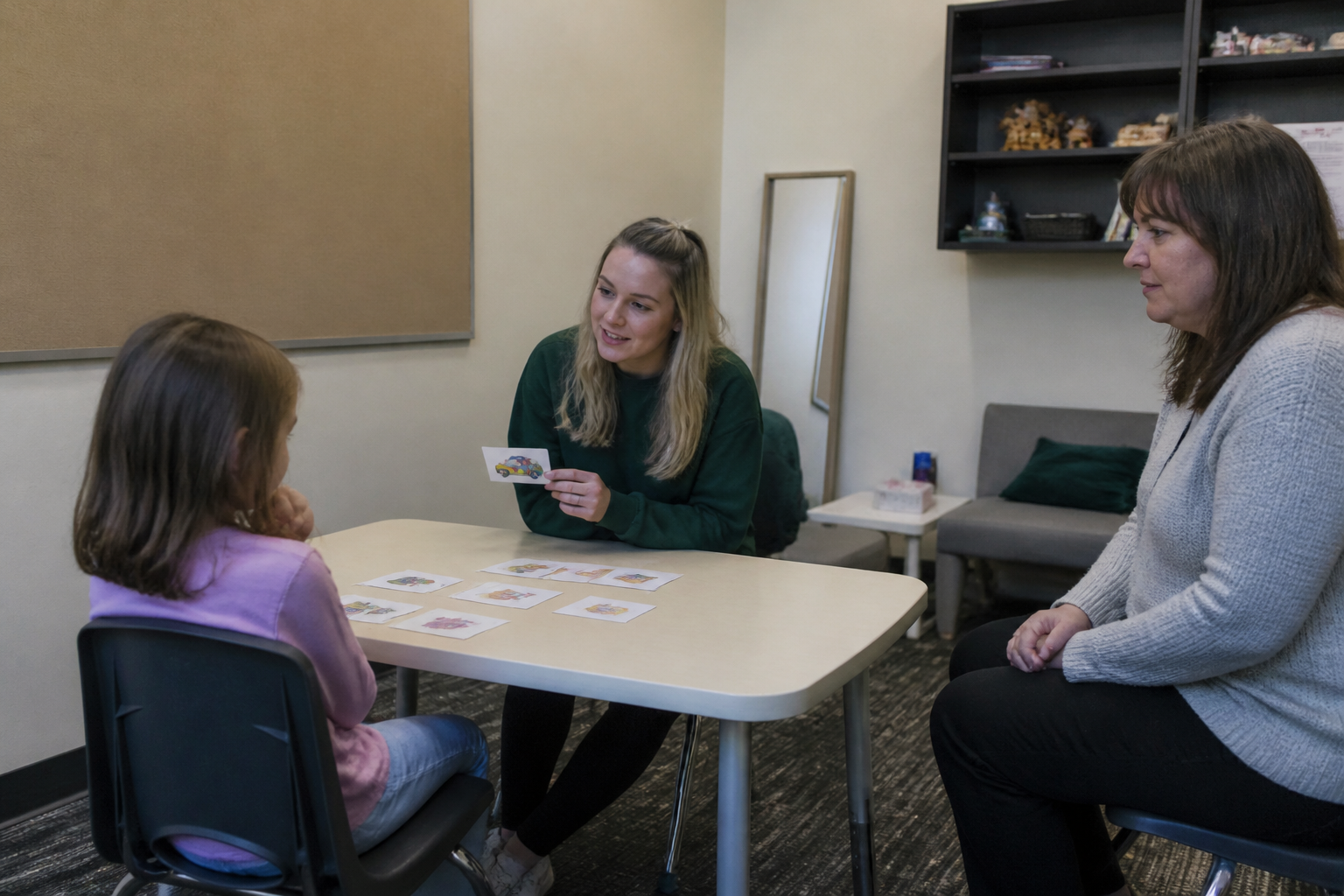
Three North Dakota schools award a bachelor's degree in speech pathology, and all three use the same name for the major. At the University of North Dakota, University of Mary and Minot State University the major is Communication Sciences and Disorders; Mary awards it as either a B.A. or a B.S.
Timing is the main constraint. Licensure as a speech-language pathologist in North Dakota requires a master's degree, so the bachelor's is a pre-professional step; choosing well means weighing tuition against early earnings, not prestige. The ranked list shows those trade-offs side by side.
Key Points
- Minot State University posts the lowest tuition and net price here.
- Sticker prices differ by over $13,000 yearly, but net prices are closer.
- North Dakota SLP licensure requires a master's; the bachelor's is pre-professional.
Best Bachelor's in Speech Pathology Schools in North Dakota
Three North Dakota schools award a bachelor's degree in speech pathology, most of them under a communication sciences and disorders name, and the best fit depends on cost, format and campus size rather than one clear winner. UND pairs a public research campus with an on-campus clinic, the University of Mary offers a private-school route that can finish in about 2.6 years or stretch into a 3+2 master's path, and Minot State pairs the lowest in-state tuition of the three with early clinical experience. Each school is listed below under the major name it uses.
University of North Dakota
#1Grand Forks, ND · ~$19,000/yr (est.)
Best for: Four-year students seeking on-campus clinic observation
The University of North Dakota is a public research university in Grand Forks, and its communication sciences and disorders major is a 120-credit, four-year program taught on campus. Students observe clients in UND's own Speech, Language & Hearing Clinic and can join CSD-themed study-abroad trips to New Zealand. The degree is built for students aiming at a speech-language pathology assistant role or at graduate study in speech-language pathology or audiology. Institution-wide, UND reports a graduation rate of about 60% and an average net price after aid of roughly $18,551.
- 120-credit Bachelor of Arts completed in four years on campus
- Coursework in phonetics, speech and hearing science, language development and audiology
- Client observation at UND's Speech, Language & Hearing Clinic
- CSD-themed study abroad trip to New Zealand
- Topics include craniofacial anomalies, neuroanatomy and school programs in CSD
- Prepares graduates for SLP assistant roles or graduate study in SLP or audiology
- Application deadlines: Aug. 15 for fall, Dec. 15 for spring, May 1 for summer
University of Mary
#2Bismarck, ND · ~$18,000/yr (est.)
Best for: Accelerated learners using year-round enrollment
The University of Mary is a private Catholic university in Bismarck that offers both a Bachelor of Arts and a Bachelor of Science in Communication Sciences and Disorders through the Saint Gianna School of Health Sciences. Coursework covers normal and disordered speech, language, voice, swallowing and hearing, plus assessment, prevention and intervention. Students can compress the bachelor's into about 2.6 years through the Year-Round Campus option or continue into a five-year 3+2 sequence that adds a Master of Science in Speech-Language Pathology. Institution-wide, UMary reports a graduation rate of about 67% and an average net price after aid of roughly $17,770.
- B.A. and B.S. options in Communication Sciences and Disorders
- Finish in about 2.6 years through the Year-Round Campus option
- Five-year 3+2 sequence adding the M.S. in Speech-Language Pathology
- Early Assurance to the SLP master's for strong incoming freshmen
- Coursework spans speech, language, voice, swallowing and hearing disorders
- Housed in the Saint Gianna School of Health Sciences
- Service-learning with Bismarck schools, adult learners and senior-living partners
Minot State University
#3Minot, ND · $13,000/yr (est. net price)
Best for: Cost-conscious students wanting early fieldwork
Minot State University is a public university in Minot whose Bachelor of Science in Communication Sciences and Disorders is a 120-credit, four-year on-campus program. Every student gains early and ongoing experience with people affected by communication disorders, and most graduates go on to advanced study in speech-language pathology, audiology, or speech and hearing science. A Freshman Admission Guarantee is available, and a student chapter of the National Student Speech Language Hearing Association gives majors a professional network from the start. Institution-wide, Minot State reports a graduation rate of about 45% and an average net price after aid of roughly $12,703.
- 120-credit Bachelor of Science completed in four years on campus
- Early and ongoing experience with people who have communication disorders
- Freshman Admission Guarantee available to incoming students
- Special consideration for entrance into graduate study
- Student chapter of the National Student Speech Language Hearing Association
- Support includes 1:1 tutoring, academic advising and career coaching
- Most graduates continue to graduate study in SLP, audiology or research
Cost & outcomes by school
Federal data for the highest-earning Speech Pathology programs, independent of the ranking above. Earnings are this field's bachelor's graduates four years after completing where the Scorecard reports them, else the school's undergraduate median.
| School | Net price / yr | Grad rate | Earnings | Debt | Grads/yr | Format |
|---|---|---|---|---|---|---|
| University of North Dakota ND | $18,551 | 61% | $56,218 | $22,057 | 22 | Campus |
| University of Mary ND | $17,770 | 67% | $55,357 | $24,000 | 12 | Campus |
| Minot State University ND | $12,703 | 45% | $51,759 | $19,609 | 18 | Campus |
Sources: U.S. Department of Education. Net price, graduation rate, earnings and debt: College Scorecard (earnings and debt for this field's bachelor's graduates where reported, else school-wide); graduates: IPEDS. A dash means no figure is reported.
Cost, debt & payoff
Median earnings of this field's bachelor's graduates (4 yrs after completing, else the school's undergraduate median) vs. their median federal loan debt · U.S. College Scorecard
Across these programs the median graduate earns about $55,357 and finishes with roughly $22,057 in debt — a ratio that clears a common rule of thumb (keep debt below first-year salary). Net price and debt vary widely school to school, so check the per-school figures in the table above before you shortlist.
Compare North Dakota Bachelor's Programs Side by Side
This table lines up cost, student outcomes and class size for each school's Communication Sciences and Disorders major, using 2024 IPEDS and College Scorecard figures from the U.S. Department of Education. Minot State University posts the lowest tuition and net price. The University of Mary has the highest graduation rate. The University of North Dakota sits between the two on cost and graduation rate.
| School | City | Sector | Major Name | In-State Tuition and Fees | Out-of-State Tuition and Fees | Average Net Price | Graduation Rate | First-Year Retention Rate | Student-to-Faculty Ratio | Median Debt at Graduation |
|---|---|---|---|---|---|---|---|---|---|---|
| University of North Dakota | Grand Forks | Public | Communication Sciences and Disorders | $10,951 | $15,570 | $18,551 | 60% | 84% | 17:1 | $22,057 |
| University of Mary | Bismarck | Private nonprofit | Communication Sciences and Disorders | $22,356 | $22,356 | $17,770 | 67% | 84% | 14:1 | $24,000 |
| Minot State University | Minot | Public | Communication Sciences and Disorders | $8,702 | $8,702 | $12,703 | 45% | 66% | 11:1 | $19,609 |
Online and Hybrid Bachelor's Options at North Dakota Schools
In North Dakota, every bachelor's program in this field on our list is campus-based. Can you get a bachelor's degree in speech pathology online in North Dakota? None of the schools on this page publishes an online or hybrid option for the bachelor's.
Delivery Format by School
- University of Mary (Bismarck): The Communication Sciences and Disorders program, offered as a B.A. or B.S., is campus-based. It runs on the university's Year-Round Campus schedule, which lets students finish the bachelor's in about 2.6 years. The program page does not describe any online or hybrid version of the major.
- University of North Dakota (Grand Forks): Our program data lists the Communication Sciences and Disorders bachelor's as a campus program. The program page does not advertise an online track.
- Minot State University (Minot): Our program data likewise lists the Communication Sciences and Disorders bachelor's as a campus program, and no online option is published.
University of Mary does promote online and evening bachelor's programs elsewhere in its catalog. That does not extend to the Communication Sciences and Disorders major; its own program page says nothing about an online version.
What Online Coursework Can and Cannot Replace
Lectures are the easy part of this field to move online. Hands-on work is harder. UND's program highlights client observation at its on-campus clinic, and Minot State says its students gain early clinical experience. Those in-person elements are what an online format would struggle to replace.
Before you commit to any school, confirm the current delivery format on its official program page or with the admissions office. Formats can change, and a school's general online offerings do not always include this major.
Admissions: GPA, Test Policy and Transfer Credit for North Dakota Bachelor's Programs
What GPA and ACT or SAT scores do you actually need to get into a speech pathology bachelor's program in North Dakota?
At each of these schools you apply to the university first, and every admissions office publishes its own first-year criteria. The selectivity numbers show how broad each bar is; anything else is worth confirming in writing before you apply.
University of North Dakota
UND admitted about 77% of applicants in fall 2024, measured across the whole institution rather than the major alone, so the bar is broad rather than narrow. GPA expectations, the testing policy, and the rules for how transfer and dual-credit coursework post to your record are set by the admissions office and posted on its site.
University of Mary
Mary's institution-wide admit rate sits close to UND's, at roughly 75%. As a private university, Mary sets its own application requirements and credit-transfer rules outside the North Dakota University System, so rely on its admissions page, not another school's numbers.
Minot State University
Minot State is the most selective of the three on this measure, admitting about 65% of applicants institution-wide. Its undergraduate materials describe a Freshman Admission Guarantee for students who meet published criteria; read that first, because it states the numbers.
Test policy and unanswered questions
Whether the ACT or SAT is required, optional, or not considered differs by school and can change from one application cycle to the next. Each admissions page states the current stance for the term you are applying to. Where a page is silent on a point, treat it as unanswered and call the office instead of assuming a policy.
One tip for transfer students
Admission to the university is not always the same as admission to the major. Before you enroll, email the communication sciences and disorders department and ask, in writing, which of your completed courses will count toward its prerequisites and which will transfer only as elective credit. Get the answer from the department, not just the registrar.
Cost of a Bachelor's Degree in Speech Pathology in North Dakota
The sticker price of a bachelor's degree in speech pathology in North Dakota varies by more than $13,000 a year between the least and most expensive option, but the gap families actually pay after aid is far narrower. Compare net price, not list price; that is the figure that actually reflects what families pay.
Tuition and Net Price, School by School
- Minot State University: about $8,700 a year in in-state tuition and fees, with an average net price near $12,700.
- University of North Dakota: about $11,000 in tuition and fees; average net price near $18,600.
- University of Mary: about $22,400 in tuition and fees; average net price near $17,800.
Net price is an institution-wide average for undergraduates who receive federal aid, not a figure calculated for speech pathology majors, so treat it as an approximation that shifts each year.
Need and borrowing differ too. About 48% of Minot State undergraduates receive Pell Grants, compared with roughly 35% at University of Mary and 36% at UND. Median federal debt among graduates runs near $19,600 at Minot State, $22,100 at UND and $24,000 at University of Mary, again institution-wide.
North Dakota Aid and Minnesota Reciprocity
The two state-level programs to research first are the North Dakota State Grant and the Dakota Promise scholarship. Award amounts and eligibility rules are set by the state and revised periodically, so confirm current terms with each campus financial aid office before building a budget. Minnesota residents should also ask about the Minnesota-North Dakota reciprocity agreement, which can bring tuition at a North Dakota public campus closer to what they would pay at home. For departmental awards, ask the communication sciences and disorders department and the financial aid office what is available for speech pathology majors in the year you enroll.
How Much Does It Cost Overall?
Plan on roughly $8,700 to $22,400 a year in tuition and fees at today's rates, or about $35,000 to $90,000 across four years before aid. After grants and scholarships, average net prices land between about $12,700 and $18,600, or roughly $51,000 to $74,000 over four years.
Apply for aid early. File the FAFSA as soon as it opens, meet every campus priority deadline, and send the same application to state programs. Aid budgets are finite, and the families who apply first usually see the best packages.
Related Articles
North Dakota Speech-Language Pathology Licensure at a Glance
Careers in North Dakota With a Bachelor's in Speech Pathology
A bachelor's degree gets you into the field quickly, but the speech-language pathologist title stays out of reach until you finish graduate study. Licensure as an SLP in North Dakota requires a master's degree, so the bachelor's in communication sciences and disorders is the pre-professional step. Here is what it qualifies you to do in the meantime.
What You Can Do with the Degree
- Speech-language pathology assistant (SLPA): Licensed work in clinics and health-care settings under a supervising SLP.
- School paraprofessional: Support students on a school SLP's caseload as a speech-language pathology paraprofessional.
- Early intervention or clinic support: Aide and support roles with young children and families, often a good way to test the field.
- Graduate study: Applying to an ASHA-accredited master's program in speech-language pathology, the route to full licensure.
The bachelor's programs at the University of North Dakota, the University of Mary and Minot State University all carry the Communication Sciences and Disorders name, which matches the coursework the state looks for.
How SLPA Credentialing Works
The North Dakota State Board of Examiners on Audiology & Speech-Language Pathology issues the SLPA license. Applicants need good moral character, a board-recognized degree, at least 100 supervised clinical hours or fieldwork, and any board-required exam within one year of applying.1 A bachelor's in speech-language pathology or communication disorders is one qualifying route. A two-year SLPA program is another, following 2025 House Bill 10492, as is a different bachelor's plus specified communication-disorders coursework. That coursework covers areas such as phonetics, speech sound disorders, language development and the anatomy of speech and hearing.
School jobs run on a separate track. ASHA lists North Dakota's school title as speech-language pathology paraprofessional, which requires an associate's or bachelor's degree.3 The Department of Public Instruction accepts paraprofessional certificate applications online, including for speech-language pathology, while the Education Standards and Practices Board handles educator licenses and endorsements. Supervision limits also differ: health-care SLPs need three of the last five years of practice and may supervise up to three SLPAs, while school supervisors need one year and may oversee up to two paraprofessionals.3
Demand in Schools
The Department of Public Instruction's 2026 critical teacher shortage list includes speech-language pathologists. Categories with 10 or more unfilled positions qualified. The announcement does not give vacancy counts or say which districts are hit hardest, so treat rural demand as likely but unconfirmed. Ask each school's advising office about local placement before you commit.
What Speech-Language Pathologists Earn in North Dakota
This is the wage for licensed speech-language pathologists, a role that requires a master's degree. It is not what graduates earn with a bachelor's degree alone.
How We Ranked These Schools
A ranking can rest on a single headline number or on several measures read together. These rankings take the second approach, weighing cost, outcomes, selectivity, format and pathway features together.
What Goes Into the Order
- Cost and net price: published tuition and the average net price after federal, state and institutional aid.
- Outcomes: graduation and retention rates, plus early earnings for graduates.
- Selectivity: acceptance rates and the academic profile of admitted students.
- Format flexibility: whether a school offers online or hybrid coursework for the bachelor's degree in speech pathology.
- Pathway features: advising, observation or clinical exposure, and how well the curriculum sets up the master's degree that North Dakota licensure eventually requires.
Where the Numbers Come From
Figures come from 2024 IPEDS / College Scorecard.1 The ranking covers bachelor's programs only. Much of the data is reported at the institution level rather than the program level, so those figures are labeled institution-wide wherever they appear.
What the Ranking Cannot Tell You
Net price is an average across students, not a quote. Your own cost shifts with residency, scholarships and how long you take to finish. Program-level data is not published for every school, so some profiles carry fewer numbers than others; a missing figure is not a verdict on the school.
Verify Before You Apply
Treat this as a starting filter, then confirm tuition, admission requirements and deadlines directly on each school's website. Those pages change faster than any ranking can follow.
Compare Speech Pathology programs on the data that matters
Explore more Communications & Media majors or browse every field of study.
All Communications & Media programs Browse every field of study