Best Professional Writing Degree Programs
Compare 170+ accredited Professional Writing programs at 160+ colleges, with net price after aid, graduation rates, earnings and debt from IPEDS and the U.S. College Scorecard.

A bachelor's degree in professional writing can mean a full major at one school and a five-course track inside English at another, so program structure matters more than the diploma title. The most common title is the Bachelor of Arts (B.A.) in Professional Writing, which prepares graduates for clear, purpose-driven workplace writing: technical documentation, digital content, and editing. Graduate programs are a separate subject.
Employers hiring for these roles weigh writing samples and internship experience heavily. A program that builds both into the curriculum, as Purdue, San Jose State, and NC State do, gives graduates a portfolio before they apply.
Key Points
- University of Rhode Island reports the strongest early-career pay among ranked schools.
- Penn's accelerated, largely asynchronous 8-week courses are the lone online option here.
- Rankings weigh net price, completion, and earnings from College Scorecard and IPEDS.
Top 10 Bachelor's Programs in Professional Writing, Ranked
These 10 schools rose to the top when affordability, completion, and graduate earnings were weighed together. Every entry below awards a bachelor's degree, and the range is wide: a fully online certificate pathway at an Ivy League university, long-established technical writing majors feeding Silicon Valley employers, and a small rigorous program inside a major research university. The factors behind the order are explained in the methodology section below.
Brigham Young University
#1Provo, UT · $15,000 – $20,000/yr (est.)
Best for: Writers seeking a customizable campus track
Brigham Young University runs its professional writing offering as a track inside the English major, so students pair workplace writing courses with a broader literary education. The track requires five courses (15 credits) and lets students build a customized path from professional writing, rhetorical foundations, and special topics such as visual and digital communication. A capstone portfolio is required, and graduates move into technical writing, editing, law, education, and business. Provo's campus setting and the university's overall cost profile make it a notable value among the private schools on this list.
- Track requires five courses, 15 credits total
- Capstone portfolio required for graduation
- Build a custom path from professional writing and rhetoric courses
- Special topics include visual communication and digital communication
- Internships and electives let students target specific careers
- Prepares graduates for technical writing, editing, law, and business
University of Pennsylvania
#2Philadelphia, PA · $29,000/yr (est. net price)
Best for: Working adults adding a writing certificate
The University of Pennsylvania delivers professional writing as a four-course block inside its Bachelor of Applied Arts and Sciences, an accelerated online degree built for adults. Students start with Fundamentals of Professional Writing and can stack two more courses for an advanced certificate, all on an eight-week schedule that is largely asynchronous with optional live sessions. Coursework leans on business writing, grammar, concision, and scenario-based practice. It suits readers who want a recognizable name and a compact, work-friendly credential rather than a standalone writing major.
- Four-course block inside the online BAAS degree
- Accelerated eight-week course schedule
- Largely asynchronous with optional synchronous sessions
- Earn a Certificate in Professional Writing with the BAAS
- Two additional courses earn an Advanced Certificate
- Focus on business writing, grammar, concision, and clarity
- Scenario-based learning; start with Fundamentals of Professional Writing
Purdue University
#3West Lafayette, IN · ~$15,000/yr (est.)
Best for: Science-minded writers targeting technical fields
Purdue University has taught professional writing for more than 30 years, and the major sits inside a science and technology university that shapes what students write about: medical and health writing, usability, visual rhetoric, and digital communication all appear in the curriculum. Undergraduates choose the major or a minor, add a related minor, and can pursue a three-year accelerated pathway. Program graduates reported median earnings of about $25,084 one year after finishing and about $49,918 four years out. Small classes and a nationwide alumni network support the internship pipeline.
- Major or minor available on the West Lafayette campus
- More than 30 years of established professional writing coursework
- Requires a related minor alongside the major
- Three-year accelerated Liberal Arts pathway for eligible students
- Coursework in medical, health, and science writing, plus usability
- Internships and a nationwide alumni network
- Small student-to-faculty ratio and scholarship support
San Jose State University
#4San Jose, CA · ~$14,000/yr (est.)
San Jose State University places its professional and technical writing concentration inside the English major, and the location does much of the work: paid internships with Bay Area tech employers and graduates working at nearly every major firm in the region. The curriculum covers business reports, promotional materials, manuals, and web content, with attention to audience and the full publication process. The concentration has run for over 30 years and carries a strong job-placement record in one of the country's densest technical communication markets.
- Paid internships coordinated with local tech employers
- 30-year program history with a strong job-placement record
- Graduates work at nearly every major Bay Area tech firm
- Coursework covers business reports, manuals, and web content
- Trains students across every stage of the publication process
Virginia Polytechnic Institute and State University
#5Blacksburg, VA · $25,000/yr (est. net price)
Virginia Tech's professional and technical writing major is a 120-credit Bachelor of Arts in English that mixes document design, technical editing, user documentation, and grant writing with intercultural communication and science writing. Students can add a minor, a second major, or a cognate, and the university's Pathways general education curriculum fills out the degree. Internships, study abroad, and student organizations give the program a practical edge. Graduates head into technology, health care, and government roles where clear communication is the job.
- 120 total credit hours
- Add a minor, a second major, or a cognate
- Includes Virginia Tech's Pathways general education curriculum
- Internships, study abroad, and student organizations
- Courses in document design, technical editing, and grant writing
- Also covers user documentation, science writing, and intercultural communication
North Carolina State University at Raleigh
#6Raleigh, NC · $9,000 – $33,000/yr (est.)
North Carolina State University houses rhetoric and professional writing as a concentration within the English major, with a 12-hour core in literature and rhetoric followed by 27 hours of concentration coursework. A credit-bearing internship is required, and courses cover editing, technical communication, and document design. Graduates move into news media, business and technical communication, publishing, and writing, and the program also prepares students for graduate study in rhetoric, composition, or law. The 120-credit degree requires a 2.0 GPA minimum.
- 120 total credit hours with a 2.0 GPA minimum
- 12-hour core in literature and rhetoric
- 27 hours of concentration coursework
- Credit-bearing internship required
- Covers editing, technical communication, and document design
- Prepares students for graduate study in rhetoric, composition, or law
University of Oklahoma
#7Norman, OK · $15,000 – $20,000/yr (est.)
The University of Oklahoma's Gaylord College runs a campus professional writing bachelor's that blends creative and practical craft: fiction and nonfiction, narrative development, editing, and the business of publishing. Faculty include bestselling novelists, and the alumni network funds internships and career support. Students work in broadcast studios and multimedia labs, can study abroad in the UK and Puerto Rico, and join the Professional Writing Student Association. A capstone in the business of professional writing closes the degree.
- Campus program inside the Gaylord College
- Capstone in the business of professional writing
- Faculty include bestselling novelists
- Alumni network awards internships and career support
- Study abroad in the UK and Puerto Rico
- Professional Writing Student Association on campus
- Minor options in fields such as Spanish or Film Studies
San Diego State University
#8San Diego, CA · $15,000/yr (est. net price)
San Diego State University offers professional writing as a specialization inside its Rhetoric and Writing Studies B.A., the only rhetoric degree program in the California State University system. The major needs at least 30 units: five core courses and 15 units of upper-division electives, with a writing internship among the core requirements. Courses take up digital and visual rhetoric, technical and professional communication, and cultural and marginalized writing practices. Small classes and pairings with business, political science, philosophy, and English give the degree range.
- At least 30 units in the major
- Five core courses totaling 15 units
- 15 units of upper-division electives
- Writing internship among the core requirements
- Only rhetoric degree program in the California State University system
- Small classes; pairs well with business, political science, or English
- Explores cultural and marginalized rhetorics
Carnegie Mellon University
#9Pittsburgh, PA · ~$32,000/yr (est.)
Carnegie Mellon University treats professional writing as a discipline of rhetoric, argument, and design, and students can take it as a primary major, an additional major, or a minor. The curriculum covers plain language, genre analysis, and document design, with hands-on projects, a required Professional Seminar for alumni networking, and internship or research experience. Program graduates reported median earnings of about $71,205 four years after finishing, the highest four-year figure among the programs here that publish one, and an accelerated master's option adds only one year.
- Take it as a primary major, an additional major, or a minor
- Required Professional Seminar course for alumni networking
- Internship or research experience built into the program
- Coursework in plain language, genre analysis, and document design
- Accelerated M.A. in Professional Writing adds one year
- Personal advising support for students
University of Mississippi
#10University, MS · $10,000 – $15,000/yr (est.)
The University of Mississippi awards a Bachelor of Arts in Rhetoric, Writing and Speech Communication and lets students add a professional writing emphasis. The emphasis adds three courses, nine hours, drawn from 14 writing courses that include technical writing, document design, editing and proofreading, grant writing, and writing for digital media. The 120-credit degree requires 33 hours in the major, a C or better in every speech and writing course counted, and 12 residency hours. Students can complete both emphases, which makes the degree easy to pair with a second major.
- 120 total credit hours, 33 in the major
- Emphasis adds three courses, nine hours
- Choose from 14 writing courses for the emphasis
- Options include technical writing, document design, and grant writing
- Also editing and proofreading and writing for digital media
- Grade of C or better required in all major speech and writing courses
- 12 major hours must be earned in residence
- Students may complete both emphases
Cost & outcomes by school
Federal data for the highest-earning Professional Writing programs, independent of the ranking above. Earnings are this field's bachelor's graduates four years after completing where the Scorecard reports them, else the school's undergraduate median.
| School | Net price / yr | Grad rate | Earnings | Debt | Grads/yr | Format |
|---|---|---|---|---|---|---|
| University of Pennsylvania PA | $28,699 | 97% | $111,371 | $15,715 | — | Online |
| Fairfield University CT | $48,095 | 84% | $88,794 | $26,000 | — | Campus |
| New Jersey Institute of Technology NJ | $16,504 | 73% | $84,276 | $21,000 | 8 | Campus |
| Missouri University of Science and Technology MO | $16,298 | 64% | $82,957 | $23,250 | 6 | Campus |
| Virginia Polytechnic Institute and State University VA | $24,953 | 86% | $81,698 | $21,500 | — | Campus |
| San Jose State University CA | $13,760 | 69% | $78,988 | $15,000 | — | Campus |
| Excelsior University NY | — | — | $78,493 | $13,769 | 3 | Online |
| Butler University IN | $36,041 | 80% | $77,235 | $26,000 | 1 | Campus |
| Brigham Young University UT | $15,564 | 81% | $75,790 | $11,069 | — | Campus |
| Immaculata University PA | $24,258 | 71% | $75,701 | $27,000 | 3 | Campus |
| Elon University NC | $41,555 | 84% | $74,545 | $20,500 | 5 | Campus |
| University of St Thomas MN | $29,155 | 76% | $73,739 | $23,250 | 10 | Campus |
Sources: U.S. Department of Education. Net price, graduation rate, earnings and debt: College Scorecard (earnings and debt for this field's bachelor's graduates where reported, else school-wide); graduates: IPEDS. A dash means no figure is reported.
Cost, debt & payoff
Median earnings of this field's bachelor's graduates (4 yrs after completing, else the school's undergraduate median) vs. their median federal loan debt · U.S. College Scorecard
Across these programs the median graduate earns about $53,874 and finishes with roughly $23,250 in debt — a ratio that clears a common rule of thumb (keep debt below first-year salary). Net price and debt vary widely school to school, so check the per-school figures in the table above before you shortlist.
Behind the List: The Cost, Completion, and Earnings Signals Weighed
The figures behind this list come from the College Scorecard and IPEDS, both published by the U.S. Department of Education. Five signals did the work:
- Net price after aid: what a typical student pays for a year after grant and scholarship aid.
- Graduation rate: the proportion of students who complete their studies at the institution.
- Earnings after completion: median pay for graduates of the program.
- Federal debt at completion: how much students typically borrowed.
- Completions: how many students actually finish the major.
Read together, they show whether a program is affordable, whether students stick with it, and whether graduates earn enough to justify the debt they take on.
Why Net Price Beats Sticker Tuition
Sticker tuition is a list price few families pay. Net price after aid reflects what a typical first-year student actually pays, so a private university with a high published price can land near a public one once grants are counted.
Where the Numbers Stop Short
Two limits shape these numbers. Graduation rates describe the whole institution, not the writing major, so a strong program inside a large university inherits that school's overall rate. Some small programs do not publish earnings for their graduates, and those gaps stayed gaps rather than being filled with estimates.
Only bachelor's-level programs were eligible. Online, on-campus, and hybrid formats competed on the same scale, so the delivery method neither helped nor hurt a program's standing.
Online, On-Campus, or Hybrid: Format Options Among the Ranked Schools
Penn's Professional Writing course block runs on an accelerated 8-week schedule that is largely asynchronous, with optional live sessions. It is the only online listing among the ranked schools. BYU, Purdue, San Jose State, Virginia Tech, NC State, Oklahoma, San Diego State, Carnegie Mellon, and Ole Miss are campus-based. Penn's offering is a course block inside a broader degree, not a standalone major.
Other Online Routes Worth Knowing
A few schools outside the ranking run their professional writing degrees fully online, and they are worth a look:
- Marshall University: its B.A. in Professional Writing is offered fully online.
- Southwest Minnesota State: the B.A. in Professional Writing and Communication (120 credits) is available online and on campus, in 16-week terms. The next start is January 11, 2027, with an application deadline of January 1, 2027.1
- Old Dominion: the Interdisciplinary Studies degree with a Professional Writing major is fully online. Degree completers may transfer up to 90 credits, must earn at least 30 at ODU, and take accelerated 8-week courses with no scheduled meetings.2
- Abraham Baldwin: announced on August 13, 2026 that its B.S. in Writing and Communication can be finished fully online, with the same curriculum and faculty as the campus degree.3 Applications are open.
Trade-Offs
Online formats suit working adults and transfer students, especially asynchronous, completion-friendly designs like Old Dominion's. Campus programs tend to offer what builds a portfolio: in-person internships, student publications, and writing centers. Purdue, San Jose State, and San Diego State all highlight internship opportunities.
Check Status Before You Apply
Admissions can close. Oregon Tech's B.S. in Professional Writing at Klamath Falls now states that it is no longer accepting applications, and its page does not say whether enrolled students can finish or whether the closure is permanent. Format and status can change between catalog years, so verify both on the program's current page before you apply.
Related Articles
What You'll Study in a Bachelor's Degree in Professional Writing
A professional writing major is not a literature degree with a workshop bolted on. It is a trade program for language: editing, document design, and writing for audiences who need something done.
The Core Courses Most Programs Share
Expect introductory professional or technical writing, a seminar on writing as a profession, rhetoric and argument, and a style and editing course. Carnegie Mellon requires Introduction to Professional and Technical Writing, Professional Seminar, Argument, and Style; Oklahoma State adds Advanced Composition, Professional Writing Theory, Visual Rhetoric and Design, and Writing for the Public.1 Grant and proposal writing usually appears as an elective aimed at nonprofit and public-sector work.
Specializations That Point to a Job
- Technical and editing: documentation and production editing for software, engineering, and manufacturing.
- Medical and science: regulated content for hospitals and device makers.
- Digital and web: content strategy and UX copy.
- Public and nonprofit: grants, policy briefs, and donor communications.
Western Connecticut State University splits its major into Creative Writing, Business and Technical Writing, and Journalism and Public Relations2; Spalding University offers Editing and Technical Writing or Business Writing.
The Portfolio, Internship, and Capstone
Barry University requires a portfolio outright,3 and most programs build one across coursework. Internships vary most: 3 required hours at Oklahoma State, 3 to 6 credits at Spalding, and conditional at Barry, which asks for 90 or more completed hours, a 2.50 overall GPA, and chair and dean approval.3 Employers read the portfolio before the transcript.
How Large the Major Is
Degree requirements cluster near 120 credits, but the major itself runs from roughly 30 to 51. Western Connecticut packs 51 semester hours into a 120-hour degree.2 The University of Rhode Island requires 120 credits with 30 to 51 in the major4, and Barry pairs a 12-credit core with at least 21 elective credits.3
B.A., B.S., or English Major With a Writing Track: Side by Side
Professional writing sits between neighboring fields: communications leans toward media and strategy, technical communication toward documentation for products and systems, and journalism toward reporting. Employers care less about the credential letters than about your specialization and your portfolio. The comparison below draws on catalog language from Oklahoma State, Carnegie Mellon, Texas A&M University-San Antonio, and NC State, so confirm details with any school you are considering.
| Factor | B.A. in Professional Writing | B.S. in Professional or Technical Writing | English B.A. With a Writing Track |
|---|---|---|---|
| Math, science, or technical requirements | Technical writing is a listed course, but the catalog reviewed shows no separate math or lab science requirement | Not documented. The catalogs reviewed did not show required math or lab science, so check each school | Technology-oriented electives, such as computer documentation design and technologies for texts |
| Foreign language requirement | 9 college credit hours in one language (including 3 at the 2000 level) or accepted equivalent proficiency | One catalog accepts two years of high school study of one language with passing grades | One 3-credit language other than English, preferably in a single language |
| Typical core focus | Professional writing and rhetoric, with technical writing built in | Usually a technical emphasis, though the catalogs reviewed did not outline a specific U.S. curriculum | Literature core plus rhetoric, technical document design and editing, and analysis of scientific writing |
| Common career targets | Content writing, editing, communications, and technical writing roles | Technical writing and documentation roles in software, engineering, and health fields | Editing, publishing, communications, and technical writing, with graduate study a common option |
| Portfolio and internship expectations | 3-credit professional writing internship listed, with portfolios built through on- and off-campus writing work | No B.S.-specific internship requirement found in the catalogs reviewed | Internship is a selectable 3-credit course, and portfolio work depends on the electives you choose |
Highest Early-Career Earnings Among Ranked Programs
Among the schools ranked here, the University of Rhode Island reports the strongest early-career pay for professional writing graduates.
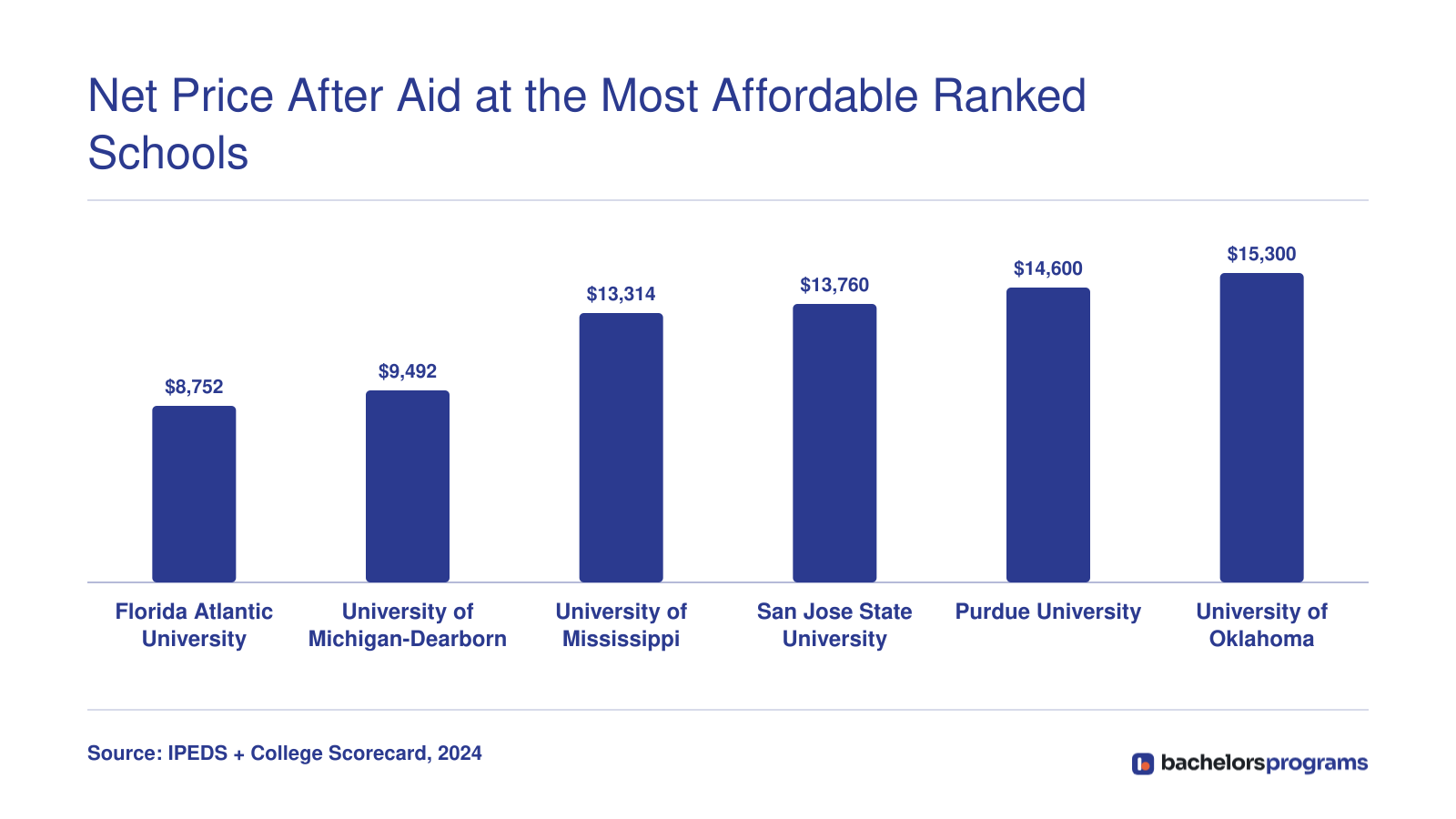
Net Price After Aid at the Most Affordable Ranked Schools
Average net price is what students pay per year after grants and scholarships, and it gives a more realistic picture of cost than sticker tuition. These figures are institution-wide averages for all undergraduates, not the professional writing major alone, so your own cost will depend on family income, residency, and the aid package you receive. Every school at the low end of this list is a public university, which helps explain why Florida Atlantic, Michigan-Dearborn, and the others come in under $16,000 a year after aid.
What Technical Writers Earn Nationally
Technical writing is one of the clearest career paths for professional writing graduates, and national wage data shows it pays well.
Professional Writing programs by state
Your Professional Writing Degree Questions, Answered
These answers draw on the programs and figures covered above. Costs and transfer rules change, so confirm current details with each school before you apply.
What are the best professional writing degree programs online?
What is the best college for professional writing?
How much does a professional writing degree cost?
Is a professional writing degree worth it?
What is the difference between a BA and BS in professional writing?
What can you do with a bachelor's degree in professional writing?
How long does a bachelor's in professional writing take, and can transfer credits shorten it?
Compare Professional Writing programs on the data that matters
Explore more Communications & Media majors or browse every field of study.
All Communications & Media programs Browse every field of study