Best Healthcare Administration Schools in Oklahoma
Compare 10 accredited Healthcare Administration programs in Oklahoma at 8 colleges, with net price after aid, graduation rates, earnings and debt from IPEDS and the U.S. College Scorecard.
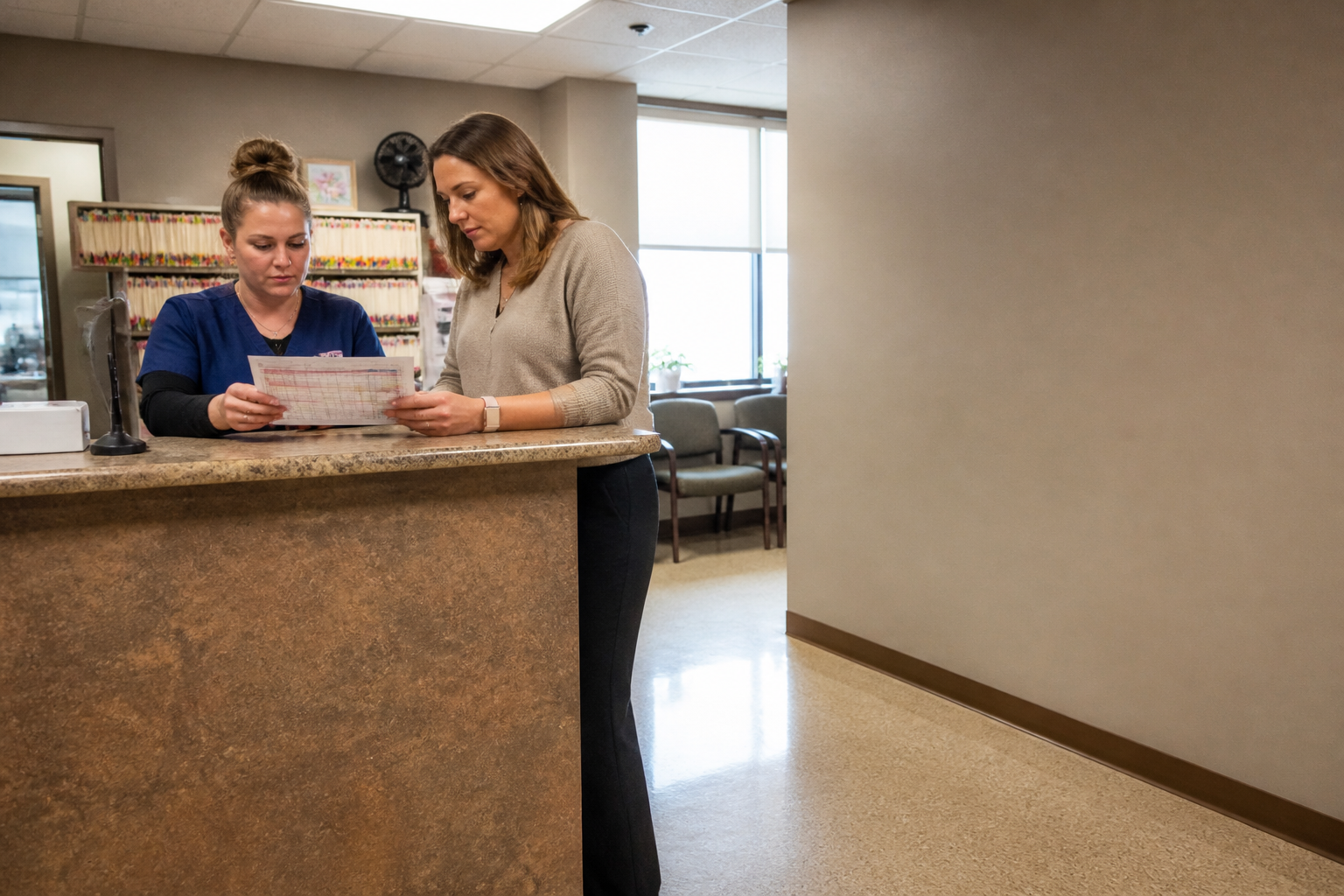
A bachelor's degree in healthcare administration in Oklahoma comes in two shapes: a public regional campus charging a net price near $11,500 a year, or a private university at more than twice that. The credential is usually the same, a Bachelor of Science (B.S.) in Healthcare Administration.
Delivery options mirror that split: accelerated online sequences for working adults, or traditional campus degrees with a supervised practicum and a long-term care track.
Medical and health services managers in Oklahoma earned a median of $101,270 a year in May 2025, and employers read transcripts for finance, compliance, and quality coursework, not the name on the diploma.
Key Points
- Langston University has the lowest net price here, at $11,504 a year.
- Oklahoma health services managers earned a $101,270 median in May 2025.
- Running an Oklahoma nursing home requires a state administrator license.
Best Bachelor's in Healthcare Administration Schools in Oklahoma, Ranked
Oklahoma's bachelor's programs in healthcare administration range from a flagship online degree built for returning adults to a long-term care track with national accreditation in Weatherford. Some are accelerated and transfer-friendly; others are traditional campus degrees with a supervised practicum. Here is how they compare.
University of Oklahoma
#1Norman, OK · $15,000 – $20,000/yr (est.)
Best for: Adult learners returning with existing college credit
The state's flagship public university, in Norman, with a healthcare management degree designed for adults who already hold about two years of college credit. Coursework covers healthcare finance, ethics and law, operations, and program evaluation, and the full degree can be completed online. About 75% of students here graduate within six years, the strongest completion rate among the Oklahoma schools on this list.
- Online Bachelor of Arts in healthcare management, not a B.S.
- Requires at least 60 prior college credit hours
- Applicants must be 25 or five years past high school
- 120 credit hours, with a minimum of 30 taken at OU
- An associate degree waives general education requirements
- Prior learning assessment accepted up to 15 hours
- 2.0 GPA to graduate, with a C or higher in every degree course
Oklahoma State University
#2Stillwater, OK · ~$17,000/yr (est.)
Best for: Tulsa-area students blending campus and online
A land-grant university in Stillwater with a health care administration degree that students can finish online, at OSU-Tulsa, or through a mix of Stillwater classes and online work. It is aimed at working adults and transfer students, and the coursework centers on operations, finance, compliance, and personnel management. OSU's expanding Tulsa health sciences presence gives students a link to the state's medical sector, and about 68% of students here graduate within six years.
- Bachelor of Professional Studies, not a B.S., in health care administration
- Finish online, at OSU-Tulsa, or with two years in Stillwater
- Built for working adults, transfer students, and traditional undergraduates
- Covers operations, finance, compliance, and personnel management
- Leads to roles such as hospital administrator or health information manager
Southern Nazarene University
#3Bethany, OK · ~$22,000/yr (est.)
Best for: Faith-based learners in accelerated online blocks
A private Christian university in Bethany, just outside Oklahoma City, whose online healthcare administration bachelor's degree blends business and clinical coursework with a Christian perspective. Classes run asynchronously in five-week blocks with a required practicum, a structure built for students working full time. About half of students here graduate within six years.
- Online B.S. delivered asynchronously in five-week blocks
- Up to 30 transfer or prior learning credits accepted
- Finish in as little as 18 months
- Required practicum with 60 clinical hours
- Rolling admissions with two start dates each year
- Books and materials shipped to students
- Dedicated student success advisor
Southwestern Oklahoma State University
#4Weatherford, OK · ~$14,000/yr (est.)
A public regional university in Weatherford with the most distinctive healthcare administration offering in the state: a traditional track and a long-term care track, both anchored by a 1,000-hour administrator-in-training practicum. The long-term care track is accredited by the National Long-Term Care Administrators Board and prepares graduates for Oklahoma's licensing exam. About 40% of students here graduate within six years.
- Two tracks: traditional and long-term care
- 1,000-hour administrator-in-training practicum
- Long-term care track accredited by the National Long-Term Care Administrators Board
- Prepares students for the Oklahoma long-term care licensing exam
- Fully online coursework
- Median $41,575 one year after graduation, $50,716 four years after
Oral Roberts University
#5Tulsa, OK · ~$25,000/yr (est.)
A private Christian university in Tulsa whose online healthcare administration bachelor's degree pairs clinical operations topics with core business fundamentals. The 120-credit program runs year-round on a mobile-friendly platform, and assigned success coaches support students from enrollment through graduation. About 57% of students here graduate within six years.
- 100% online, 120 total credit hours
- Can be finished in as little as 45 months
- Year-round terms with a mobile-friendly platform
- Coursework includes emergency and disaster management and quality improvement
- Assigned success coaches from start to finish
Mid-America Christian University
#6Oklahoma City, OK · ~$17,000/yr (est.)
A private Christian university in Oklahoma City offering a fully online bachelor's degree in healthcare management and ethics that pairs business courses with ethics coursework grounded in Christian principles. Classes are accelerated, credit for prior learning is accepted, and financial aid is available. About 44% of students here graduate within six years.
- Fully online, 120 total credit hours
- 45 credits in the major core plus a capstone
- Coursework includes healthcare law, economics, and information systems
- Median $47,781 one year after graduation, $70,349 five years after
- Credit for prior learning accepted
Langston University
#7Langston, OK · ~$12,000/yr (est.)
Oklahoma's historically Black university, with healthcare administration coursework now offered at its Langston, Tulsa, and Oklahoma City locations. The Tulsa campus added healthcare administration courses for the 2025-26 year, giving students a public in-state option without relocating to Langston. About 17% of students here graduate within six years.
- Campus program offered in Langston, Tulsa, and Oklahoma City
- Tulsa campus added healthcare administration courses for 2025-26
- Introductory courses include healthcare administration and gerontology
- One of roughly 40 bachelor's degree programs at the university
Northeastern State University
#8Tahlequah, OK · ~$13,000/yr (est.)
A public regional university in Tahlequah that approaches the field through business: a Bachelor of Business Administration in Health Organizations Administration. The degree is offered fully online with three concentration options, and a capstone and practicum give students applied experience before they finish. About 35% of students here graduate within six years.
- Online B.B.A. with a healthcare administration concentration
- Coursework in healthcare finance, quality management, and public health
- Capstone and practicum required
- Blends health information systems with information technology fundamentals
- One of three concentration options in the major
- Includes clinical administrator training and certification hours
- Focus on patient personal care and long-term care operations
Cost & outcomes by school
Federal data for the highest-earning Healthcare Administration programs, independent of the ranking above. Earnings are this field's bachelor's graduates four years after completing where the Scorecard reports them, else the school's undergraduate median.
| School | Net price / yr | Grad rate | Earnings | Debt | Grads/yr | Format |
|---|---|---|---|---|---|---|
| University of Oklahoma OK | $15,300 | 75% | $63,126 | $20,654 | 6 | Online |
| Oklahoma State University OK | $17,447 | 68% | $57,413 | $20,500 | — | Online |
| Southern Nazarene University OK | $22,084 | 51% | $54,951 | $21,900 | 9 | Online |
| Southwestern Oklahoma State University OK | $14,459 | 40% | $50,716 | $22,712 | 15 | Online |
| Oral Roberts University OK | $25,365 | 57% | $46,885 | $27,000 | 2 | Online |
| Mid-America Christian University OK | $16,692 | 44% | $46,116 | $29,500 | 14 | Online |
| Northeastern State University OK | $12,710 | 35% | $45,379 | $17,367 | — | Online |
| Langston University OK | $11,504 | 17% | $33,261 | $26,000 | 3 | Campus |
Sources: U.S. Department of Education. Net price, graduation rate, earnings and debt: College Scorecard (earnings and debt for this field's bachelor's graduates where reported, else school-wide); graduates: IPEDS. A dash means no figure is reported.
Cost, debt & payoff
Median earnings of this field's bachelor's graduates (4 yrs after completing, else the school's undergraduate median) vs. their median federal loan debt · U.S. College Scorecard
Across these programs the median graduate earns about $46,501 and finishes with roughly $21,277 in debt — a ratio that clears a common rule of thumb (keep debt below first-year salary). Net price and debt vary widely school to school, so check the per-school figures in the table above before you shortlist.
How We Ranked Oklahoma Bachelor's Programs
Federal data now lets students compare cost and outcomes across colleges, but most of those figures still describe a whole institution rather than a single major. That gap shaped how we built this list of Oklahoma schools offering a bachelor's degree in healthcare administration.
What We Weighed
- Cost: Average net price, meaning what students actually pay after grants and scholarships.
- Outcomes: Graduate earnings after leaving school, where federal data reports them.
- Completion: The share of students who finish their bachelor's degree.
- Format flexibility: Whether a program runs on campus, online, or both.
- Accreditation: Institutional accreditation from a recognized accreditor, which affects federal aid eligibility and credit transfer.
Where the Numbers Come From
Figures come from federal sources. Graduation rate and net price are institution-wide, not specific to the healthcare administration major. Net price is an average for students who receive federal financial aid, not a quote for any one student. Only schools based in Oklahoma with a bachelor's program in this field appear, whether delivered on campus or online.
What a Ranking Can't Tell You
No ranking can predict your own aid package. Family income, transfer credits, and institutional scholarships can push your price well above or below the average. Treat the ranking as a starting point, then run each school's net price calculator and compare the offers you actually receive.
Most Affordable Oklahoma Bachelor's Programs in Healthcare Administration
These are the lowest-cost healthcare administration bachelor's programs here, ordered by average annual net price after grants and scholarships, based on 2024 U.S. Department of Education data from IPEDS and the College Scorecard. Langston University leads at $11,504 a year. Mid-America Christian University sits at $16,692, a gap of about $5,200 a year, or roughly $20,750 over four years if prices hold steady. That is close to the full first-year cost at Langston, so the choice can matter as much as any scholarship you win. Net price is an average for students who receive aid (public schools report it for in-state students, private schools for all aided students), so treat it as a benchmark, not a quote, and check each school's net price calculator for your own estimate.
| School | Location | Type | Program Format | In-State Tuition and Fees | Avg. Net Price After Aid | Median Graduate Debt (School-Wide) |
|---|---|---|---|---|---|---|
| Langston University | Langston, OK | Public (HBCU) | Campus | $6,863 | $11,504 | $26,000 |
| Northeastern State University | Tahlequah, OK | Public | Online | $7,810 | $12,710 | $17,367 |
| Southwestern Oklahoma State University | Weatherford, OK | Public | Online | $8,469 | $14,459 | $15,954 |
| University of Oklahoma | Norman, OK | Public | Online | $9,797 | $15,300 | $20,654 |
| Mid-America Christian University | Oklahoma City, OK | Private nonprofit | Online | $21,294 | $16,692 | $26,394 |
Online and Hybrid Bachelor's Options at Oklahoma Schools
Most of the schools ranked here offer a bachelor's in healthcare administration online, and OSU adds a hybrid route. Langston University lists its Health Care Administration program as campus-based only.
Which Schools Offer Which Format
- University of Oklahoma: a 100% online BS in Interdisciplinary Studies, Healthcare Management, built as a degree-completion program (120 credits total, at least 60 already earned).
- Oral Roberts University: a 100% online B.S. in Healthcare Administration, 120 credits.
- Oklahoma State University: a Bachelor of Professional Studies in Health Care Administration, taken in Tulsa, in Stillwater, online or in combination.
- Southern Nazarene, Southwestern Oklahoma State, Mid-America Christian and Northeastern State: each lists an online route, and SWOSU describes its program as completely online.
Terms, Start Dates and Tuition
ORU runs 7-week terms, and full-time students can finish in as little as 45 months. Southern Nazarene uses a 5-week course format with two start dates a year at $489 per credit. OU starts students in Fall, Spring or Summer at $515 per credit, a flat rate regardless of residency, though rates can change.2 Mid-America Christian lists online tuition of $455 per credit for lower-division and $499 for upper-division courses.
Several details are not published on the pages reviewed. ORU does not post an online tuition amount or an annual start schedule. OSU does not state term length, start dates or whether online tuition differs by residency. OU, Mid-America Christian, SWOSU and Northeastern State do not give term length. Confirm these with admissions before you apply.
Who Each Format Suits
Working adults and transfer students will find the most flexibility online. OU expects roughly two years of earlier college credit.1 Southern Nazarene's program is 36 credits and accepts up to 30 hours of prior learning credit. Traditional full-time students who want a campus routine can look at OSU in Stillwater or Langston.
Cost of a Bachelor's Degree in Healthcare Administration in Oklahoma
Average net price after aid runs from $11,504 a year at Langston University to $25,365 at Oral Roberts University, and sticker tuition spreads even wider, from $6,863 to $35,470 for in-state students. Those are annual figures, so a four-year degree multiplies them by four. Students who transfer in credits or finish a completion program pay for fewer terms.
Public vs. Private Tuition
Public universities are the budget route. In-state tuition and fees run $6,863 at Langston, $7,810 at Northeastern State University, $8,469 at Southwestern Oklahoma State University, $9,797 at the University of Oklahoma and about $10,110 at Oklahoma State University. Net price at these schools lands between $11,504 and $17,447.
Private schools charge more but do not vary by residency. Mid-America Christian University lists $21,294, Southern Nazarene University $31,190 and Oral Roberts University $35,470, with net prices of $16,692, $22,084 and $25,365 after aid.
In-State vs. Out-of-State
Residency matters most at the flagship campuses. Out-of-state tuition reaches $27,377 at the University of Oklahoma and about $25,630 at Oklahoma State University, roughly two and a half times the in-state rate. Southwestern Oklahoma State is the exception at $8,499 for nonresidents, barely above its resident price.
Debt After Graduation
Program-level borrowing data is limited. Southwestern Oklahoma State graduates carry median debt of $22,712, about $241 a month on a standard 10-year plan. At Mid-America Christian University the median is $29,500, or about $313 a month.
The state grants and scholarships in the table below can narrow these gaps further, so check them before comparing schools on price alone.
Oklahoma Grants and Scholarships for Bachelor's Students
Oklahoma's main state aid programs, administered by the Oklahoma State Regents for Higher Education (OSRHE), can be combined with federal aid such as the Pell Grant. Filing the FAFSA early is the single most important step, since OTAG is awarded through the FAFSA and requires Pell eligibility. Oklahoma's Promise begins with enrollment in grades 8 through 12, so families should plan years before college starts.
| Program | Who Qualifies | Award Amount | Key Deadline or Note |
|---|---|---|---|
| Oklahoma's Promise | Oklahoma students in grades 8 to 12 who meet high school academic and conduct requirements. Annual household income limits are $60,000 for families with 1 or 2 dependent children, $70,000 for 3 or 4, and $80,000 for 5 or more. | Pays for college credit hours, up to a cap of 129 credit hours | Available starting the first fall term after high school graduation. Eligibility ends at the earliest of five years, a bachelor's degree, or 129 credit hours paid by the program. |
| Oklahoma Tuition Aid Grant (OTAG) | Oklahoma residents eligible for in-state tuition who file the FAFSA, receive a Pell Grant, have unmet need, make satisfactory academic progress, are enrolled in an eligible undergraduate program, and have not earned a first bachelor's degree | Flat-rate award set each year by OSRHE (see the 2026-27 award schedule) | Apply by filing the FAFSA. OSRHE recommends filing as soon as the FAFSA becomes available. |
| Baccalaureate Scholarship at Oklahoma regional universities (RUBS) | Oklahoma residents entering college right after high school with a composite ACT of 30 plus exceptional GPA and class rank as set by the school, or National Merit Semifinalists or Commended Students | $3,500 cash award per year, plus a required tuition waiver | For fall 2026, each eligible campus had 15 freshman nominee slots. Renewable for up to eight semesters with full-time enrollment, a 3.25 cumulative GPA, and 24 credit hours completed each year. |
Related Articles
Admissions: GPA, Test Policy, and Transfer Credit at Oklahoma Schools
What Each School Publishes
- Oklahoma State University: The Bachelor of Professional Studies in Health Care Administration, offered in Tulsa and online, does not publish a minimum GPA, an ACT or SAT policy, or a maximum transfer-credit total on its program and admissions pages.
- Oral Roberts University: The B.S. in Healthcare Administration page confirms the major but does not publish a minimum GPA, a test-optional or test-required rule, or a transfer-credit cap.
- Southern Nazarene University: Review for the B.S. in Healthcare Administration weighs overall GPA, prerequisite GPA, references, and an interview. The minimum overall and prerequisite GPA to be considered is 2.0, and prerequisite courses require a C or higher.1 An ACT or SAT policy and a maximum transfer-credit total are not published.
For the University of Oklahoma, Southwestern Oklahoma State University, Mid-America Christian University, Langston University, and Northeastern State University, ask undergraduate admissions for the minimum GPA, testing rule, and transfer cap in writing. The answer should include both the overall GPA and any major-specific requirement. Do this before you apply, not after you are admitted. A school that does not publish a test rule may still consider scores, so ask whether the ACT or SAT helps, hurts, or is ignored.
Oklahoma State publishes articulation maps that show how associate-level work from an Oklahoma community college applies to the health care administration bachelor's. The maps list planned courses and credit-hour totals, not an overall transfer-credit ceiling. Ask for a written credit evaluation before enrolling, and confirm whether community-college credits count toward major requirements or only general electives. If you hold an associate degree, request the evaluation before you register for the first term.
The Takeaway
Treat any published GPA as the floor. Southern Nazarene states a 2.0 minimum and a C-or-higher prerequisite rule for its healthcare administration program.1 Oklahoma State and Oral Roberts do not publish the GPA, test, or transfer details that most applicants need, so get those answers from admissions directly.
Accreditation for Oklahoma Healthcare Administration Programs
Institutional accreditation comes first: the Higher Learning Commission (HLC) accredits degree-granting institutions across Oklahoma and the central states. Programmatic recognition is separate, and it is thinner at the bachelor's level.
Two Kinds of Accreditation
Institutional accreditation covers the whole university and is what makes federal financial aid available, which is why it matters most for a bachelor's degree. Programmatic recognition reviews the healthcare administration curriculum itself. The Commission on Accreditation of Healthcare Management Education (CAHME) accredits graduate programs, and AUPHA certifies full bachelor's program members while allowing associate members to join without meeting certification requirements.2 CAHIIM covers health information management, a related but distinct field.
What the Directories Show
AUPHA's public directory lists the University of Oklahoma Health Sciences Center in Oklahoma City as a full graduate member offering a Master of Health Administration, not a bachelor's program.3 Searching the available directories, none of the bachelor's programs named on this page could be confirmed as holding AUPHA certification, CAHME accreditation, or CAHIIM recognition in 2026. That reflects the directories as reviewed, not a judgment on program quality.
Why It Matters
Institutional accreditation governs your access to Pell Grants, federal loans, and transfer credit between schools. Employers in Oklahoma generally screen on the degree and institutional standing rather than a bachelor's-level program seal.
Verify Before You Enroll
- Confirm the university's HLC status on the HLC website.
- Check the AUPHA directory and note whether a listing is certified or associate.
- Ask the program directly which accreditation it claims, and in writing.
- Ask a financial aid officer whether the program qualifies for federal aid.
Healthcare Administration Salaries and Jobs in Oklahoma
Medical and health services managers in Oklahoma earned a median of $101,270 a year across 6,030 jobs in May 2025, according to Occupational Employment and Wage Statistics (OEWS) data published by the Oklahoma Employment Security Commission and the U.S. Bureau of Labor Statistics. The commission's 2025 to 2027 short-term projections show the occupation growing from 7,640 to 8,070 jobs, a broader count built with a different method than the wage survey. These occupation-wide figures include experienced managers at hospitals, clinics and long-term care facilities, so they typically run higher than the College Scorecard program earnings in the ranking, which track each school's own graduates early in their careers, and new bachelor's graduates often start as office or department managers or patient services coordinators before moving into practice manager or administrator roles.
| Area | Median Annual Wage | Employment |
|---|---|---|
| Oklahoma statewide (OEWS, May 2025) | $101,270 | 6,030 |
| Oklahoma statewide (2025 projection base) | N/A | 7,640 |
| Oklahoma statewide (2027 projected) | N/A | 8,070 |
Do You Need a License? Oklahoma Nursing Home Administrator Requirements
Most healthcare administration jobs in Oklahoma do not require a state license. Nursing home administrators do. If you want to run a long-term care facility, the Oklahoma State Department of Health and the Board of Examiners for Long-Term Care Administrators set the path, and a bachelor's degree is the first step on it.
The Core Requirements
- Age and eligibility: at least 21, a U.S. citizen or qualified alien, and cleared through a criminal background review.1
- Education: a bachelor's degree, or an associate degree plus five verified years of upper-level long-term care management experience.2
- State-approved training: a board-approved administrator training course must be underway before the internship begins.
- Internship: 560 hours under a board-approved preceptor, completed within one year.2 An unrelated degree can raise that to 700 hours, and the preceptor must be approved before any hours count.
- Exams: the 100-question Oklahoma State Standards exam (70% to pass), then the NAB Core and NAB Nursing Home Administrator line-of-service exams, with a passing score of 113 points on the Nursing Home Administrator exam.3
How a Healthcare Administration Degree Fits
A bachelor's degree in healthcare administration meets the education requirement directly and covers the finance, operations, and regulatory material the exams test. Graduates still complete the internship and both exam stages unless a military or reciprocity exception applies. Renewal takes 24 continuing education units a year, and licenses expire on Dec. 31.4
Rules, fees, and testing steps change periodically, so confirm the current sequence with the board before you apply.
Compare Healthcare Administration programs on the data that matters
Explore more Business & Management majors or browse every field of study.
All Business & Management programs Browse every field of study