Best Elementary Education Degree Programs in New Jersey
Compare 20 accredited Elementary Education programs in New Jersey, with net price after aid, graduation rates, earnings and debt from IPEDS and the U.S. College Scorecard.
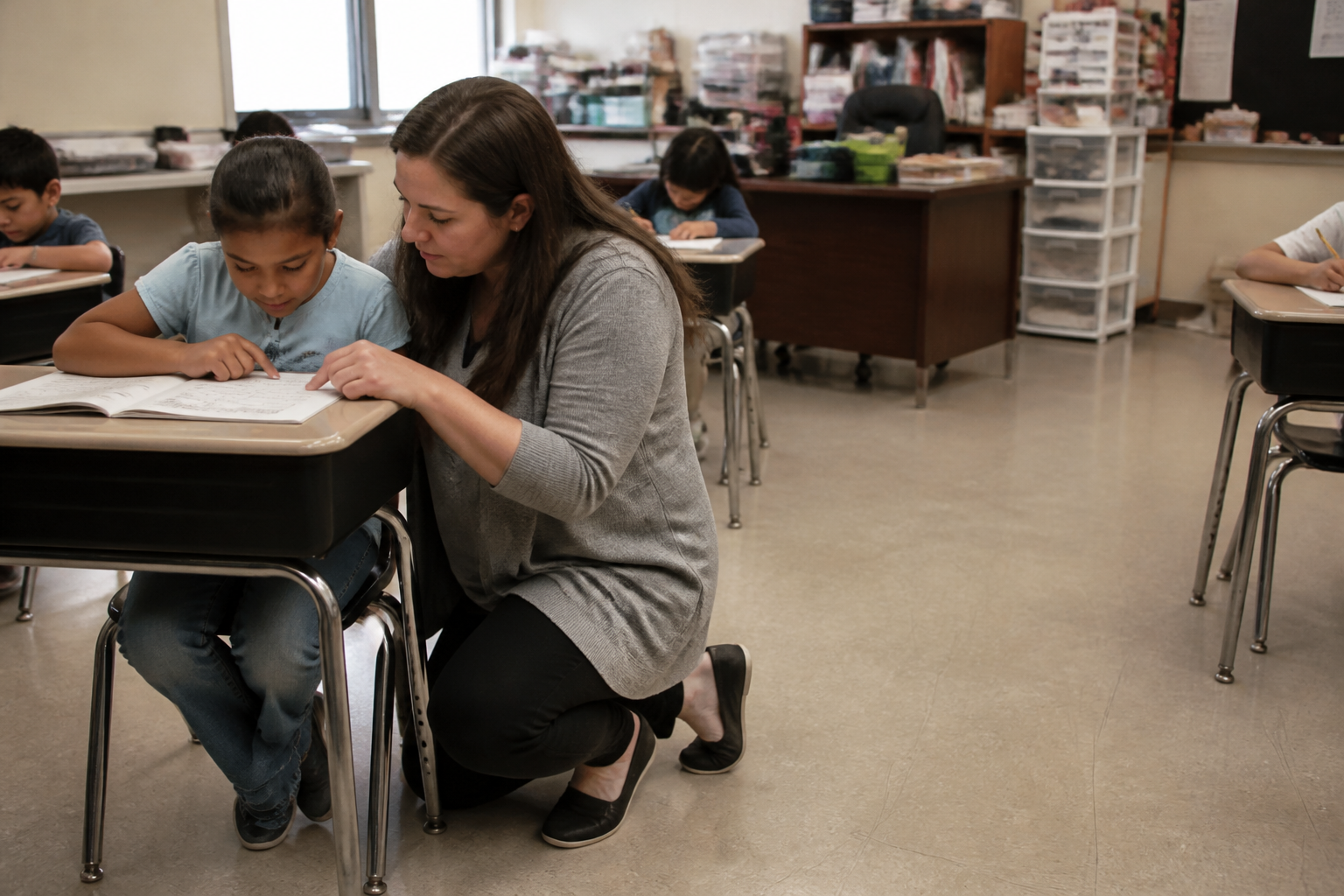
To teach in a New Jersey K-6 classroom, the first step is a bachelor's degree in elementary education, and programs title it the Bachelor of Arts (B.A.) far more often than the Bachelor of Science (B.S.). Most programs build certification coursework and supervised student teaching into the four years, so graduates finish eligible to apply for a state teaching license.
Formats range from traditional campuses at Rutgers, Rowan and Kean to online options at New Jersey-based schools such as Saint Peter's. Costs, admissions standards and aid differ sharply from one school to the next.
The real constraint is rarely finding a program; it is matching a certification track, clinical placements and a price to the grade levels you want to teach.
Key Points
- Pillar College has the lowest average net price here: $8,470 a year.
- Saint Peter's University offers a fully online Elementary Education BA.
- Rutgers, Rowan and Montclair pair K-6 certification with a required second major.
Best Bachelor's Degree in Elementary Education Programs in New Jersey
New Jersey's strongest elementary education programs split along a clear line. Large public universities such as Rutgers, Rowan and Montclair pair K-6 certification with a required second major and deep clinical placements, while private colleges such as Seton Hall, Drew and Saint Peter's run smaller cohorts and, in two cases, fully online or on-the-job routes. What separates the top of this list is not prestige but how much supervised classroom time you get before student teaching and how cleanly the degree maps onto a New Jersey teaching certificate.
Rutgers University
#1New Brunswick, NJ · $24,000/yr (est. net price)
Best for: Urban educators seeking dual certification
Rutgers University is New Jersey's flagship public research university, and its route into elementary teaching is built around a standalone urban education major rather than a generic methods sequence. The program holds CAEP accreditation at the initial licensure level and adds a Teacher of Students with Disabilities endorsement to P-3 and K-6 certification, which widens where graduates can be hired. Admission to the major is gated by a 3.0 GPA and passing Praxis scores, and the university graduates about 84% of its undergraduates.
- CAEP accredited at the initial licensure level through December 2028
- 54-credit standalone major inside a 120-credit bachelor's degree
- Leads to P-3 and K-6 certification plus a Students with Disabilities endorsement
- Admission requires a 3.0 GPA plus Praxis CORE and Praxis II scores
- Kappa Delta Pi student chapter on campus
The College of New Jersey
#2Ewing, NJ · $20,000 – $26,000/yr (est.)
Best for: Students pairing education with a second major
The College of New Jersey is a highly selective public liberal arts college, and its School of Education requires every elementary education candidate to complete a second major alongside the Bachelor of Science. That structure means graduates leave with a genuine content specialization in English, history, mathematics, biology or another field, which is what New Jersey hiring for departmentalized upper elementary grades tends to reward. Roughly 86% of students finish their degrees, one of the strongest completion rates on this list.
- Bachelor of Science in Elementary Education in the School of Education
- Second major required, from English and history to biology and math
- Built on the school's Creating Agents of Change framework
- Special education pairing is non-certification at the bachelor's level
Stockton University
#3Galloway, NJ · $21,000/yr (est. net price)
Best for: Students wanting early classroom hours
Stockton University wraps elementary education in a preset liberal arts or psychology degree, so candidates arrive at pedagogy with a content foundation already in place. Students log about 230 hours in P-12 classrooms before a full-time student teaching semester, and the pathway is approved by the New Jersey Department of Education and accredited by AAQEP. Candidates can add a middle school subject matter specialization in English language arts, math, science or social studies. About 69% of undergraduates graduate.
- K-6 certification pathway approved by the New Jersey Department of Education
- Pairs with a B.A. in Liberal Studies or Psychology
- About 230 clinical hours before a full-time student teaching semester
- AAQEP accredited and aligned with InTASC standards
- Add a middle school subject specialization for grades 5-8
Ramapo College of New Jersey
#4Mahwah, NJ · $15,000 – $20,000/yr (est.)
Ramapo College of New Jersey runs a CAEP-accredited teacher education program with an unusually front-loaded clinical design: a senior-year cohort pairs fall methods courses with a spring capstone student teaching term. Across the program candidates accumulate more than 700 hours of clinical practice in urban, suburban and rural districts within reach of the Mahwah campus. The Bachelor of Science is approved by the New Jersey Department of Education, and roughly 70% of undergraduates finish their degrees.
- CAEP accredited and approved by the New Jersey Department of Education
- Senior cohort pairs fall methods courses with a spring capstone
- More than 700 hours of clinical practice across the program
- Placements in urban, suburban and rural districts near campus
Montclair State University
#5Montclair, NJ · ~$16,000/yr (est.)
Montclair State University runs one of the largest teacher preparation operations in New Jersey, and its Bachelor of Arts in Elementary Education leads directly to K-6 certification. Students pair the major with one of 12 co-majors, and admission to the Teacher Education program is a separate step from admission to the university, requiring 60 completed credits, a 3.0 GPA, an essay and a faculty interview. Deadlines are firm: February 1 for fall entry and September 15 for spring single-certification applicants. About 65% of undergraduates graduate.
- Leads to Elementary Education K-6 certification
- Second major required, chosen from 12 co-major options
- Teacher Education admission needs 60 credits and a 3.0 GPA
- Essay, resume, faculty recommendation and interview required
- Fall deadline February 1; spring deadline September 15
- In-state tuition of $8,294 per semester
Rowan University
#6Glassboro, NJ · $22,000/yr (est. net price)
Rowan University's College of Education prepares more elementary teachers than almost any other program in the state, and the Bachelor of Arts runs 120 credits with two full semesters of clinical practice. Candidates finish with an initial elementary license plus a certificate of undergraduate studies, and the university now operates a registered apprenticeship pathway for aspiring educators already working alongside partner districts. Praxis II Elementary subtests stand between candidates and certification. Roughly 67% of undergraduates graduate.
- 120 credits with two full semesters of clinical practice
- Initial elementary license plus a certificate of undergraduate studies
- Praxis II Elementary subtests required before certification
- Reading and language arts 157, math 157, social studies 155, science 159
- Background clearance and TB test needed before semester 4 fieldwork
- Registered apprenticeship pathway for aspiring elementary educators
Fairleigh Dickinson University-Metropolitan Campus
#7Teaneck, NJ · $15,000/yr (est. net price)
Fairleigh Dickinson University's Metropolitan Campus runs the QUEST program, a five-year combined degree that pairs a liberal arts or science major with K-6 certification coursework beginning in the third year. Students choose a dual certification pathway in special education or English as a second language, and two semesters of student teaching anchor the final year. It suits candidates who want a full content degree plus an endorsement in one continuous sequence rather than two separate credentials. About 53% of undergraduates graduate.
- Five-year combined degree; education coursework begins in year three
- Dual certification pathway in special education or English as a second language
- Two semesters of student teaching in the final year
- 3.0 GPA must be maintained throughout the program
- Up to 15 graduate education credits may double count
Drew University
#8Madison, NJ · ~$24,000/yr (est.)
Drew University's route to elementary certification is the Paraprofessional Teacher Pathway, delivered on the job with BloomBoard for people already employed in partner New Jersey school districts. Applicants need a district invitation, a completed associate's degree and a 3.0 GPA, and coursework is portfolio-based with no night or weekend classes. Drew holds CAEP and state approval and acts as a CEAS provider for New Jersey teacher certification. About 70% of its undergraduates graduate.
- On-the-job pathway for paraprofessionals in partner districts
- District invitation and a completed associate's degree required
- Portfolio-based learning with no night or weekend courses
- 3.0 GPA expected; applicants at 2.75 may be considered
- CEAS provider for New Jersey teacher certification
Saint Peter's University
#9Jersey City, NJ · ~$12,000/yr (est.)
Saint Peter's University delivers its Bachelor of Arts in Elementary Education through the Caulfield School of Education and the School of Professional Studies, and the online option makes it one of the most accessible routes on this list for working adults. The major requires 38 credits of education coursework, including an 8-credit student teaching term, and folds in Pre-School-3 certification courses for candidates pursuing the K-6 certificate. Rolling admissions return a decision within a week of a complete file. About 58% of undergraduates graduate.
- Fully online option through the School of Professional Studies
- 38 credits of education coursework including 8-credit student teaching
- Leads to New Jersey K-6 certificate with Pre-School-3 courses added
- Middle school certification for grades 6-8 adds 15 credits plus Praxis II
- Rolling admissions; decision within one week of a complete file
Seton Hall University
#10South Orange, NJ · $31,000/yr (est. net price)
Seton Hall University offers Elementary Education and Special Education as a Bachelor of Science in Education through its College of Human Development, Culture, and Media, combining general and special education preparation in a single degree. A joint option lets students continue into a speech-language pathology graduate program, which appeals to candidates aiming at related services rather than a general classroom. The university's education portfolio runs from the bachelor's through doctoral study, so candidates who later want reading specialist or leadership credentials stay within the same network. About 69% of undergraduates graduate.
- Bachelor of Science in Education (B.S.E.) in elementary and special education
- Joint option continues into a speech-language pathology graduate program
- Housed in the College of Human Development, Culture, and Media
Cost & outcomes by school
Federal data for the highest-earning Elementary Education programs, independent of the ranking above. Earnings are this field's bachelor's graduates four years after completing where the Scorecard reports them, else the school's undergraduate median.
| School | Net price / yr | Grad rate | Earnings | Debt | Grads/yr | Format |
|---|---|---|---|---|---|---|
| Rutgers University NJ | $24,406 | 84% | $74,479 | $21,500 | — | Campus |
| Monmouth University NJ | $30,988 | 72% | $67,991 | $27,000 | 32 | Campus |
| Ramapo College of New Jersey NJ | $18,173 | 70% | $67,541 | $21,000 | 54 | Campus |
| Drew University NJ | $24,280 | 71% | $63,646 | $25,288 | — | Hybrid |
| Seton Hall University NJ | $31,446 | 70% | $62,399 | $27,000 | 33 | Campus |
| Saint Peter's University NJ | $12,199 | 58% | $62,040 | $23,650 | 20 | Online |
| Montclair State University NJ | $15,566 | 65% | $61,415 | $22,000 | 151 | Campus |
| Centenary University NJ | $20,503 | 56% | $61,358 | $23,611 | 31 | Campus |
| Caldwell University NJ | $24,691 | 58% | $60,433 | $25,000 | 7 | Campus |
| Rider University NJ | $24,792 | 61% | $60,178 | $25,748 | 42 | Campus |
| Rowan University NJ | $22,408 | 67% | $59,988 | $20,500 | 119 | Campus |
| The College of New Jersey NJ | $27,646 | 86% | $59,328 | $23,299 | 79 | Campus |
Sources: U.S. Department of Education. Net price, graduation rate, earnings and debt: College Scorecard (earnings and debt for this field's bachelor's graduates where reported, else school-wide); graduates: IPEDS. A dash means no figure is reported.
Cost, debt & payoff
Median earnings of this field's bachelor's graduates (4 yrs after completing, else the school's undergraduate median) vs. their median federal loan debt · U.S. College Scorecard
Across these programs the median graduate earns about $60,083 and finishes with roughly $24,292 in debt — a ratio that clears a common rule of thumb (keep debt below first-year salary). Net price and debt vary widely school to school, so check the per-school figures in the table above before you shortlist.
Most Affordable Elementary Education Schools in New Jersey
Ranked by average net price after aid, using 2024 U.S. Department of Education data, Pillar College in Newark (a school in our directory) comes in lowest at $8,470 a year, followed by Saint Peter's University at $12,199 and Kean University at $12,447. Public universities such as Kean and Montclair State charge lower in-state tuition, but private schools like Saint Peter's and Fairleigh Dickinson discount heavily through institutional aid, which narrows a sticker gap of more than $20,000 to a few thousand dollars in net price. Net price is an average for students who receive aid at each school, not a personal quote, so run each school's net price calculator with your own family's numbers before you compare offers.
| School | City | Sector | Program Format | In-State Tuition and Fees | Average Net Price After Aid | Median Graduate Debt (all programs) |
|---|---|---|---|---|---|---|
| Pillar College | Newark | Private nonprofit | Campus and online | $25,900 | $8,470 | $21,483 |
| Saint Peter's University | Jersey City | Private nonprofit | Online | $42,552 | $12,199 | $20,500 |
| Kean University | Union | Public | Campus | $14,299 | $12,447 | $23,250 |
| Fairleigh Dickinson University-Metropolitan Campus | Teaneck | Private nonprofit | Campus | $38,004 | $15,404 | $25,000 |
| Montclair State University | Montclair | Public | Campus | $15,912 | $15,566 | $22,000 |
How We Ranked New Jersey Elementary Education Programs
In New Jersey teacher preparation, the measures that count are concrete: what a program costs, whether candidates finish, and whether graduates leave eligible for certification.
Where the Numbers Come From
Every comparison here draws on two federal sources. IPEDS is the annual survey every U.S. college files on enrollment, tuition, graduation and financial aid. The College Scorecard publishes institution-level outcomes, including median earnings for former students and typical net price after aid. Degree names and formats come from each school's own catalog, so a program listed as fully online is one the university describes that way.
What We Look At
- Cost: in-state tuition and net price after grant aid, which is closer to what a New Jersey family actually pays.
- Outcomes: graduation rates and post-college earnings, both reported for the whole institution rather than for the elementary education major alone.
- Format: whether a bachelor's program runs on campus, in a hybrid arrangement, or fully online, and whether it leads to New Jersey certification.
What the Data Cannot Tell You
Net price is an average across all undergraduates, not a quote for your household. Graduation rate is school-wide, and earnings figures blend every major on campus. Treat them as a starting point for a campus visit and a financial aid conversation, not a verdict on any single program.
The list covers bachelor's programs at New Jersey-based schools, campus and online, for students who want to study in the state or earn a New Jersey degree from elsewhere.
Online and Hybrid Elementary Education Options at New Jersey Schools
Saint Peter's University in Jersey City is the clearest fully online route: its Elementary Education BA includes a fully online option, with a New Jersey K-6 certificate and Pre-School-3 courses.1 Drew University's Bachelor of Arts in Elementary Education is hybrid, but it is a paraprofessional pathway. Applicants need district invitation, an associate's degree and work experience. Ramapo College of New Jersey is partially online, with online coursework but not a fully online degree.2
Rutgers, The College of New Jersey, Stockton, Montclair State, Rowan, Fairleigh Dickinson, Seton Hall and Kean are campus-based in our data. Kean's fieldwork begins sophomore year at its Union, Toms River and Jersey City locations.
How Field Placements Work Remotely
Online coursework does not replace in-school hours. Every program here still requires supervised classroom time in New Jersey, and the schools set the rules.
- Ramapo: Clinical Practice I is 180 hours part-time in the fall of the final year. Clinical Practice II is 525 hours full-time in the spring.2 Placements are in districts near the college.
- Stockton: 230 clinical hours come before a 12-credit full-time final semester.3 The School of Education approves every placement and has final say.
- Pillar College: 490 clinical hours are required, with at least a B in Clinical Practice and Seminar.
- Saint Peter's: Field experiences run sophomore and junior year, and student teaching carries 8 credits.1
What Schools Don't Publish
Saint Peter's does not publish how online students find placements, how many hours are required, or whether you can student-teach near home. Drew, Ramapo and Pillar also do not explain whether an out-of-area or remote placement is possible. Do not assume flexibility: ask the program directly.
A Tip on Certification Eligibility
Before you enroll, email the program's certification or field placement office and ask two things in writing: whether the online or hybrid track leads to a New Jersey teaching certificate, and whether your home district can host your clinical practice. Keep the reply with your enrollment records.
Questions to Ask Yourself
Does the degree plan include the content-area major that New Jersey K-6 certification requires?
Can you complete student teaching near home, or do you need a local placement?
Does the school publish a GPA cutoff for entering the education program, not just for admission?
Related Articles
What New Jersey Elementary Teachers Earn
New Jersey pays elementary teachers well above the national norm, which strengthens the case for earning a bachelor's degree in elementary education here.
Compare Elementary Education programs on the data that matters
Explore more Education & Teaching majors or browse every field of study.
All Education & Teaching programs Browse every field of study