Best Forensic Science Schools in Florida
Compare 9 accredited Forensic Science programs in Florida at 8 colleges, with net price after aid, graduation rates, earnings and debt from IPEDS and the U.S. College Scorecard.
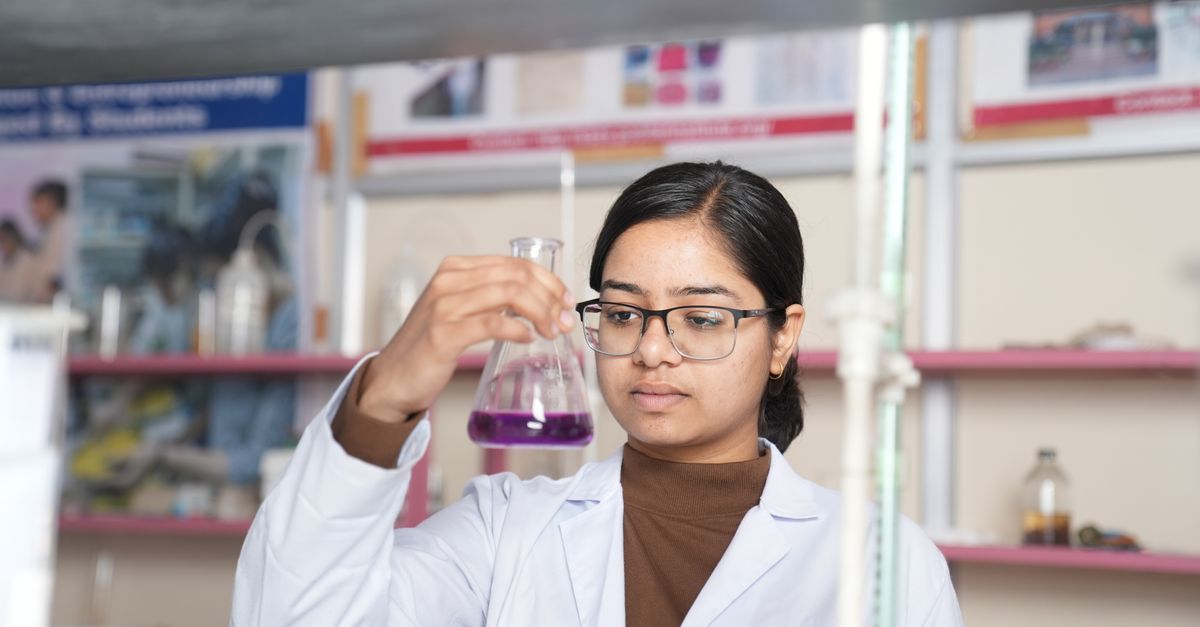
Florida's forensic science degrees divide along a discipline line: chemistry-heavy Bachelor of Science programs at public research universities, and investigation-focused Bachelor of Arts or B.S. tracks at private colleges. Both feed the same crime lab and agency jobs.
A forensic science bachelor's degree typically runs four years, and FEPAC, the field's program accreditor, reviews coursework in biology, chemistry and trace analysis. Crime labs hire on that science base, and analytical chemistry is usually where applicants separate.
The harder fork is cost: in-state public tuition in Florida runs a fraction of private sticker price, and net price after Bright Futures and need-based aid widens that gap.
Key Points
- Florida's public universities lead on net price after grants and scholarships.
- Keiser University-Ft Lauderdale offers a hybrid Forensic Investigations B.S.
- FEPAC accredits individual forensic science programs, not entire universities.
Best Bachelor's in Forensic Science Schools in Florida, Ranked
Florida offers a bachelor's degree in forensic science at public research universities, private universities and career-focused colleges, and the programs differ sharply in how much chemistry and biology they require. The eight schools below are ordered by institutional measures including completion and net price, with program details drawn from each school's own published requirements. Read each entry for the curriculum style and access it gives you to Florida crime laboratories and internships.
Florida State University
#1Tallahassee, FL · ~$11,000/yr (est.)
Best for: Working adults seeking fully online CSI study
Florida State University runs its forensic science bachelor's degree as a crime scene investigation track inside the Public Safety and Security program, and students can take every course online or face to face in Tallahassee. The curriculum adds 160 hours of International Association for Identification certified training, and the department also offers a certificate in underwater crime scene investigation. It suits students who want a large public research university's resources with the flexibility of distance coursework.
- Fully online or face-to-face coursework
- 160 hours of IAI-certified training
- Certificate in underwater crime scene investigation
- Housed under Public Safety and Security
- Lab courses build technology familiarity
- Careers: crime scene investigator, forensic technician, autopsy technician
University of Central Florida
#2Orlando, FL · ~$10,000/yr (est.)
Best for: Science majors drawn to a working state lab
The University of Central Florida traces its forensic science program to 1974, which the university describes as the second oldest in the country, and offers chemistry and biochemistry tracks leading to the same B.S. In 2026 the Florida Department of Law Enforcement relocated its Orlando toxicology laboratory to UCF's Academic Health Sciences Campus in Lake Nona, putting state forensic work alongside university classrooms and research labs. Students who want DNA and toxicology exposure next to an operating crime laboratory will find the strongest fit here.
- Program started in 1974, described as second oldest in the U.S.
- 120 credit hours with a capstone or research methods course
- Analytical chemistry, trace evidence and controlled substances coursework
- 30 upper-division residency hours in the Chemistry department
- Maximum 45 alternate credit hours accepted
- $212.28 per credit hour for Florida residents
- Meets ACS certification requirements
- Focus on DNA and biochemical evidence
- 2.5 GPA minimum in specified major courses
- Chemistry and Math placement tests required before enrolling
- Equipment fee of $90 per term for full-time students
- Law-enforcement-style background check likely
Florida Gulf Coast University
#3Fort Myers, FL · ~$13,000/yr (est.)
Best for: Southwest Florida students combining science and justice
Florida Gulf Coast University built its forensic science B.S. on a chemistry and biology base with criminal justice folded in, a combination the university describes as unique in Florida. Students take analytical chemistry and forensic chemistry, can join undergraduate research, and pursue internships in federal, state and private crime labs. The Fort Myers campus gives southwest Florida students a local route into criminalist work or graduate study.
- 120 credit hours including biology, chemistry and calculus prerequisites
- Combines chemistry, biology and criminal justice coursework
- Internships in federal, state and private crime labs
- Undergraduate research participation available
- Required courses include Analytical Chemistry and Forensic Chemistry
- Trains for criminalist roles in crime laboratories
- Active learning and collaborative laboratory work
Keiser University-Ft Lauderdale
#4Fort Lauderdale, FL · ~$30,000/yr (est.)
Keiser University's forensic investigations degree takes the science concentration route, with general and organic chemistry, physics and forensic biology built into 120 credits. The program runs about 34 months in four-week terms, one class at a time, and is offered on campus and in hybrid form at Florida locations. Admission involves a Wonderlic score, a level 2 background check and an interview with the campus program director, so applicants should plan for those steps early.
- 120 credit hours completed in about 34 months
- Four-week terms, one class at a time
- Admission requires a Wonderlic score of 21, background check and director interview
- 2.5 GPA required to graduate
- Up to 12 transfer credits accepted
- Forensic Investigations Externship I and II for upper-division students
- Coursework in forensic chemistry, forensic biology and medico-legal death investigation
The University of Tampa
#5Tampa, FL · ~$36,000/yr (est.)
The University of Tampa offers a Bachelor of Science in Forensic Science through its chemistry and biochemistry department, and the university reports that the degree holds accreditation from the Forensic Science Education Programs Accreditation Commission. Internships have placed students with the FBI, the Florida Department of Law Enforcement, and county medical examiner and crime laboratories, and faculty include former forensic practitioners. The program graduates a small class each year on a campus in Tampa.
- University reports FEPAC accreditation from the American Academy of Forensic Sciences
- Internships with the FBI, FDLE and county medical examiner offices
- Faculty are former forensic practitioners
- First-year sequence begins with General Chemistry and General Biology
- DNA-focused students add Molecular Biology and Biochemistry
- Alumni work in forensic science, analytical labs and graduate study
Edward Waters University
#6Jacksonville, FL · ~$14,000/yr (est.)
Edward Waters University, a historically Black university in Jacksonville, awards a Bachelor of Science in Forensic Science with two specializations: criminalistics and forensic biology/DNA. The 125-credit degree covers molecular cell biology, genetics, biochemistry and statistics, and a Forensic Futures Pathway with Florida State College at Jacksonville lets students start at FSCJ and transfer in for advanced forensic coursework and a laboratory practicum. It is a strong fit for Northeast Florida students who want DNA and criminalistics training close to home.
- 125 credits: 38 general education, 51 major, 36 concentration
- Two specializations: criminalistics or forensic biology and DNA
- First-year entrants need a 2.5 high school average and chemistry
- Transfers need 30 credits and a 2.5 overall and math/science GPA
- Forensic Futures Pathway 2+2 with Florida State College at Jacksonville
- PCR and STR DNA profiling techniques in the curriculum
- Coursework includes court testimony and report writing
Saint Leo University
#7Saint Leo, FL · ~$21,000/yr (est.)
Saint Leo University approaches the field through a criminal justice bachelor's degree with a criminalistics specialization rather than a stand-alone forensic science major. The 120-credit program covers evidence recognition, collection and comparison plus crime scene reconstruction, and it runs on campus, at education centers and fully online in eight-week terms with six starts a year. Internships have included the U.S. Secret Service and the Florida Department of Law Enforcement, and students can train for the police standard certificate at the Pasco-Hernando Police Academy.
- 120 credit hours, about four years
- On campus, at education centers, or fully online
- Eight-week terms with six starts a year
- Coursework in evidence collection, comparison and scene reconstruction
- Internships with agencies such as the U.S. Secret Service and FDLE
- Fingerprint examination in a forensics lab and a courtroom role-play
- Police standard certificate training at the Pasco-Hernando Police Academy
Lynn University
#8Boca Raton, FL · ~$44,000/yr (est.)
Lynn University's forensic investigations B.S. is a 120-credit campus program in Boca Raton built around crime scene preservation, arson and explosive scene investigation, and the evaluation of physical evidence. Students design and solve a mock crime before graduating, and faculty include a former FBI special agent. Published three-year and four-year study plans let students finish faster, and admissions review runs on a rolling basis with fall and spring starts.
- 120 credits, taken at 30 credits per year on campus
- Coursework in arson and explosive scene investigation
- Students create and solve a mock crime before graduating
- Faculty include a former FBI special agent
- Published three-year and four-year plans of study
- Coursework includes Forensic Pathology and Abnormal Psychology
Cost & outcomes by school
Federal data for the highest-earning Forensic Science programs, independent of the ranking above. Earnings are this field's bachelor's graduates four years after completing where the Scorecard reports them, else the school's undergraduate median.
| School | Net price / yr | Grad rate | Earnings | Debt | Grads/yr | Format |
|---|---|---|---|---|---|---|
| Florida State University FL | $11,297 | 86% | $93,841 | $18,750 | 45 | Online or campus |
| University of Central Florida FL | $10,411 | 78% | $61,633 | $18,190 | 64 | Campus |
| The University of Tampa FL | $36,211 | 64% | $59,436 | $24,211 | 22 | Campus |
| Florida Gulf Coast University FL | $12,568 | 57% | $52,096 | $19,099 | 75 | Campus |
| Lynn University FL | $44,089 | 52% | $49,006 | $17,940 | 11 | Campus |
| Saint Leo University FL | $21,293 | 45% | $48,364 | $25,278 | 35 | Online or campus |
| Keiser University-Ft Lauderdale FL | $30,498 | 61% | $47,847 | $34,630 | 53 | Hybrid |
| Edward Waters University FL | $13,649 | 28% | $34,782 | — | — | Campus |
Sources: U.S. Department of Education. Net price, graduation rate, earnings and debt: College Scorecard (earnings and debt for this field's bachelor's graduates where reported, else school-wide); graduates: IPEDS. A dash means no figure is reported.
Cost, debt & payoff
Median earnings of this field's bachelor's graduates (4 yrs after completing, else the school's undergraduate median) vs. their median federal loan debt · U.S. College Scorecard
Across these programs the median graduate earns about $52,096 and finishes with roughly $18,925 in debt — a ratio that clears a common rule of thumb (keep debt below first-year salary). Net price and debt vary widely school to school, so check the per-school figures in the table above before you shortlist.
Most Affordable Bachelor's in Forensic Science Schools in Florida, Ranked
These schools are ordered by average annual net price, which is what students typically pay after grants and scholarships, based on 2024 IPEDS and College Scorecard data from the U.S. Department of Education. Florida's public universities lead on cost, and the University of Central Florida is the most affordable option here. Saint Leo University costs more but offers a fully online path alongside its campus program.
| Rank | School | City | Program | Average Annual Net Price | Format |
|---|---|---|---|---|---|
| 1 | University of Central Florida | Orlando | Forensic Science, BS | $10,411 | Campus |
| 2 | Florida State University | Tallahassee | Crime Scene Investigation | $11,297 | Campus and online |
| 3 | Florida Gulf Coast University | Fort Myers | Forensic Science (B.S.) | $12,568 | Campus |
| 4 | Edward Waters University | Jacksonville | Bachelor of Science in Forensic Science | $13,649 | Campus |
| 5 | Saint Leo University | Saint Leo | Bachelor's Degree in Criminal Justice - Criminalistics | $21,293 | Campus and online |
How We Ranked Florida Bachelor's in Forensic Science Programs
The ranking is built from cost and outcomes rather than reputation, so a program's place reflects its price and its graduates' results.
The Data Behind the Order
Three federal numbers set the order: net price after grants and scholarships, graduation rate, and earnings for a program's graduates where the government reports them. All figures come from the College Scorecard. Only bachelor's-level programs count, and campus and online formats are weighed side by side rather than in separate tiers.
What the Numbers Do and Do Not Describe
Graduation rate and net price are institution-wide averages. They describe the whole university, not the forensic science department, so a school with a strong program inside a large, uneven student body can look weaker on paper than its forensics faculty warrants. Program-level earnings, where published, cover everyone who completed that field of study, not one major's job outcomes.
Accreditation, Checked at the Source
FEPAC status is verified against the Forensic Science Education Programs Accreditation Commission's own directory rather than taken from a school's marketing page. A listed program has passed that commission's review of curriculum, faculty and facilities. Absence from the directory is not an accusation; it means the program has not been through that specific review.
Scope
This comparison covers bachelor's programs at Florida-based schools, including campuses in Tallahassee, Orlando, Fort Myers, Tampa, Jacksonville, Saint Leo, Boca Raton and Fort Lauderdale. Formats vary: some are built for campus study, while others can be completed online or in a hybrid mix.
FEPAC Accreditation and Specializations at Florida Bachelor's Programs
FEPAC, the accreditor run through the American Academy of Forensic Sciences, reviews individual programs rather than whole schools, and it covers bachelor's degrees in forensic science or in a natural science with a forensic concentration. In its 2026 accreditation actions, the B.S. in Forensic Science at The University of Tampa holds continued accreditation through March 2031, and the University of Central Florida's B.S. is listed as currently accredited. The other programs below did not appear in the 2026 FEPAC records we reviewed, which is not proof they lack accreditation, so confirm status directly with each school, and keep in mind that criminal justice and investigations degrees generally sit outside FEPAC's scope.
| School | FEPAC Status | Degree (B.S./B.A.) | Tracks or Concentrations |
|---|---|---|---|
| The University of Tampa | Accredited (March 2026 to March 2031) | B.S. in Forensic Science | No separate tracks listed in FEPAC records |
| University of Central Florida | Accredited (2026 coursework and faculty changes approved) | B.S. in Forensic Science | No separate tracks listed in FEPAC records |
| Florida Gulf Coast University | Not confirmed in 2026 FEPAC actions | B.S. in Forensic Science | Not specified |
| Edward Waters University | Not confirmed in 2026 FEPAC actions | B.S. in Forensic Science | Not specified |
| Florida State University | Not confirmed in 2026 FEPAC actions | Bachelor's (degree type not listed) | Crime Scene Investigation |
| Keiser University-Ft Lauderdale | Not confirmed in 2026 FEPAC actions | Bachelor's (degree type not listed) | Forensic Investigations, Science Concentration |
| Saint Leo University | Not confirmed in 2026 FEPAC actions | Bachelor's in Criminal Justice | Criminalistics |
| Lynn University | Not confirmed in 2026 FEPAC actions | Bachelor's (degree type not listed) | Forensic Investigations |
Online and Hybrid Bachelor's in Forensic Science Options at Florida Schools
Keiser University-Ft Lauderdale offers its Forensic Investigations B.S. in a hybrid format, the clearest Florida example of how online coursework and science labs combine. Most of the other programs here are campus-based, so check the format before you plan around a remote schedule.
Delivery Format by School
- Hybrid: Keiser University-Ft Lauderdale (Forensic Investigations, science concentration).
- Online and campus options: Florida State University (Crime Scene Investigation) and Saint Leo University (Criminal Justice with a Criminalistics concentration) both list a fully online option alongside campus delivery.
- Online upper division: Florida Gulf Coast University offers a B.S. in Forensic Studies whose 60 upper-division credits can be completed online. Its separate 120-credit B.S. in Forensic Science is delivered on campus.
- Campus only: University of Central Florida, The University of Tampa, Edward Waters University and Lynn University list their forensic programs as campus-based.
If you want a fully online path, FSU, Saint Leo and FGCU's Forensic Studies degree are the places to start. Be aware that the FSU and Saint Leo programs sit in crime scene investigation and criminal justice, not a laboratory-heavy forensic chemistry curriculum.
How Labs Work Outside the Classroom
Science labs are the hard part of any remote forensic degree. Keiser's program requires Biology I and II, General Chemistry, Advanced Chemistry and General Physics, each with a lab. Its extensive laboratory work, forensic-equipment training and crime-scene experience require students to attend on campus. Expect that kind of in-person component at any program that teaches evidence analysis. FGCU's published information on the online Forensic Studies degree does not say how lab work is handled, so ask the department directly before enrolling.
Verify FEPAC Accreditation
Program format and accreditation do not always travel together. UCF's B.S. in Forensic Science is FEPAC-accredited, and the University of Tampa holds full FEPAC accreditation for 2026 to 2031. Both are campus programs. Keiser's program is not FEPAC-accredited, and we found no confirmed FEPAC status for the online options at FSU, Saint Leo or FGCU. If a crime lab career or later graduate study is your goal, confirm accreditation on the FEPAC website and with the admissions office before you commit.
Admissions for a Bachelor's Degree in Forensic Science in Florida
Admission to a Florida forensic science bachelor's program turns less on a single test score than on how well your high school science and math record matches the major's first-year sequence.
GPA and Test Scores: What the Schools Publish
The University of Central Florida sorts freshman and transfer applicants into separate application categories and lists May 1 as the fall deadline, so the requirements that apply to you depend on which category you fall into. Beyond deadlines and application categories, several of the schools ranked here publish no fixed minimum GPA and no stated SAT or ACT cutoff on their forensic science program pages. Where a school publishes no GPA or test-score policy, treat that silence as a reason to contact admissions directly and get the expectation in writing rather than assuming a number. Test policies have shifted repeatedly in recent years, so confirm the rule for your own entry term instead of trusting an older catalog or a forum post.
Science and Math Prerequisites Shape Year One
Chemistry and biology are not courses you can safely defer. They are the prerequisites for upper-division laboratory work in the major, and a plan that pushes them into sophomore year usually stretches the degree. Math placement decides whether you begin in calculus or in a precalculus track; transfer roadmaps built for UCF's forensic major, for instance, accept precalculus options such as MAC 1140 or MAC 1114 alongside calculus.3 A low placement score can add a full semester, so take the placement exam seriously and review before you sit for it.
Transfer Credit and the AA Pathway
Florida's statewide articulation is the most dependable route from a state college into a university. An Associate in Arts from one of the 28 Florida College System colleges carries at least 60 credits toward a bachelor's degree, and the 36-credit general education block must transfer in full between Florida public institutions.1 The guarantee is admission to one of the 12 state universities, not to a particular university, college, or major.1 Common prerequisites, GPA, foreign language, and available capacity still decide the rest.
Transfer roadmaps built for UCF's forensic science major run roughly 84 credits, general education and electives included.3 Identify your target major by 30 credits2, request a transfer audit, and finish the AA before you leave: transferring early, before the general education block is complete, can forfeit the guarantees and cost you credits.
Related Articles
What Florida Forensic Science Graduates Earn After Finishing
Program-level federal data points to strong earnings growth for forensic science graduates in Florida.
Compare Forensic Science programs on the data that matters
Explore more Criminal Justice & Law majors or browse every field of study.
All Criminal Justice & Law programs Browse every field of study