Best Forensic Science Schools in Louisiana
Compare 7 accredited Forensic Science programs in Louisiana, with net price after aid, graduation rates, earnings and debt from IPEDS and the U.S. College Scorecard.
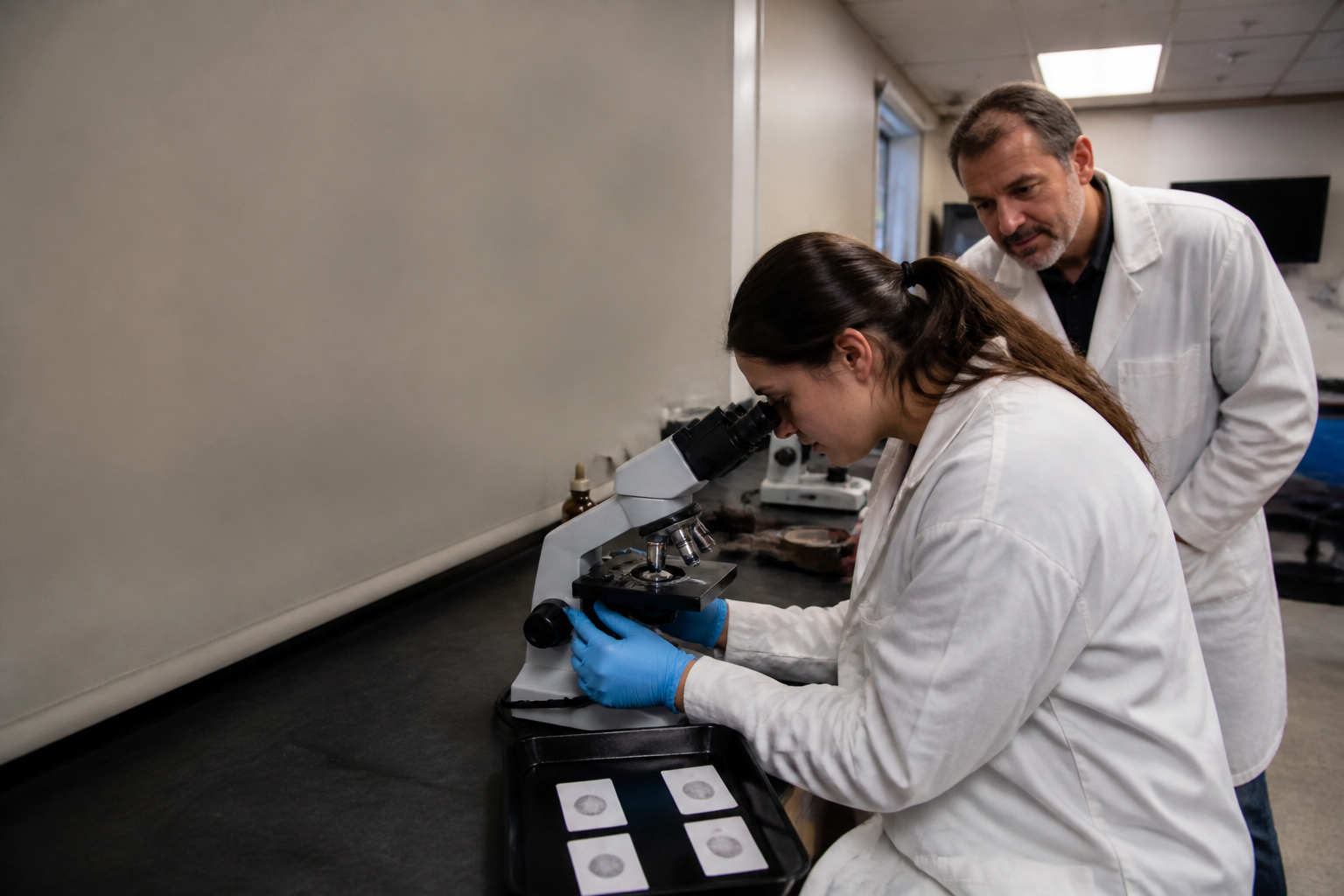
A bachelor's degree in forensic science in Louisiana rarely carries that exact title: Southern University at New Orleans awards the Bachelor of Science in Forensic Science, and other campuses fold the field into chemistry, biology or criminal justice, LSU, for example, offers chemistry degrees with forensic science and forensic chemistry concentrations. Standalone majors are scarce. The ranked programs split between full forensic science majors and science degrees with a forensic concentration, and no Louisiana program holds FEPAC accreditation, a distinction that shapes how crime labs read a transcript.
Cost and coursework decide more than the title. Louisiana residents weigh TOPS awards against tuition of $7,050 to $11,954 at public campuses, and state labs favor chemistry and biology depth over a diploma label.
Key Points
- No Louisiana bachelor's program currently appears on FEPAC's accredited list.
- In-state tuition runs from $7,050 (LSU Alexandria) to $11,954 (LSU Baton Rouge).
- Most options here are chemistry or biology majors with forensic tracks.
Best Bachelor's Degree in Forensic Science Programs in Louisiana, Ranked
The seven Louisiana programs below come in two shapes: one standalone Bachelor of Science in Forensic Science, and six chemistry or biology degrees that carry a forensic concentration or track. Each entry says which one it is, so you can tell at a glance whether you would graduate with forensic science on the diploma or with a chemistry or biology degree that names forensics as a specialization.
Southern University at New Orleans
#1New Orleans, LA · ~$15,000/yr (est.)
Best for: Future DNA and firearms analysts
Southern University at New Orleans is the only historically Black college or university in the country to award a forensic science degree, and its Bachelor of Science in Forensic Science is the one standalone forensic degree among the Louisiana programs listed here. The Department of Natural Sciences houses the 121-credit curriculum, which trains students in DNA analysis, drug chemistry and firearms examination. A forensic science minor is also available for students majoring in other fields.
- 121 total credit hours in core and forensic science courses
- Only HBCU offering a forensic science program
- Training in DNA analysis, drug chemistry and firearms examination
- Housed in the Department of Natural Sciences
- Forensic Science minor also available
- Prepares students for advanced degrees or forensic science jobs
Northwestern State University of Louisiana
#2Natchitoches, LA · $10,000 – $15,000/yr (est.)
Best for: Hands-on learners seeking crime lab internships
Northwestern State's forensic offering is a concentration inside the Bachelor of Science in Physical Sciences, and the university has paired it with real laboratory access: a 2025 agreement with the North Louisiana Crime Laboratory in Shreveport sets up structured internships for students in the forensic track. The Natchitoches campus blends chemistry, biology and criminal justice in the concentration, and students run experiments in modern labs. It suits readers who want documented lab exposure before they graduate rather than a purely classroom route.
- One of five concentrations in the B.S. in Physical Sciences
- Blends chemistry, biology and criminal justice
- Coursework in evidence collection, analysis and reporting
- Experiments and research in modern labs
- Academic map published for the concentration
- 2025 agreement with North Louisiana Crime Laboratory for internships
Louisiana State University and Agricultural & Mechanical College
#3Baton Rouge, LA · $15,000 – $20,000/yr (est.)
Best for: Chemistry-focused students entering forensics
LSU's flagship Baton Rouge campus approaches forensic science through chemistry, listing a Bachelor of Arts in Chemistry with a Forensic Science concentration effective August 16, 2026, alongside a Bachelor of Science in Chemistry with a Forensic Chemistry concentration. The forensic track runs 120 credits over eight semesters and layers forensic analysis, forensic anthropology and criminology on top of a traditional chemistry core. Students enter through the College of Science, and the schedule leaves room for a minor or a second major.
- 120 credit hours across eight semesters
- Forensic Chemistry in year three, then Forensic Analysis and its lab
- Minimum 2.0 semester, cumulative and LSU GPA
- C- or better in required science and mathematics courses
- Forensic electives include forensic anthropology and criminology
- Two biology electives from molecular genetics and biochemistry
- Room for a minor or second major
- Effective August 16, 2026 in the 2026-2027 catalog
McNeese State University
#4Lake Charles, LA · $10,000 – $15,000/yr (est.)
McNeese State University runs a forensic chemistry concentration inside an ACS-approved chemistry curriculum, so graduates leave with a degree built to the American Chemical Society's undergraduate standard. The Lake Charles campus keeps classes small, and the concentration covers the chemical and biological side of crime scene analysis with collaboration from crime labs and police departments. Chemistry majors can also apply for teaching assistantships and departmental awards.
- ACS-approved chemistry curriculum
- 120 credit hours over four years, delivered in person
- One of six chemistry concentrations
- Covers chemical and biological aspects of crime scene analysis
- Collaboration with crime labs and police departments
- Teaching assistantships and Chem-excellence Awards for majors
- Small classes on the Lake Charles campus
Louisiana State University-Shreveport
#5Shreveport, LA · ~$7,000/yr (est.)
LSU Shreveport houses its forensic track in the Department of Biological Sciences, so the concentration rests on a biology foundation rather than a chemistry one. The Bachelor of Science in Biological Sciences offers three tracks, and the forensic option sits in the College of Arts and Sciences beside a biological sciences minor. It fits readers who see DNA and biological evidence as the center of forensic work.
- One of three tracks in the B.S. in Biological Sciences
- Housed in the Department of Biological Sciences
- Listed under the College of Arts and Sciences
- Biological Sciences minor also offered
Louisiana State University at Alexandria
#6Alexandria, LA · $7,000/yr (est. net price)
LSU Alexandria offers a forensic concentration within the Bachelor of Science in Biology, one of nine concentrations in that major. The campus describes the forensics track as preparation for graduate school, and it requires 30 credits in the concentration area plus 45 upper-level semester hours. Students finish with an electronic portfolio documenting ten learning outcomes, which is useful when applying to graduate and professional programs.
- One of nine concentrations in the B.S. in Biology
- 30 credits required in the concentration area
- 45 upper-level semester hours, 15 at the 4000 level
- C or higher in every course listed under major requirements
- No separate admission requirements for the biology major
- Electronic portfolio covering ten learning outcomes
- Built as preparation for graduate school
Grambling State University
#7Grambling, LA · ~$20,000/yr (est.)
Grambling State University teaches forensic chemistry from inside its Department of Chemistry, with a Bachelor of Science carrying a forensic concentration. The 120-credit curriculum pairs instrumental analysis and biochemistry with criminal justice courses in procedure, evidence and investigation, and it adds a required summer forensic internship. Students also sit a Rising Junior Examination before moving into upper-division work.
- 120 credit hours, split 33/32/32/23 by year
- Introduction to Forensic Chemistry and Physical Methods courses
- Four-credit forensic internship in the summer semester
- Criminal justice courses in procedure, evidence and investigation
- Rising Junior Examination required
- Calculus I and II, physics with labs and C++ programming required
- Science electives need advisor and department approval
Cost & outcomes by school
Federal data for the highest-earning Forensic Science programs, independent of the ranking above. Earnings are this field's bachelor's graduates four years after completing where the Scorecard reports them, else the school's undergraduate median.
| School | Net price / yr | Grad rate | Earnings | Debt | Grads/yr | Format |
|---|---|---|---|---|---|---|
| Louisiana State University and Agricultural & Mechanical College LA | $19,151 | 69% | $61,251 | $20,500 | — | Campus |
| Louisiana State University-Shreveport LA | $7,022 | 38% | $47,477 | $22,500 | — | Campus |
| Northwestern State University of Louisiana LA | $13,606 | 43% | $47,021 | $25,000 | — | Campus |
| McNeese State University LA | $12,493 | 47% | $46,453 | $23,000 | — | Campus |
| Louisiana State University at Alexandria LA | $7,065 | 34% | $42,205 | $19,000 | — | Campus |
| Grambling State University LA | $19,809 | 36% | $41,109 | $36,500 | — | Campus |
| Southern University at New Orleans LA | $14,810 | 13% | $34,042 | $31,000 | 13 | Campus |
Sources: U.S. Department of Education. Net price, graduation rate, earnings and debt: College Scorecard (earnings and debt for this field's bachelor's graduates where reported, else school-wide); graduates: IPEDS. A dash means no figure is reported.
Cost, debt & payoff
Median earnings of this field's bachelor's graduates (4 yrs after completing, else the school's undergraduate median) vs. their median federal loan debt · U.S. College Scorecard
Across these programs the median graduate earns about $46,453 and finishes with roughly $23,000 in debt — a ratio that clears a common rule of thumb (keep debt below first-year salary). Net price and debt vary widely school to school, so check the per-school figures in the table above before you shortlist.
How We Ranked Louisiana Bachelor's Programs in Forensic Science
Louisiana awards forensic science credentials under several different titles, so we scored programs on the substance behind the name rather than the name alone.
What Carried Weight
Degree type came first: a full bachelor's major in forensic science, or a directly tied science discipline with substantial forensic coursework, outranked a minor, a certificate, or a general chemistry or criminal justice track with one or two forensic courses attached. Program and institutional accreditation came next. We also weighed lab and internship access, meaning dedicated instrument space, simulated scene work, and working relationships with crime labs or medical examiner offices. Cost and outcomes rounded out the score, using published tuition and aid figures alongside graduation rates and early-career earnings.
How Forensic Science Was Separated from Adjacent Majors
Louisiana schools label related study in very different ways. Degrees in forensic chemistry, forensic biology, and physical sciences with a forensic concentration stayed in view, because that is how several schools here structure the field. Standalone certificates and minor-only offerings were set aside, since neither leads to a bachelor's degree.
What the Figures Can and Cannot Tell You
Graduation rates and net prices in these listings are institution-wide averages, not figures for the forensic science major alone, and they are approximate. Use them to compare schools roughly, not to predict your own bill or timeline.
Only bachelor's programs in Louisiana were considered, including online and hybrid options at Louisiana-based schools.
Does Louisiana Have a FEPAC-Accredited Forensic Science Program?
No Louisiana bachelor's program appears on FEPAC's current list of accredited forensic science programs.1 Louisiana State University and Agricultural & Mechanical College, Southern University at New Orleans and Grambling State University all offer forensic science study, and Louisiana State University-Shreveport offers a forensic science concentration within biological sciences. None of them is listed by the accreditor today.
What FEPAC and SACSCOC Each Cover
FEPAC, the accrediting commission connected to the American Academy of Forensic Sciences, reviews bachelor's programs in forensic science and natural or computer science degrees with a forensic science concentration.1 Crime labs value the credential because it signals that a graduate finished the coursework and lab training that casework depends on.
SACSCOC is a different layer. It accredits whole institutions, not individual majors, and that status keeps a school eligible for federal financial aid and makes your credits easier to transfer. Louisiana State University and Agricultural & Mechanical College holds SACSCOC accreditation to award degrees from the baccalaureate through the doctorate.2 That status was reaffirmed in 2024, and the next comprehensive review is set for 2034.2 Confirm institutional accreditation for any other school before you enroll.
Lab Careers Without a FEPAC Degree
FEPAC accreditation carries weight, but it is not the only route into a lab. Many crime lab analyst postings accept degrees in chemistry, biology or a related natural science. That route remains open at McNeese State University's chemistry program, Grambling State University's forensic chemistry degree, Louisiana State University at Alexandria's Biology B.S. and Northwestern State University of Louisiana's B.S. in Physical Sciences. Fill your schedule with lab-heavy chemistry and biology courses, plus statistics, to stay competitive.
How to Check Status Yourself
- FEPAC: Search the accredited programs list and the recent accreditation actions on the American Academy of Forensic Sciences site.
- SACSCOC: Look up the school in the commission's institution directory or in Louisiana Board of Regents accreditation records.
- Dates: Some older directories still cite an August 2024 snapshot of the FEPAC list, so rely on the live list over secondhand summaries.
Online and Hybrid Bachelor's Options at Louisiana Schools
Southern University at New Orleans offers a 121-credit forensic science bachelor's built on DNA analysis, drug chemistry and firearms, a lab-heavy mix that is not listed as an online or hybrid program.
What Is Available Online
The forensic science programs at Southern University at New Orleans, Louisiana State University and LSU-Shreveport are campus-based. LSU-Shreveport lists its criminal justice and biology forensic science concentrations as in-person, and LSU's forensic chemistry concentration is built around campus laboratory work. The fully online route here is a criminal justice degree: Louisiana State University at Alexandria offers a 120-credit online Bachelor of Science in Criminal Justice with a criminal psychology concentration. Chemistry and physical science degrees at McNeese State University, Northwestern State University of Louisiana and Grambling State University depend on lab sequences, so treat them as campus-first unless the department confirms otherwise.
Where Labs and Practica Fit
Forensic science rests on bench work. Expect chemistry and biology labs to meet in person, plus any crime scene or evidence handling practicum. LSU-Shreveport points students to partner crime laboratories in the region. In an online criminal justice program, check whether an internship is embedded; it will usually place you at an agency or lab site, not online.
The 2+2 Route and the Bottom Line
Louisiana community colleges offer 2+2 agreements that let you finish an associate degree near home, then transfer into a bachelor's program. Confirm that the four-year school will accept your chemistry and biology lab credits before you enroll. An online criminal justice degree can lead to investigator, compliance or agency roles, but it does not replace the laboratory training that crime lab jobs require. If you want to work in a forensic lab, plan on a campus-based forensic science or chemistry degree.
Related Articles
Admissions for Louisiana Forensic Science Bachelor's Programs: GPA, Tests and Transfer Credit
Getting into a Louisiana forensic science program takes two steps: admission to the university, then clearing the chemistry and biology courses that gate the major.
GPA and Test Policy
For 2026-27, assured freshman admission requires a 3.0 Core GPA on 19 LSU-Core college-prep units and/or a 22 ACT composite (or the SAT equivalents of 1100 on the current scale).1 The catalog does not establish a blanket test-optional policy for freshmen. Dual-enrollment applicants need at least a 2.0 in their college-credit courses.1 Once enrolled, the forensic science program asks for a 2.0 GPA minimum and a C- or better in required science courses. LSU admitted about 73 percent of applicants.
Southern University at New Orleans (79 percent admitted) is a different case: its admissions page did not confirm a 2026 minimum GPA or ACT/SAT policy, so check with the admissions office directly. The same goes for McNeese State (78 percent), Northwestern State (93 percent), LSU Shreveport (51 percent) and Grambling State (45 percent): confirm current GPA and test rules before you apply. LSU Alexandria (92 percent) lists no special admission requirements for its biology degree with a forensics concentration, though it still requires a C or higher in major courses.
Transferring From a Community College
LSU accepts college-level coursework from regionally accredited institutions.3 Transfer applicants need at least 30 transferable, non-remedial credits and a 2.5 GPA on all transferable work.2 No ACT or SAT is required, though scores may be reported.2 Students with fewer than 30 hours must also meet freshman requirements. College English and math must be completed with a C or better when they satisfy general education. Accepted credit is still subject to degree review, and the sources we reviewed show no specific Louisiana community college agreement or course-by-course guarantee. Ask an advisor to map your courses to the forensic science plan before you enroll.
Prerequisites That Matter
Forensic science is a lab science, so expect chemistry, biology and math to carry the degree. Strong high school chemistry and algebra or higher make the first-year sequence easier, and community college students should prioritize general chemistry with lab, biology and calculus-level math. Some programs add gates of their own: Grambling State, for example, requires a Rising Junior Examination.
Cost of a Bachelor's Degree in Forensic Science in Louisiana
For Louisiana residents, published tuition and fees run from $7,050 at LSU Alexandria to $11,954 at LSU in Baton Rouge. Average net price is a campus-wide figure for all aided undergraduates, not forensic majors alone, and it ranges from $7,022 at LSU Shreveport to $19,809 at Grambling State, a gap of roughly $51,000 over a four-year degree. To bring that cost down, TOPS, the state's merit scholarship for eligible residents, generally covers tuition for full-time study (Opportunity requires a 2.50 GPA and a 20 ACT or 1030 SAT; Performance requires a 3.25 GPA and a 23 ACT and adds a $400 yearly stipend; Honors requires a 3.50 GPA and a 27 ACT and adds $800), Pell-eligible residents taking at least six hours can add a need-based Louisiana GO Grant of $300 to $3,000, and campus awards such as McNeese's chemistry scholarships can lower the bill further.
| School | Program | City | In-state tuition and fees (2024) | Out-of-state tuition and fees (2024) | Average net price after aid (all students) |
|---|---|---|---|---|---|
| Louisiana State University-Shreveport | Biological Sciences (Forensic Science) | Shreveport | $7,518 | $7,518 | $7,022 |
| Louisiana State University at Alexandria | Biology, BS (Forensics) | Alexandria | $7,050 | $14,650 | $7,065 |
| McNeese State University | Chemistry (Forensic Chemistry) | Lake Charles | $8,489 | $9,989 | $12,493 |
| Northwestern State University of Louisiana | B.S. in Physical Sciences (Forensic Laboratory Science) | Natchitoches | $8,864 | $19,652 | $13,606 |
| Southern University at New Orleans | Forensic Science | New Orleans | $8,054 | $16,954 | $14,810 |
| Louisiana State University and Agricultural & Mechanical College | Forensic Science | Baton Rouge | $11,954 | $28,631 | $19,151 |
| Grambling State University | Forensic Chemistry | Grambling | $7,683 | $16,706 | $19,809 |
Forensic Science Technician Pay in Louisiana
Federal wage data gives the clearest national benchmark for the crime-lab careers a bachelor's degree in forensic science prepares you for.
Questions to Ask Yourself
Do you want to spend your days at a lab bench or at a scene?
Will Louisiana crime labs recognize the degree you are considering?
Can you be on campus for lab courses every semester?
Forensic Science in Louisiana: Common Questions
What are the best forensic science schools in Louisiana?
Can you get a bachelor's degree in forensic science online in Louisiana?
How much does a forensic science degree cost in Louisiana?
What can you do with a forensic science degree in Louisiana?
Is a chemistry or biology degree an acceptable alternative for crime lab jobs?
Compare Forensic Science programs on the data that matters
Explore more Criminal Justice & Law majors or browse every field of study.
All Criminal Justice & Law programs Browse every field of study