Best Cybersecurity Schools in Texas
Compare 39 accredited Cybersecurity programs in Texas at 35 colleges, with net price after aid, graduation rates, earnings and debt from IPEDS and the U.S. College Scorecard.
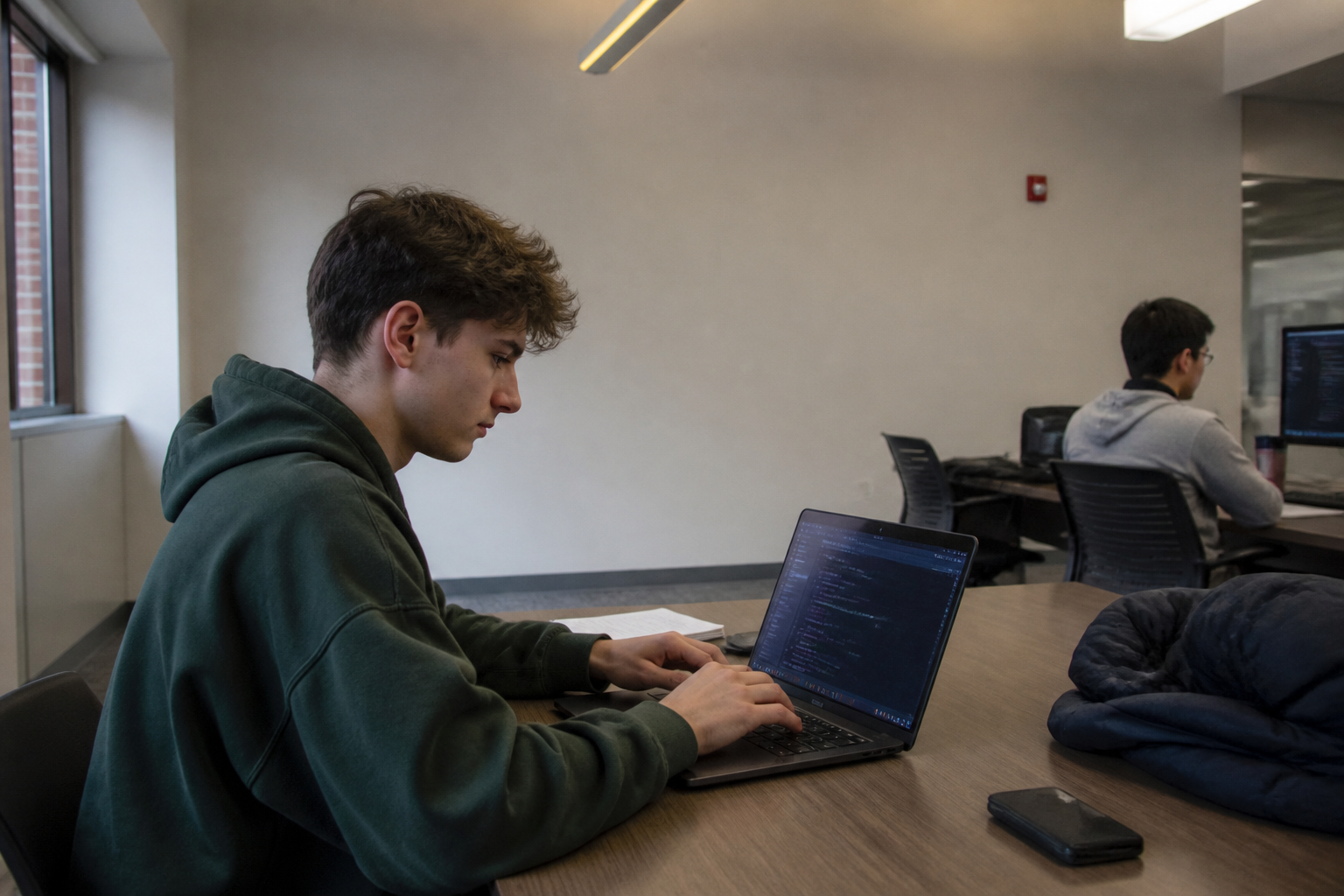
San Antonio, Austin, Dallas-Fort Worth and Houston each anchor a different slice of the Texas cyber economy, from military and intelligence work to energy, finance and health care. For all of them, a bachelor's degree in cybersecurity is the usual entry credential. The most common version is the Bachelor of Science (B.S.) in Cybersecurity, though some schools use a B.A., a B.B.A. or an applied technology degree.
The real tension is fit: sticker price, lab access, online flexibility and federal NSA/DHS designations vary widely from campus to campus. Employers here care less about the school's name than about hands-on skills and certifications.
Key Points
- UT Rio Grande Valley carries the lowest net price on this list.
- St. Philip's and Austin Community College award applied cybersecurity bachelor's degrees.
- With no Texas license required, employers screen for degrees and certifications.
The 10 Best Bachelor's in Cybersecurity Programs in Texas
Texas splits its cybersecurity bachelor's degrees across large public universities, private Catholic and Baptist campuses, and several smaller regional schools, and the formats vary just as widely, from a live security operations center in Huntsville to a fully online business degree. Each card below gives you the program's shape, its cost and completion numbers, and the NSA designation status we could verify. Where a designation did not turn up in the public CAE list, we say so and leave you to confirm it directly with the school.
Sam Houston State University
#1Huntsville, TX · ~$16,000/yr (est.)
Best for: Hands-on learners drawn to a live SOC
Sam Houston State runs its cybersecurity bachelor's out of Huntsville with an unusual amount of operational practice built in: students monitor live network traffic in an on-campus Security Operations Center and work forensic cases through the Cyber Forensics Intelligence Center. The four-year B.S. requires no minor and can be finished on campus or fully online, with coursework in cryptography, malware analysis and hardware security. The university reports a renewed National Center of Academic Excellence in Cyber Defense designation through 2030 for its information assurance computer science track, along with agency ties to the FBI, CISA and U.S. Cyber Command. Institution-wide, about 55 percent of students complete within six years, and median net price after aid runs near $16,400.
- Four-year degree, no minor required
- Available on campus in Huntsville or fully online
- On-campus Security Operations Center with live traffic
- SHSU Cyber Forensics Intelligence Center research access
- Coursework in cryptography, malware analysis, hardware security
- Labs, simulations and forensic investigations
- Ties to law enforcement agencies
University of St Thomas
#2Houston, TX · ~$19,000/yr (est.)
Best for: Policy-minded students blending security and world affairs
St. Thomas takes a rare angle on the field: a Bachelor of Arts in Global Cybersecurity that pairs computer science coursework with international studies, governance and cyber warfare. Courses run online and on campus, with labs in simulated environments, and students can add internships, study abroad and conference travel. The curriculum is taught through Catholic social teaching and asks who benefits from emerging technology and what duties companies and governments carry. No NSA Center of Academic Excellence designation for this program turned up in the public CAE list we reviewed.
- Blends computer science with international studies
- Hands-on labs in simulated environments
- Courses in cyber warfare, governance and cyber ethics
- Internships, study abroad and professional conferences
- Global Cybersecurity minor also offered
- Low student-to-faculty ratio
- Catholic social teaching lens on privacy and data protection
St. Mary's University
#3San Antonio, TX · $20,000 – $25,000/yr (est.)
Best for: Computer science majors adding a security track
St. Mary's houses cybersecurity inside a traditional computer science degree, so students graduate with a full CS foundation plus a 12-hour security track rather than a stand-alone security major. The 120-credit plan includes a required course in computer security and privacy, three electives from digital forensics to cryptography, a 17-hour mathematics minor and a senior project. Classes are small, with an 11-to-1 student-to-faculty ratio institution-wide. We found no NSA Center of Academic Excellence designation confirmed for this track.
- 120 total credit hours
- 12-hour cybersecurity track inside the CS major
- Required course in computer security and privacy
- Electives include digital forensics, cryptography, cloud security
- 17-hour mathematics minor required
- Senior capstone project
- Coursework in algorithms, architecture and software engineering
Saint Edward's University
#4Austin, TX · ~$26,000/yr (est.)
Saint Edward's in Austin offers computer science with a cybersecurity concentration, and the major is unusually large at 72 hours of coursework plus supporting math, which leaves room for depth in programming and algorithms. Students get internships, a capstone project and small classes with faculty mentors, along with a cybersecurity competition scene and an accelerated route into graduate study. Graduates of the program report median earnings of about $52,000 four years after completing. We found no NSA Center of Academic Excellence designation confirmed for the concentration.
- 72 hours of major coursework plus supporting math
- Cybersecurity concentration on a CS foundation
- Internships and a required capstone
- Small classes with faculty mentors
- Cybersecurity competitions and a computer science club
- Accelerated graduate pathways available
Lamar University
#5Beaumont, TX · ~$9,000/yr (est.)
Lamar's B.S. in Cybersecurity is one of the most affordable routes in the state, with in-state tuition and fees near $8,900 and a median net price after aid around $9,400. The 120-credit degree runs on campus in Beaumont or fully online, keeps class sizes small and pushes undergraduate research and internships. Graduates head into information security, forensics and software development roles. We found no NSA Center of Academic Excellence designation confirmed for this program.
- 120 credit hours
- On-campus and fully online delivery
- Small class sizes
- Undergraduate research and internship opportunities
- Prepares students for information security, forensics and software roles
Houston Christian University
#6Houston, TX · $21,000/yr (est. net price)
Houston Christian University teaches cybersecurity as a hands-on, 123-credit B.S. on its Houston campus, with required internship and senior project work layered over network security, ethical hacking and applied cryptography. More than 95 percent of students receive financial aid, and the application asks for no essay and charges no fee. The program also prepares students for professional certifications alongside the degree. We found no NSA Center of Academic Excellence designation confirmed for this program.
- 123-credit program, on campus in Houston
- Coursework in network security, ethical hacking, applied cryptography
- Required internship and senior project
- Prepares students for professional certifications
- No essay and no application fee
- More than 95 percent of students receive financial aid
Wayland Baptist University
#7Plainview, TX · ~$21,000/yr (est.)
Wayland Baptist frames cybersecurity as a business discipline: a B.B.A. with a cybersecurity specialization taught fully online through the School of Business. Coursework centers on information risk, business technology, and the analytical and decision-making skills employers expect from managers who own security decisions. It suits working adults who want the flexibility of an online business degree with a security focus. The institution-wide six-year completion rate is about 19 percent, well below the rest of this list, and we found no NSA CAE designation confirmed for the program.
- Fully online delivery
- Housed in the School of Business
- Focus on information risk and business technology
- Builds analytical and professional decision-making skills
- Christian learning environment
The University of Texas at Dallas
#8Richardson, TX · $18,000/yr (est. net price)
UT Dallas splits the degree between two schools, so its B.S. in Cybersecurity Technology and Policy covers both the technical and the legal side: a 33-credit major core spans foundations, data and application security, trustworthy and secure AI/ML, digital forensics and incident response, cyber law and policy, and open-source intelligence. The 120-credit plan includes 12 credits of technical electives and requires 45 upper-division hours. Institution-wide, about 76 percent of students finish within six years and median earnings run near $68,000, the strongest combination on this list. We found no NSA CAE designation confirmed for this program.
- 120 total credit hours
- Jointly offered by computer science and the policy school
- 33-credit major core spanning technical and policy topics
- Courses in secure AI/ML, digital forensics, cyber law and governance
- 12 credits of technical electives
- 45 upper-division credit hours required
The University of Texas Rio Grande Valley
#9Edinburg, TX · under $5,000/yr (est.)
UTRGV's B.S. in Cyber Security sits in the College of Engineering and Computer Science and follows the NICE workforce framework, mixing security coursework with business law, criminal justice and policy. The result is a degree aimed at analysts, forensics specialists and security engineers rather than pure developers. Cost is the headline: median net price after aid runs under $5,000, and the university's Tuition Advantage covers tuition and mandatory fees for families earning $125,000 or less. We found no NSA CAE designation confirmed for this program.
- College of Engineering and Computer Science
- Aligned to NICE workforce framework standards
- Blends technical, legal, business and policy coursework
- Includes business law and criminal justice
- Tuition Advantage covers tuition for family income of $125,000 or less
- Paths include analyst, forensics expert and security engineer
University of North Texas at Dallas
#10Dallas, TX · ~$6,000/yr (est.)
UNT Dallas keeps its cybersecurity bachelor's practical and close to home, with small classes and a curriculum built around identifying threats and system vulnerabilities, defending networks with industry tools and handling incident response. Career tracks include security operations center analyst, digital forensics specialist and risk or compliance coordinator. Median net price after aid lands around $6,400, among the lowest here. We found no NSA CAE designation confirmed for this program.
- Small class sizes
- Identify threats and system vulnerabilities
- Defend networks with industry tools
- Incident response and risk reduction
- Paths include SOC analyst, cloud security specialist, forensics
- Practical skills and ethical decision-making
Cost & outcomes by school
Federal data for the highest-earning Cybersecurity programs, independent of the ranking above. Earnings are this field's bachelor's graduates four years after completing where the Scorecard reports them, else the school's undergraduate median.
| School | Net price / yr | Grad rate | Earnings | Debt | Grads/yr | Format |
|---|---|---|---|---|---|---|
| The University of Texas at Dallas TX | $18,267 | 76% | $68,227 | $18,000 | — | Campus |
| University of St Thomas TX | $19,359 | 69% | $59,224 | $19,928 | 6 | Hybrid |
| The University of Texas at Tyler TX | $13,323 | 54% | $57,053 | $17,137 | — | Hybrid |
| University of North Texas TX | $15,649 | 61% | $57,010 | $19,250 | — | Campus |
| St. Mary's University TX | $21,145 | 59% | $56,955 | $25,563 | 25 | Campus |
| University of the Incarnate Word TX | $22,775 | 51% | $56,733 | $27,000 | 10 | Campus |
| Texas Woman's University TX | $11,963 | 49% | $56,544 | $19,218 | — | Campus |
| University of Mary Hardin-Baylor TX | $26,106 | 49% | $56,132 | $26,000 | — | Campus |
| Houston Christian University TX | $20,629 | 49% | $55,933 | $22,642 | — | Campus |
| Abilene Christian University TX | $26,182 | 59% | $55,736 | $24,250 | — | Online |
| Sam Houston State University TX | $16,404 | 55% | $54,211 | $21,983 | — | Online or campus |
| University of Houston-Downtown TX | $10,542 | 33% | $53,551 | $18,750 | — | Campus |
Sources: U.S. Department of Education. Net price, graduation rate, earnings and debt: College Scorecard (earnings and debt for this field's bachelor's graduates where reported, else school-wide); graduates: IPEDS. A dash means no figure is reported.
Cost, debt & payoff
Median earnings of this field's bachelor's graduates (4 yrs after completing, else the school's undergraduate median) vs. their median federal loan debt · U.S. College Scorecard
Across these programs the median graduate earns about $51,067 and finishes with roughly $21,983 in debt — a ratio that clears a common rule of thumb (keep debt below first-year salary). Net price and debt vary widely school to school, so check the per-school figures in the table above before you shortlist.
What Put These Texas Programs in This Order
The order here rewards programs that pair a fair price with solid results, so a lower-cost school with strong outcomes can sit above a pricier one. Five things drive it: cost and net price (what students pay once grants and scholarships are applied), completion and graduation rates, selectivity, outcomes after graduation, and format, campus, hybrid, or online.
Each figure measures something different. Graduation rate, net price, and 10-year earnings are institution-wide College Scorecard figures. They describe the whole school, not the cybersecurity major alone, so a school with a strong overall record may still have a small or young cybersecurity program. Earnings and debt figures, where they appear, are program-level and tied to the specific degree.
Treat the order as a starting point. Two students can reasonably rank these schools differently depending on budget, commute, and whether they need evening or online classes. Compare the institution-wide numbers with the program-level ones, then check each school's own program page for the current curriculum and requirements.
Five Lowest-Cost Texas Schools for a Cybersecurity Bachelor's
Net price is the average yearly cost after grants and scholarships, based on IPEDS and College Scorecard (2024) data. The University of Texas Rio Grande Valley has the lowest net price among the schools ranked here. St. Philip's College and Austin Community College District, both in our directory, offer applied bachelor's degrees in cybersecurity at a similar or lower cost.
| School | City | Program | Format | Average Net Price per Year | In-State Tuition and Fees (Schoolwide) | Median Federal Debt at Graduation |
|---|---|---|---|---|---|---|
| St. Philip's College | San Antonio | Bachelor of Applied Technology (BAT) in Cybersecurity | Campus and online | $4,273 | $3,412 | $9,500 |
| The University of Texas Rio Grande Valley | Edinburg | Bachelor's in Cyber Security | Campus | $4,831 | $9,987 | $12,950 |
| Austin Community College District | Austin | Bachelor of Applied Science in Cybersecurity | Hybrid | $6,390 | $2,550 | $10,499 |
| University of North Texas at Dallas | Dallas | Bachelor's in Cybersecurity | Campus | $6,420 | $9,595 | $18,606 |
| Lamar University | Beaumont | Bachelor of Science in Cybersecurity | Campus | $9,366 | $8,905 | $21,250 |
Online and Hybrid Cybersecurity Bachelor's Options at Texas Schools
Flexibility and hands-on lab access pull in opposite directions when you pick a delivery format, and Texas schools split accordingly. Delivery formats come from school program pages, and several schools do not publish exact start dates, so confirm those with admissions.
Fully Online and Hybrid
- Abilene Christian University: The Bachelor of Science in Cybersecurity is 100% online. Listed upcoming starts are January 12, 2027 and March 9, 2027.
- Lone Star College System: The Bachelor of Applied Technology in Cybersecurity is offered as hybrid, Online Your Time, and Online Live through Westway Park Technology Center. Admission is competitive each Fall and Spring.
- San Jacinto Community College: The Bachelor of Applied Technology in Cybersecurity can be taken in person or 100% online, at North Campus, South Campus, or San Jac Online.
- Sam Houston State University and Lamar University: Both pair a campus program with an online option. Wayland Baptist University's cybersecurity specialization in its B.B.A. is also available fully online.
Campus-Only and New Launches
The University of Texas at Dallas launched its in-person B.S. in Cybersecurity Technology and Policy for Fall 2026. The University of North Texas at Dallas started its Bachelor of Arts in Cybersecurity for 2026-27, with classes beginning August 24, 2026. Houston Christian University, St. Mary's University, and The University of Texas Rio Grande Valley deliver their programs on campus.
Who Fits Where
Online study suits working adults and transfer students who need to keep a job or carry in associate credits. Campus programs suit students who want lab time and team-based practice. Saint Edward's University lists a Computer Science Club and cybersecurity-focused competitions, and Sam Houston State University has an on-campus Security Operations Center. Both are harder to replicate from a laptop.
Related Articles
Admission Requirements for a Bachelor's Degree in Cybersecurity in Texas
Admission to a cybersecurity bachelor's program in Texas usually happens in two steps: you are admitted to the university, then you satisfy whatever math and GPA conditions the major adds on top. Most of what schools publish covers the first step.
GPA and test scores
Abilene Christian asks for a 2.5 high school GPA and does not require SAT or ACT scores.1 Houston-Downtown sets a 2.0 and lists MATH 1301 or an equivalent with a C or better, plus ENG 1302, before a student moves into cybersecurity coursework. Where a school publishes no GPA floor or no test policy, ask an admissions counselor to confirm the rule in writing before you apply. Overall admission rates at the schools ranked here run from roughly 56 percent at Wayland Baptist to 98 percent at St. Mary's, so the university gate ranges from selective to close to automatic. Those figures describe the institution, not the major.
The community college route
Texas public colleges and universities share a 42-semester-credit-hour core curriculum, and finishing it at a community college generally satisfies the general education block at a four-year public school. Houston-Downtown accepts transfer students at a 2.0. UT Dallas expects transfer applicants to have completed lower-division math and computer science core courses before they arrive.2 Lone Star College, which offers its own applied bachelor's in cybersecurity, admits students who hold an associate degree or are within six credits of completing one, with a 2.25 GPA.3
Houston-Downtown's cybersecurity page lists freshman admission criteria but also expects 24 college-level semester hours, so a student coming straight from high school should confirm the entry path with an advisor.
Before you apply
Pull your unofficial transcripts, note which math course you have finished, and email the department to confirm that each transfer course will count toward the degree. A written answer now saves a semester later.
What a Cybersecurity Bachelor's Costs in Texas, and How to Pay Less
Sticker price is the wrong number to compare at a Texas public university. What you actually pay is the net price after aid, and at some Texas schools that figure comes in at roughly half the published tuition.
In-state versus out-of-state, then net price
Lamar University publishes $8,905 in tuition and fees for Texas residents against $18,745 for out-of-state students. UT Rio Grande Valley runs $9,799 and $19,645; UNT Dallas $9,595 and $21,894. That gap is why Texas students rarely pay the out-of-state rate.
The figure that matters is average net price after grant and scholarship aid, an approximate sector average rather than a personal quote. UTRGV lands near $4,831, UNT Dallas about $6,420, and Lamar roughly $9,366. Median debt for graduates tracks the same pattern: about $12,950 at UTRGV and $18,606 at UNT Dallas, against $21,250 at Lamar. Pell recipients make up a large share of undergraduates at UTRGV and UNT Dallas, so both campuses are built around need-based aid.
Three state programs that cut the bill
- TEXAS Grant: for Texas residents with need, with priority to students whose FAFSA or TASFA shows a Student Aid Index of $6,478 or lower.1 Twelve credit hours earns the full award, nine earns 75%, and fewer than nine makes you ineligible.2 The priority deadline is January 15.2
- Texas Public Educational Grant: administered by each public college from its own funds. Residents, nonresidents, and international students can qualify, and each campus sets its own deadlines and amounts.3
- Tuition set-aside aid: Texas public institutions hold back at least 15% of resident undergraduate tuition above $46 per credit hour for need-based aid, prioritizing students whose costs are not met by other non-loan aid.4
Practical ways to pay less
Begin at a community college. St Philip's College, Austin Community College District, and San Jacinto Community College all teach cybersecurity at the associate and applied bachelor's level at lower per-credit rates, so general education credits transfer for less. Choose an in-state online program to keep resident tuition while living at home, and file the FAFSA or TASFA in the fall, well before January 15, so state and campus aid decisions reach you in time.
What Information Security Analysts Earn in Texas
A bachelor's degree in cybersecurity is the usual starting point for information security analyst roles, and Texas pays these analysts slightly above the national level.
Texas Licensing for Cybersecurity Jobs at a Glance
Compare Cybersecurity programs on the data that matters
Explore more Computers & IT majors or browse every field of study.
All Computers & IT programs Browse every field of study