Best Criminal Justice Schools in Wisconsin
Compare 18 accredited Criminal Justice programs in Wisconsin at 16 colleges, with net price after aid, graduation rates, earnings and debt from IPEDS and the U.S. College Scorecard.
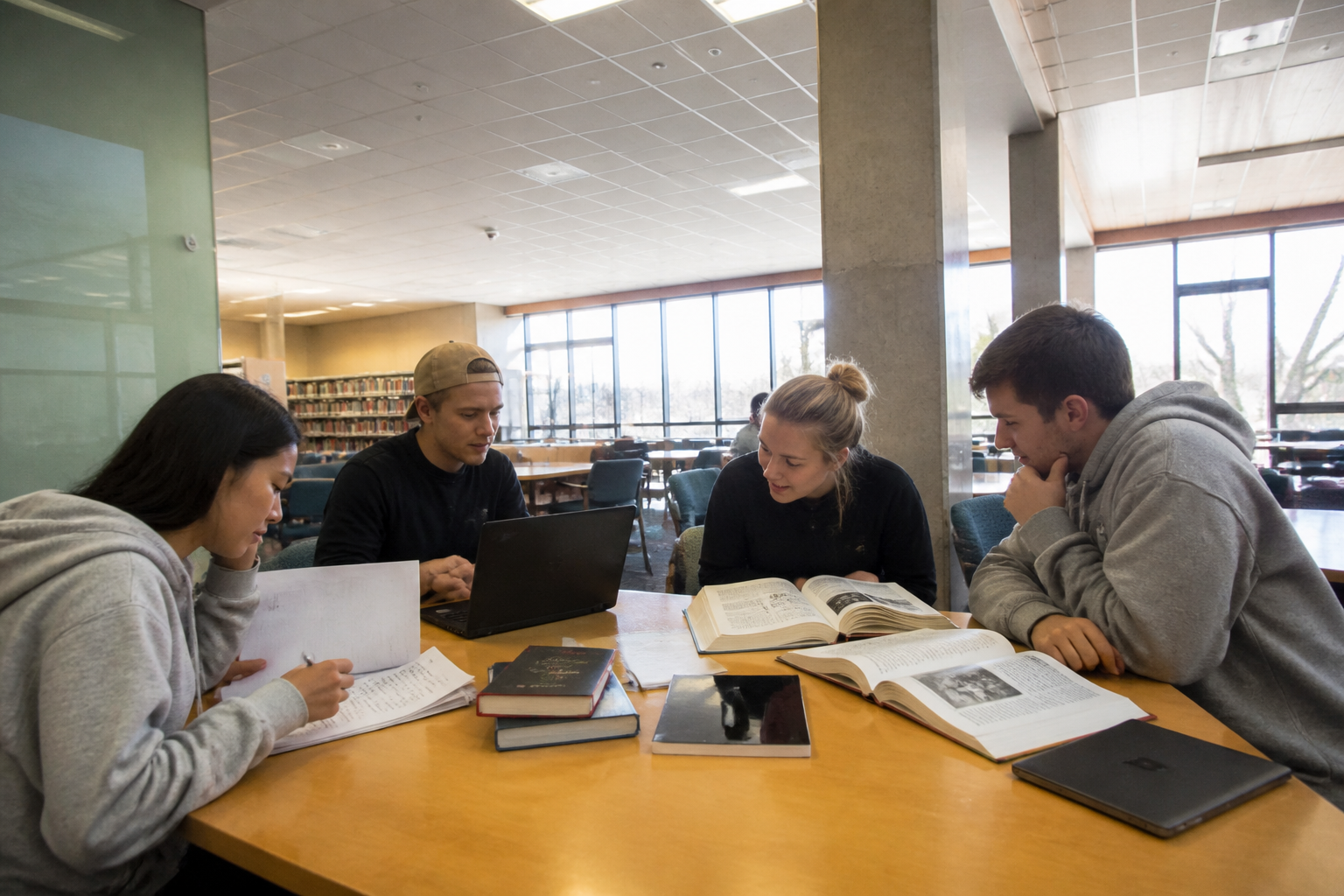
You can earn a bachelor's degree in criminal justice in Wisconsin on a campus in Waukesha or Eau Claire, fully online through several UW schools, or through a blend of the two. The Bachelor of Science (B.S.) in Criminal Justice is the common credential.
Cost is where the choice gets sharp: net price starts at $11,772 at UW-Parkside and rises at the private colleges, while admission is rarely the obstacle, with school-wide rates reaching about 92 percent. Internship hours, officer certification through the state's Law Enforcement Standards Board and earnings after graduation separate these programs far more than admissions standards do.
Key Points
- Carroll University ranks first for four-year completion and internship placements.
- UW-Parkside carries the lowest average net price, at $11,772.
- UW-Parkside, UW-Platteville and UW-Oshkosh each offer a fully online criminal justice route.
Best Criminal Justice Schools in Wisconsin: Our Top 10 Ranked Bachelor's Programs
The best criminal justice school in Wisconsin depends on what you can spend and how you want to attend. Carroll University takes the top spot here on the strength of its four-year completion record and its internship placements, but readers paying in-state tuition at a UW campus, or working adults who need a fully online degree, will find better value a few entries down.
Carroll University
#1Waukesha, WI · $15,000 – $20,000/yr (est.)
Best for: Double majors pairing justice with psychology
A private university in Waukesha, Carroll combines a criminal justice major with unusual scheduling flexibility: students can add a second major or minor and still finish in four years. Internship placements run from local police departments to the Wisconsin Department of Justice and federal agencies. Coursework takes on sentencing policy, racial and ethnic disparities and alternatives to incarceration rather than procedure alone.
- Four-year major, with a double major or minor still on a four-year plan
- Coursework covers law enforcement, courts, corrections and sentencing
- Seminar study of racial and ethnic disparities in sentencing
- Internships with the Wisconsin Department of Justice and federal agencies
- Placements in public defender and district attorney offices
- Criminal justice minor also offered
University of Wisconsin-Eau Claire
#2Eau Claire, WI · ~$17,000/yr (est.)
Best for: Students wanting academy certification while enrolled
A public university in Eau Claire that awards the criminal justice major as either a Bachelor of Arts or a Bachelor of Science, with no minor required. Internships at more than a dozen sites, the Wisconsin State Patrol and the U.S. Secret Service among them, earn up to six credits. A partnership with Chippewa Valley Technical College lets students earn law enforcement academy certification while enrolled.
- Major offered as a Bachelor of Arts or a Bachelor of Science
- No minor required; coursework spans sociology, psychology and social work
- More than a dozen internship sites, earning up to 6 credits
- Law enforcement academy certification through a CVTC partnership
- Placements include the Wisconsin State Patrol and U.S. Secret Service
- Named courses include Police in Society and Victimology
- Civil Rights Pilgrimage trip and an annual on-campus career conference
Wisconsin Lutheran College
#3Milwaukee, WI · $20,000 – $25,000/yr (est.)
Best for: Hands-on forensic science learners
A small private college in Milwaukee where criminal justice splits into three tracks: Police Science, Forensic Science and Legal Studies. Every major completes an internship, usually in the junior year, and students have placed with the Milwaukee County Medical Examiner's Office and the Milwaukee County District Attorney's Office. Lab work covers ballistics analysis, fingerprinting, ground penetrating radar and staged homicide investigation.
- Three tracks: Police Science, Forensic Science and Legal Studies
- Required internship, typically taken in the junior year
- Placements with the Milwaukee County Medical Examiner and District Attorney
- Labs include ballistics analysis and fingerprinting practice
- Ground penetrating radar used in shallow grave searches
- Double major with chemistry for students aiming at toxicology
Herzing University-Kenosha
#4Kenosha, WI · ~$23,000/yr (est.)
Herzing's Kenosha campus awards a Bachelor of Science in Criminal Justice that runs entirely online, 120 credits over about 36 months. The major covers criminal law, ethics, corrections, criminal investigation, predictive policing, cybercriminology and victimology, and closes with a capstone or internship. Rolling admissions, transfer of up to 90 approved credits and a reduced military rate make it one of the more flexible options on this list for working adults.
- 120 credits completed in about 36 months
- Fully online through the Canvas learning platform
- 64 credits of criminal justice coursework plus a capstone or internship
- Courses in predictive policing, cybercriminology and victimology
- Transfer up to 90 approved credits
- Up to 9 dual-credit graduate hours toward an MBA or MSW
- Rolling admissions; ACT, SAT or entrance testing accepted
- Reduced military tuition rate for veterans and active duty members
Carthage College
#5Kenosha, WI · $27,000/yr (est. net price)
Carthage, in Kenosha, offers a Bachelor of Arts in Criminal Justice built on a 20-credit common core with a choice between a criminal justice track and a pre-law track. The criminal justice track leans into social problems in the city, wrongful convictions and mass incarceration, while the pre-law track adds American government and constitutional law. A four-credit Senior Seminar and an elective that can be a field placement or internship round out the 36-credit major.
- 36-credit major built on a 20-credit common core
- Two tracks: criminal justice or pre-law
- Four-credit Senior Seminar required of all majors
- Electives include criminal law, restorative justice and mock trial
- A field placement or internship counts as an elective
- Criminal justice minor also offered
University of Wisconsin-Platteville
#6Platteville, WI · $9,000 – $18,000/yr (est.)
UW-Platteville awards both a Bachelor of Science and a Bachelor of Arts in criminal justice, on campus or fully online, with emphases in Corrections, Law Enforcement or Substance Use Disorders Counseling. Graduates of a Wisconsin law enforcement academy approved by the state's Training and Standards Bureau receive 15 lower-level transfer credits. On-campus students practice on simulated crime scenes at the Forensic Investigation Crime Scene House, and an annual career day draws nearly 100 tri-state agencies.
- Corrections emphasis directs elective credits to corrections topics
- First 60 credits combine general education with three core courses
- On-campus practice at the Forensic Investigation Crime Scene House
- Internship placements with local, state and national agencies
- Law enforcement emphasis for policing and investigation careers
- Bachelor of Science and Bachelor of Arts both offered
- 15 transfer credits for a Wisconsin law enforcement academy
- Career Day draws nearly 100 tri-state agencies
- Counseling emphasis inside the criminal justice major
- Coursework includes alcohol and other drug abuse counseling
- Fully online option available for the entire degree
- Accelerated bachelor's to master's pathway available
Viterbo University
#7La Crosse, WI · ~$21,000/yr (est.)
Viterbo, in La Crosse, awards a Bachelor of Arts or Bachelor of Science in Criminal and Community Justice and requires every major to complete an internship with a local agency, whether a police academy, district attorney's office, probation and parole office or law enforcement agency. The 120-credit degree includes a law enforcement academy partnership, and instructors bring field experience to the classroom. Alumni work as police officers, sheriff's deputies, probation officers, jailers and game wardens.
- 120 credits leading to a Bachelor of Arts or Bachelor of Science
- Internship with a local agency required of all majors
- Law Enforcement Academy partnership
- Internship sites include a police academy, DA and probation offices
- Instructors bring field experience to the classroom
- Career paths include police officer, deputy, jailer and game warden
University of Wisconsin-Milwaukee
#8Milwaukee, WI · $10,000 – $22,000/yr (est.)
UW-Milwaukee's Bachelor of Science in Criminal Justice and Criminology is the largest program on this list, with 139 degrees awarded and a 48-credit major inside a 120-credit degree. Required coursework runs from Introduction to Policing and Corrections to Criminological Theory and a capstone seminar, with up to six credits of fieldwork at approved agencies. An accelerated BS/MS option shares 21 credits between the two degrees, and graduates go into the FBI, intelligence analysis, evidence technology and border patrol.
- 120 credits, including at least 48 in the major
- 2.0 GPA required in major credits taken at UWM
- Required capstone seminar and methods coursework
- Fieldwork for up to 6 credits at approved criminal justice agencies
- Accelerated BS/MS option shares 21 credits
- Required course in race, crime and criminal justice
- Honors in the major and a permanent professional advisor
University of Wisconsin-Oshkosh
#9Oshkosh, WI · $10,000 – $15,000/yr (est.)
UW-Oshkosh runs a 42-credit criminal justice major that students can complete fully online, fully in person or in a blend of the two. The curriculum is academically centered rather than a training program, emphasizing writing, critical thinking, data analysis and policy analysis alongside the legal, ethical and behavioral sides of the system. A double major pairing criminal justice with sociology is available, and psychology, sociology or public administration make natural minors.
- 42 credits: 27 core and 15 electives
- Fully online, in person or blended delivery
- Emphasis on writing, critical thinking and policy analysis
- Recommended minors in psychology, sociology or public administration
- Double major in criminal justice and sociology available
- Academically focused major rather than a training academy
University of Wisconsin-Parkside
#10Kenosha, WI · ~$12,000/yr (est.)
UW-Parkside, in Kenosha, offers a criminal justice major in person or online, plus an accelerated online version built on seven-week courses that run year round. The program has placed 327 majors in internships over ten years through partnerships with more than 30 agencies, and more than 60 percent of those placements were paid. Coursework spans criminology, policing, courts, juvenile justice and corrections, with graduates going into the FBI, crime scene investigation, probation and game warden roles.
- Accelerated online option with seven-week courses year round
- More than 30 internship partner agencies
- 327 internship placements over ten years
- Over 60% of internship placements were paid
- Coursework in criminology, policing, courts and juvenile justice
- Also available in person on the Kenosha campus
Cost & outcomes by school
Federal data for the highest-earning Criminal Justice programs, independent of the ranking above. Earnings are this field's bachelor's graduates four years after completing where the Scorecard reports them, else the school's undergraduate median.
| School | Net price / yr | Grad rate | Earnings | Debt | Grads/yr | Format |
|---|---|---|---|---|---|---|
| Marian University WI | $21,937 | 44% | $70,934 | $25,000 | 21 | Campus |
| Herzing University-Kenosha WI | $23,066 | 72% | $69,601 | $19,310 | 2 | Online |
| Herzing University-Brookfield WI | $20,514 | 42% | $69,601 | $19,310 | 1 | Online or campus |
| Herzing University-Madison WI | $22,327 | 28% | $69,601 | $19,310 | 9 | Online |
| Carthage College WI | $26,565 | 64% | $60,633 | $27,000 | 21 | Campus |
| Rasmussen University-Wisconsin WI | — | 57% | $60,483 | $29,236 | — | Online |
| Edgewood University WI | $26,113 | 60% | $59,728 | $24,424 | 7 | Campus |
| University of Wisconsin-Platteville WI | $16,032 | 56% | $59,533 | $24,783 | 71 | Online or campus |
| University of Wisconsin-Eau Claire WI | $16,550 | 64% | $58,762 | $20,437 | 41 | Campus |
| University of Wisconsin-Oshkosh WI | $14,305 | 46% | $58,489 | $23,769 | 59 | Online or campus |
| University of Wisconsin-Milwaukee WI | $15,014 | 49% | $58,223 | $24,525 | 98 | Online or campus |
| Viterbo University WI | $21,260 | 68% | $55,660 | $25,000 | 4 | Campus |
Sources: U.S. Department of Education. Net price, graduation rate, earnings and debt: College Scorecard (earnings and debt for this field's bachelor's graduates where reported, else school-wide); graduates: IPEDS. A dash means no figure is reported.
Cost, debt & payoff
Median earnings of this field's bachelor's graduates (4 yrs after completing, else the school's undergraduate median) vs. their median federal loan debt · U.S. College Scorecard
Across these programs the median graduate earns about $59,533 and finishes with roughly $24,783 in debt — a ratio that clears a common rule of thumb (keep debt below first-year salary). Net price and debt vary widely school to school, so check the per-school figures in the table above before you shortlist.
How We Ranked Wisconsin's Bachelor's in Criminal Justice Programs
Every criminal justice program in Wisconsin can call itself one of the best, and plenty do. Our ranking instead leans on published federal figures rather than the marketing language on department homepages.
What We Look At
- Cost and net price: sticker tuition plus the average price students actually pay after grant aid.
- Completion: graduation and retention rates, which show whether students who start actually finish.
- Outcomes: earnings and debt for graduates of the program itself, not just the whole school.
- Format: whether the degree runs on campus, online, or as a hybrid.
Where the Numbers Stop
College Scorecard and IPEDS supply the underlying figures. They are useful and they are limited: graduation rates and net price are reported for the entire institution, and net price is an average across all undergraduates, not a quote for a criminal justice major. Program-level earnings reflect graduates who received federal aid, so treat them as a signal rather than a complete picture. A school with a strong overall profile can still run a thin program in this field, which is why we weigh the major alongside the institution.
Treat "#1 in Wisconsin" banners as unsourced until a school shows the data behind them. Every figure below can be looked up and checked.
Most Affordable Bachelor's in Criminal Justice Programs in Wisconsin
The schools below are ordered by average net price, which is what students typically pay after grants and scholarships are subtracted from the full cost of attendance. University of Wisconsin-Parkside carries the lowest net price at $11,772. Carroll University shows why sticker price can mislead: its $38,890 private tuition drops to a $15,193 net price after aid, close to several UW campuses. Figures come from the U.S. Department of Education's IPEDS and College Scorecard data (2024).
| School | City | Format | In-State Tuition and Fees | Average Net Price | Graduation Rate | Median Earnings 1 Year After Graduation (Criminal Justice Bachelor's) |
|---|---|---|---|---|---|---|
| University of Wisconsin-Parkside | Kenosha | Campus and online | $8,270 | $11,772 | 40% | $42,342 |
| University of Wisconsin-Oshkosh | Oshkosh | Campus and online | $8,532 | $14,305 | 46% | $39,394 |
| University of Wisconsin-Milwaukee | Milwaukee | Campus and online | $10,398 | $15,014 | 49% | $38,640 |
| Carroll University | Waukesha | Campus | $38,890 | $15,193 | 71% | $38,101 |
| University of Wisconsin-Platteville | Platteville | Campus and online | $8,644 | $16,032 | 56% | $41,636 |
Online and Hybrid Criminal Justice Bachelor's Options at Wisconsin Schools
You can earn a criminal justice degree online in Wisconsin. UW-Parkside, UW-Platteville and UW-Oshkosh each describe a fully online route, and UW-Milwaukee's program data lists both campus and online delivery. Formats differ by school, so check the details below.
UW-Parkside
UW-Parkside offers the most clearly documented online path: a fully online B.A. in Criminal Justice. It requires 120 credits and accepts up to 90 transfer credits. An accelerated option uses seven-week courses offered year-round. The 2026-2027 start dates are:
- Fall II: October 22, 2026
- Spring I: January 27, 2027
- Spring II: March 18, 2027
UW-Parkside also runs degree-completion programs for students with at least 60 transfer credits. The criminal justice B.A. is not specifically labeled as one, so confirm with an advisor.
UW-Platteville, UW-Milwaukee and UW-Oshkosh
UW-Platteville lists a fully online option alongside its campus program, and it grants 15 transfer credits for law enforcement academy training. UW-Oshkosh describes its major as available fully online, in person or blended, with online courses aimed at both traditional and non-traditional students. The major itself is 42 credits (27 core, 15 electives), though its total degree credits are not confirmed here. UW-Milwaukee's criminal justice degree is 120 credits, with 48 in the major, but I could not verify its online format details.
Current term start dates and accelerated tracks for these three schools were not confirmed. Confirm the date with each admissions office before you plan around one.
Tuition for Online Students
Online students at these schools generally pay under Wisconsin's tuition structures rather than a separate national rate, but I could not verify that for each program. Some online programs use different per-credit pricing or fees, so confirm the rate on each school's online tuition page.
Which Format Fits You
- Transfer students: UW-Parkside's 90-credit transfer limit is the most generous documented here. UW-Platteville helps those with academy training.
- Working adults: UW-Parkside's seven-week, year-round courses and UW-Oshkosh's blended option offer the most flexibility.
Related Articles
Admission Requirements for Wisconsin Criminal Justice Bachelor's Programs
Most Wisconsin criminal justice programs admit broadly, and the published requirements are easier to clear than the reputation of the field suggests. School-wide admission rates across the programs here run from roughly 67 percent at Carroll University to about 92 percent at Herzing University-Kenosha, with the UW campuses mostly in the 75 to 91 percent band. UW-Platteville admits about 89 percent of applicants, UW-Oshkosh about 87 percent, UW-Milwaukee about 91 percent and UW-Parkside about 75 percent. These are access-oriented schools, not gatekeepers.
GPA and Test Policies
UW-Milwaukee shows how these policies read in practice. Its first-year admissions page publishes no minimum GPA at all. Instead, the review weighs course rigor, class rank where a high school reports it, overall GPA, and grades in subjects tied to your intended major. ACT and SAT scores are optional for the current application year; if you send them, they count as one factor among several. The ACT writing section is not required, though it may be considered.
UW-Platteville, UW-Oshkosh and UW-Parkside publish no confirmed 2026 GPA or test requirement, so check each school's admissions page rather than assuming a number carries over from an older catalog. Once enrolled at UWM, students must hold a 2.000 cumulative GPA university-wide, and individual programs, including Criminal Justice and Criminology, may set a higher bar.
Transfer Credit and the Pell Picture
UWM reviews transfers holistically, with no single minimum GPA and no one criterion that guarantees a seat. Its guaranteed pathway does have firm numbers: at least 24 transferable credits, a 2.0 cumulative GPA across every institution attended, good standing everywhere, and a completed application by the term deadline. Tests are not required for transfers, and never for applicants 21 or older or anyone with 12 or more transferable credits. UWM accepts up to 72 semester credits from two-year institutions, with no cap from four-year universities.
For transfers, a full associate degree counts for more than scattered coursework. UW-Platteville also awards 15 transfer credits for law enforcement academy training. Pell shares run high at several of these schools, with UW-Parkside near 60 percent and UWM above 52 percent, so aid offices are used to working with transfer and working-adult students.
Criminal Justice Schools in Wisconsin With Internships
Field experience separates the graduates who get hired from those who keep applying, and Wisconsin programs handle it in very different ways.
What Each Program Requires
- UW-Platteville: Up to eight elective credits for 320 hours, or eight 40-hour weeks. Requires 60 completed credits, 12 upper-level major credits and a 2.5 GPA; the department can decline a placement.
- UW-Milwaukee: Field placement runs through CJ 311, capped at six credits (96 hours for three, 192 for six). Juniors need a 2.5 GPA, Criminal Justice 110 and a cleared background check.
- UW-Parkside: Declared majors at junior or senior standing apply, interview with the agency, keep a journal and write a final paper.
- UW-Oshkosh: Optional. Students at 90 credits with a 3.0 major GPA can earn one to eight credits; the department calls openings limited.1
- Wisconsin Lutheran College requires a junior-year internship; Carroll University builds field experience into coursework, including placements with the Wisconsin Department of Justice and public defender offices.
Where Students Land
UW-Milwaukee lists the Antigo Police Department, Bayside Public Safety and the Wisconsin Department of Justice; UW-Platteville names the Ozaukee County Sheriff's Office, the U.S. Marshals Service and the state's Statewide Intelligence Center. UW-Parkside has worked with more than 30 agencies in the past decade, placing 327 majors, and reports that about 60% of placements were paid at roughly $15.75 to $16.50 an hour. UW-Oshkosh names no partner agencies.
What to Ask Admissions
Ask who coordinates placements and how early to apply, who runs the background check, how many students were paid last year, and whether internship credits count as major electives or free electives.
Questions to Ask Yourself
Will you qualify for Wisconsin resident tuition, or for Minnesota reciprocity if you live across the border?
Have you filed the FAFSA early enough to be considered for the Wisconsin Grant and school scholarships?
Is the lowest sticker price also the lowest net price at the schools you are considering?
Cost of a Bachelor's Degree in Criminal Justice in Wisconsin
Sticker tuition minus the grants and scholarships you receive is the real cost of a bachelor's degree in criminal justice in Wisconsin, and that gap is large. The state's public universities charge far less than its private colleges at list price, but aid narrows that difference.
In-State Tuition and Net Price
Public schools charge Wisconsin residents much less than out-of-state students. Annual tuition and fees run about $8,270 in-state and $17,429 out-of-state at UW-Parkside, and $10,398 versus $22,398 at UW-Milwaukee. UW-Eau Claire runs $9,642 in-state and $19,228 out-of-state. Carroll University lists $38,890 for everyone.
Net price is the average cost after grant aid, an average, not a quote. Your own number depends on family income and the aid you receive. Averages are about $11,772 at UW-Parkside, $15,014 at UW-Milwaukee, $16,550 at UW-Eau Claire and $15,193 at Carroll. Carroll's net price lands close to the UW schools despite its higher sticker price.
State Aid for Wisconsin Residents
The Wisconsin Grant goes to Wisconsin residents at UW, technical college and tribal institutions.1 You apply through the FAFSA2, and you can receive it for up to 10 semesters1. Full-time means 12 credits and half-time means 61. Awards are prorated by enrollment, and HEAB sets the minimum and maximum each year, so check its site for current amounts. Residents at private nonprofit Wisconsin colleges, such as Carroll, can look at the separate Wisconsin Tuition Grant. The Academic Excellence Scholarship adds $2,250 toward tuition at UW, technical, independent and tribal colleges.3
Minnesota-Wisconsin Reciprocity
Under reciprocity, Minnesota residents at a Wisconsin public college may pay the higher of the Wisconsin school's rate or a comparable Minnesota school's. Apply to your school first, then submit the online reciprocity application, with a December 31 deadline for a full academic year.4 A FAFSA is usually not required4. Benefits can renew for up to five years, rates are reviewed yearly, and distance-education students who stay in their home state are not covered.5
Ways to Lower Your Cost
- File the FAFSA early: It drives the Wisconsin Grant and UW grant aid.6
- Bring transfer credits: UW-Platteville accepts 15 credits for law enforcement academy training.
- Establish residency: In-state status roughly halves public tuition.
What You Can Do With a Criminal Justice Bachelor's Degree in Wisconsin
A bachelor's degree in criminal justice most often leads to patrol, corrections, community supervision and analyst roles. Projections for 2025-2035 show modest growth for patrol and probation work but a decline for correctional officer jobs. This table does not report Wisconsin pay or job counts, so pull them from the Bureau of Labor Statistics May 2025 state wage estimates, the Occupational Outlook Handbook, the Wisconsin Department of Workforce Development's labor market data, your program's career services outcomes, current agency job postings, and groups such as the Wisconsin Chiefs of Police Association, Wisconsin Sheriffs and Deputy Sheriffs Association, Wisconsin Correctional Association, American Probation and Parole Association and International Association of Crime Analysts, since pay varies by agency, county and experience.
| Occupation | Median Annual Wage (Wisconsin) | Employment | Projected Growth |
|---|---|---|---|
| Police and sheriff's patrol officers | N/A | N/A | 3% (2025-2035) |
| Correctional officers and jailers | N/A | N/A | -7.4% (2025-2035) |
| Probation officers and correctional treatment specialists | N/A | N/A | 3% (2025-2035) |
Wisconsin Law Enforcement Certification at a Glance
Compare Criminal Justice programs on the data that matters
Explore more Criminal Justice & Law majors or browse every field of study.
All Criminal Justice & Law programs Browse every field of study