Best Criminology Schools in California
Compare 21 accredited Criminology programs in California at 19 colleges, with net price after aid, graduation rates, earnings and debt from IPEDS and the U.S. College Scorecard.
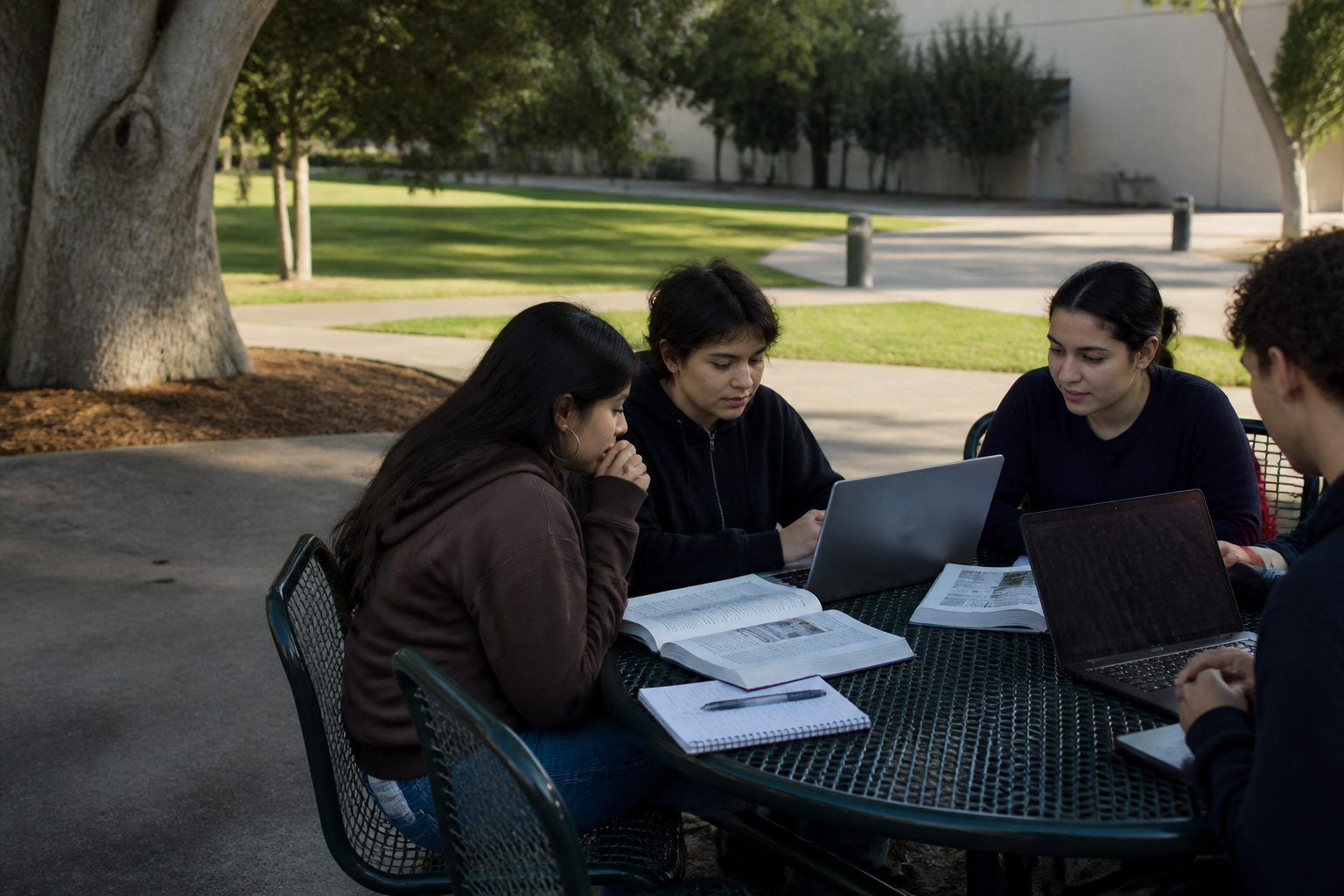
California schools title the degree several ways: criminology, criminal justice, justice studies, and criminology, law and society. Whether a school awards a Bachelor of Science (B.S.) or a Bachelor of Arts (B.A.), the coursework behind those titles differs more than the labels suggest.
Money separates the choices. Net price at a public campus and a private university can diverge by tens of thousands over four years, and federal cost and completion data make the gap visible. Pay after graduation varies widely, from county probation to state agency work. Admission at the public campuses leans on GPA and completed prerequisites; the private ones read the whole file.
Key Points
- California State University-Long Beach offers an online criminology and criminal justice B.S.
- Net price after grants, not sticker price, sets what families actually pay.
- California POST requires peace officer candidates to be 21 by appointment.
Best Bachelor's in Criminology Schools in California: Top 10 Ranked
The ten programs below run from large public research universities to small private colleges, and every one awards a bachelor's degree in criminology or a closely related justice-studies credential at a California school. Some suit readers aiming at law school or research, others suit readers heading straight into probation, corrections, policing or victim services. Graduation rates cited here are institution-wide, not program-specific.
University of California-Irvine
#1Irvine, CA · $14,000/yr (est. net price)
Best for: Future law students wanting research depth
A public research university whose criminology major sits in the School of Social Ecology and leans on law, social control and inequality rather than a narrow law-enforcement track. Undergraduates take 44 units spread across three required course groups, then build seven upper-division electives around their own interests. Institution-wide graduation rate is 87%, and the department also runs a combined J.D./Ph.D. path for students aiming at legal and research careers.
- 44 units across 11 courses
- Three required course groups, including Crime and Criminology
- Seven upper-division electives worth 28 units
- Sample courses include American Law and Criminological Theory
- Also covers Juvenile Delinquency and Race, Ethnicity, and Social Control
- Prepares for criminal justice, policy and legal-system roles
California State University-Fresno
#2Fresno, CA · ~$7,000/yr (est.)
Best for: Aspiring probation and victim-services officers
A public university in the San Joaquin Valley that requires every criminology major to pick an academic specialization: Corrections, Law Enforcement or Victimology. Courses blend interdisciplinary theory with applied material and point toward probation, parole, jails, prisons and victim/witness agencies. Institution-wide graduation rate is 57%, and the department also offers a separate B.S. in Forensic Behavioral Sciences.
- Prepares for work with offenders in institutions and community agencies
- Routes into probation, parole, jails and prisons
- Coordinated by Dr. Monica Summers
- Interdisciplinary theory combined with applied coursework
- Targets federal, state and local law enforcement agencies
- Also prepares for private-sector law enforcement roles
- Built as preparation for graduate study
- Separate B.S. in Forensic Behavioral Sciences offered
- Prepares for victim and witness program roles
- Coursework toward domestic violence and rape counseling careers
- Coordinated by Dr. Tinneke Van Camp
- Counts toward criminal justice careers and graduate study
California State Polytechnic University-Pomona
#3Pomona, CA · $10,000 – $15,000/yr (est.)
Best for: Budget-conscious commuters near Los Angeles
A public campus in the Pomona Valley that treats crime as a social phenomenon, pairing criminology theory with research methods, criminal law, rehabilitation and penology. Students analyze data, conduct interviews and examine the psychological side of criminal behavior, and majors can join a criminology club and compete for a departmental endowed scholarship. Institution-wide graduation rate is 68%.
- Behavioral Sciences Endowed Scholarship open to criminology majors
- Criminology Club available to undergraduates
- Coursework in criminal law, penology and rehabilitation
- Research methods of criminal investigation and data analysis
- Prepares for crime analyst, victim advocate and paralegal roles
San Diego State University
#4San Diego, CA · $15,000/yr (est. net price)
A large public university in San Diego whose criminal justice and criminology major is housed in the School of Public Affairs and is officially impacted, so entry runs through prerequisite courses and a 2.80 cumulative GPA. Coursework covers criminological theory, justice systems, crime trends and legal process, and graduates move into policing, probation, courts, corrections and federal agencies. Institution-wide graduation rate is 76%.
- Impacted major with competitive admission
- 2.80 cumulative GPA required for the major
- Prerequisites include POL S 102, SOC 101, SOC 102 and statistics
- 45 transferable semester units (60 for transfer applicants)
- Eight Career Readiness Competencies built into the curriculum
- Federal employers include the FBI, DEA and Secret Service
San Jose State University
#5San Jose, CA · ~$14,000/yr (est.)
A public university in the South Bay that offers Justice Studies with a Criminology Concentration centered on the science of crime and how society reacts to it. The interdisciplinary major mixes theory and empirical research with experiential learning, and grading rules are strict: core courses can be attempted only twice. Institution-wide graduation rate is 69%.
- Two majors: Justice Studies and the Criminology Concentration
- C or better required in preparation and major courses
- Core and required courses may be attempted only twice
- A C- or lower on the first attempt triggers administrative probation
- Competency areas include theories, methodologies and critical inquiries
- Experiential learning component required
California State University-San Marcos
#6San Marcos, CA · $10,000/yr (est. net price)
A public university in North County San Diego whose Criminology and Justice Studies B.A. is a 16-month degree-completion program built for transfer students who already hold 60 units. Coursework spans criminal law, family violence, inequality, race and gender, and justice system analysis, and the program ends in either a 100-hour supervised internship or a capstone seminar. Institution-wide graduation rate is 55%.
- $490 per unit tuition
- 16-month degree-completion format
- Requires 60 transferable units plus prerequisite courses
- Asynchronous classes with rolling admissions
- Priority deadlines: Dec. 23, 2026 for spring, April 7, 2027 for fall
- 100-hour supervised internship or capstone seminar alternative
- Credit for Prior Learning accepted
California State Polytechnic University-Humboldt
#7Arcata, CA · ~$13,000/yr (est.)
A public university on the North Coast where Criminology & Justice Studies is housed in the Sociology department and asks how race, class, gender and sexuality shape the criminal justice system. Faculty teaching in the major come from several disciplines, and students can continue into a combined B.A./M.A. path in Public Sociology. Institution-wide graduation rate is 49%.
- Combined B.A./M.A. path completed in five years
- Three years for transfer students in the combined track
- Coursework in social theory and research methods
- Examines race, class, gender and sexuality in criminal justice
- Faculty drawn from multiple disciplines
- Housed in the Department of Sociology
University of La Verne
#8La Verne, CA · $20,000 – $25,000/yr (est.)
A private university in the San Gabriel Valley that awards a B.S. in Criminology through its Sociology/Anthropology department in the College of Arts and Sciences. The department also lists a Criminal Justice & Criminology B.S., a Sociology B.S. and a criminology minor, so students have room to shift focus within a small-college setting. Institution-wide graduation rate is 63%.
- Offered through the College of Arts and Sciences
- Criminology minor also available
- Criminal Justice & Criminology B.S. listed in the same department
- Sociology B.S. offered alongside it
Dominican University of California
#9San Rafael, CA · ~$35,000/yr (est.)
A private university in Marin County whose research-focused criminology major pairs social science with applied professional preparation, including placements at Marin County Probation and the San Rafael Police Cadet program. Students visit local jails and prisons and hear from guest lecturers, and a faculty advisor helps line up internships. Institution-wide graduation rate is 78%, and the campus is test optional with no application fee.
- Test optional with a $0 application fee
- Internships at Marin County Probation
- Placements with the San Rafael Police Cadet program
- Class visits to local jails and prisons
- Guest lectures from local activists and experts
- Pre-Law track available
- Faculty advisor helps students find internships
Fresno Pacific University
#10Fresno, CA · ~$14,000/yr (est.)
A private Christian university in Fresno whose criminology major adds theological ethics and conflict and peacemaking to standard justice coursework such as victimology, corrections and criminal procedure. Majors complete 42 to 47 units including an internship, and the university publishes a four-year graduation guarantee for students who meet its conditions. Institution-wide graduation rate is 50%, and the application is free.
- $1,361 per unit, or $37,990 a year at 12 to 18 units
- 9 units of lower-division prerequisites before major coursework
- 42 to 47 units of required major work
- Core includes victimology, corrections, restorative justice and statistics
- Four-year graduation guarantee for qualifying students
- Internships with the District Attorney's office
- Off-campus summer and study abroad options
Cost & outcomes by school
Federal data for the highest-earning Criminology programs, independent of the ranking above. Earnings are this field's bachelor's graduates four years after completing where the Scorecard reports them, else the school's undergraduate median.
| School | Net price / yr | Grad rate | Earnings | Debt | Grads/yr | Format |
|---|---|---|---|---|---|---|
| University of San Francisco CA | $41,431 | 70% | $89,812 | $23,000 | — | Campus |
| Dominican University of California CA | $35,333 | 78% | $84,713 | $27,000 | 2 | Campus |
| San Jose State University CA | $13,760 | 69% | $78,988 | $15,000 | — | Campus |
| Mount Saint Mary's University CA | $21,413 | 53% | $72,379 | $29,036 | 5 | Online or campus |
| California State Polytechnic University-Pomona CA | $11,531 | 68% | $71,902 | $16,000 | 79 | Campus |
| California Lutheran University CA | $30,109 | 70% | $68,712 | $18,250 | 35 | Campus |
| Sonoma State University CA | $12,885 | 58% | $65,986 | $16,705 | — | Campus |
| San Diego State University CA | $15,364 | 76% | $64,909 | $15,000 | — | Campus |
| California State University-Long Beach CA | $10,440 | 69% | $64,403 | $14,289 | — | Online |
| California State University-San Bernardino CA | $4,564 | 55% | $59,977 | $14,715 | — | Campus |
| California State University-Northridge CA | $7,021 | 57% | $59,115 | $13,872 | — | Campus |
| Fresno Pacific University CA | $13,630 | 50% | $58,896 | $23,146 | 21 | Campus |
Sources: U.S. Department of Education. Net price, graduation rate, earnings and debt: College Scorecard (earnings and debt for this field's bachelor's graduates where reported, else school-wide); graduates: IPEDS. A dash means no figure is reported.
Cost, debt & payoff
Median earnings of this field's bachelor's graduates (4 yrs after completing, else the school's undergraduate median) vs. their median federal loan debt · U.S. College Scorecard
Across these programs the median graduate earns about $59,115 and finishes with roughly $16,000 in debt — a ratio that clears a common rule of thumb (keep debt below first-year salary). Net price and debt vary widely school to school, so check the per-school figures in the table above before you shortlist.
Cheapest Criminology Bachelor's Programs in California
Net price is the average amount students pay each year after grants and scholarships, drawn from 2024 U.S. Department of Education data, so it is a benchmark rather than an exact quote: your own cost depends on family income and the aid you receive. Every school with the lowest net price for a criminology bachelor's degree here is a public California State University campus, and no private university falls into this group. Cal State San Bernardino averages $4,564 a year and Cal State Long Beach averages $10,440, a difference of about $5,900 a year that grows to roughly $23,500 over a four-year degree.
| School | City | Program | Format | In-State Tuition and Fees | Average Net Price per Year | Graduation Rate |
|---|---|---|---|---|---|---|
| California State University-San Bernardino | San Bernardino | B.A. in Criminology and Criminal Justice | Campus | $8,093 | $4,564 | 55% |
| California State University-Fresno | Fresno | Bachelor of Science (B.S.) in Criminology | Campus | $7,350 | $7,000 | 57% |
| California State University-Northridge | Northridge | Criminology and Justice Studies, B.A. | Campus | $7,458 | $7,021 | 57% |
| California State University-San Marcos | San Marcos | Criminology and Justice Studies | Online | $8,082 | $10,229 | 55% |
| California State University-Long Beach | Long Beach | Bachelor of Science in Criminology and Criminal Justice (Online) | Online | $7,350 | $10,440 | 69% |
Online and Hybrid Bachelor's in Criminology at California Schools
Online study buys schedule flexibility; campus study buys the internship pipeline. The right format depends on whether you already have a foothold in a California agency and how many college credits you bring with you. The online route also narrows your options: many of the programs below are built around campus attendance.
Three formats, different rules
- Fully online: all coursework remote. California Lutheran's B.S. in Criminology and Justice Studies is offered 100% online.
- Degree completion: the most common online shape. CSU San Marcos runs a fully online asynchronous B.A. for students arriving with 60 transferable semester units (90 quarter units).1 CSU Long Beach's online B.S. asks for 60 lower-division units and runs roughly 21 months. CSU San Bernardino lists its criminal justice B.A. as an online degree completion program.2
- Hybrid: in-person and remote classes mixed, usually cohort-based. Confirm meeting locations before you apply.
What completion programs expect
Plan on an associate degree or a substantial block of transferable credits, general education satisfied, and a minimum GPA. California Lutheran, for example, admits students with a high school diploma or GED plus at least 24 prior college credits, then requires 124 credits to graduate, 45 of them in the major.
Weigh flexibility against access
Online formats fit working adults, shift schedules, and distance. Campus formats put you in front of local police departments, probation offices, and faculty who write references, which matters most if you have no agency experience yet.
Check two things first
Check that the program is offered by a California-based school and that it is regionally accredited. Accreditation affects financial aid, transfer credit, and whether graduate programs will later accept the degree.
Admission Requirements for a Bachelor's in Criminology in California
Admission to a California criminology program usually turns on three things: your GPA, the courses you have completed, and whether you apply as a first-year student or as a transfer. First-year review is the shorter conversation. Transfer review is where most of the rules live.
First-Year Review and Test Policy
Selectivity varies widely across these schools. UC Irvine admits roughly 29 of every 100 applicants and San Diego State about 36, while Fresno State, Cal State San Marcos and Cal Poly Humboldt admit the large majority. Pell Grant recipients make up about 47 percent of undergraduates at Dominican University of California and about 86 percent at Fresno State.
Test policy is set campus by campus. Dominican publishes a test-optional policy with no entrance exam and no application fee; San Diego State lists a 2.8 GPA minimum plus prerequisite courses for its impacted criminal justice and criminology major. Where a campus does not publish a fixed GPA or test rule, ask admissions for the current policy in writing.
The Administration of Justice Transfer Path
The Associate Degree for Transfer in Administration of Justice is the cleanest route from a California community college into a CSU criminology or criminal justice major. Statewide, the ADT requires 60 CSU-transferable semester units, the Cal-GETC pattern, at least 18 semester units of major coursework, a 2.0 GPA and a C or better in every major course.1 Local colleges can raise the bar: Grossmont sets 2.80 for 2026-20272, while Norco, Lemoore and Citrus list 2.0.
At CSUN the ADT matches Criminology and Justice Studies and earns priority consideration even when the major is impacted; you still need upper-division transfer eligibility, and the 60-unit completion benefit holds only if you keep the same major.3 Sacramento State lists Administration of Justice as a similar ADT for Criminal Justice-General.4 An ADT guarantees junior standing somewhere in the CSU, not a seat at a specific campus or major.5
Application Timelines
- Cal State Apply: the CSU application typically opens October 1 for the following fall. Cal State San Marcos lists a December 23, 2026 date for its online program.
- Transfer planning: finish Cal-GETC and the 18 major units before the CSU filing window.
- Private campuses: La Verne, Dominican and Fresno Pacific run their own deadlines, so confirm directly.
Related Articles
What a Bachelor's in Criminology Costs in California
The sticker price on a California criminology program's website is rarely the number a family pays, and the gap between the two is the whole cost conversation.
Public, Private and What Aid Changes
At the CSU campuses ranked here, in-state tuition and fees range from roughly $7,350 to $8,410 a year for 2026. Average net price after grants and scholarships spans a wider band, from about $7,000 at California State University-Fresno to $13,760 at San Jose State University. Private options post higher sticker prices: Fresno Pacific University lists tuition near $36,660, while its average net price sits near $13,630, which is why the published tuition line alone tells you very little. Read net price as a sector-level average for first-time, full-time students, not a promise for your situation. A student living at home or holding outside scholarships can land well below it.
California Aid Programs
Cal Grant A pays tuition and fees only, up to a sector maximum: $15,588 at a UC campus and $6,838 at a CSU for 2026-27.1 It generally requires a 3.0 high school GPA and demonstrated need. Cal Grant B needs a 2.0 GPA and gives most new recipients a $1,648 access award in the first year before shifting to the tuition award.1
The Middle Class Scholarship targets families with income and assets up to $250,000,2 covering a share of remaining need (about 23% for non-foster youth) after other gift aid and an $8,616 student self-help contribution, for up to four years.3
Students who qualify under AB 540 but cannot file the FAFSA apply through the California Dream Act for the same state programs. The Dreamer Service Incentive Grant adds up to $4,500 for 150 hours of service per semester.5
One Deadline and One Calculator
March 2 is the priority deadline for Cal Grant and the Middle Class Scholarship, and the state also needs a verified GPA on file.4 CSU and UC campuses may layer their own aid steps on top, so confirm with each financial aid office.
Then run each school's net price calculator before you apply. Ten minutes there usually beats any published average.
Careers and Salaries With a Criminology Bachelor's Degree in California
What jobs does a criminology bachelor's degree lead to in California? Mostly public-safety, corrections, and court-related roles, each with its own hiring rules.
Common Career Paths
- Probation officer: supervises people on community supervision, usually for a county probation department.
- Correctional treatment specialist: builds rehabilitation and reentry plans for people in custody or under supervision.
- Police or sheriff's patrol officer: handles patrol and response for city police or county sheriff's agencies.
- Crime analyst: studies crime patterns and data to support police agencies.
- Victim advocate or court roles: supports victims through the court process or works in case management and court administration.
What the Wage Data Shows
The Bureau of Labor Statistics (BLS) reported a May 2025 national median wage of $66,270 a year ($31.86 an hour) for probation officers and correctional treatment specialists, across 93,700 jobs.1 BLS projects 3% growth from 2025 to 2035, or about 2,800 added jobs, with roughly 7,900 openings a year.2 That is national data, not a California figure. BLS also describes demand for police and sheriff's patrol officers as growing as fast as average.
California pay differs by county and agency. For state-level numbers on each occupation, check the BLS Occupational Employment and Wage Statistics tables and the California Employment Development Department (EDD) before you plan around a salary. Crime analysts can be classified under different occupations depending on the employer, so their wages vary more widely.
These occupational wages cover workers at every experience level. They are separate from the program-level earnings data for individual schools, which track former students, and the two should not be compared directly.
Licensing and Requirements
Criminology itself is not a licensed field. The jobs it feeds carry their own requirements. Police officers must meet California peace officer standards. County probation departments set their own qualifications, which commonly include a bachelor's degree, background screening, and agency training.
Median Wage for Probation Officers in California
Probation work is one of the most direct career paths from a criminology bachelor's degree, and California pays it well.
California Peace Officer Standards at a Glance
Common Questions About Criminology Degrees in California
These answers draw on the admissions, online and career sections of this page. Transfer rules and hiring standards vary by school and agency, so confirm details with the program or department before you apply.
Can I transfer from a California community college into a criminology bachelor's program?
Which California schools offer a bachelor's degree in criminology online?
Do I need a bachelor's degree to become a police officer in California?
What is the difference between criminology and criminal justice?
Compare Criminology programs on the data that matters
Explore more Criminal Justice & Law majors or browse every field of study.
All Criminal Justice & Law programs Browse every field of study