Best Early Childhood Education Schools in Massachusetts
Compare 26 accredited Early Childhood Education programs in Massachusetts at 23 colleges, with net price after aid, graduation rates, earnings and debt from IPEDS and the U.S. College Scorecard.
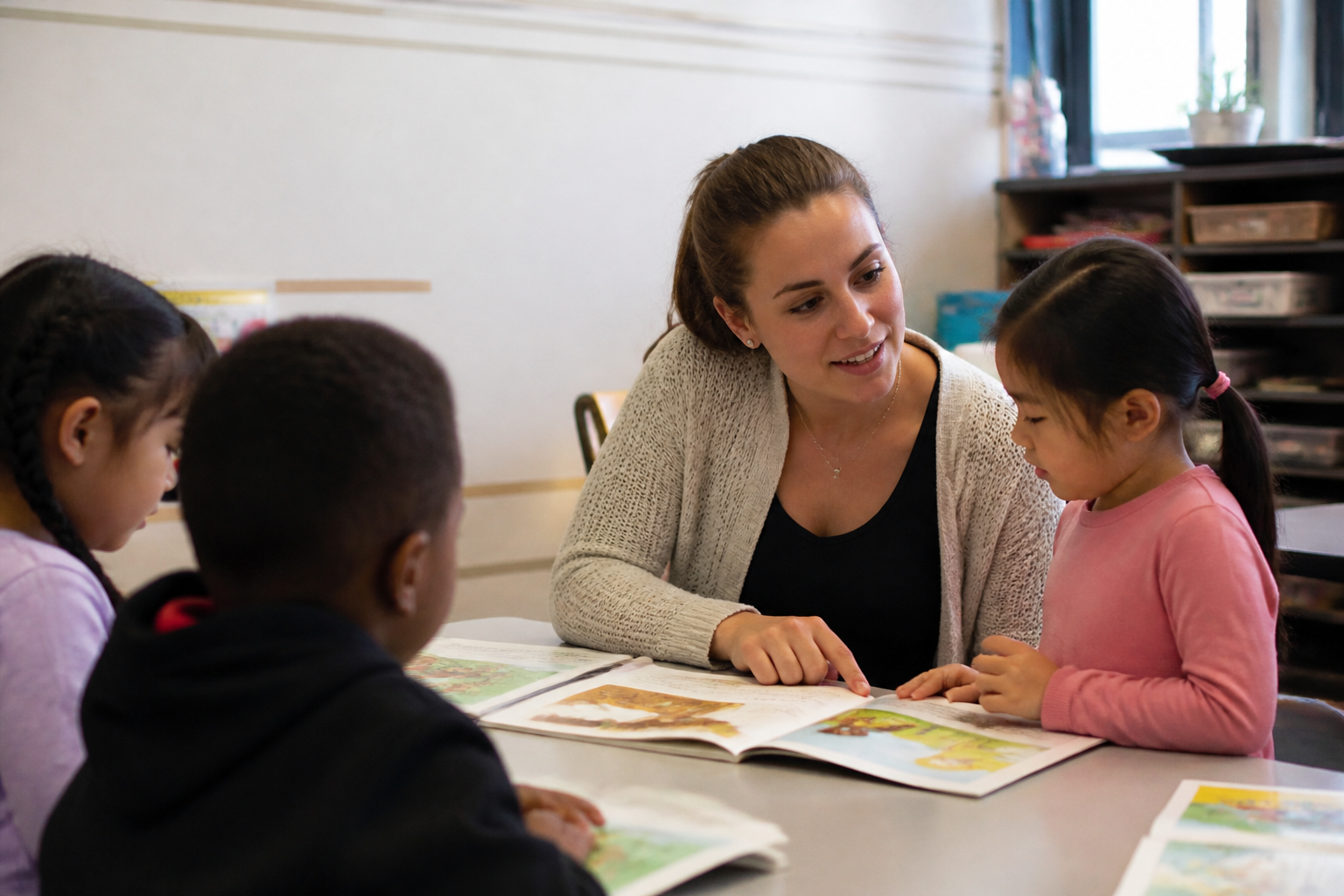
A bachelor's degree in early childhood education in Massachusetts usually means a Bachelor of Science (B.S.) in Early Childhood Education, though several schools use different titles or house the major inside a broader degree. The real tension is licensure. A PreK-2 teaching license from the state requires an approved preparation program, a practicum and MTEL exams, while child-care and preschool roles run through a separate credential.
Programs range from public universities with lower net prices to private colleges with smaller cohorts, offered on campus and online. The right choice depends on which classroom you want to teach in and whether a school's program leads to a license or ends at a child development degree.
Key Points
- Worcester State and Fitchburg State are among the cheapest after aid.
- EEC certification covers child care; DESE licensure covers public-school classrooms.
- Massachusetts PreK-2 licensure requires a 300-hour practicum and MTEL exams.
Best Bachelor's Degree in Early Childhood Education Programs in Massachusetts: Our Top 10
Ten Massachusetts colleges and universities award a bachelor's degree in early childhood education or a closely related child development field, and they fall into two broad camps: licensure programs built for the PreK-2 classroom, and broader child development degrees that lead to early intervention, program administration, or graduate study. The list runs from a research university with a long child study tradition to public universities at a fraction of the price, and each entry names the credential and the field experiences the school publishes.
Tufts University
#1Medford, MA · ~$40,000/yr (est.)
Best for: Future researchers in child development
Tufts University is a private research university in Medford, and its Eliot-Pearson child study department is one of the region's most established homes for the study of children and families. Undergraduates earn a BA in Child Study and Human Development with four concentration options, an applied or research experience, and fieldwork abroad offered every semester, summer included. Boston-area placements reach teaching hospitals, clinics, schools, early-intervention centers, and family-serving organizations. It is the most selective and highest-priced option here, and the degree is broader than a PreK-2 licensure track.
- Ten courses total, starting with two foundations and an inquiry course
- Four concentrations, or an individual plan of study
- Applied or research experience of 3.0 to 4.0 credits
- Internships require at least 110 hours in the field
- Fieldwork Abroad offered every semester, summer included
- Field placement seminar pairs an internship with coursework
- Senior honors thesis option for research-minded students
Assumption University
#2Worcester, MA · ~$29,000/yr (est.)
Best for: Aspiring counselors focused on children
Assumption University is a private Catholic university in Worcester where early childhood study sits inside the psychology department rather than a teacher preparation program. The child and adolescent development concentration runs 13 courses, one more than the general psychology major, and sits beside sibling tracks in mental health and pre-clinical counseling and in the neuroscience of human behavior. Because this is a psychology degree with a development focus rather than a PreK-2 preparation program, students set on a Massachusetts teaching license should confirm the licensure pathway with the university directly.
- 13 courses, one more than the general psychology major
- Housed in the Department of Psychology
- Sibling tracks in mental health and pre-clinical counseling
- Sibling track in the neuroscience of human behavior
- Six-course psychology minor available
Worcester State University
#3Worcester, MA · ~$13,000/yr (est.)
Best for: Budget-conscious future early educators
Worcester State University is a public university in Worcester and one of the lowest-cost routes to an early childhood credential in this ranking. Its Education department lists a BS in Early Childhood Education as a major, alongside a BS in Early Education and Care and a related Elementary Education degree, so students can aim at a classroom license or at a broader early care and administration path. A commuter-friendly campus and moderate class sizes make it a practical choice for students balancing coursework with work.
- Bachelor of Science awarded through the Education department
- Listed in the catalog as a major, not a minor
- Same department offers a BS in Early Education and Care
- Related Elementary Education BS sits in the same listing
College of Our Lady of the Elms
#4Chicopee, MA · ~$18,000/yr (est.)
Elms College is a private Catholic college in Chicopee that puts teacher licensure at the center of its early childhood degree. The 72-credit BA is built around a 14-week practicum split across two sites, one a public preschool inclusion classroom accredited by NAEYC and the other a first- or second-grade classroom. The college reports full employment for its 2019 graduates and says the initial license is recognized in more than 40 states and territories. Small cohorts mean fieldwork starts early and happens in local schools serving children with and without special needs.
- 72-credit major leading to the PreK-2 initial license
- 14-week practicum split between two school sites
- Preschool placement in an NAEYC-accredited inclusion classroom
- Second placement in a first- or second-grade classroom
- Coursework in reading, math, science, social studies, and the arts
- College reports 100% employment for its 2019 graduates
- License recognized in more than 40 states and territories
- Fieldwork with children with and without special needs
Fitchburg State University
#5Fitchburg, MA · $14,000/yr (est. net price)
Fitchburg State University is a public university in north-central Massachusetts with a four-year, on-campus degree that leads straight to the PreK-2 initial teaching license. The program holds full AAQEP accreditation through December 2030 and puts students in public school classrooms with mentor teachers before a formal practicum. A 4+1 option adds a master's degree and a second license area, with admission guaranteed for students who maintain academic standing and meet the qualifications. It is a straightforward, licensure-first choice at a public price.
- AAQEP accredited through December 31, 2030
- Four-year on-campus day program
- Field experiences in public schools with mentor teachers
- Formal practicum required for the initial license
- MTEL exams required to earn the license
- 4+1 option adds an M.Ed. and a second license area
- Guaranteed 4+1 admission for students meeting qualifications
- Study abroad opportunities available
Gordon College
#6Wenham, MA · ~$25,000/yr (est.)
Gordon College is a private Christian liberal arts college in Wenham, on the North Shore, and its early childhood degree is delivered in person through the Herschend School of Education. Students log more than 100 hours of field-based experience before a semester-long student teaching practicum or internship, and adding a special education minor opens a dual licensure path for early childhood and moderate disabilities. The program earned an A+ from the National Council on Teacher Quality for early literacy preparation, one of two Massachusetts programs recognized. Graduates teach in public, private, charter, and Christian schools.
- More than 100 hours of field-based experience
- Semester-long student teaching practicum or internship
- Special education minor opens a dual licensure path
- Integrated special education coursework on developmental delays
- NCTQ A+ rating for early literacy preparation
- Initial Massachusetts license, comparable in all 50 states
Massachusetts College of Liberal Arts
#7North Adams, MA · $15,000 – $20,000/yr (est.)
Massachusetts College of Liberal Arts is a small public liberal arts college in North Adams, in the Berkshires, with a 76-credit BS in Early Childhood Education. Three semester-long field experiences build from first placements into student teaching split between PK-K and grades 1-2, and graduates are endorsed for the Massachusetts Initial license in Early Childhood PK-2. Small classes, a rural setting, and public tuition suit students who want close supervision and a lower bill.
- 76 credit hours, including 36 in subject matter knowledge
- Three semester-long field-based experiences
- Student teaching split between PK-K and grades 1-2
- Sheltered English instruction and inclusive classroom practice
- Endorsement for the Massachusetts Initial license, PK-2
- Seminar runs alongside the student teaching practicum
- Coursework in early childhood curriculum and design
Bridgewater State University
#8Bridgewater, MA · $16,000/yr (est. net price)
Bridgewater State University is a public university in southeastern Massachusetts and carries the largest early childhood education cohort in this ranking. The degree leads to an Initial PreK-2 license, holds approval from the Massachusetts Department of Elementary and Secondary Education, and requires a second major outside the department, which broadens what graduates can teach or move into later. Admission to professional education requires a 2.8 GPA, and all three MTEL exams must be passed before student teaching. A large local school network means plenty of supervised placement options.
- 53 to 64 credit major; 120 credits required to graduate
- Second major outside the department required
- 2.8 GPA required for admission to professional education
- All three MTEL exams passed before student teaching
- Semester-long full-time placement in a local school
- Approved by the Massachusetts Department of Elementary and Secondary Education
- Prepractica built into the foundation courses
- CORI background check needed for school access
University of Massachusetts-Boston
#9Boston, MA · $18,000/yr (est. net price)
UMass Boston is a public research university in the city, and its early education and care degree is built for urban, diverse, inclusive classrooms serving children from birth to age eight. The 24-credit core covers early intervention, observation and assessment, family systems, and language and literacy, and students choose from six concentrations, including one that leads to PreK-2 licensure. The degree also fits readers aiming at program coordination, curriculum development, or Head Start leadership rather than a classroom license.
- 24-credit core across eight courses
- Licensure concentration leads to PreK-2 initial license
- Studies children from birth to age eight
- Built for urban, diverse, inclusive classrooms
- Financial aid and scholarships available
- One of six concentration options in the major
- Prepares students for early intervention services
- Runs through the College of Education and Human Development
- Concentration centered on infants and toddlers
- Prepares for early intervention work with the youngest children
- Career paths include early childhood educator and curriculum developer
Stonehill College
#10Easton, MA · ~$33,000/yr (est.)
Stonehill College is a private Catholic college in Easton with a BA in Early Childhood Education that leads to the Massachusetts Initial license as Teacher: Early Childhood PreK-2. Field placements can begin in the first semester and finish with a full-semester practicum in senior year, and the professional strand covers reading theory and instruction, English language learners, inclusive learning, and child assessment. Small classes, faculty-facilitated internships, and an accelerated bachelor's-to-master's option appeal to students who want an early start in classrooms.
- Prepares for the Initial license as Teacher: Early Childhood PreK-2
- Field placements can begin in the first semester
- Full-semester practicum during senior year
- Professional strand covers reading theory and instruction
- Coursework in English language learners and inclusive learning
- Practicum strand includes curriculum design and a seminar
- Accelerated bachelor's and master's option in four years
Cost & outcomes by school
Federal data for the highest-earning Early Childhood Education programs, independent of the ranking above. Earnings are this field's bachelor's graduates four years after completing where the Scorecard reports them, else the school's undergraduate median.
| School | Net price / yr | Grad rate | Earnings | Debt | Grads/yr | Format |
|---|---|---|---|---|---|---|
| Tufts University MA | $39,998 | 94% | $83,214 | $16,250 | — | Campus |
| Merrimack College MA | $37,927 | 70% | $75,584 | $27,000 | 37 | Campus |
| Wheaton College (Massachusetts) MA | $29,822 | 73% | $67,725 | $26,000 | 22 | Campus |
| Assumption University MA | $29,498 | 75% | $61,136 | $27,000 | 24 | Campus |
| Salem State University MA | $15,996 | 50% | $56,509 | $25,000 | 72 | Campus |
| University of Massachusetts-Boston MA | $17,707 | 49% | $56,460 | $24,990 | 73 | Campus |
| Curry College MA | $29,207 | 51% | $54,400 | $25,000 | 12 | Campus |
| Lesley University MA | $31,152 | 58% | $52,570 | $16,355 | 33 | Campus |
| Framingham State University MA | $16,114 | 48% | $52,349 | $25,000 | 44 | Campus |
| Worcester State University MA | $13,381 | 62% | $52,337 | $20,297 | 58 | Campus |
| College of Our Lady of the Elms MA | $17,545 | 68% | $51,540 | $25,000 | 5 | Campus |
| Bridgewater State University MA | $16,383 | 53% | $51,523 | $27,000 | 135 | Campus |
Sources: U.S. Department of Education. Net price, graduation rate, earnings and debt: College Scorecard (earnings and debt for this field's bachelor's graduates where reported, else school-wide); graduates: IPEDS. A dash means no figure is reported.
Cost, debt & payoff
Median earnings of this field's bachelor's graduates (4 yrs after completing, else the school's undergraduate median) vs. their median federal loan debt · U.S. College Scorecard
Across these programs the median graduate earns about $51,939 and finishes with roughly $25,000 in debt — a ratio that clears a common rule of thumb (keep debt below first-year salary). Net price and debt vary widely school to school, so check the per-school figures in the table above before you shortlist.
How We Ranked Massachusetts Bachelor's in Early Childhood Education Programs
A campus that feels right and a price tag that fits are not evidence of how a school's early childhood graduates actually fare, so the ranking keeps the two separate. Three kinds of evidence drive the order.
The Sources
- Federal cost and outcome data: College Scorecard figures for cost, student debt, and completions, alongside program-level earnings, plus tuition reported through IPEDS.
- Earnings by time window: each figure is labeled by how long after finishing it is measured, such as four years out. Do not confuse them with the school-wide 10-year figures published elsewhere.
- Completions: how many students actually finish the program, which says something about whether students stick with it.
Two Averages That Are Not Program-Specific
Graduation rate and net price are institution-wide numbers. They describe the whole college, not the early childhood education major, so read them as context rather than a verdict on the program itself.
The Scope
Massachusetts-based schools only, covering both campus and online bachelor's programs, so a classroom option in Worcester and an online one based in Boston can be compared on the same terms. A school appears only if it offers a bachelor's degree in early childhood education or a closely related major in child development.
Cost of a Bachelor's in Early Childhood Education in Massachusetts: Cheapest Programs and State Aid
By average net price after aid, Worcester State University, Fitchburg State University, Bay Path University, Salem State University and Massachusetts College of Liberal Arts are the lowest-cost options for a bachelor's degree in early childhood education in our data. Bay Path shows how a private school with a $38,302 sticker price can land near the state universities once grants are applied. Pell Grant recipients make up roughly 50% to 67% of undergraduates at these five schools, and school-wide median debt at graduation runs from $19,500 to $25,000. Keep in mind that net price is a federal average across aided students, not a personal quote, so use each school's net price calculator before you compare offers. On the state side, the main programs work like this. MASSGrant requires at least one year of Massachusetts residency, full-time enrollment in a certificate, associate or bachelor's program, and a FAFSA or MASFA on file. The MASSGrant Plus Expansion reaches students who don't qualify for Pell when their Student Aid Index is $15,000 or less. Community college transfers can use the MassTransfer Tuition Waiver, which covers 100% of resident tuition (not necessarily fees) at a state university for two years; keeping it for the second year requires a 3.0 GPA. The Commonwealth Commitment adds a 10% rebate on tuition and fees each semester and freezes those costs for students on its transfer pathway. After graduation, educators working in EEC-licensed or EEC-funded programs can apply for up to $7,500 toward student loans under guidelines effective August 1, 2026.
| School | City | Sector | In-State Tuition and Fees | Average Net Price After Aid | Pell Grant Share | Median Debt at Graduation (School-Wide) |
|---|---|---|---|---|---|---|
| Worcester State University | Worcester | Public | $11,786 | $13,381 | 50% | $19,500 |
| Fitchburg State University | Fitchburg | Public | $11,346 | $14,262 | 53% | $24,239 |
| Bay Path University | Longmeadow | Private nonprofit | $38,302 | $14,271 | 67% | $24,901 |
| Salem State University | Salem | Public | $12,338 | $15,996 | 56% | $25,000 |
| Massachusetts College of Liberal Arts | North Adams | Public | $12,436 | $16,068 | 61% | $23,750 |
Online and Hybrid Bachelor's Options at Massachusetts Schools
A fully online degree, a hybrid evening and weekend program and a traditional campus degree each ask something different of your calendar, and only one will fit yours.
Fully Online
Fisher College offers a B.A. in Early Childhood Education and Care entirely online, 122 credits delivered in 8-week terms. At two courses per term the program runs about 20 terms, or roughly 40 months. Eligible transfer credit can shorten that timeline, and lighter enrollment can stretch it. Practicum courses ED200 and ED201 stay in the degree regardless of delivery mode.
Hybrid, Evenings and Weekends
Bay Path University's B.A. in Education in Early Childhood Education and Care blends campus sessions, live Zoom classes and asynchronous work, scheduled for students who are working or raising children. Supervised pre-practicum and student teaching in a public early childhood classroom are required, and the field component exceeds state requirements.
Campus
Most of the schools ranked here run their early childhood bachelor's degree on campus with field placements built into the weekday schedule. Bridgewater State's Early Education and Care program includes a field experience one day a week; Salem State's practicum is full time. UMass Boston, Worcester State, Fitchburg State, Elms, Gordon, MCLA and Stonehill all follow a campus model.
No format removes the in-person requirement. Massachusetts licensure pathways require supervised classroom work regardless.
Which Fits Whom
- Fully online: working adults with daytime jobs who can arrange local fieldwork.
- Hybrid evenings and weekends: adults near a campus who want live instruction outside business hours.
- Campus: students who want the school to place them in classrooms early and often.
Related Articles
Massachusetts Early Childhood Licensure at a Glance
Massachusetts EEC Certification vs. Prek-2 Licensure: What's the Difference?
A bachelor's degree in early childhood education can lead to two different Massachusetts credentials, and they are not interchangeable. EEC certification covers child-care and preschool settings, while DESE licensure covers public-school teaching. Many students plan for both, since a DESE Early Childhood license can also satisfy EEC preschool education requirements.
| Factor | EEC Lead Teacher / Preschool Teacher Certification | DESE Initial PreK-2 Licensure |
|---|---|---|
| Governing agency | Massachusetts Department of Early Education and Care (EEC) | Massachusetts Department of Elementary and Secondary Education (DESE) |
| Settings covered | Large center-based group child-care programs and community-based early-education settings | Public-school classrooms at the licensed grade span |
| Education requirements | Degree holders need 12 early childhood education credits in 4 categories of study, including 2 additional credits in planning programs, curriculum, or classroom management | A bachelor's degree completed through a state-approved licensure program; the degree alone does not establish licensure |
| Experience requirements | Preschool Lead Teacher applicants with a bachelor's or advanced degree in early childhood education or a related field need 9 months of experience | Field-based pre-practicums and a practicum aligned with the license; no separate months-of-employment requirement is specified |
| MTEL requirement | Not required under the cited EEC requirements | Communications and Literacy Skills MTEL required for the initial license |
| Credential levels | Preschool Teacher and Preschool Lead Teacher, with Lead Teacher the higher level | A school-teacher license tied to a grade span, not a child-care professional certification |
| Typical path from a bachelor's degree | A bachelor's in early childhood education typically supports Lead Teacher eligibility once the required coursework is documented | A bachelor's typically leads to this license only when paired with licensure-program, MTEL, and practicum requirements |
Questions to Ask Yourself
Do you want to teach in a public school PreK-2 classroom or in a preschool and childcare setting?
Can you complete an in-person practicum, or do you need a part-time or evening schedule?
Are you starting at a community college and planning to transfer?
Frequently Asked Questions
These answers cover the questions Massachusetts students ask most often when comparing a bachelor's degree in early childhood education with state licensure rules, pay and transfer routes.
Can you earn a bachelor's degree in early childhood education online in Massachusetts?
What is the difference between Massachusetts EEC certification and PreK-2 licensure?
How much do early childhood educators earn in Massachusetts?
Can I transfer from a community college into a Massachusetts early childhood education bachelor's program?
Compare Early Childhood Education programs on the data that matters
Explore more Education & Teaching majors or browse every field of study.
All Education & Teaching programs Browse every field of study