Best Psychology Schools in New York
Compare 81 accredited General Psychology programs in New York at 77 colleges, with net price after aid, graduation rates, earnings and debt from IPEDS and the U.S. College Scorecard.
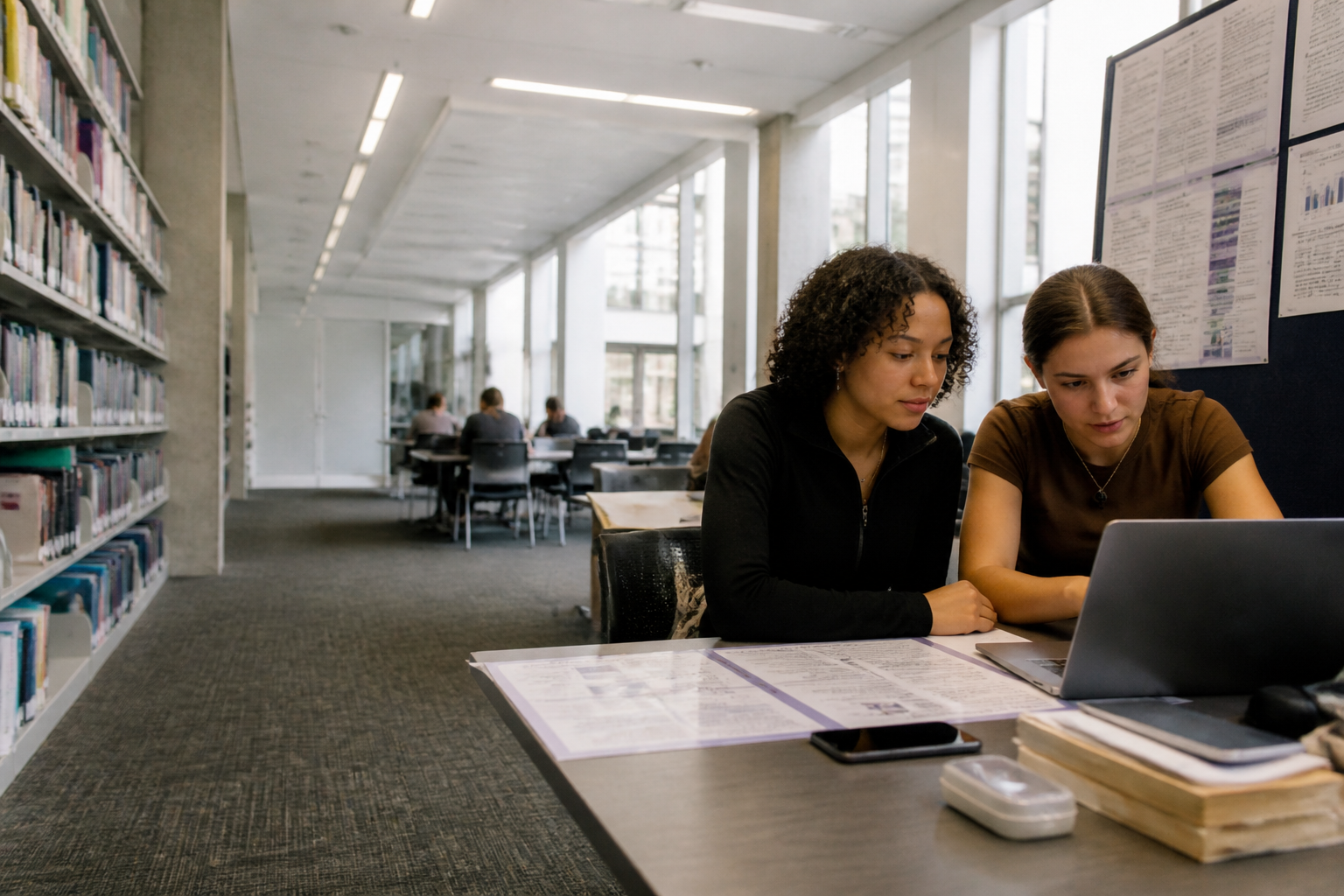
A bachelor's degree in psychology in New York can start at a CUNY campus where the average net price is under $3,000 a year, or at an Ivy League department built around faculty research labs. The options run from SUNY and CUNY campuses to private colleges, in New York City and upstate.
Schools award a Bachelor of Science (B.S.) or Bachelor of Arts (B.A.) in Psychology, and the choice often changes the math and science requirements. The programs below cover campus and online options at New York-based schools, ranked by transparent criteria.
The real tension is selectivity against cost. The most competitive departments admit a small share of applicants, while the cheapest public options are the ones most students can realistically afford.
Key Points
- CUNY Hunter College posts the lowest average net price: $2,984 a year.
- Columbia admits about 4 percent of applicants; Cornell, about 9 percent.
- A bachelor's alone won't qualify you as a licensed New York psychologist.
Best Schools for a Bachelor's Degree in Psychology in New York
New York's psychology bachelor's programs range from large CUNY and SUNY departments with a dozen or more concentration options to Ivy League majors built around faculty research labs. Every school below awards a Bachelor of Arts or Bachelor of Science in Psychology, and they differ most in class size, research access and how many specialization tracks the major allows.
CUNY Bernard M Baruch College
#1New York, NY · $7,000 – $15,000/yr (est.)
Best for: Business-minded students pairing psychology with careers
A public CUNY campus in Manhattan, Baruch College is best known for business but draws a large psychology cohort into its 25-credit B.A. program. The major pairs a required research methods course with 12 foundation credits and 9 electives, and faculty specialize in industrial-organizational, clinical, social, cognitive neuroscience and developmental psychology. Students can add an independent study or honors thesis and are assigned a faculty advisor when they declare. The degree sends graduates into business, law, healthcare, education and nonprofit work as well as graduate school.
- 25-credit major with a required research methods course
- 12 foundation credits plus 9 elective credits
- Faculty strengths include industrial-organizational, clinical and social psychology
- Independent study or honors thesis available
- Faculty advisor assigned when you declare the major
- Prepares for business, law, healthcare and nonprofit careers
Columbia University in the City of New York
#2New York, NY · ~$22,000/yr (est.)
Best for: Research-focused students wanting faculty lab experience
An Ivy League university in Morningside Heights, Columbia runs its psychology major across 11 courses and 30 credits, covering research methods, cognition, neuroscience, developmental, social and clinical psychology. Students are encouraged to work in faculty labs and can join the Senior Thesis Advanced Research program for a capstone research project. Advising is personalized, and AP or IB credit can cover the introductory psychology requirement. Graduates head to graduate study or into social work, education, medicine, law and business.
- 30 credits across 11 courses
- Distribution requirements across three course groups
- Statistics and research methods required
- Senior Thesis Advanced Research (STAR) program
- Research lab involvement encouraged
- AP and IB credit accepted for introductory psychology
- Faculty and peer advising available
Cornell University
#3Ithaca, NY · $29,000/yr (est. net price)
Best for: Undecided students exploring four concentration options
Cornell's psychology major in Ithaca runs 40 credits across biological, cognitive, developmental and social perspectives, with four concentration options and breadth requirements in four areas. Students complete statistics and research methods, are assigned a faculty advisor, and can apply up to 12 research credits toward the degree. Independent research is available within a large research university, and external course credit is accepted. The major prepares graduates for research, counseling, human resources, education and healthcare, or for graduate study.
- 40 total credit hours
- 4 concentration options within the major
- Breadth across perception and cognition, development, neuroscience, social and personality
- Up to 12 research credits can count toward the degree
- Assigned faculty advisor
- Statistics proficiency and research methods required
- External course credit accepted
Binghamton University
#4Vestal, NY · $20,000 – $25,000/yr (est.)
A SUNY university in Vestal, near Binghamton, offering a Bachelor of Arts in Psychology of 60 to 64 credits. The major combines three core courses with a required laboratory course, three foundational courses, two 400-level psychology courses and 24 credits of math and science electives. Tracks include Autism Spectrum Disorder and Foundations in Psychology, and students can gain practicum experience at the Institute for Child Development. At least 16 credits must be completed in residence, and undergraduates can join ongoing faculty research.
- 60-64 credit hours, including one four-credit laboratory course
- Two tracks: Autism Spectrum Disorder and Foundations in Psychology
- 24 credits of math and science electives
- Practicum at the Institute for Child Development
- At least 16 credits must be taken in residence
- Research with faculty encouraged
- Declare the major by the end of sophomore year
Stony Brook University
#5Stony Brook, NY · ~$19,000/yr (est.)
A SUNY research university on Long Island, Stony Brook awards a Bachelor of Arts in Psychology with a 12-credit concentration chosen from 15 options. The core includes introductory psychology, statistics and Research and Writing in Psychology, and the honors program requires a 3.50 psychology GPA, a 3.20 cumulative GPA and a senior thesis across two semesters. Outside concentration areas run from Africana Studies and Biology to Computer Science, Economics and Writing. Transfer students must complete at least 12 psychology credits in residence.
- 12-credit concentration chosen from 15 options
- At least two concentration courses at the 300 to 499 level
- Honors thesis requires 3.50 psychology and 3.20 cumulative GPA
- Outside concentration areas include Biology, Computer Science and Economics
- Transfer students complete 12 psychology credits in residence
- Psychology courses may be repeated only once
CUNY Hunter College
#6New York, NY · ~$3,000/yr (est.)
A CUNY college in Manhattan, Hunter builds its psychology major around statistics and experimental psychology, then opens eight specialized tracks and an optional behavioral neuroscience concentration. Students develop critical thinking, ethical reasoning and communication skills through coursework and hands-on research, and the curriculum emphasizes scientific inquiry. Graduates move into mental health, education, social services and industry, or continue to graduate psychology programs. A flexible structure lets students tailor the degree to their interests.
- Core courses in statistics and experimental psychology
- Eight specialized tracks plus a behavioral neuroscience concentration
- Prerequisite courses required before advanced work
- Emphasizes scientific inquiry, ethics and communication
- Prepares for mental health, education, social services and industry roles
- Strong math, lab science and writing foundations recommended
CUNY City College
#7New York, NY · ~$3,800/yr (est.)
The City College of New York, CUNY's flagship campus in upper Manhattan, offers a Bachelor of Arts in Psychology of 120 credits, 35 of them in the major. Students take 11 required courses plus 3 speech credits and at least one course in three of four concentration areas. An internship program adds research or clinical and counseling experience, and a BA/MA pathway lets strong students earn both degrees. Graduates move into counseling, clinical psychology, social work, education, child psychology and human resources.
- 120 total credits, 35 of them in psychology
- 11 required courses plus 3 speech credits
- At least one course in three of four concentration areas
- Internships in research or clinical and counseling settings
- BA/MA pathway lets students earn both degrees
- PSY 32100 is a prerequisite or co-requisite for 300-level courses
CUNY Brooklyn College
#8Brooklyn, NY · under $5,000/yr (est.)
Brooklyn College awards a Bachelor of Science in Psychology through its School of Natural and Behavioral Sciences, with an approved curriculum listed for the 2026-27 academic year. The 32.5-credit major requires Psychology 1000, 3400 and 3450W, one course from each of three designated sets, and four advanced electives. B.S. candidates also complete at least 60 credits in science and mathematics, 24 of them in advanced psychology courses taken at Brooklyn College. The department treats psychology as a STEM discipline, publishes four-year degree maps, and the Magner Career Center connects students to employers such as Northwell Health, NYU Langone Health and the New York City Department of Education.
- 32.5 credits in the major
- At least 60 science and math credits, 24 in advanced psychology at Brooklyn
- Department treats psychology as a STEM discipline
- Five learning outcomes drawn from APA guidelines
- Four-year degree maps published for every major
- Magner Career Center job fairs and internship database
- Approved curriculum listed for the 2026-27 academic year
University at Buffalo
#9Buffalo, NY · $20,000 – $25,000/yr (est.)
The University at Buffalo, SUNY's largest campus, offers a BA in Psychology with coursework across behavioral neuroscience, clinical, cognitive and social-personality psychology. Students complete statistics and scientific inquiry, take advanced courses in residence at UB, and can assist in faculty research for credit or join the Psychology Honors Program. Learning goals follow American Psychological Association standards, and the degree can be combined with a second major. Graduates go into counseling, social work, education, law, healthcare, marketing, public health and user-experience research.
- Coursework across behavioral neuroscience, clinical, cognitive and social-personality
- Statistics and scientific inquiry required
- Advanced psychology courses must be completed at UB
- Research assistant roles available for credit
- Psychology Honors Program for advanced research
- Learning goals follow American Psychological Association standards
- Can be combined with a second major
CUNY Lehman College
#10Bronx, NY · $3,100/yr (est. net price)
Lehman College in the Bronx offers a Bachelor of Arts in Psychology with a 35-credit major built on a 14-credit core of general psychology, two research methods courses and history of psychology. Two distribution blocks cover developmental, clinical, personality, applied, cognitive and biological areas, with 9 credits of upper-level electives. Independent study and an honors research option with an APA-style thesis and departmental presentation are available. Starting Fall 2027, the research methods sequence moves to PSY 302 and PSY 303, offered in person only.
- 35 credits in psychology
- 14-credit core: general psychology, two research methods courses, history
- Two 6-credit distribution blocks plus 9 elective credits
- PSY 485 independent study capped at 6 credits
- PSY 495 honors research requires an APA-style thesis and presentation
- PSY 302 and PSY 303 replace the old methods sequence starting Fall 2027
Cost & outcomes by school
Federal data for the highest-earning General Psychology programs, independent of the ranking above. Earnings are this field's bachelor's graduates four years after completing where the Scorecard reports them, else the school's undergraduate median.
| School | Net price / yr | Grad rate | Earnings | Debt | Grads/yr | Format |
|---|---|---|---|---|---|---|
| Columbia University in the City of New York NY | $21,590 | 96% | $102,491 | $21,500 | — | Campus |
| Rensselaer Polytechnic Institute NY | $36,228 | 84% | $102,051 | $23,750 | 4 | Campus |
| New York University NY | $37,050 | 88% | $82,509 | $20,500 | — | Campus |
| Barnard College NY | $28,800 | 93% | $80,516 | $18,000 | — | Campus |
| Hamilton College NY | $28,985 | 91% | $78,411 | $17,000 | — | Campus |
| Cornell University NY | $28,690 | 95% | $78,049 | $13,000 | 102 | Campus |
| Clarkson University NY | $30,305 | 75% | $73,359 | $25,813 | 31 | Campus |
| New York Institute of Technology NY | $22,443 | 59% | $70,080 | $23,334 | — | Campus |
| Binghamton University NY | $21,620 | 82% | $67,249 | $18,500 | 395 | Campus |
| D'Youville University NY | $20,433 | 68% | $66,942 | $25,000 | 17 | Hybrid |
| Syracuse University NY | $38,793 | 84% | $65,694 | $26,000 | 312 | Campus |
| Manhattan University NY | $27,256 | 64% | $64,684 | $26,000 | 63 | Campus |
Sources: U.S. Department of Education. Net price, graduation rate, earnings and debt: College Scorecard (earnings and debt for this field's bachelor's graduates where reported, else school-wide); graduates: IPEDS. A dash means no figure is reported.
Cost, debt & payoff
Median earnings of this field's bachelor's graduates (4 yrs after completing, else the school's undergraduate median) vs. their median federal loan debt · U.S. College Scorecard
Across these programs the median graduate earns about $55,458 and finishes with roughly $22,995 in debt — a ratio that clears a common rule of thumb (keep debt below first-year salary). Net price and debt vary widely school to school, so check the per-school figures in the table above before you shortlist.
Most Affordable Bachelor's in Psychology Schools in New York
CUNY Hunter College has the lowest average net price among the schools ranked here, at $2,984 a year, and every option in this table is a CUNY campus in New York City. Net price is the average a full-time student actually paid after grants and scholarships, based on 2024 federal data from IPEDS and the College Scorecard, so treat it as a guide rather than an exact quote for your own aid package. Public SUNY and CUNY campuses offer the strongest value for New York residents, while private schools such as Columbia and Cornell do not reach this low-cost tier, so their value depends on each family's individual aid offer.
| School | Location | Average Net Price After Aid | In-State Tuition and Fees | Graduation Rate | Median Debt at Graduation | Median Earnings 1 Year After Graduating (Psychology) |
|---|---|---|---|---|---|---|
| CUNY Hunter College | New York, NY | $2,984 | $7,382 | 57% | $11,000 | $31,706 |
| CUNY Bernard M Baruch College | New York, NY | $3,033 | $7,464 | 72% | $11,512 | $35,149 |
| CUNY Brooklyn College | Brooklyn, NY | $3,103 | $7,452 | 54% | $11,000 | $29,802 |
| CUNY Lehman College | Bronx, NY | $3,148 | $7,410 | 51% | $10,950 | $36,913 |
| CUNY City College | New York, NY | $3,776 | $7,340 | 57% | $11,990 | $30,925 |
Online and Hybrid Bachelor's in Psychology Options at New York Schools
Flexibility and campus access compete, and the format you choose decides which one you get. Most programs here, including those at Columbia University, Cornell University, Binghamton University and Stony Brook University, are campus-based. Online options are narrower, and a clearly defined hybrid psychology degree is harder to confirm than a fully online or fully on-campus one.
Online Formats and Accreditation
Accredited online bachelor's degrees in psychology do exist at New York-based schools. CUNY City College offers a B.A. in Psychology Online delivered asynchronously, and it is identified as accredited by the Middle States Commission on Higher Education. CUNY Bernard M Baruch College also offers an asynchronous online psychology B.A., but it admits students who already hold an associate's degree or 60 or more college credits.1
Middle States is the regional accreditor for New York institutions. Its approval affects federal financial aid, credit transfer, and how graduate schools and employers view your degree. Do not assume it. Look up each school in the accreditor's directory.
Who Each Format Suits
- Online: Working adults, career changers, and transfer students with 60 or more credits who need to study on their own schedule.
- Campus: Traditional-age students who want faculty-mentored research, labs, and honors thesis work, such as Columbia's lab involvement or Stony Brook's honors thesis.
What to Verify Before Enrolling
Confirm the accreditation status, whether the whole degree can be finished online, whether any courses meet live, and how many of your credits will transfer. Also ask whether research methods or practicum requirements must be completed in person.
Related Articles
Admissions for a Bachelor's in Psychology in New York: GPA and Test Policy
Highly selective private schools and broad-access public campuses sit at opposite ends of New York admissions. Columbia admits about 4 percent of applicants and Cornell about 9 percent. Binghamton admits roughly 39 percent. Stony Brook and Baruch are near 49 and 48 percent. Hunter, Brooklyn, Lehman and City College fall between about 54 and 60 percent, and University at Buffalo admits about 74 percent.
GPA and Test Policy
A published minimum GPA or a current test-optional or test-blind policy could not be confirmed for psychology at these schools, so treat any number you see elsewhere cautiously. Most admit students to the college rather than the major, and the admissions office sets the bar. Columbia and Cornell publish no single cutoff, and their admitted classes are far stronger than any minimum would suggest. Check each school's admissions page for the current cycle before you plan around a score, since test policies change from year to year.
Common Application Pieces
Expect most of the following:
- Transcripts: Your high school record, plus any college coursework.
- Application: The Common Application at private schools and many SUNY campuses (SUNY also offers its own application), and the CUNY application at the CUNY colleges.
- Essays: A personal statement, with supplements at the more selective schools.
- Recommendations: Typically required at the selective schools, while open-access campuses often ask for fewer.
- Fee or waiver: Fees vary, and waivers are common for eligible students.
Psychology-Specific Requirements
Psychology rarely has its own application. The requirements come after you enroll. Binghamton asks students to declare the major by the end of sophomore year. Cornell and Hunter list prerequisite courses, and Cornell's major is open to Arts and Sciences students. Statistics and research methods are common early requirements, so strong math and writing preparation helps.
Transferring Into a Psychology Bachelor's Program: SUNY and CUNY Pathways
Starting at a community college saves money, but only if your credits count toward the psychology major instead of landing as generic electives.
SUNY Transfer Path
SUNY's Psychology Transfer Path is a 60-credit planning framework for A.A. or A.S. students. It includes Introduction to Psychology, and approved courses earned with a C or better1 transfer as major or cognate credit. SUNY general education credits also move between campuses, with at least 7 of 10 categories applying. Associate degree holders, including CUNY A.A. and A.S. graduates, are guaranteed a chance to continue full time at a SUNY bachelor's campus with junior standing.2 That is not guaranteed admission to every campus or psychology program.
CUNY Pathways
CUNY's Psychology Universal Transfer Path covers 18 credits within the major across participating colleges, including Baruch, Brooklyn College, City College, and Hunter. CUNY's 2026 articulation form says Pathways gateway courses must transfer as major credit.
Practical tips
- Get it in writing: Ask the receiving school to confirm in writing how each course will count.
- Check prerequisites: Statistics and research methods requirements vary by campus, so compare your plan against the target major.
- Watch credit caps: No single maximum applies to every SUNY or CUNY psychology agreement, so read the specific document.
If a school publishes no clear transfer policy, ask its admissions office for a transfer-credit evaluation or degree audit before you enroll.
New York State Aid for Bachelor's Students: TAP, Excelsior, and Other Grants
New York State aid for psychology majors comes mainly through TAP, the Excelsior Scholarship, and the Enhanced Tuition Award.
TAP: The Base Grant
The Tuition Assistance Program requires New York residency for 12 months before your first term (or DREAM Act eligibility), attendance at an approved New York college, a degree program, good standing, and at least 12 credits a semester.1 Income limits shift with your category: up to $125,000 for dependent students and independent married students with dependents, $60,000 for independent married students without dependents, and $30,000 for independent single students.1 The maximum award is $5,665, though the actual amount depends on family income and tuition charges.2
Excelsior and the Enhanced Tuition Award
The Excelsior Scholarship covers remaining tuition after other grants, up to $5,500, for households with federal adjusted gross income of $125,000 or less.3 It works only at SUNY and CUNY, requires 12 credits a term and 30 a year, and expects a bachelor's in four years.4 At participating private colleges, the Enhanced Tuition Award applies instead: same income cap, up to $6,000 a year, with TAP counted inside that figure.5
Filing and One Example
Submit the FAFSA and New York's TAP application, since the state award is not automatic. A student under the income limits at a SUNY campus can stack TAP and Excelsior to cut the tuition bill sharply. The same student at a private college can claim at most $6,000 in combined state support, so a higher sticker price leaves a larger remainder to cover.
Can You Become a Licensed Psychologist in New York With a Bachelor's Degree?
A bachelor's degree in psychology is the starting point for licensure in New York, not the finish line. On its own, it does not qualify you to practice as a psychologist.
What the License Requires
The NYSED Office of the Professions sets the rules.1 For a Licensed Psychologist, you need a doctoral degree in psychology from a program registered by NYSED or accredited by the American Psychological Association (or one the Department finds substantially equivalent).2 You also need two years of supervised experience, counted at 1,750 hours per year, under a licensed psychologist. Finally, you must earn a converted score of at least 75 on the EPPP.2 Applicants already licensed in another jurisdiction may qualify through a separate route based on five years of post-licensure experience within the last ten.
Licensed mental health counselors (LMHCs) need a master's degree or higher in counseling, 3,000 hours of supervised post-master's experience, and the NCMHCE exam. School psychologist certification is a separate credential with its own degree, experience and exam rules, so confirm those details directly with NYSED rather than assuming they match the psychologist license.
Either way, the bachelor's degree is the undergraduate foundation you build on before graduate training.
Roles Open Without a License
With a bachelor's alone, graduates commonly work in human services, as research assistants, or in human resources. These roles don't carry the title of psychologist or counselor.
Before you plan around any pathway, check the current requirements on the NYSED Office of the Professions website, which is the authoritative source.1
How to Choose a Bachelor's in Psychology School in New York
The best psychology school in New York is the one that fits your budget, career goals and location, and the schools here serve different priorities.
Match Cost and Value to Your Priorities
For the lowest cost, look to the CUNY campuses: Hunter, Baruch, Brooklyn, Lehman and City College show average net prices of roughly $3,000 to $3,800 a year. Stony Brook ($18,784), Buffalo ($20,995) and Binghamton ($21,620) cost more but offer large research universities. Columbia ($21,590) and Cornell ($28,690) are the most selective, with graduation rates of 96% and 95%.
Treat graduation rate carefully. The figure is institution-wide rather than specific to psychology majors, and among the CUNY schools it ranges from 51% at Lehman to 72% at Baruch.
Internships and Research Access
New York City campuses put hospitals, agencies and nonprofits within commuting distance. Brooklyn College's program lists an internship database and job fairs. Upstate, the draw is campus labs: Cornell counts up to 12 research credits toward the major, and Stony Brook offers an honors thesis with a faculty mentor.
B.A. or B.S., and Which Concentration
A B.S. tends to carry more science and statistics coursework. Brooklyn College's B.S. requires 60 science and math credits, which suits students aiming at research or neuroscience. A B.A. leaves more room for a second major or minor. Concentrations vary widely: Stony Brook lists 15 options, Hunter nine (including Behavioral Neuroscience) and Cornell four. Pick the program whose tracks match the work you want to do.
Frequently Asked Questions About Psychology Bachelor's Programs in New York
Can you get an accredited psychology bachelor's degree online in New York?
Can you become a licensed psychologist in New York with a bachelor's degree?
What is the difference between a B.A. and a B.S. in Psychology?
Is it better to study psychology in New York City or upstate?
Compare General Psychology programs on the data that matters
Explore more Psychology majors or browse every field of study.
All Psychology programs Browse every field of study