Best Data Science Degree Programs in Missouri
Compare 7 accredited Data Science programs in Missouri, with net price after aid, graduation rates, earnings and debt from IPEDS and the U.S. College Scorecard.
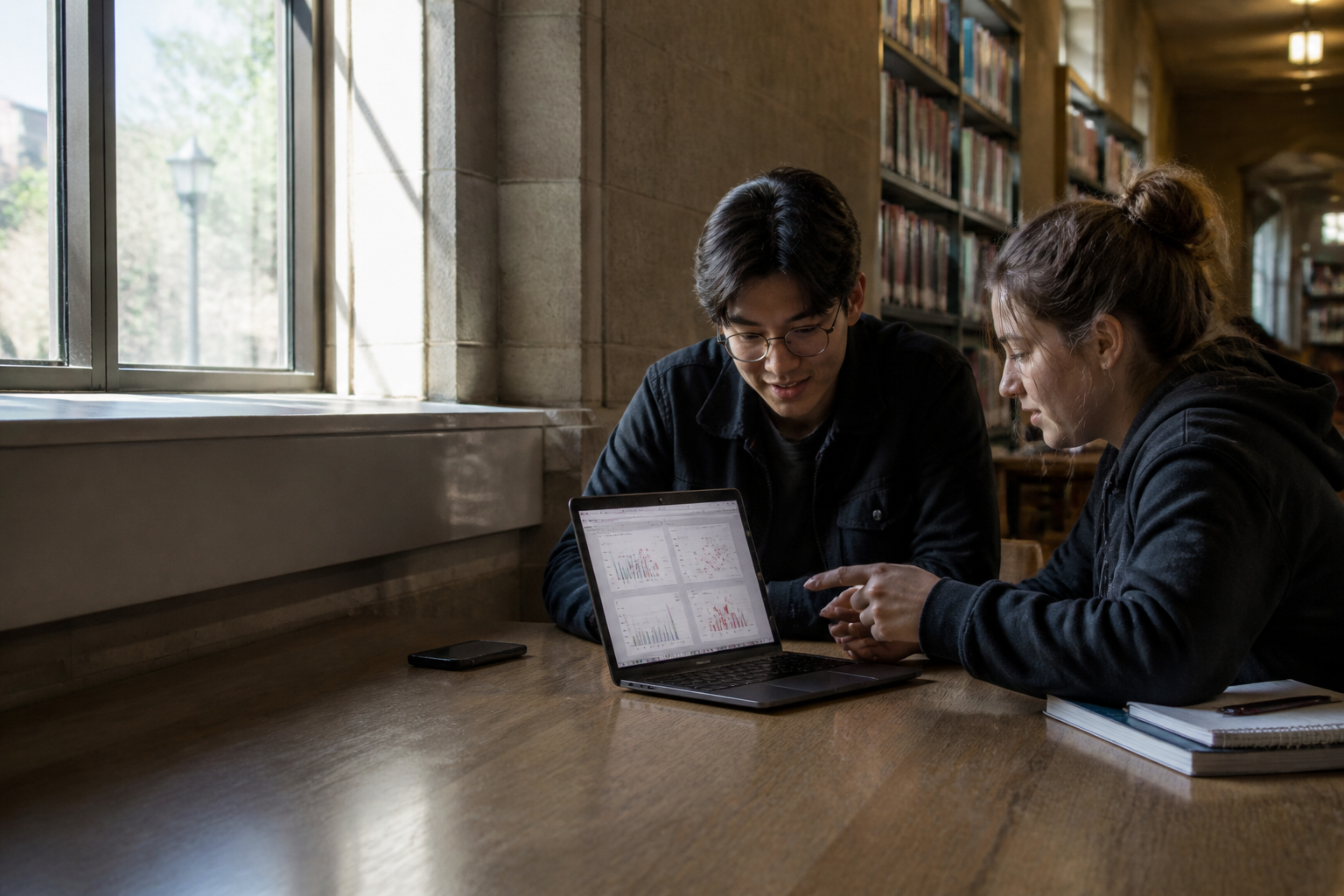
What is the best data science college in Missouri for a bachelor's degree in data science? Maryville University earns the top spot here, though the right fit depends on budget and location. Most programs award a Bachelor of Science (B.S.) in Data Science.
Options cluster in St. Louis (SLU, Maryville, University of Health Sciences and Pharmacy), metro Kansas City (William Jewell in Liberty, Central Missouri in Warrensburg) and Columbia, home to the University of Missouri, with Westminster in nearby Fulton. Public and private schools both compete.
Sticker prices run from $10,050 for Missouri residents at Central Missouri to $55,760 at SLU, though aid pulls SLU's average net price down to $24,398.
Key Points
- Saint Louis University ranks first for its statistics, computing and research core.
- Tuition runs $10,050 (Central Missouri, in-state) to $55,760 (Saint Louis University).
- Most programs here are campus-based; fully online delivery remains the exception.
Best Bachelor's in Data Science Schools in Missouri, Ranked
Saint Louis University takes the top spot here for students who want a rigorous statistics and computing core with undergraduate research experience. Maryville University suits learners who want machine learning depth alongside a business foundation, and the University of Health Sciences and Pharmacy in St. Louis fits students aiming at health and population data. If in-state cost and a large public campus matter most, the University of Missouri and the University of Central Missouri are the value picks.
Saint Louis University
#1Saint Louis, MO · $24,000/yr (est. net price)
Best for: St. Louis students wanting statistics and computing depth
Saint Louis University is a private Jesuit research university in midtown St. Louis with a strong pre-professional bent and long-standing science and health programs. Its data science major is taught jointly by computer science and mathematics and statistics faculty, and undergraduates can pursue research and internship placements that include work with the Lincoln Lab at MIT. The university also runs accelerated pathways from the bachelor's degree into master's study in computer science or artificial intelligence.
- 62 credits in the major inside a 120-credit degree
- Jointly taught by computer science and mathematics and statistics
- Four semesters of practica plus capstone experiences
- Two specialization paths: computing or statistical
- Curriculum modeled on American Statistical Association guidelines
- Research placements include the MIT Lincoln Lab
- Data Science Club runs predictive modeling competitions
- Dec. 1 priority deadline for scholarship consideration
Maryville University
#2Saint Louis, MO · ~$22,000/yr (est.)
Best for: Career changers wanting business analytics grounding
Maryville University is a private institution in west St. Louis County known for flexible scheduling and career-focused undergraduate programs. The data science major is deliberately interdisciplinary, pairing mathematics and computer science with business coursework, and small classes let students work closely with faculty. Two entry terms a year, transfer credit, and an accelerated master's option make it a practical choice for students arriving from community college or planning graduate study.
- Includes a built-in minor in Business Administration
- Coursework in machine learning, deep learning and automation
- Accelerated Master's in Data Science after 100 undergraduate credits
- 3.6 GPA required for the accelerated master's pathway
- No application fee, with spring and fall start terms
- Average class size of 14 students
- Transfer credit accepted and GI Bill benefits supported
- 98% career outcomes rate reported by the university
University of Health Sciences and Pharmacy in St. Louis
#3Saint Louis, MO · ~$32,000/yr (est.)
Best for: Health care students adding data skills
The University of Health Sciences and Pharmacy in St. Louis is a small private institution focused on health professions, long known as St. Louis College of Pharmacy. Its data science degree sits in the College of Global Population Health, so students work with health and population data rather than treating analytics as a purely technical exercise. Undergraduates share a campus with pharmacy and health administration students, which suits anyone aiming at health care analytics or clinical research support.
- Housed in the College of Global Population Health
- Bachelor of Science credential with a health and population focus
- Data Science minor also available for other majors
William Jewell College
#4Liberty, MO · ~$18,000/yr (est.)
William Jewell College is a small private liberal arts college in Liberty, just northeast of Kansas City. Data science here is taught as an applied business discipline, with a required capstone and an internship option that push students to build a portfolio of real analytics projects. It suits students who want a liberal arts setting and a business foundation rather than a large engineering school.
- Business Analytics concentration within the data science major
- Business Analytics Capstone required for graduation
- Business coursework in accounting, law, ethics, finance and marketing
- Courses in programming, databases, data modeling and visualization
- Data Science Internship option for professional analytics projects
- Web development and cloud computing courses available
- Prepares students for business analyst and BI analyst roles
- Leads to graduate study in data science, analytics or statistics
University of Central Missouri
#5Warrensburg, MO · ~$14,000/yr (est.)
The University of Central Missouri is a public regional university in Warrensburg with a second site in Lee's Summit, serving the Kansas City region. Its data science degree blends analytics with software development, and seniors finish with a capstone built around an industry employer's real problem. Computing scholarships and a BS-MS pathway keep the total cost of a graduate credential lower for students who continue.
- 120-credit degree with full-time and part-time scheduling
- Senior capstone completed with an industry employer
- Coursework in machine learning, neural networks and deep learning
- Accelerated BS-MS pathway into graduate study
- Internships that earn college credit
- Study abroad in Germany, France or the Netherlands
- Program scholarships including the ACM, Brown and Griffith awards
- Select online courses and a Lee's Summit campus location
Westminster College
#6Fulton, MO · ~$24,000/yr (est.)
Westminster College is a small private liberal arts college in Fulton, roughly halfway between St. Louis and Kansas City. Mathematical Data Science is taught as an interdisciplinary major, with statistics and computing coursework in R and RStudio rather than a narrow programming track. It works well for students who want to pair data skills with a second field such as biology, business, psychology or environmental studies.
- Interdisciplinary major blending statistics, math and computing
- Statistical Computing in R Studio is a required course
- Fundamentals of Data Science plus a Data Science Seminar
- Students enter team competitions such as DataFest
- Commonly paired with biology, business, psychology or environmental studies
- Internship support through the Career Services Office
University of Missouri
#7Columbia, MO · ~$20,000/yr (est.)
The University of Missouri is the state's flagship public research university in Columbia, with the widest course catalog and alumni network in the state. Its data science degree is split across three focus areas and two colleges, so students graduate with either an engineering or an arts and science credential depending on the track. In-state tuition at a flagship research university makes it a value option for many Missouri families.
- 120-credit degree with three focus areas
- Choose computer science, mathematics or statistics as the focus
- 60 major hours including a 30-credit core
- 6 credits of experiential work, 3 of which meet the capstone
- Computer science focus is awarded by the College of Engineering
- Coursework in data ethics, governance, privacy and algorithmic fairness
- Core sequence includes Computing with Data in Python
- Experiential options include internships, research or a thesis
Cost & outcomes by school
Federal data for the highest-earning Data Science programs, independent of the ranking above. Earnings are this field's bachelor's graduates four years after completing where the Scorecard reports them, else the school's undergraduate median.
| School | Net price / yr | Grad rate | Earnings | Debt | Grads/yr | Format |
|---|---|---|---|---|---|---|
| University of Health Sciences and Pharmacy in St. Louis MO | $31,817 | 62% | $137,047 | $17,755 | 2 | Campus |
| Saint Louis University MO | $24,398 | 80% | $70,783 | $25,000 | 4 | Campus |
| University of Missouri MO | $20,268 | 75% | $63,403 | $20,500 | — | Campus |
| Maryville University MO | $22,066 | 66% | $62,105 | $22,000 | 16 | Campus |
| William Jewell College MO | $17,562 | 68% | $59,268 | $24,498 | 14 | Campus |
| Westminster College MO | $24,314 | 56% | $52,199 | $27,000 | 3 | Campus |
| University of Central Missouri MO | $14,462 | 54% | $49,560 | $21,000 | 1 | Hybrid |
Sources: U.S. Department of Education. Net price, graduation rate, earnings and debt: College Scorecard (earnings and debt for this field's bachelor's graduates where reported, else school-wide); graduates: IPEDS. A dash means no figure is reported.
Cost, debt & payoff
Median earnings of this field's bachelor's graduates (4 yrs after completing, else the school's undergraduate median) vs. their median federal loan debt · U.S. College Scorecard
Across these programs the median graduate earns about $62,105 and finishes with roughly $22,000 in debt — a ratio that clears a common rule of thumb (keep debt below first-year salary). Net price and debt vary widely school to school, so check the per-school figures in the table above before you shortlist.
How We Ranked Missouri Bachelor's Data Science Schools
The College Scorecard, the U.S. Department of Education's public dataset, supplies the core figures behind the ranking. Each input answers a practical question a prospective student would ask.
What Went Into the Ranking
- Program earnings: Median pay for graduates of the specific data science program, measured after they leave school.
- Debt: Median federal loan debt for completers of that program.
- Net price: What a student pays after grants and scholarships, rather than the sticker tuition.
- Graduation rate: The share of a school's students who finish a bachelor's degree.
- Completions: How many students earn the credential, a rough signal of how established a program is.
Program-Level vs. Institution-Wide Figures
Earnings, debt and completions describe the data science program itself. Graduation rate and net price describe the whole school. A strong campus-wide graduation rate at Saint Louis University or the University of Missouri says something about the institution, not necessarily about its data science majors, so read those two figures as context.
Net price is a sector-average estimate for the type of school, not a personal quote. Your own cost depends on your family's finances, aid eligibility and residency, so run each school's net price calculator before comparing bills.
Limits to Keep in Mind
Only Missouri-based schools with a bachelor's data science program in the dataset appear here, so a program that is brand new or reported under a different field label may not carry full numbers. The Scorecard also reports medians only. A median shows the middle graduate, not the lowest or highest outcome, and small programs can shift noticeably from one year to the next. Treat the rankings as a starting point, then confirm details on each school's program page.
Online and Hybrid Bachelor's in Data Science Options at Missouri Schools
Can you get a bachelor's degree in data science online in Missouri? Among these schools, fully online undergraduate delivery is the exception rather than the rule. Maryville University lists an online Bachelor of Science in Data Science, and the University of Central Missouri offers a hybrid format that blends online and in-person coursework. If you need a 100% online bachelor's degree in data science, confirm the current format with the admissions office before you apply.
How the Schools Deliver Their Programs
- University of Central Missouri: hybrid format in Warrensburg, 120 total credit hours, with full-time and part-time options and an accelerated pathway toward a master's degree.
- University of Missouri: campus-based in Columbia, a 120-credit interdisciplinary degree built on computer science, mathematics and statistics, including experiential coursework.1
- Saint Louis University, University of Health Sciences and Pharmacy in St. Louis, William Jewell College and Westminster College: listed as campus programs on their program pages.
Watch for Graduate Programs in Your Search
Many "online data science Missouri" results lead to master's degrees. Mizzou, for example, labels its graduate data science and analytics program as online, but that designation does not extend to the bachelor's degree. This page covers undergraduate programs only, so check the credential level on any page before you read further.
Who Suits Online or Hybrid, and Who Suits Campus
Working adults and transfer students tend to do best with a hybrid schedule and part-time pacing, since they can keep a job while finishing the degree. First-time freshmen usually get more from a campus program: lab access, internship placements, faculty research projects and the team competitions that build a portfolio. A residential campus also makes it easier to pick up a second major in computer science, mathematics or statistics alongside the data science core.
Where Delivery Format Was Not Confirmed
For several schools, the program pages did not state an undergraduate online or hybrid option, so the format above reflects what the schools publish. Delivery can change between catalog years, so ask admissions to confirm in writing before you commit.
Admission Requirements for Missouri Bachelor's Data Science Programs
Admission to a Missouri bachelor's program in data science depends more on math readiness than on beating steep odds. Most of the schools ranked here admit well over half of their applicants.
Selectivity at a Glance
- More selective: William Jewell College admits about 38% of applicants, and the University of Central Missouri about 64%.
- Middle range: Saint Louis University (75%), the University of Missouri (78%) and Westminster College (79%).
- Most open: the University of Health Sciences and Pharmacy in St. Louis (90%) and Maryville University (95%).
Pell Grant share signals how accessible a campus is to lower-income students. The University of Central Missouri (58%) and Westminster (57%) enroll the largest shares of Pell recipients. William Jewell enrolls the smallest (37%).
University of Missouri: The Most Detailed Policy
Mizzou is test-optional.1 Transfer applicants need these credentials:
- GPA: a 2.5 GPA on completed college credits.1
- Course grade: a C- or better in a transferable math course (intermediate algebra, statistics or higher) or in English composition.
- Under 24 credits: applicants must also meet freshman admission standards.
- Two-year college route: students from an accredited two-year college may qualify with a 2.0 GPA plus an associate of arts or the completed Missouri CORE 42 block.
The data science major sets no separate entry GPA. However, admission to Mizzou does not guarantee a spot in a specific program unless a current signed articulation agreement covers it.
What the Private Schools Publish
Saint Louis University's program lists a 2.0 GPA minimum and accepts the Common and Coalition Applications. Its priority scholarship deadline is Dec. 1. Maryville charges no application fee, accepts transfer credit and starts students in spring or fall. William Jewell, Westminster, the University of Central Missouri and the University of Health Sciences and Pharmacy in St. Louis publish no data-science-specific GPA floor, test policy or transfer rule in the sources we reviewed. Confirm those details directly with each admissions office.
Preparing and Transferring In
- Math: take precalculus or calculus plus a statistics course in high school. Data science curricula lean on both early.
- Coding: basic programming experience makes first-year computer science courses easier.
- Community college: finish Missouri's 42-semester-hour general education block and keep at least a 2.0 cumulative GPA. Those guidelines govern transfers among Missouri public institutions.2
- Progression rules: ask whether the major sets course-grade minimums once you enroll, separate from admission to the university.
Cost of a Bachelor's Degree in Data Science in Missouri
Published tuition and fees at the schools ranked here run from $10,050 for Missouri residents at the University of Central Missouri to $55,760 at Saint Louis University, but the average net price after grants and scholarships narrows that spread to $14,462 to $31,817 a year, according to U.S. Department of Education figures. The University of Central Missouri and the University of Missouri, both public, charge state residents far less than out-of-state students, while the private colleges charge one rate and use institutional aid to lower what families actually pay. Missouri residents may also qualify for state aid: Access Missouri awards $1,750 to $3,500 a year at four-year schools to full-time students with a Student Aid Index of $12,000 or less, and Bright Flight pays up to $3,000 to students who score in the top 5% on the ACT or SAT, though final amounts for both depend on state funding.
| School | Location | Type | In-State Tuition and Fees | Out-of-State Tuition and Fees | Average Net Price (After Aid) |
|---|---|---|---|---|---|
| University of Central Missouri | Warrensburg | Public | $10,050 | $18,600 | $14,462 |
| William Jewell College | Liberty | Private nonprofit | $20,610 | $20,610 | $17,562 |
| University of Missouri | Columbia | Public | $14,837 | $36,056 | $20,268 |
| Maryville University | St. Louis | Private nonprofit | $27,166 | $27,166 | $22,066 |
| Westminster College | Fulton | Private nonprofit | $35,214 | $35,214 | $24,314 |
| Saint Louis University | St. Louis | Private nonprofit | $55,760 | $55,760 | $24,398 |
| University of Health Sciences and Pharmacy in St. Louis | St. Louis | Private nonprofit | $32,550 | $32,550 | $31,817 |
Accreditation and Specializations: What to Look for in a Missouri Data Science Program
The University of Missouri, Saint Louis University and the University of Central Missouri each list 120 credit hours for their B.S. in Data Science. Maryville, UHSP, William Jewell and Westminster publish less detail on total credits in the information reviewed, so confirm that on each program page.
Are Missouri data science programs accredited?
Institutional accreditation comes from the Higher Learning Commission (HLC), the regional accreditor for Missouri colleges. The University of Central Missouri's program page states its HLC status outright. For any other school, check the HLC directory before you apply. Program-level accreditation is a different story. ABET accreditation is limited for data science, and none of the Missouri bachelor's programs reviewed shows it. That is not a red flag on its own, so weigh curriculum and outcomes instead.
Statistics, math or computer science: which track fits?
- Statistics-based: Best for students drawn to modeling and inference. Saint Louis University's curriculum follows American Statistical Association guidelines, and Westminster's Mathematical Data Science blends statistics, math and computing with R.
- Math-based: Suits students who want theory and a path to graduate study. Mizzou offers a Mathematics focus through the College of Arts and Science.
- Computer science-based: Suits aspiring machine learning engineers. Mizzou's CS focus is awarded through the College of Engineering, and UCM's coursework runs from big data analytics to neural networks and deep learning.
Mizzou lets you choose among Computer Science, Mathematics and Statistics focus areas, with 12 advanced credits in your chosen focus.
AI, health and applied emphasis
AI shows up as coursework rather than a formal track. Mizzou lists Artificial Intelligence I, Neural Models and Machine Learning, and natural language processing, while UCM lists artificial intelligence and NoSQL databases. William Jewell's Business Analytics version pairs predictive modeling with accounting and marketing. UHSP houses its program in the College of Global Population Health, a health-oriented setting, though no formal health concentration is listed. Always verify current tracks in each school's catalog.
Data Science Careers and Salaries in Missouri
Two kinds of pay figures circulate for data science, and they answer different questions: what working data scientists earn across all experience levels, and what a fresh graduate can expect. Mixing the two leads to bad expectations.
Where the Jobs Are
Missouri's data work clusters in a few sectors: healthcare, finance, agriculture and logistics. St. Louis and Kansas City are the two largest hubs, with Columbia adding a university-centered mix of health and agricultural research. Graduates of the bachelor's programs at Saint Louis University, Maryville University, the University of Missouri and the other schools here can look in any of these markets. Some programs, such as William Jewell College's business analytics focus, point toward finance, marketing and healthcare employers.
What BLS Reports for Data Scientists (May 2025)
These are occupational wages from the Bureau of Labor Statistics for all data scientists, not entry-level pay:
- Missouri statewide: median $97,090 a year ($46.68 an hour), with the 10th percentile at $58,960 and the 90th at $151,380.1
- St. Louis metro: median $99,600, ranging from $59,500 to $158,310 at the 10th and 90th percentiles.2
- Kansas City metro: median $99,870, ranging from $61,820 to $149,060.3
Both metro areas cross state lines (St. Louis includes Illinois, Kansas City includes Kansas), so their figures are not Missouri-only.
Nationally, BLS projects data scientist employment to grow 35% from 2025 to 2035, from about 275,600 jobs, adding roughly 95,400 positions.4 It also expects about 24,800 openings a year on average.4 That is a national outlook, not a Missouri forecast, but it signals strong demand.
Occupational Wages vs. Graduate Earnings
The BLS medians above include people with years of experience and graduate degrees. College Scorecard graduate earnings measure something narrower: what bachelor's completers earn shortly after finishing. Scorecard earnings for these Missouri data science programs are not reported, because the programs are new and the graduating classes are small. Expect a new graduate's starting pay to sit nearer the lower end of the BLS range than the median, and treat the median as a mid-career target.
Licensure
Missouri does not require a state license to work as a data scientist. Employers hire on skills, portfolios, internships and degrees, so a capstone project or internship matters more than any credential exam.
Related Articles
Is a Bachelor's Degree in Data Science Worth It in Missouri?
A bachelor's degree in data science is a four-year program that teaches you to gather, clean, model and explain data. In Missouri, it is worth the investment for most students who choose a program that fits their budget. The state offers a spread of options, from public schools like the University of Missouri and the University of Central Missouri to private schools like Saint Louis University and Maryville University. Public tuition generally keeps the sticker price lower for residents. Net price after aid is the number that decides value, and private schools often narrow the gap once institutional scholarships are applied.
The verdict: choose the program where the net price you will actually pay stays modest next to the earnings and debt figures that school reports. A lower-cost degree with solid graduate outcomes beats a pricier one with similar results.
Which Path Fits You
- In-state freshman with state aid: Public campuses such as Mizzou and Central Missouri are the natural starting point. Stack state grant aid and school scholarships first, then compare what remains against what each school's graduates earn.
- Working adult needing online: Confirm each school's current delivery format before applying. Ask whether required courses run online, in the evening or on campus, and whether the full degree can be finished without relocating.
- Transfer student: Ask every school for a written credit evaluation. Accepted credits shorten the degree and cut cost more than almost any other lever.
- Out-of-state applicant: Non-resident pricing changes the math. Private schools like Maryville, Westminster College and William Jewell College may compete better once aid is included.
Where the Evidence Is Thin
Data science is a newer undergraduate major, so some programs have small graduating classes and earnings or debt figures that are limited or not yet reported. Smaller numbers can swing from year to year. Treat any single figure as a signal, not a promise, and ask each school for its own outcomes, curriculum and aid details.
Next Step
Ready to narrow the list? Request information from the Missouri programs that match your preferred format and budget, then compare their net price estimates and outcomes side by side.
Missouri Data Science Degree FAQs
These answers cover the questions students ask most when comparing Missouri bachelor's programs in data science. Always confirm current details on each school's program page.
What is the best data science college in Missouri?
Can you get a bachelor's degree in data science online in Missouri?
How much does a data science degree cost in Missouri?
Do you need a license to work as a data scientist in Missouri?
How strong does my math background need to be to start a data science major?
Compare Data Science programs on the data that matters
Explore more Science & Engineering majors or browse every field of study.
All Science & Engineering programs Browse every field of study