Best Information Technology Schools in Illinois
Compare 15 accredited Information Technology programs in Illinois, with net price after aid, graduation rates, earnings and debt from IPEDS and the U.S. College Scorecard.
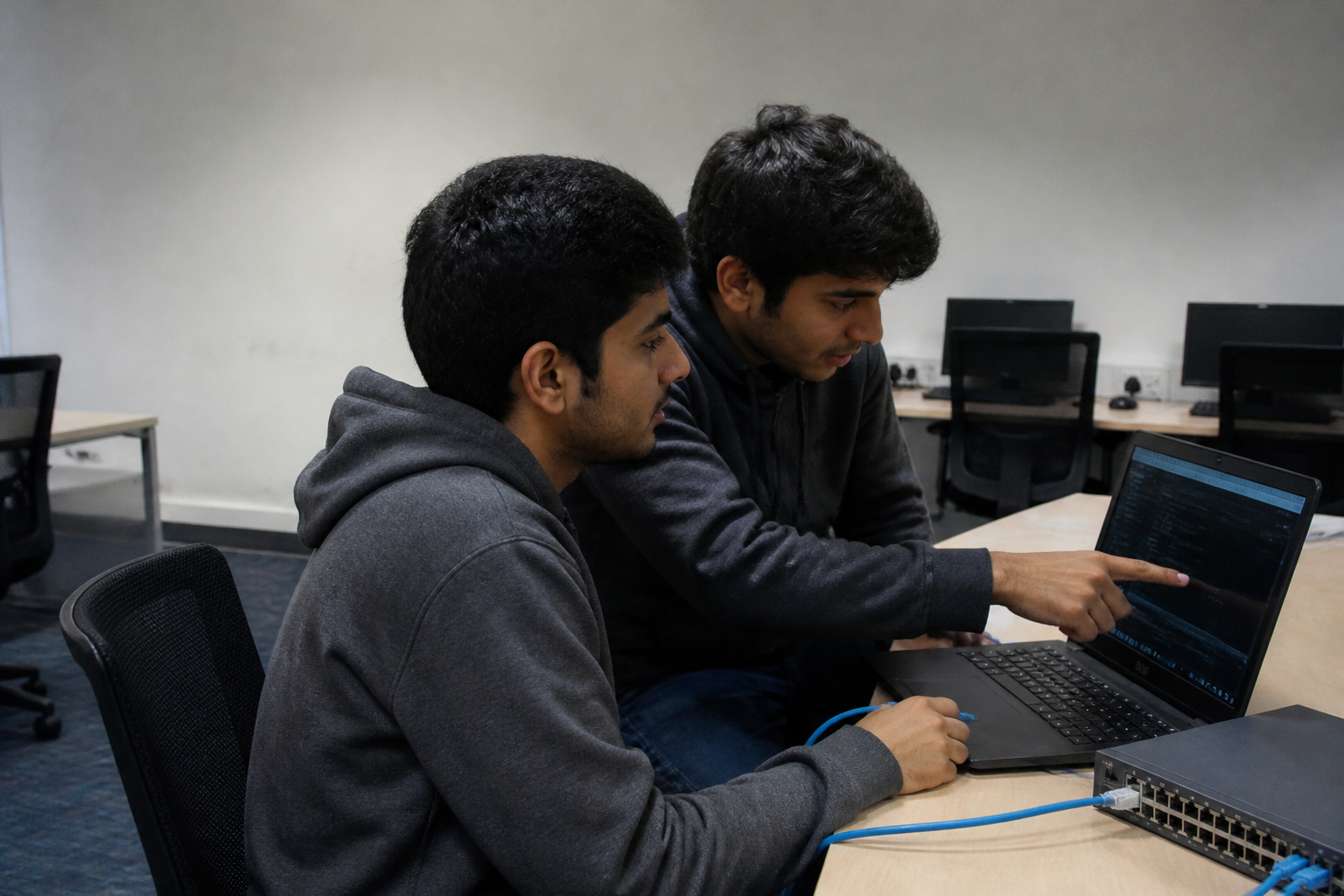
A public university in Edwardsville and a private campus in Chicago can award the same credential, the Bachelor of Science (B.S.) in Information Technology, at very different net prices.
Illinois IT graduates move into network administration, cybersecurity, cloud support and systems roles across Chicago and downstate, and employers here hire on demonstrated skill as much as on the name on the diploma. Only bachelor's programs appear on this list: campus and online degrees run by Illinois-based schools.
The tension is cost. Average net price after grants among the programs ranked below falls between roughly $11,745 and $13,297 a year, yet median earnings five years after graduation separate these campuses far more sharply than tuition does.
Key Points
- The cheapest programs here cost $11,745 to $13,297 a year after aid.
- Illinois Institute of Technology admits about 55 percent of applicants.
- Private Illinois campuses post higher tuition but often discount it heavily.
Best Bachelor's Degree in Information Technology Schools in Illinois, Ranked
Two things separate the top of this list from the rest: how much of the degree a student can finish online or through transfer credit, and whether the school's standing survives an accreditation check. Every school below awards a bachelor's in information technology or a closely named computing degree in Illinois, and each entry notes its concentrations, delivery options and what our accreditation check did or did not confirm.
Illinois Institute of Technology
#1Chicago, IL · ~$18,000/yr (est.)
Best for: Transfer students bringing prior college credit
Illinois Tech awards a Bachelor of Information Technology through a partnership with Coursera, so students can complete the 120-credit degree online and transfer up to 54 credits. The university appears in ABET's accredited-program search, though that listing does not confirm the IT bachelor's itself carries Computing Accreditation Commission status. A 2026 pathway agreement with Moraine Valley Community College guarantees admission to qualified transfers with a 3.0 GPA and includes a renewable transfer scholarship. It admits roughly 55 percent of applicants and graduates about 75 percent of its students overall, the highest completion rate on this list.
- 120 total credit hours
- Delivered through a Coursera partnership
- Accepts up to 54 transfer credit hours
- Up to 9 graduate ITM credits toward a master's
- Two IPRO interprofessional project courses
- Cloud computing course sequence
- 36 credits of communication-intensive coursework
Southern Illinois University Edwardsville
#2Edwardsville, IL · $10,000 – $15,000/yr (est.)
Best for: Budget-minded commuters in the St. Louis metro
Southern Illinois University Edwardsville lists Computer Information Systems as an undergraduate major in its degrees and programs directory, alongside separate majors in cybersecurity and data analytics. The university appears in ABET's accredited-program search, but that listing does not identify which program is accredited or under which commission. It admits about 98 percent of applicants and graduates about 57 percent of its students overall, and the IT major is not tagged as online in the university's directory.
- Undergraduate major in Computer Information Systems
- Listed beside separate cybersecurity and data analytics majors
- Campus-based; not tagged online in the program directory
- Department also offers graduate management information systems
University of St Francis
#3Joliet, IL · ~$13,000/yr (est.)
Best for: Students who prefer a private, smaller campus
The University of St. Francis awards a Bachelor of Science in Information Technology at its Joliet campus, with coursework on integrating networks into existing companies, system security and emerging technology. Majors work on classroom projects with tools businesses use, plus labs and internships, and students in other programs can add an IT minor. It is accredited by the Higher Learning Commission, and our check of ABET's directories found no IT-specific listing for the program. The university admits roughly 65 percent of applicants and graduates about two-thirds of its students overall.
- B.S. in Information Technology at the Joliet campus
- Coursework in networking, system security, emerging technology
- Classroom projects use current business tools, plus labs
- Information Technology minor open to other majors
- University accredited by the Higher Learning Commission
Lewis University
#4Romeoville, IL · ~$17,000/yr (est.)
Lewis University builds its Bachelor of Science in Information Technology on a core in systems analysis, design, implementation and administration, then asks students to choose one of six concentrations, including Cybersecurity, Digital Forensics and Data Privacy. Students complete a project across the full systems development life cycle and assemble an online portfolio for employers, and well-qualified students can add a master's in one extra year. It admits about 71 percent of applicants and graduates about two-thirds of its students overall. No ABET listing specific to the IT program was found in our check.
- Six concentrations, including Cybersecurity and Digital Forensics
- Concentrations lead to industry certifications
- Project carried through the full systems development life cycle
- Online portfolio built for employers
- 4+1 master's option in one extra year
- Cyber Defense Club and IEEE student chapter
Southern Illinois University-Carbondale
#5Carbondale, IL · $10,000 – $15,000/yr (est.)
Southern Illinois University Carbondale offers a 120-credit Bachelor of Science in Information Technology with the same curriculum online and on campus, plus dedicated labs for cybersecurity, networking, virtualization and the Internet of Things. A required internship or senior project can be satisfied by prior IT work experience, and associate degree holders can use the Capstone Option to finish in 60 additional credit hours. The university appears in ABET's 100% online accredited-program search, though that result does not specify which program or commission applies. It admits about 87 percent of applicants and graduates about 62 percent of its students overall.
- 120 credit hours, including 27 in major requirements
- Same curriculum available fully online and on campus
- Required internship or senior project; work experience may qualify
- Labs for cybersecurity, networking, IoT and virtualization
- Capstone Option: 60 additional credits after an AAS
- Academic partners offer discounted or free certification exams
Eastern Illinois University
#6Charleston, IL · $14,000 – $16,000/yr (est.)
Eastern Illinois University's Bachelor of Science in Computer and Information Technology is an on-campus, eight-semester, 120-credit degree with 50 credits in the major, covering cybersecurity, networking, cloud computing, database administration and systems management. Students earn academic credit for internships, work on industry projects with current technologies and compete in national technology and cybersecurity competitions. It admits about 65 percent of applicants and graduates about 47 percent of its students overall. No ABET listing specific to the program was found in our check.
- 120 credit hours, 50 in the major, eight semesters
- On-campus delivery
- Coursework in cybersecurity, networking and cloud computing
- Internships earn academic credit
- Students compete in national technology and cybersecurity events
Elmhurst University
#7Elmhurst, IL · ~$24,000/yr (est.)
Elmhurst University runs its Information Technology bachelor's as a degree completion program for working adults, one of four such degrees at the school, with flexible schedules and online options. Coursework moves from Java-based programming into SQL databases, aimed at careers in a high-growth field. The university admits about 74 percent of applicants and graduates about 70 percent of its students overall. No ABET listing specific to the IT program was found in our check.
- Bachelor's degree completion program for working adults
- Java programming through SQL databases
- Flexible schedules with online options
- One of four bachelor's completion degrees at the university
- More than 500 transfer and adult students enroll each year
Dominican University
#8River Forest, IL · ~$12,000/yr (est.)
Dominican University's undergraduate Informatics major sits in the School of Information Studies and runs in a hybrid format that pairs small classes with online learning. Seven specializations include Cybersecurity, Data Analytics, Health Informatics, User Experience and Web Designing and Development, and the program is STEM-designated for F-1 international students. Internships have students tackle data problems in actual workplaces. It admits about 90 percent of applicants and graduates about 55 percent of its students overall, and our check found no ABET listing for the program.
- Seven specializations, including Cybersecurity and Health Informatics
- Hybrid format: small classes plus online learning
- Coursework in AI, data science, data visualization and privacy
- Internships address real workplace data problems
- STEM-designated for F-1 international students
DePaul University
#9Chicago, IL · ~$31,000/yr (est.)
DePaul University's Bachelor of Science in Information Technology sits in the Jarvis College of Computing and Digital Media and offers Standard, Media Engineering and Web Development concentrations, with Standard and Web Development available fully online. The capstone has students build software for nonprofit organizations, and instructors come from companies including Microsoft and Accenture. It is STEM-designated and admits about 76 percent of applicants, graduating about 68 percent of its students overall. No ABET listing specific to the IT program was found in our check.
- Three concentrations: Standard, Media Engineering, Web Development
- Standard and Web Development can be completed fully online
- STEM-designated program for international students
- Capstone builds software for nonprofit organizations
- Three community-based service courses required
- Industry partners include Abbott and Allstate
Loyola University Chicago
#10Chicago, IL · ~$36,000/yr (est.)
Loyola University Chicago's B.S. in Information Technology is a 122-credit degree with 49 credits in the major and a six-credit practicum capstone. Required coursework covers object-oriented programming, database systems, computer systems, computer security and IT project management, with electives in database administration, data mining and computer networks. It admits about 82 percent of applicants and graduates about 73 percent of its students overall, the second-highest completion rate here. No ABET listing specific to the IT program was found in our check.
- 122 credit hours, 49 in the major
- Required courses in programming, databases, security and IT project management
- Six-credit practicum capstone
- Electives include database administration, data mining and networks
- Internship credit available
Cost & outcomes by school
Federal data for the highest-earning Information Technology programs, independent of the ranking above. Earnings are this field's bachelor's graduates four years after completing where the Scorecard reports them, else the school's undergraduate median.
| School | Net price / yr | Grad rate | Earnings | Debt | Grads/yr | Format |
|---|---|---|---|---|---|---|
| Loyola University Chicago IL | $36,079 | 73% | $99,112 | $21,295 | 45 | Campus |
| Illinois Institute of Technology IL | $18,425 | 75% | $97,153 | $21,491 | 56 | Online |
| DePaul University IL | $30,902 | 68% | $84,554 | $21,666 | 33 | Online or campus |
| Southern Illinois University Edwardsville IL | $14,889 | 57% | $73,513 | $21,637 | 1 | Campus |
| Eastern Illinois University IL | $12,786 | 47% | $72,220 | $21,500 | 9 | Campus |
| Governors State University IL | $12,329 | 22% | $70,895 | $15,000 | 26 | Campus |
| Southern Illinois University-Carbondale IL | $13,297 | 62% | $69,552 | $27,000 | 32 | Online or campus |
| Lewis University IL | $17,028 | 67% | $66,099 | $21,500 | 22 | Campus |
| Roosevelt University IL | $20,194 | 35% | $64,872 | $22,000 | — | Campus |
| University of St Francis IL | $13,006 | 67% | $63,926 | $21,079 | 3 | Campus |
| Elmhurst University IL | $24,185 | 70% | $61,462 | $20,489 | 8 | Online or campus |
| Dominican University IL | $11,745 | 55% | $60,327 | $24,411 | 9 | Hybrid |
Sources: U.S. Department of Education. Net price, graduation rate, earnings and debt: College Scorecard (earnings and debt for this field's bachelor's graduates where reported, else school-wide); graduates: IPEDS. A dash means no figure is reported.
Cost, debt & payoff
Median earnings of this field's bachelor's graduates (4 yrs after completing, else the school's undergraduate median) vs. their median federal loan debt · U.S. College Scorecard
Across these programs the median graduate earns about $66,099 and finishes with roughly $21,500 in debt — a ratio that clears a common rule of thumb (keep debt below first-year salary). Net price and debt vary widely school to school, so check the per-school figures in the table above before you shortlist.
How We Ranked Illinois Information Technology Schools
Families comparing IT programs now weigh what graduates earn and what they pay ahead of reputation, and the ranking below reflects that priority.
What Counts Most
- Net price: The average a student pays after federal, state and institutional aid. Over four years, this figure shapes borrowing far more than the published tuition does.
- Program-level earnings: Median pay for graduates of the specific IT program, from federal College Scorecard data. A university's overall name says little about what its IT majors earn early in their careers.
- Graduation rate: Finishing matters more than starting, and an IT degree that stretches to six years costs more than its listed price suggests.
- Delivery format: Campus, online and hybrid options are weighed together, because working students and career changers need schedules they can actually keep.
Scope and Data Notes
Only bachelor's programs at Illinois schools are ranked, and every format is eligible, fully online, hybrid and traditional campus, so fit counts alongside reputation.
Two figures describe the whole institution rather than the IT department. Net price and graduation rate are institution-wide averages, so a large university's numbers may reflect majors far from computing. Earnings come from program-level federal data and are used where a school reports them; otherwise the ranking rests on the measures that remain.
Checked Separately
Accreditation status, admission requirements and financial aid details were verified against each school's own pages and accreditor directories rather than third-party summaries, since those pages change between cycles.
Cheapest Illinois Information Technology Bachelor's Programs by Net Price
Average net price, the yearly cost after grants and scholarships, shows what a bachelor's degree in information technology in Illinois actually costs, and here it ranges from $11,745 to $13,297 a year based on IPEDS and College Scorecard data from the U.S. Department of Education. Dominican University, a private school with a $38,978 sticker price, has the lowest net price among the ranked schools because of the grant aid it awards. Governors State University, listed in our directory, comes in second at $12,329, and the public options at Eastern Illinois University and Southern Illinois University-Carbondale keep both tuition and net price close to $13,000.
| School | City | Sector | IT Program | Format | Average Net Price (per year) | Published Tuition and Fees | Graduation Rate | Median Debt at Graduation (school-wide) |
|---|---|---|---|---|---|---|---|---|
| Dominican University | River Forest | Private nonprofit | Informatics | Hybrid | $11,745 | $38,978 | 55% | $24,411 |
| Governors State University | University Park | Public | Information Technology, B.S. | Campus | $12,329 | $12,004 (in-state) | 22% | $18,618 |
| Eastern Illinois University | Charleston | Public | Computer and Information Technology | Campus | $12,786 | $13,679 (in-state) | 47% | $21,500 |
| University of St Francis | Joliet | Private nonprofit | Information Technology (B.S.) | Campus | $13,006 | $38,110 | 67% | $21,079 |
| Southern Illinois University-Carbondale | Carbondale | Public | Bachelor of Science in Information Technology | Campus and online | $13,297 | $13,334 (in-state) | 62% | $21,543 |
Illinois IT Bachelor's Programs With the Highest Graduate Earnings
The earnings figures below come from the College Scorecard, published by the U.S. Department of Education, which reports median pay for graduates of each school's information technology bachelor's program. Illinois Institute of Technology leads at $101,049 five years after graduation, and Loyola University Chicago follows closely at $99,112 measured four years out. The latest reported year differs by school, so the one-year column gives a fairer side-by-side view of starting pay. On that measure, Loyola posts the highest figure at $68,950.
| School | City | Program | Format | Median Earnings 1 Year After Graduation | Latest Median Earnings | Years After Graduation (Latest Figure) | Median Program Debt |
|---|---|---|---|---|---|---|---|
| Illinois Institute of Technology | Chicago | Bachelor of Information Technology | Online | $61,313 | $101,049 | 5 | $21,491 |
| Loyola University Chicago | Chicago | Information Technology | Campus | $68,950 | $99,112 | 4 | $21,295 |
| DePaul University | Chicago | Information Technology | Campus and online | $58,220 | $88,092 | 5 | $21,666 |
| Southern Illinois University Edwardsville | Edwardsville | Computer Information Systems | Campus | $55,844 | $85,645 | 5 | $21,637 |
| Southern Illinois University-Carbondale | Carbondale | Bachelor of Science in Information Technology | Campus and online | $46,254 | $69,552 | 4 | $27,000 |
Related Articles
Online and Hybrid Information Technology Bachelor's Options at Illinois Schools
Illinois gives online IT students a real choice, but the format labels on program pages are not interchangeable. A fully online degree, a hybrid degree, and a campus degree with a few web courses ask different things of your week, your commute, and your budget.
Fully Online, Hybrid, and Campus Formats
Illinois Institute of Technology lists its Bachelor of Information Technology as an online program delivered through a Coursera partnership, and accepts 54 transfer credit hours. Southern Illinois University Carbondale offers the B.S. in Information Technology in both fully online and on-campus formats1; online students complete the same curriculum as on-campus students. DePaul University lists both in-person and online class formats for its IT degree, and Elmhurst University describes flexible schedules and online options designed for working adults. Dominican University's Informatics program is hybrid, combining small classes with online learning. Southern Illinois University Edwardsville, the University of St Francis, Lewis University, Eastern Illinois University, and Loyola University Chicago list campus-based delivery for their IT programs.
Schedules and Residency
SIU says online students may work on their own schedule and complete the program from anywhere, and its pages do not state a required campus residency for the online option. Confirm before enrolling whether any exam, lab, or capstone requires a visit. Elmhurst's flexible schedules and DePaul's in-person-or-online class choice give working students room to maneuver; ask each department for the actual evening, weekend, or daytime section pattern. At Illinois Tech, the curriculum includes two IPRO interprofessional project courses, so ask how online students complete them.
How to Judge an Online IT Program
Three checks separate a strong online IT degree from a convenient one. - Accreditation: Confirm the program's ABET status directly with the department. Accreditation affects how employers and graduate schools read the degree. - Tuition: SIU publishes $327.75 per undergraduate credit hour.2 Its online undergraduate programs are described as charging the same rate to all students, with no out-of-state tuition and lower mandatory fees than on-campus study.3 Online and off-campus sections numbered 900-999 are billed at the Illinois-resident on-campus rate2, so ask which rate applies to your courses. Budget for online charges such as the distance learning and information technology fees. - Degree parity: Ask whether the online diploma and transcript match the campus version, and whether the online curriculum is the same. SIU states that it is.1
Admission Requirements for Illinois Information Technology Bachelor's Programs
Getting into an Illinois information technology bachelor's program is rarely about clearing a steep bar. It is about matching your record to the right school. Admission rates at the schools ranked here run from about 55 percent at Illinois Institute of Technology to 97.5 percent at Southern Illinois University Edwardsville, so applicants with a solid transcript have real options.
Sorting Schools Into Reach, Match and Likely
- Reach for many applicants: Illinois Institute of Technology admits about 55 percent of applicants, the most selective rate in this group.
- Match: University of St Francis (65.3 percent), Eastern Illinois University (65.4 percent), Lewis University (71.3 percent), Elmhurst University (73.6 percent), DePaul University (75.9 percent) and Loyola University Chicago (81.6 percent).
- Likely: Southern Illinois University-Carbondale (86.9 percent), Dominican University (90.3 percent) and Southern Illinois University Edwardsville (97.5 percent).
Treat these bands as starting points. Whether a school is a reach or a likely admit depends on how your GPA and coursework compare with its typical admitted student, not on the rate alone.
GPA and Test Policies
GPA and testing rules usually sit on a school's general admissions page, not its program page. Illinois Tech publishes no minimum first-year GPA and no SAT or ACT policy specific to its Bachelor of Information Technology. We found no IT-specific first-year GPA floor or test policy at the other schools either, so read each school's general admissions page and confirm with admissions whether scores are optional, required or simply considered. A policy at one campus does not carry over to another.
Transfer Credit and Community College Routes
Illinois Tech gives the clearest transfer detail. Its online IT bachelor's accepts up to 54 transfer credit hours, and transfer students can apply up to 27 free-elective hours because the minor requirement is waived. When a community college teaches one IT subject across two or three courses, usually only the final course transfers as an IT course (ITM 301), and the earlier ones count as free electives.
Illinois Tech also runs a guaranteed-admission partnership with Chicago's public community college system for the security-systems specialization of its IT bachelor's. To qualify, you must finish within three years of first enrolling at the community college, earn a B or better in every math, computer information systems, cybersecurity and networking technology course, and hold a 3.0 GPA both cumulatively and in every semester. The school lists other state transfer partnerships, so confirm whether any of them apply to the IT degree before you plan around one.
Statewide, the Illinois Articulation Initiative lets a completed general education core move between participating schools as a block.1 Elmhurst University's degree-completion route reports serving more than 500 transfer and adult students each year.
What to Gather Before You Apply
- Official transcripts from high school and every college attended
- SAT or ACT scores, if you plan to submit them
- A course-by-course list of IT and math classes with grades
- Written confirmation of any transfer agreement or completed general education core
- A saved copy of each school's admissions page, noting the date you checked it
Cost of an Information Technology Bachelor's Degree in Illinois
The real tradeoff in Illinois is sticker price versus what families actually pay. Private campuses post the highest tuition but often discount it heavily, while public universities start low and stay there.
Published Tuition vs. Net Price
Published in-state tuition for an IT bachelor's runs from about $12,092 a year at Southern Illinois University Edwardsville to $52,202 at Illinois Institute of Technology. Public campuses cluster at the low end: Southern Illinois University-Carbondale lists $13,334 and Eastern Illinois University $13,377. Private schools such as Lewis University ($39,200), Dominican University ($38,828) and University of St Francis ($38,110) post far higher figures.
Average net price after grants narrows that gap sharply. Dominican falls to roughly $11,745, the lowest of the group. St Francis averages about $13,006, Lewis $17,028 and Illinois Tech $18,425. Among the public options, Eastern Illinois averages $12,786, SIU Carbondale $13,297 and SIUE $14,889. Treat these as approximate averages across aided students, not a quote; your own cost depends on household income and the aid package you receive.
Need-based aid is common at these campuses. About 64 percent of Dominican undergraduates receive Pell Grants, as do roughly 66 percent at Eastern Illinois and SIU Carbondale and 62 percent at Illinois Tech. Northeastern Illinois University and Governors State University run higher still, near 83 and 79 percent.
Illinois MAP Grant and AIM HIGH
The Illinois Student Assistance Commission (ISAC) runs the state's two main undergraduate grant programs:
- MAP Grant: A need-based grant toward tuition and mandatory fees at approved Illinois colleges, public or private. For 2025-26, the statutory maximum was $8,400, but a 4 percent funding reduction set the effective maximum at $8,064.1 You must be an Illinois resident, show financial need, enroll in at least 3 credit hours per term, and not already hold a bachelor's degree or have used 135 MAP-paid credit hours.2 A full term award requires 15 semester hours; fewer hours reduce it proportionally.2
- AIM HIGH: Available to full-time undergraduates at Illinois' 12 public four-year universities, including SIUE, SIU Carbondale and Eastern Illinois.3 Household income must be no more than eight times the federal poverty guideline.3 Each university sets its own award amounts, GPA or test criteria and deadlines.
Both programs start with the FAFSA, which is shared with ISAC.2 Students who cannot file a FAFSA may use the Alternative Application for MAP. AIM HIGH also requires meeting your university's deadline. File early: MAP funding is limited, and for 2025-26 ISAC stopped announcing awards for first-time submissions received after June 5, 2025.1
What IT Graduates Borrow
Federal outcomes data from 2022 show median loan debt at graduation for IT bachelor's completers of about $21,491 at Illinois Tech, $21,500 at Eastern Illinois, $21,637 at SIUE and $27,000 at SIU Carbondale. Governors State graduates borrowed less, around $15,000.
What Illinois IT Professionals Earn: Statewide and Chicago-Area Wages
What do IT professionals in Illinois actually earn, and does the Chicago area pay more than the rest of the state? The most reliable way to answer is to pull the federal wage tables yourself. Ten minutes with the federal wage tables gets you current numbers instead of a secondhand estimate.
Look Up the Federal Wage Data
The Bureau of Labor Statistics publishes Occupational Employment and Wage Statistics (OEWS) once a year. The latest release is May 2025.1
- Step 1: Go to BLS.gov and open the OEWS tool. Choose the state estimates and select Illinois.
- Step 2: Open the metropolitan area estimates and select Chicago-Naperville-Elgin, IL-IN. This metro spans Illinois and Indiana, so its figures are not the same as a statewide Illinois number.
- Step 3: Search three occupations: network and computer systems administrators, information security analysts, and computer user support specialists. Record the median annual wage and the employment level for each.
The data also comes as downloadable spreadsheets, which makes side-by-side comparison easy. The OEWS technical notes explain how the estimates are built if you want to check the details.
Ask Schools for Graduate Outcomes
BLS data covers every worker in an occupation, not recent graduates. For that, check each program's website for published salary outcomes or career-services reports for IT graduates. If nothing is posted, contact the admissions or career office and ask where graduates are working, what entry-level pay looks like in the Chicago area, and which employers recruit from the program.
Cross-Check With the Job Market
Professional associations such as CompTIA, ISACA, and (ISC)² publish salary and workforce research that shows which credentials and skills carry a pay premium. Chicago-area IT councils and local job postings show what employers are offering right now, along with the demand for specific roles.
Quick Checklist
- BLS.gov OEWS, May 2025 state estimates for Illinois
- BLS.gov OEWS, May 2025 metropolitan estimates for Chicago-Naperville-Elgin, IL-IN
- Search terms: "OEWS Illinois," "OEWS Chicago-Naperville-Elgin," "Chicago IT salaries"
- Role-specific searches: "information security analyst Chicago," "systems administrator Illinois"
- Program pages and career-services offices for graduate outcomes
- CompTIA, ISACA, and (ISC)² salary and workforce resources
- Live job postings for Chicago-area IT roles
Compare medians rather than averages, and note whether a figure covers the state or the metro. A few minutes of checking shows how each role's pay fits your plans.
Information Technology Careers in Illinois and Specializations Worth Considering
A broad IT degree lets you move between roles, while a specialized track gets you into a narrower one faster. Most graduates of a B.S. in Information Technology start in practical, hands-on jobs and specialize later.
Common Illinois Job Titles
The degree maps to several entry points: IT support specialist, systems administrator, network administrator, security analyst and cloud support associate. Help desk and support roles are the usual first step. Administrator and analyst titles tend to follow after a few years of experience or added certifications.
Chicago has the deepest concentration of employers in finance, healthcare, logistics and consulting, so the metro area offers more openings and, as the wage comparison in the previous section shows, generally stronger pay than the rest of the state. Cities outside the Chicago area, including those around Carbondale, Charleston and Edwardsville, have fewer employers but a lower cost of living. Many students also work remotely for Chicago-area companies.
How the Tracks Differ
- Cybersecurity: Focuses on defending systems, monitoring threats and responding to incidents. Students who want this path from day one can also look at Illinois cybersecurity bachelor's programs as an alternative to a general IT major.
- Networking: Centers on designing, configuring and maintaining the infrastructure that connects organizations.
- Cloud: Covers deploying and supporting services on platforms such as AWS, Azure and Google Cloud.
Licensure and Certifications
Illinois does not license IT professionals, so no state exam stands between you and a job. Employers often look for optional industry credentials instead. CompTIA A+, Network+ and Security+ are common starting points, Cisco's CCNA is a standard networking credential, and cloud vendors offer their own entry-level certifications.
Reading the Earnings Data
When you return to the earnings table, remember that each figure reflects a specific measurement window for a specific group of graduates. Early-career pay says little about where a systems administrator or security analyst lands after certifications and several years on the job.
Compare Information Technology programs on the data that matters
Explore more Computers & IT majors or browse every field of study.
All Computers & IT programs Browse every field of study