Best Criminal Justice Schools in Louisiana
Compare 16 accredited Criminal Justice programs in Louisiana, with net price after aid, graduation rates, earnings and debt from IPEDS and the U.S. College Scorecard.
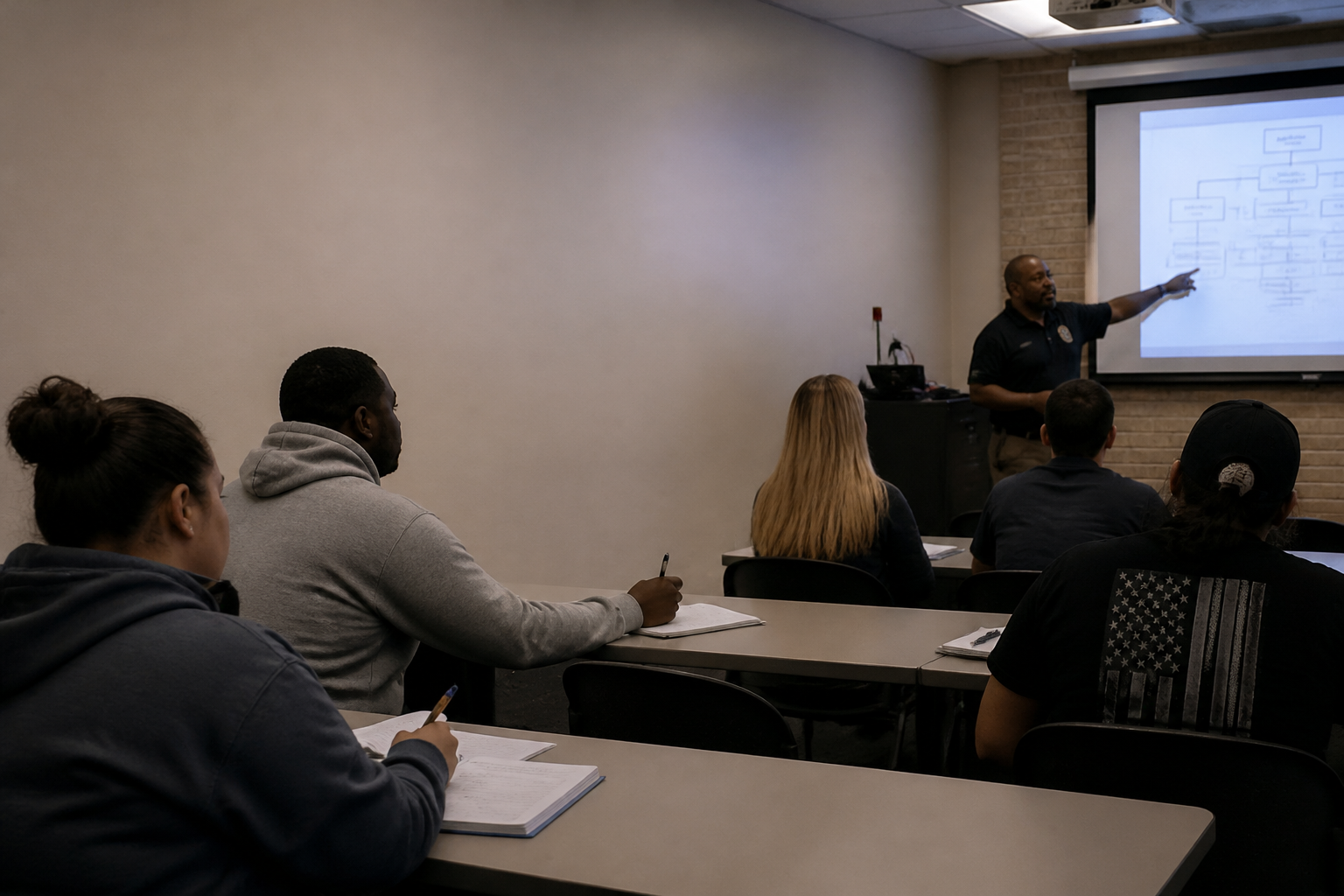
Picking a Louisiana criminal justice school comes down to a tradeoff: a campus close to the parish and state agencies that will hire you, or an online program that lets you keep working while you study. A bachelor's degree in criminal justice, most often a Bachelor of Science (B.S.) in Criminal Justice, is a common route into policing, probation and parole, corrections, and legal support.
Several Louisiana-based schools offer the degree fully online, and costs vary widely between public campuses.
For peace officer work, the degree supplements state POST training rather than replacing it, so plan the credential and the certification together.
Key Points
- University of Louisiana at Monroe ranks first; its program dates to 1970.
- Louisiana State University-Shreveport averages $7,022 a year after aid, the lowest here.
- LSU Alexandria's online B.S. runs seven-week terms with six yearly starts.
Best Criminal Justice Schools in Louisiana: Our Ranked List
The University of Louisiana at Monroe is the best criminal justice school in Louisiana on this list, taking the top spot for a program that dates to 1970, a fully online route, and job placement the department reports itself. The ten bachelor's programs below run the length of the state, from Shreveport and Monroe to Lafayette, Thibodaux and Hammond, and several can be finished without ever setting foot on campus.
University of Louisiana at Monroe
#1Monroe, LA · ~$13,000/yr (est.)
Best for: Working adults seeking fully online study
ULM's criminal justice program dates to 1970 and the university bills it as the oldest of its kind in Louisiana, with coursework spanning police, courts and corrections. A fully online route exists, and the department reports that about 88% of graduates are working in the field within six months of finishing, with more than a third promoted by their employers within five years. The university's overall graduation rate is about 54%.
- Oldest criminal justice program in Louisiana, founded in 1970
- Fully online option available
- Coursework covers police, courts and corrections
- About 88% of graduates working in the field within six months
- More than a third promoted by employers within five years
- Over 40% continue to a master's degree
- Transfers need college-level English and math with a C or better
- Prepares for roles such as probation officer and crime scene investigator
Nicholls State University
#2Thibodaux, LA · $8,000 – $9,000/yr (est.)
Best for: Law enforcement aspirants eyeing coastal security
Nicholls State builds its criminal justice major around the six content areas the Academy of Criminal Justice Sciences recommends, then adds a focus on wetlands, coastal and maritime security drawn from its own service region. Students complete 120 credit hours over a suggested four-year sequence, and holders of an Associate of Science enter straight at the junior level. The university's overall graduation rate is about 54%.
- 120 credit hours over a suggested four-year sequence
- Built on six ACJS-recommended content areas
- Wetlands, coastal and maritime security focus
- Associate of Science holders enter at the junior level
- Starts with CRJU 290 and CRJU 291
- Coursework examines diversity and ethics
- Criminal Justice minor requires 18 semester hours
University of Louisiana at Lafayette
#3Lafayette, LA · $10,000 – $15,000/yr (est.)
Best for: Hands-on learners wanting agency internships
UL Lafayette's criminal justice department requires an internship of every major and places students with local and state police, correctional facilities, indigent defender programs and nonprofits. Many classes are taught by practicing professionals, and undergraduates can assist faculty research in the SPRUCE Lab and the Center for Critical Infrastructure Cybersecurity. The university's overall graduation rate is about 53%.
- 120 credit hours
- Internship required of all majors
- Placements with police, correctional facilities and defender programs
- Many classes taught by practicing professionals
- Fully online option available
- Faculty research in the SPRUCE Lab and cybersecurity center
- Annual trip to Louisiana State Penitentiary
- Criminal Justice Society open to majors
Southeastern Louisiana University
#4Hammond, LA · ~$13,000/yr (est.)
Southeastern Louisiana offers criminal justice on campus and fully online, with a flat rate tuition option and an honors curriculum for stronger students. The 120-hour major covers federal, state and local law enforcement along with the courts, corrections and the psychological and sociological roots of criminal behavior. Its overall graduation rate is about 45%.
- 120 semester hours
- On campus or fully online
- Qualifies for the university's flat rate tuition
- Honors curriculum available
- Active Criminal Justice Student Association
- Covers federal, state and local law enforcement, courts and corrections
- Explores the psychological and sociological roots of crime
McNeese State University
#5Lake Charles, LA · $10,000 – $15,000/yr (est.)
McNeese State runs its criminal justice degree in person and online, with online coursework delivered in two seven-week sessions each fall and spring for students who want a faster pace. Up to three internships are available at law enforcement offices, juvenile justice centers and district attorney's offices, and a minor in terrorism, preparedness and security sits alongside the major. The university's overall graduation rate is about 47%.
- 120 credit hours, four-year plan or accelerated track
- In person and online, with two 7-week sessions each fall and spring
- Online criminal justice courses delivered with LSU-Eunice and SOWELA
- Up to three internships at agencies, juvenile justice centers and DA offices
- Minor in Terrorism, Preparedness, and Security
- Chief Sam Ivey Criminal Justice Scholarship available
- Coursework includes forensic science, serial killers and corrections ethics
Remington College-Shreveport Campus
#6Shreveport, LA · ~$31,000/yr (est.)
Remington College's Shreveport campus offers a bachelor's completion degree in criminal justice for students who already hold some college credit, also available through the college's online division. The curriculum leans toward applied entry roles such as corrections officer, security guard and loss prevention specialist, with coursework in juvenile justice, forensic psychology and crime intelligence. Its overall graduation rate is about 33%.
- Completion degree designed for students with prior college credit
- On ground in Shreveport or through Remington College Online
- Coursework in juvenile justice, forensic psychology and restorative justice
- Includes vice, narcotics and crime intelligence content
- Prepares for entry roles such as corrections officer and loss prevention specialist
- Covers criminal law, ethics and law enforcement procedures
Louisiana State University-Shreveport
#7Shreveport, LA · ~$7,000/yr (est.)
LSU Shreveport awards a Bachelor of Criminal Justice rather than a B.S., with a generalist track plus concentrations in security studies, forensic science and political science. The program is campus based, pairs coursework with internships at agencies, probation and parole offices or courts, and the campus distributes more than $12.4 million in scholarships a year. Its overall graduation rate is about 38%.
- Generalist concentration covering the judicial process and the Supreme Court
- Additional concentrations in Security Studies, Forensic Science and Political Science
- Campus based format, about four years for first-time freshmen
- Internships at law enforcement agencies, probation and parole departments and courts
- Topics include cybercrime, terrorism, profiling and gangs
- Alpha Phi Sigma honor society
- Department scholarships for criminal justice majors
Northwestern State University of Louisiana
#8Natchitoches, LA · $10,000 – $15,000/yr (est.)
Northwestern State's criminal justice major covers law enforcement, the legal system and corrections, with simulation and scenario work and faculty drawn from law enforcement, forensics and legal studies. A criminal justice minor is available for students majoring elsewhere. The university's overall graduation rate is about 43%.
- Covers law enforcement, the legal system and corrections
- Coursework in criminal investigation, criminology and foundations
- Simulations and career-based scenarios
- Faculty with law enforcement, forensics and legal studies experience
- Criminal Justice minor available
- Listed paths include police officer, paralegal and forensic science technician
Louisiana State University at Alexandria
#9Alexandria, LA · $7,000/yr (est. net price)
LSUA offers a Bachelor of Science in Criminal Justice on campus or fully online and adds a criminal psychology concentration for students interested in behavioral motivations and special populations inside the justice system. The department also runs a Criminal Justice Association open to majors and minors, and the program is structured with law school or graduate study as a possible next step. Its overall graduation rate is about 34%.
- On campus or 100% online
- Criminal Psychology concentration available
- Covers courts, corrections, juveniles and law enforcement
- Prepares students for law school or graduate study
- Criminal Psychology track leads to victim advocacy and forensic behavioral roles
- Recommended minors in Psychology and Victim Studies
- Criminal Justice Association open to majors and minors
Louisiana Christian University
#10Pineville, LA · ~$13,000/yr (est.)
Louisiana Christian University teaches criminal justice on campus or fully online and is unusually practical about credit for prior service. Active-duty military members can bank up to 12 semester hours, and POST-certified officers can convert a 496-hour basic training course into 15 semester hours toward the major. Its overall graduation rate is about 44%.
- 100% online or traditional on-campus format
- Up to 12 semester hours for active-duty military service
- 15 semester hours for POST-certified officers with 496-hour basic training
- Covers police, courts and corrections
- Student-led Alpha Tau Gamma Omega organization
- Prepares for law enforcement, homeland security and emergency response roles
Cost & outcomes by school
Federal data for the highest-earning Criminal Justice programs, independent of the ranking above. Earnings are this field's bachelor's graduates four years after completing where the Scorecard reports them, else the school's undergraduate median.
| School | Net price / yr | Grad rate | Earnings | Debt | Grads/yr | Format |
|---|---|---|---|---|---|---|
| Herzing University-New Orleans LA | $21,269 | 15% | $69,601 | $19,310 | 6 | Online |
| Louisiana State University and Agricultural & Mechanical College LA | $19,151 | 69% | $61,251 | $20,500 | — | Online |
| Louisiana State University at Alexandria LA | $7,065 | 34% | $52,560 | $18,812 | 62 | Online or campus |
| Louisiana Christian University LA | $13,113 | 44% | $51,700 | $21,875 | 10 | Online or campus |
| Dillard University LA | $22,094 | 43% | $49,687 | $31,000 | 25 | Online or campus |
| Southern University and A & M College LA | $20,077 | 27% | $49,609 | $27,125 | 81 | Online or campus |
| University of Louisiana at Lafayette LA | $13,530 | 53% | $49,201 | $23,149 | 49 | Online |
| Louisiana State University-Shreveport LA | $7,022 | 38% | $47,477 | $22,500 | 20 | Campus |
| McNeese State University LA | $12,493 | 47% | $46,223 | $24,685 | 35 | Online or campus |
| Nicholls State University LA | $12,947 | 54% | $45,454 | $22,675 | 11 | Online or campus |
| Southeastern Louisiana University LA | $13,154 | 45% | $45,393 | $22,977 | 90 | Online or campus |
| Southern University at New Orleans LA | $14,810 | 13% | $44,723 | $28,864 | 33 | Online or campus |
Sources: U.S. Department of Education. Net price, graduation rate, earnings and debt: College Scorecard (earnings and debt for this field's bachelor's graduates where reported, else school-wide); graduates: IPEDS. A dash means no figure is reported.
Cost, debt & payoff
Median earnings of this field's bachelor's graduates (4 yrs after completing, else the school's undergraduate median) vs. their median federal loan debt · U.S. College Scorecard
Across these programs the median graduate earns about $46,850 and finishes with roughly $23,063 in debt — a ratio that clears a common rule of thumb (keep debt below first-year salary). Net price and debt vary widely school to school, so check the per-school figures in the table above before you shortlist.
Most Affordable Bachelor's Programs in Criminal Justice in Louisiana
Louisiana State University-Shreveport is the cheapest criminal justice bachelor's program in Louisiana by average net price, at $7,022 a year after aid, while Louisiana State University at Alexandria has the lowest in-state tuition and fees at $7,050. Net price is a school-wide average for students who receive aid, not a criminal justice program figure, so your own cost may differ. Median debt is the typical federal loan balance of criminal justice bachelor's graduates and appears only where the U.S. Department of Education's IPEDS and College Scorecard (2024) data reports it.
| School | City | Type | Credential | Format | In-State Tuition and Fees | Average Net Price After Aid (School-Wide) | Median Debt, Criminal Justice Graduates |
|---|---|---|---|---|---|---|---|
| Louisiana State University-Shreveport | Shreveport | Public | Bachelor of Criminal Justice (B.C.J.) | On campus | $7,518 | $7,022 | Not published |
| Louisiana State University at Alexandria | Alexandria | Public | Bachelor of Science in Criminal Justice | On campus or online | $7,050 | $7,065 | $18,812 |
| McNeese State University | Lake Charles | Public | Bachelor's in Criminal Justice | On campus or online | $8,489 | $12,493 | $24,685 |
| Nicholls State University | Thibodaux | Public | Bachelor's in Criminal Justice | On campus or online | $8,149 | $12,947 | Not published |
| Louisiana Christian University | Pineville | Private nonprofit | Bachelor of Science in Criminal Justice | On campus or online | $20,266 | $13,113 | Not published |
Online and Hybrid Bachelor's in Criminal Justice Options at Louisiana Schools
Louisiana State University at Alexandria (LSUA) delivers its online Bachelor of Science in Criminal Justice in seven-week terms with six starts per year. Several Louisiana-based schools offer the degree online, and others combine online and campus courses.
How the Formats Compare
Most of the schools here pair campus and online delivery. The University of Louisiana at Monroe lists its program as online. The University of Louisiana at Lafayette, Nicholls State, Southeastern Louisiana, McNeese State, Northwestern State, LSUA, Louisiana Christian University and Remington College-Shreveport list both formats. Louisiana State University-Shreveport lists its Bachelor of Criminal Justice as campus-based only. Check each program page for how much coursework can be completed remotely, since "hybrid" can mean different things.
Accelerated Terms
LSUA's seven-week terms are the clearest example. UL Lafayette lets students choose 8-week or 16-week courses and describes the 8-week option as accelerated. McNeese State's program page describes two 7-week sessions each fall and spring. Accelerated options at the remaining schools are unconfirmed, so ask admissions directly.
Who Each Format Suits
- Working adults: Online, accelerated terms let you take one or two courses at a time around a job.
- Career-changers: Frequent start dates, as at LSUA, shorten the wait to begin.
- Transfer students: Online or hybrid pathways, plus credit policies like Louisiana Christian's credit for POST-certified officers, can cut time to completion.
- Traditional students: A campus program such as LSUS offers internships with local agencies and in-person faculty contact.
Confirm Accreditation First
The program pages I reviewed do not state each school's regional accreditation, so verify it yourself in the SACSCOC directory before enrolling. Accreditation matters most at private institutions, which may hold national rather than regional status, and it affects credit transfer and eligibility for later study.
Cost of a Criminal Justice Degree in Louisiana: Tuition, Net Price, and TOPS
Tuition is only part of what a Louisiana criminal justice degree costs, and state aid decides how much of the rest you carry. The two numbers can point in opposite directions.
Tuition Versus Net Price
Net price is the average cost after grants and scholarships, and it also folds in housing, books, and living expenses. At McNeese State University, in-state tuition is $8,489 while the average net price is $12,493. At Nicholls State University the figures are $8,149 and $12,947. Louisiana Christian University runs the other way: $20,266 in tuition drops to a $13,113 net price because private schools discount heavily. Louisiana State University-Shreveport sits close to even, at $7,518 against $7,022. These net prices are approximate averages for each school's aid recipients, not a personal quote, so your own number will differ.
Who Qualifies for TOPS
The Taylor Opportunity Program for Students (TOPS) is merit-based, not income-based.1 Louisiana high school graduates must complete the required core curriculum and meet both a GPA and an ACT minimum. Under the 2026 Q&A from the Louisiana Office of Student Financial Assistance (LOSFA)1:
- Tech and Opportunity: 2.50 GPA, with ACT 17 and 20 respectively.2
- Performance: 3.00 GPA and ACT 23.3
- Honors: 3.00 GPA and ACT 27.3
Opportunity covers undergraduate tuition for up to eight semesters of full-time study.4 Performance adds a $400 annual stipend and Honors adds $800.4 At private institutions, TOPS pays a portion of tuition rather than the full amount. To keep the award, you need 24 credit hours a year and a minimum GPA (2.3 after year one, then 2.5 for Opportunity; 3.0 for Performance and Honors). LOSFA materials list slightly different GPA and core-unit figures in places, so confirm your tier with LOSFA. Home-schooled and out-of-state graduates follow different ACT rules.
Other Aid and the FAFSA
The GO Grant helps Pell-eligible students with remaining need: $3,000 a year for 12 or more hours, or $1,500 for 6 to 11 hours. Schools also offer their own awards, such as the Chief Sam Ivey Criminal Justice Scholarship at McNeese. File the FAFSA or the LOSFA TOPS application by July 1 for the coming award year, since both open the door to state aid.1
Related Articles
What Jobs Can You Get With a Criminal Justice Degree in Louisiana?
A bachelor's degree in criminal justice opens four main families of work in Louisiana: law enforcement, probation and parole, corrections, and legal support. Each has its own entry path.
Law Enforcement
City, parish, and state agencies generally hire officers who complete a POST-accredited academy; the Louisiana Commission on Law Enforcement keeps the list of approved academies. Minimum age and education requirements vary by agency and hiring announcement, so read the posting rather than assuming a statewide rule. Recruits can expect firearms qualification, defensive tactics, written exams, and daily fitness.
Probation and Parole
Probation and parole comes closest to the degree. Louisiana probation and parole applicants need a baccalaureate degree, six years of full-time work experience, or a combination of college hours and experience.1 They must be U.S. citizens, have no felony or misdemeanor domestic-violence convictions, hold a valid Louisiana driver's license, and be willing to carry a firearm.1 Hires then complete a 14-week POST academy in Baton Rouge, roughly 480 hours including 80 hours of firearms training, with a fitness test and a cumulative POST exam at week 11.2 Graduation is followed by 240 hours of on-the-job training and ongoing in-service hours.1
Corrections and Legal Support
Correctional officers enter through state corrections hiring, orientation, and facility-based academy training.3 No single statewide age, education, or academy length applies, so the vacancy announcement is the real guide. Legal support roles (paralegal, court clerk, pretrial services, victim advocacy) hire on the degree plus relevant coursework.
Beyond Entry Level
The degree pays off later: promotion to sergeant and above, specialized units such as investigations or narcotics, and analyst or administrative posts.
Louisiana Peace Officer POST Certification at a Glance
What Criminal Justice Jobs Pay in Louisiana
The pay gap between a patrol officer and a detective is the real reason many Louisiana officers go back for a bachelor's degree: they are not chasing the first job, they are positioning for the second one.
Louisiana Median Wages (May 2023)
The Bureau of Labor Statistics publishes state estimates for these occupations, with a May 2023 reference date:
- Police and sheriff's patrol officers: median annual wage of $49,340, with 12,670 employed statewide1
- Probation officers and correctional treatment specialists: $57,240, with 790 employed1
- Detectives and criminal investigators: $73,680, with 1,460 employed1
Correctional officers and jailers are tracked as a separate BLS occupation, but the state figures for that group were not available for this comparison.
Outlook Through 2035
Nationally, the BLS projects 3 percent growth for police and detectives across the 2025 to 2035 window.2 That is a national figure for the broader occupational group, not a Louisiana forecast and not a promise for any single job title.
Keep Two Earnings Numbers Apart
Earlier on this page, the graduate earnings figures describe what students from a given program earned after finishing. The numbers above describe what working officers, probation staff, and investigators across Louisiana earn in their roles. Two different measures, two different questions. Read the first as a signal about a program and the second as a signal about the job you are training for.
How We Ranked Louisiana Criminal Justice Schools
The ranking compares Louisiana bachelor's degree programs in criminal justice using public federal data and an accreditation check. Only bachelor's programs from Louisiana-based schools, on campus or online, are included.
Where the Numbers Come From
Cost, graduation rate, and graduate earnings come from two federal sources: IPEDS, the Department of Education's annual survey of colleges, and the College Scorecard. We did not assign made-up weights or publish a formula. Schools were compared on these measures together, and the ordering reflects that overall picture.
The Accreditation Check
Every school was checked for regional accreditation. You can confirm it yourself on the accrediting body's website (for Louisiana colleges, usually the Southern Association of Colleges and Schools Commission on Colleges) or through the U.S. Department of Education's accreditation database. Do this before you apply, since the status can change.
What the Data Cannot Tell You
- Institution-wide figures: Graduation and earnings numbers usually describe the whole school, not the criminal justice major alone.
- Net price averages: Net price is an average after grants. Your own cost depends on your aid and residency.
- Unpublished program data: Many schools do not report outcomes for this specific degree, so we left those figures out rather than guess.
Treat the ranking as a starting point, then confirm details with each admissions office.
Frequently Asked Questions
These answers draw on the school profiles, cost figures, and career information covered above. Confirm current details with each school before you apply.
What is the best criminal justice school in Louisiana?
What is the cheapest criminal justice bachelor's program in Louisiana?
Can you get a criminal justice degree online in Louisiana?
Are Louisiana criminal justice programs accredited?
What jobs can you get with a criminal justice degree in Louisiana?
Compare Criminal Justice programs on the data that matters
Explore more Criminal Justice & Law majors or browse every field of study.
All Criminal Justice & Law programs Browse every field of study