Best Criminal Justice Schools in Virginia
Compare 26 accredited Criminal Justice programs in Virginia at 22 colleges, with net price after aid, graduation rates, earnings and debt from IPEDS and the U.S. College Scorecard.
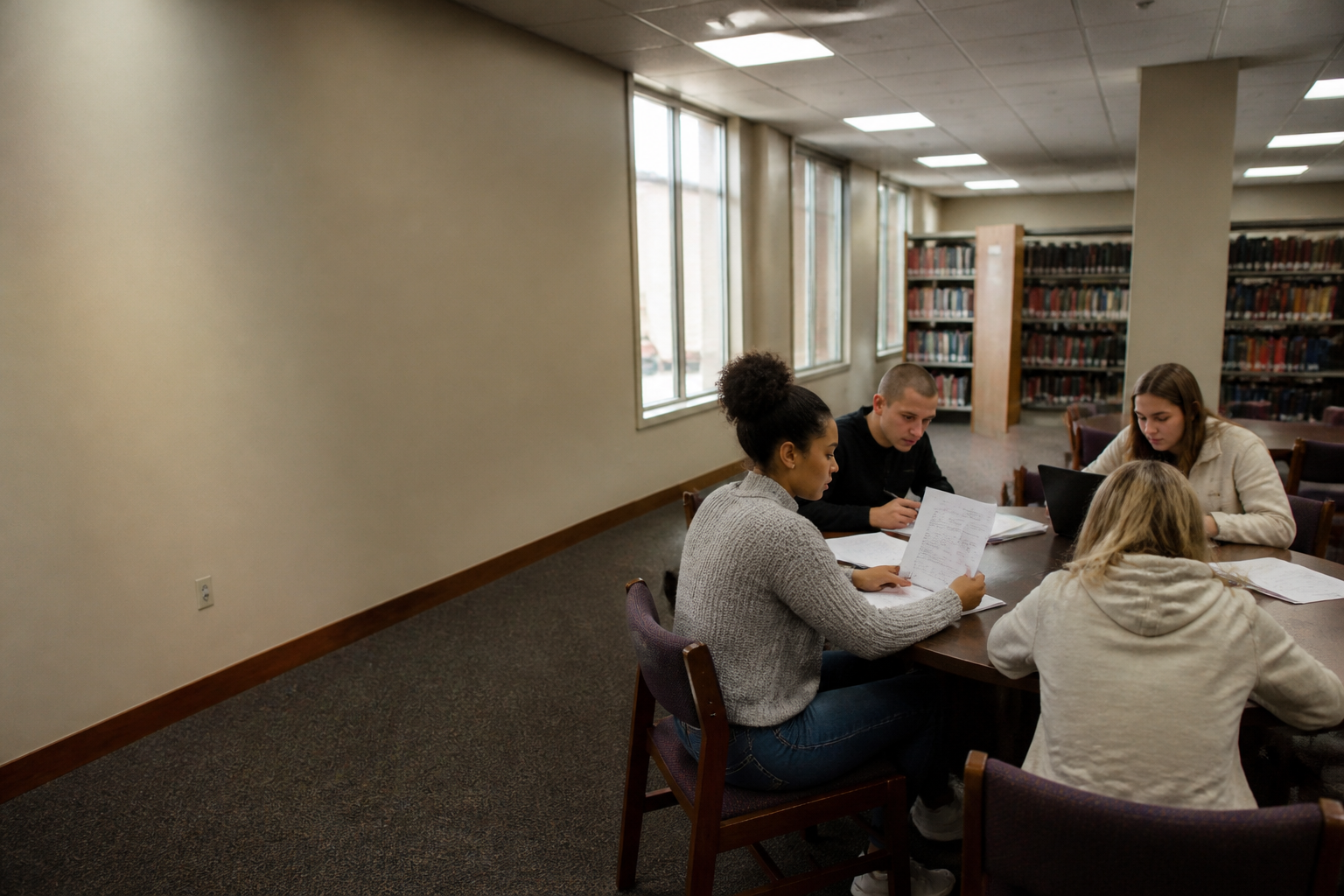
George Mason University takes the top spot for a bachelor's degree in criminal justice in Virginia, ahead of Virginia Commonwealth University and Liberty University. The Bachelor of Science in Criminal Justice is the standard credential, though several schools award a Bachelor of Arts in criminology or sociology instead, which shifts the balance between theory and applied coursework.
Cost is where the field splits. Net price after aid varies widely across Virginia campuses, and state grant money applies differently to public and private schools. Virginia also does not require a college degree to be sworn as a police officer, so the credential pays off mainly in promotion, federal hiring, and specialized units.
Key Points
- Liberty University ranks #1, with 99% acceptance and 64% graduation.
- Net price runs $5,000 to $10,000 at University of Management and Technology.
- Radford University averages a $13,701 net price, versus Liberty's $29,235.
Best Bachelor's in Criminal Justice Schools in Virginia, Ranked
Ten Virginia schools make this list, from large public universities in Richmond and Fairfax to private colleges with required internships and federal placement pipelines. Each entry names the bachelor's credential the school actually awards, along with the concentrations, credit requirements and field experience that separate one program from another.
Liberty University
#1Lynchburg, VA · ~$29,000/yr (est.)
Best for: Students who want investigative specializations
Liberty University is the largest of Virginia's criminal justice options, and its Helms School of Government awards a Bachelor of Science in Criminal Justice with six specializations, from Crime Scene Investigation to Homeland Security. Admission is test optional with no set minimum GPA, and students have interned with the FBI, U.S. Secret Service, U.S. Marshals and NCIS. The residential program sits in Lynchburg, with the next start date on January 18, 2027.
- 120 credit hours; six specializations including Homeland Security and Crime Scene Investigation
- Coursework in corrections, criminology, interview and interrogation, and criminal investigations
- Interview and interrogation courses built around supervised simulations
- Internships with the FBI, U.S. Secret Service, U.S. Marshals and NCIS
- Test optional: CLT, SAT and ACT results are not required for admission
- No set minimum GPA; applications reviewed case by case
- Full-time tuition $25,390 per year for 2026-2027; part-time study $870 per credit
Virginia Commonwealth University
#2Richmond, VA · ~$23,000/yr (est.)
Best for: Pre-law students wanting forensic investigation skills
Virginia Commonwealth University houses its criminal justice bachelor's degree in its school of government and public affairs in downtown Richmond, offering a justice concentration and a forensic crime scene investigation track. The degree requires a 2.0 GPA in the major and limits how much of the major can be transferred, a detail that matters to community college students planning ahead. Graduates move into policing, courts, corrections and crime scene work, or continue to law school.
- 120 credits minimum; 39 in criminal justice and 60 in courses outside VCU criminal justice
- 2.0 cumulative and major GPA; 45 credits must be at the 300 level or above
- Core runs from Introduction to Criminal Justice through Courts and Sentencing and a senior seminar
- 15 credits of upper-level criminal justice electives shaped to career goals
- No more than half of the criminal justice courses applied to the major may be transferred
- Accelerated B.S. to M.S. path completable in five years
George Mason University
#3Fairfax, VA · $15,000 – $20,000/yr (est.)
Best for: Northern Virginia students eyeing federal careers
George Mason University awards a Bachelor of Arts in Criminology, Law and Society with an optional Criminal Justice concentration, on a Fairfax campus close to federal agencies and Northern Virginia police departments. Students complete 42 credits in the major plus a capstone, and up to 18 ADJ credits from the Virginia Community College System can transfer in. Honors work in the major and an accelerated master's pathway are both available.
- 42 credits in the major and at least 120 credits overall
- Criminal Justice concentration, plus Homeland Security and Justice and Law and Society options
- Only one concentration may be pursued at a time
- Core includes criminal justice ethics, research methods and constitutional law
- Capstone in criminology, law and society required for graduation
- Up to 18 transferable ADJ credits from the Virginia Community College System
- 2.00 GPA minimum; honors in the major and an accelerated master's pathway available
Regent University
#4Virginia Beach, VA · ~$20,000/yr (est.)
Regent University offers its criminal justice bachelor's degree on campus in Virginia Beach and fully online, which makes it one of the more flexible options in the state for working adults. Students pick a concentration in Corrections, Homeland Security or Law Enforcement and take coursework in criminal investigation, constitutional law and ethics. The next session begins January 11, 2027.
- 120 credits with concentrations in Corrections, Homeland Security or Law Enforcement
- On campus in Virginia Beach or fully online
- Online tuition $415 per credit for full-time students, $470 per credit part-time
- On-campus block rate of $10,995 per semester for 12 to 18 credits
- Coursework in criminal investigation, corrections, constitutional law and justice theory
- Incoming freshmen can pursue $10,000 Freedom Scholarships
- Next session starts January 11, 2027
Shenandoah University
#5Winchester, VA · $30,000/yr (est. net price)
Shenandoah University runs a compact criminal justice and criminology major in Winchester, 39 credit hours spread across 13 courses. The program pairs theory with applied work and requires at least two 400-level courses, so upperclassmen do substantial research, analysis and writing. Graduates move into local, state and federal law enforcement, courts and corrections agencies, or continue to graduate study.
- 39 credit hours across 13 courses
- Three required core courses plus seven criminal justice electives
- At least two courses must be at the 400 level; no more than two at the 100 or 200 level
- One course each required in diversity, law, and policy and analysis
- Prepares students for local, state or federal law enforcement, courts or corrections roles
University of Management and Technology
#6Arlington, VA · $5,000 – $10,000/yr (est.)
The University of Management and Technology in Arlington is an online-first institution whose criminal justice bachelor's degree is built for students who already hold at least 60 lower-level college credits. Half of the 120-credit degree is upper-level work, and the criminal justice core spans juvenile justice, criminal procedure, criminology and forensic science. An optional Homeland Security major adds five courses for students who declare it at enrollment.
- 120 credit hours, 60 of them upper-level
- Entering students need at least 60 semester credit hours of lower-level college study
- 30 general education credits, including six in psychology or sociology
- 30 criminal justice core credits spanning juvenile justice to criminal procedure
- Optional Homeland Security major adds five courses, declared at enrollment
Longwood University
#7Farmville, VA · ~$19,000/yr (est.)
Longwood University in Farmville pairs crime theory with practical criminal justice coursework, an approach it presents as one of the few in Virginia to combine both. Majors study law, courts and corrections and build statistics, data analysis and communication skills along the way. Classes are small, and an 18-credit criminology minor is open to students outside the major.
- Combines criminological theory with practical criminal justice experience
- Courses include Introduction to Corrections, Constitutional Law for Criminal Justice Professionals and Introduction to Policing
- Built-in work in statistics, computerized data analysis and communication
- Separate 18-credit criminology and criminal justice minor available
- Small classes with internships and student organizations for majors
Marymount University
#8Arlington, VA · ~$29,000/yr (est.)
Marymount University in Arlington requires every criminal justice major to complete an internship, and recent placements have included the Arlington County Sheriff's Office, the FBI and the National Center for Missing and Exploited Children. Labs use virtual reality correctional environments and simulated crime scenes, and coursework covers counterintelligence, terrorism and forensic science. The university reports that more than 92% of graduates are employed in the field or move on to a master's degree.
- Internship required of all students, with placements at the FBI and sheriff's office
- Virtual reality correctional environments and simulated crime scene and forensics labs
- Coursework in counterintelligence and terrorism, corrections and principles of forensic science
- Study abroad options in Hungary, the Netherlands and the United Kingdom
- Criminal justice living-learning community for residential students
- Full-time and part-time enrollment available
Roanoke College
#9Salem, VA · ~$25,000/yr (est.)
Roanoke College in Salem gives its criminal justice majors an unusually strong experiential menu: a Washington Semester of federal internships, a mock trial team and one of the few Inside-Out prison exchange programs in Virginia. Coursework examines the causes and impact of crime through political, sociological, scientific and psychological lenses, with sample courses such as Forensics and Inequality in Criminal Justice. Students can also earn academic credit for internships in the legislative and judicial branches.
- Washington Semester with federal internships at agencies such as the U.S. Marshals Service
- Inside-Out prison exchange program, one of only a handful in Virginia
- Mock trial team and pre-law programming with guest events
- Sample courses include Forensics, Law and Film, and Inequality in Criminal Justice
- Mock trial and internship credit available in the legislative and judicial branches
Radford University
#10Radford, VA · $15,000/yr (est. net price)
Radford University awards both a Bachelor of Arts and a Bachelor of Science in Criminal Justice, with classes on the main campus and at its Roanoke location. Internships with local, state and federal agencies can earn up to 15 credits.
- Bachelor of Arts and Bachelor of Science tracks; courses in Radford and Roanoke
- Optional internships worth up to 15 credit hours with local, state and federal agencies
- October 2026 Virginia State Police pathway for seniors, a first among public Virginia universities
- Trooper School semester counts as a 15-credit internship under the state police agreement
- Accelerated master's option and an Alpha Phi Sigma honor society chapter
- Mock trial program, government career fair and undergraduate research opportunities
Cost & outcomes by school
Federal data for the highest-earning Criminal Justice programs, independent of the ranking above. Earnings are this field's bachelor's graduates four years after completing where the Scorecard reports them, else the school's undergraduate median.
| School | Net price / yr | Grad rate | Earnings | Debt | Grads/yr | Format |
|---|---|---|---|---|---|---|
| Marymount University VA | $29,137 | 54% | $73,058 | $25,000 | 20 | Online or campus |
| George Mason University VA | $17,915 | 68% | $69,511 | $17,750 | 320 | Campus |
| University of Management and Technology VA | — | 33% | $68,530 | — | 7 | Online |
| Shenandoah University VA | $30,298 | 67% | $63,290 | $23,250 | 21 | Campus |
| Liberty University VA | $29,357 | 65% | $61,715 | $25,000 | 602 | Campus |
| Ferrum College VA | $20,082 | 32% | $60,235 | $27,000 | 6 | Campus |
| Virginia Commonwealth University VA | $23,433 | 63% | $58,792 | $21,250 | 188 | Campus |
| Roanoke College VA | $24,503 | 67% | $58,040 | $27,000 | 22 | Campus |
| Radford University VA | $14,578 | 49% | $56,996 | $22,250 | 82 | Campus |
| Bluefield University VA | $25,573 | 18% | $56,811 | $23,500 | 20 | Online or campus |
| Longwood University VA | $19,066 | 61% | $56,685 | $21,000 | 40 | Campus |
| ECPI University VA | $22,965 | 43% | $54,649 | $25,759 | 54 | Online or campus |
Sources: U.S. Department of Education. Net price, graduation rate, earnings and debt: College Scorecard (earnings and debt for this field's bachelor's graduates where reported, else school-wide); graduates: IPEDS. A dash means no figure is reported.
Cost, debt & payoff
Median earnings of this field's bachelor's graduates (4 yrs after completing, else the school's undergraduate median) vs. their median federal loan debt · U.S. College Scorecard
Across these programs the median graduate earns about $55,667 and finishes with roughly $26,332 in debt — a ratio that clears a common rule of thumb (keep debt below first-year salary). Net price and debt vary widely school to school, so check the per-school figures in the table above before you shortlist.
Most Affordable Bachelor's in Criminal Justice Schools in Virginia, Ranked
These schools are ordered by average annual net price, the amount students pay after grants and scholarships, based on 2024 IPEDS and College Scorecard data from the U.S. Department of Education. Radford University is the most affordable option here at $14,578 a year, and Virginia State University, a public HBCU in Petersburg, follows closely at $15,840. Emory & Henry University's online degree completion program carries a $39,000 sticker price, but aid brings its net price to $19,061.
| School | City | Average Net Price (After Aid) | In-State Tuition and Fees | Program Format |
|---|---|---|---|---|
| Radford University | Radford | $14,578 | $12,548 | Campus |
| Virginia State University | Petersburg | $15,840 | $10,043 | Campus |
| George Mason University | Fairfax | $17,915 | $14,220 | Campus |
| Emory & Henry University | Emory | $19,061 | $39,000 | Online |
| Longwood University | Farmville | $19,066 | $15,744 | Campus |
How We Ranked Virginia's Criminal Justice Schools
A low price and strong student outcomes do not always come from the same school, so no single number decides the order here. Instead, each school's score combines several measures.
What Goes Into the Ranking
- Net price after aid: What students typically pay once grants and scholarships are subtracted from the sticker price.
- Graduation rate: How many students finish their degree at the school.
- Program earnings: What graduates of the criminal justice program earn after they leave.
- Debt: How much graduates of the program typically borrow.
- Completions: How many students finish the program each year, a sign of how established it is.
Limits Worth Knowing
Graduation rate describes the whole institution, not the criminal justice major. A school with a strong overall rate may still have a program that performs differently, and the reverse can also be true.
Net price is an estimate based on the average for that type of school, such as public or private nonprofit. It is not a personal quote. Your own aid offer can land well above or below it, so treat it as a way to compare schools, not a final bill.
What the Ranking Covers
The list includes bachelor's programs only, both on campus and online, at schools based in Virginia. When a school does not report a figure, it is judged on the measures it does report.
Virginia Criminal Justice Bachelor's Programs With the Highest Graduate Earnings
These figures come from U.S. Department of Education data (IPEDS and College Scorecard, 2024) and track graduates of each school's criminal justice bachelor's program, not the university as a whole. George Mason University reports the highest median pay five years after graduation at $70,311, while Liberty University graduates start strongest at $48,855 one year out. Marymount University shows the steepest climb, rising from $35,642 in the first year to $69,951 by year five.
| Rank | School | City | Program | Median Earnings 1 Year After Graduation | Median Earnings 5 Years After Graduation |
|---|---|---|---|---|---|
| 1 | George Mason University | Fairfax | Criminology, Law and Society, Bachelor of Arts | $43,612 | $70,311 |
| 2 | Marymount University | Arlington | Criminal Justice (B.A.) | $35,642 | $69,951 |
| 3 | Regent University | Virginia Beach | B.S. in Criminal Justice | $46,005 | $61,409 |
| 4 | Shenandoah University | Winchester | Criminal Justice and Criminology | $46,816 | $58,666 |
| 5 | Liberty University | Lynchburg | Bachelor of Science in Criminal Justice | $48,855 | $58,274 |
What a Bachelor's Degree in Criminal Justice Covers in Virginia
A Bachelor of Science in Criminal Justice leans toward applied practice, while a Bachelor of Arts leans toward social science and theory. Both appear among the programs here: Liberty University, Virginia Commonwealth University, Regent University, Virginia State University, Strayer University-Virginia and the University of Management and Technology award the B.S., while George Mason University and Marymount University award the B.A.
Core coursework
Whatever the letters, the core is consistent. Expect introductory survey courses followed by sequences in policing, courts and criminal procedure, corrections, criminal law, criminology, and research methods or statistics. Most Virginia programs finish with a capstone seminar, an internship with a police department, sheriff's office, court services unit or federal agency, or both. Northern Virginia schools such as George Mason and Marymount sit close to federal agency placements; Longwood University, Radford University, Roanoke College and Ferrum College tend to place students with regional and county agencies.
Concentrations
Common tracks include criminology, homeland security, corrections, forensics and cybercrime. Several schools build the emphasis into the degree title itself: Shenandoah University offers Criminal Justice and Criminology, Longwood offers Criminology and Criminal Justice, Virginia University of Lynchburg houses criminal justice as a concentration inside a sociology B.A., and George Mason's degree is Criminology, Law and Society.
Criminal justice, criminology, or administration of justice
Criminal justice studies the system: agencies, procedure, operations. Criminology studies why crime happens, drawing on sociology and statistics. Administration of justice usually signals a management and policy emphasis. The labels overlap more than they differ, so read the course list rather than the title.
Finally, confirm the school holds regional institutional accreditation. Federal hiring and federal student aid eligibility depend on it.
Online and Hybrid Criminal Justice Bachelor's Options at Virginia Schools
The online versus campus decision in criminal justice is less about prestige than about how you actually spend your week. Asynchronous coursework protects a shift schedule; a campus program protects access to internships, labs, and the instructors who write recommendation letters. Virginia schools offer both paths, and the right choice depends on which of those you can afford to give up.
Yes, You Can Earn This Degree Online From a Virginia School
Liberty University's B.S. in Criminal Justice is fully online and asynchronous, with no set login times and no campus requirement. Courses run in 8-week terms with eight start dates a year, which lets you begin without waiting for a traditional semester. The University of Management and Technology also delivers its B.S. in Criminal Justice online. Liberty notes that some courses may instead follow full-semester sub-terms, scheduled sessions, or field experiences, so confirm the exceptions with an advisor before you register.
Hybrid and Campus Options
Regent University and Marymount University list both campus and online formats, so you can mix delivery within one degree. Marymount requires an internship of every major, and that placement is in-person work even when the coursework is remote.
Who Each Format Suits
- Online: working adults, active-duty service members, and officers on rotating shifts who need asynchronous classes and frequent entry points.
- Campus: students who want mock trial, forensic labs, agency visits, and faculty mentoring built into the schedule.
Either way, ask whether asynchronous sections still carry fixed exam windows.
Virginia Grants and Scholarships That Lower the Cost of a Criminal Justice Degree
How much state money can a Virginia resident actually get toward a criminal justice degree? Two programs carry most of the weight, and which one applies depends entirely on whether your school is public or private.
VTAG and the Commonwealth Award
The Virginia Tuition Assistance Grant (VTAG) goes to Virginia residents attending participating private nonprofit colleges in the state, including schools like Regent University and Marymount University.1 It is not need-based, so family income does not disqualify you. You need Virginia domicile for at least a year before the award, full-time enrollment in an eligible degree program, and an application filed directly with your school's financial aid office. SCHEV lists a maximum undergraduate award of $5,250 for 2026-27, though actual awards depend on legislative appropriations and the number of eligible applicants, so plan for less.1 The priority deadline is September 15, 2026.2 VTAG does not cover religious or theological training, and a $250-per-semester bonus exists for certain teacher candidates.
The Commonwealth Award works differently. It is administered by Virginia's public institutions, such as George Mason University, Longwood University, and Radford University.3 Awards are based on demonstrated financial need, capped at tuition and fees, and require at least half-time enrollment.3 There is no separate application: filing the FAFSA or the Virginia Alternative State Aid application by your school's deadline puts you in the pool.3
Sticker Price Versus What You Pay
Published tuition rarely reflects the bill. Radford University's net price after aid lands near $14,578 and George Mason's near $17,915. Among private options, Regent University's net price sits around $19,923 against a far higher listed tuition.
SCHEV does not maintain a statewide scholarship specifically for criminal justice majors, so check each school's aid page and departmental awards.4 File the FAFSA early and confirm institutional deadlines separately.
Related Articles
Admission Requirements: GPA and Test Policy at Virginia Criminal Justice Schools
Some Virginia schools admit nearly every qualified applicant, while others turn away most. The gap matters when you build your list of bachelor's programs.
Selectivity at a Glance
Liberty University admits about 99% of applicants, and Marymount University (about 93%), Virginia Commonwealth University (about 93%), Longwood University (about 90%), Radford University (about 90%) and George Mason University (about 87%) sit in a similar open range. Roanoke College (about 83%) and Shenandoah University (about 77%) are a bit tighter. Regent University is the most selective of the schools here at roughly 38%. The University of Management and Technology reports no admission rate.
GPA and Test Policy
Liberty publishes no set minimum GPA.1 It reviews first-year applications case by case and does not require SAT or ACT scores, though CLT, SAT or ACT results may be considered for merit-based aid.
VCU does not require test scores.2 Transfer applicants with at least 24 semester credits do not need to submit high school transcripts or SAT/ACT scores unless their intended program asks for them.2 We could not confirm VCU's first-year GPA expectation.
We found no clearly stated GPA minimum or test policy for George Mason, Regent, Shenandoah, the University of Management and Technology, Longwood, Marymount, Roanoke or Radford. Check each admissions page before you apply, since test-optional rules change from year to year.
Beyond GPA and Tests
Essays, recommendation letters and interviews vary by school, and we cannot confirm which of these schools require them. Liberty's case-by-case review suggests it looks at more than one number, but its page does not itemize the extras. Confirm the full application checklist directly with each school.
Transferring From a Community College Into a Criminal Justice Bachelor's Program in Virginia
Can you start at a community college and still finish a bachelor's degree in criminal justice in Virginia? Yes, and many students do. The usual route is a two-year associate degree, often about 60 credits, at one of the state's community colleges, followed by two years at a four-year school.
How Articulation and Guaranteed Admission Work
Virginia's community colleges publish transfer agreements with four-year partners. Some map an associate degree in administration of justice or criminology directly onto a bachelor's in criminal justice. Others promise admission if you meet a GPA threshold. Terms differ by pairing and change with catalog years, and published guides commonly require a C or higher in each course for credit.
One published pathway lists 64 community college credits before transfer and 59 to 65 credits afterward. That guide was written for 2022-2023 catalogs, so treat those numbers as a starting point, not a promise. Current GPA thresholds and credit caps should be confirmed directly.
Why Starting Local Can Save Money
Community college per-credit tuition is generally well below four-year in-state rates, so two years there can trim the total bill noticeably. Compare the net-price figures in the grants and scholarships section. The savings hold only if your credits transfer into the major.
Before You Enroll
Meet a transfer advisor at both schools. Ask for written answers on three points:
- Major credit: Which courses count toward the criminal justice major, and which land only as general electives.
- Admission terms: The current GPA requirement and any guarantee conditions.
- Credit limits: Whether the four-year school caps transfer credit.
Schools such as Radford University, Longwood University, and Virginia Commonwealth University each set their own transfer policies, so check each one.
Virginia DCJS Certification, Private Security Licensing, and Whether You Need a Degree
Virginia does not require a college degree to become a police officer, so a bachelor's degree in criminal justice is a career investment rather than a licensing hurdle. That distinction should shape how you weigh the tuition bill.
How Virginia Police Certification Works
The Department of Criminal Justice Services sets the minimum standards: at least 18 years old, U.S. citizenship, a valid driver's license, a high school diploma or equivalency, a background investigation, no felony conviction or disqualifying misdemeanor, a physical exam, and a clean pre-employment drug screen. An agency hires you first; you then have 12 months to complete compulsory minimum and field training at a DCJS-approved academy and pass the state certification exam. Local agency requirements vary. Certification is entered on Form B-13 through TRACER, and it holds through continued agency employment and in-service training.
Private Security Registration
- Unarmed: 18 or older, U.S. citizen or legal resident, the 18-hour entry course, fingerprints, and an online application. A new officer may work up to 90 consecutive days while finishing training only if prints were submitted on or before hire and the employer issued a 90-day authorization.
- Armed: builds on unarmed training. Combined entry training totals 50 hours, and a firearms endorsement is required, renewed every 12 months.
- Both: registrations last 24 months, with in-service training (4 hours for unarmed officers) due before expiration.
Where the Degree Changes the Trajectory
Federal agencies set their own degree requirements, and investigator, probation, and supervisory roles, along with promotion cycles, reward the credential.
Common Questions About Criminal Justice Degrees in Virginia
What is the best criminal justice school in Virginia?
How much does a criminal justice degree cost in Virginia?
Can you get a bachelor's degree in criminal justice online from a Virginia school?
What jobs can you get with a bachelor's degree in criminal justice in Virginia?
Do you need a degree to become a police officer in Virginia?
Compare Criminal Justice programs on the data that matters
Explore more Criminal Justice & Law majors or browse every field of study.
All Criminal Justice & Law programs Browse every field of study