Best Forensic Science Schools in Iowa
Compare 4 accredited Forensic Science programs in Iowa, with net price after aid, graduation rates, earnings and debt from IPEDS and the U.S. College Scorecard.
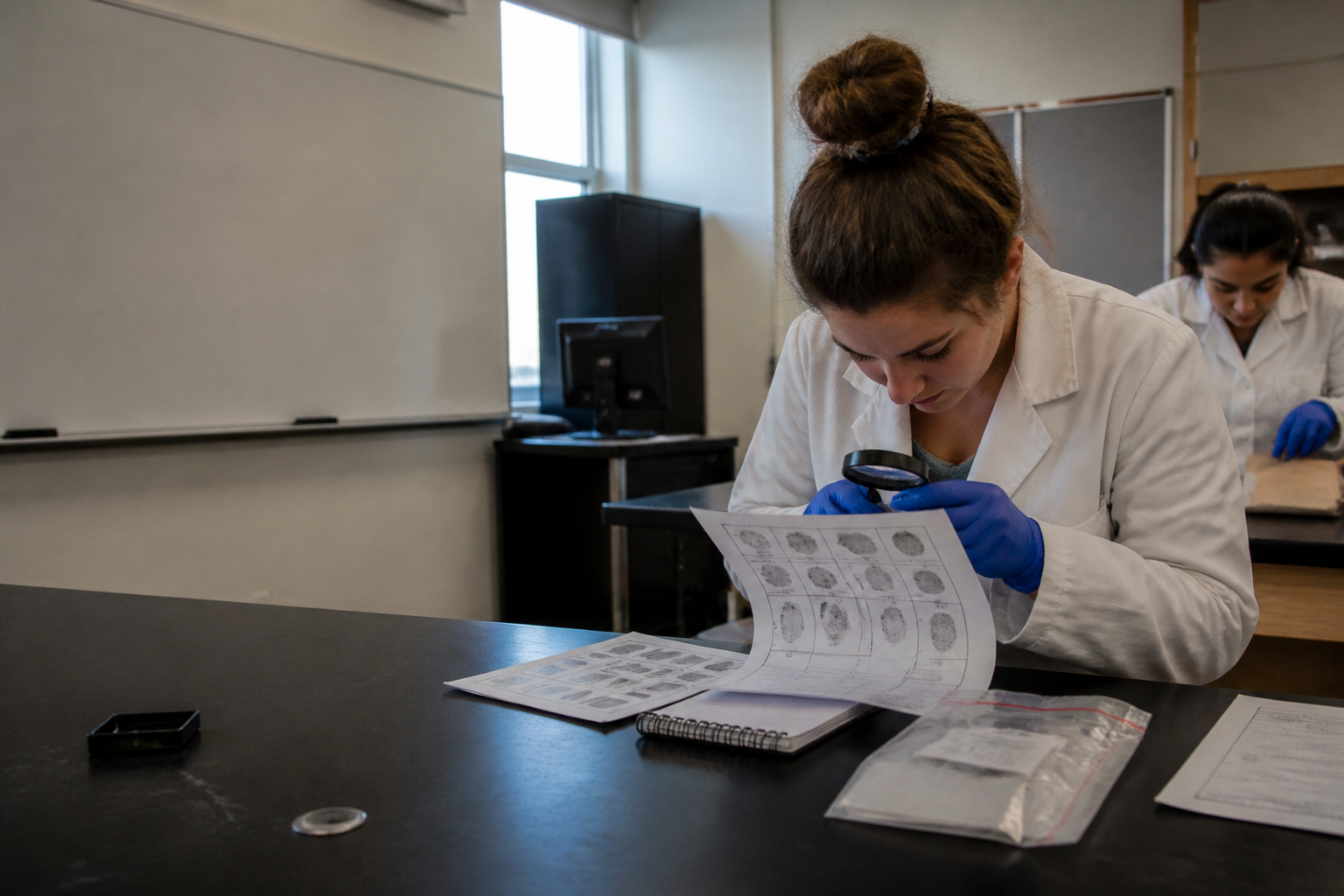
Iowa's undergraduate forensic science options are few, and most run through chemistry or criminology departments rather than a standalone forensic science major.
Degrees come as a Bachelor of Science (B.S.) or a Bachelor of Arts (B.A.), and every program ranked here is labeled a dedicated major, a combined major or a track, so the diploma reads differently from one campus to the next.
That distinction matters when a crime lab or a graduate committee reads a transcript. FEPAC accreditation is the field's main quality marker, and analytical chemistry and instrumentation coursework is what a hiring panel actually weighs.
Key Points
- Simpson College offers a combined Forensic Science/Biochemistry major in Indianola.
- Saint Ambrose and Mount Mercy build forensic preparation on chemistry majors.
- Every forensic science program ranked here is delivered on campus in 2027.
Best Forensic Science Schools in Iowa: Ranked Bachelor's Programs
Four Iowa colleges currently offer a bachelor's-level forensic science program that qualifies for this ranking, and all four deliver it on campus. None awards a standalone forensic science major: two build the degree on a chemistry major with a forensics concentration, one pairs forensic science with biochemistry, and one houses forensics inside criminology and criminal justice. Each card names the credential type so you can tell a combined science major from a criminology-style track before you compare costs and outcomes.
Buena Vista University
#1Storm Lake, IA · $15,000 – $20,000/yr (est.)
Best for: Future crime scene investigators
A small private university in Storm Lake, Buena Vista houses its forensic study inside the criminology and criminal justice department, so the degree leans toward investigation and evidence handling rather than bench chemistry. Students train on a scenario-based law enforcement simulator, work in labs in the Estelle Siebens Science Center, and finish with an internship and capstone. Graduates move into crime scene investigation, forensic technician and laboratory analyst roles, and the program cites hires at the Iowa Division of Criminal Investigation and the Polk County Medical Examiner's Office. Of the four Iowa programs here, this is the one built around the crime scene rather than the chemistry lab.
- Bachelor of Arts with a forensic science track
- Coursework in criminal law, criminal investigation and evidence collection
- Training on the MILO scenario-based law enforcement simulator
- Lab work in the Estelle Siebens Science Center
- Internship and capstone built into years three and four
- Value Added Funding covers certifications and professional experiences
- Graduates hired by Iowa DCI and the Polk County Medical Examiner's Office
Simpson College
#2Indianola, IA · ~$22,000/yr (est.)
Best for: Lab-bench scientists wanting instrument time
Simpson College in Indianola runs its forensic science and biochemistry major through the chemistry and physics department, pairing a full science sequence with forensics and criminal justice coursework. The George Washington Carver Science Center gives undergraduates instrument time that is unusual for a college this size, including a human cadaver lab, gas chromatographs, an atomic force microscope and an NMR spectrometer. An internship is strongly encouraged, and transfer students can complete much of the required coursework before arriving. Alumni work at the Iowa Department of Health and Human Services, the Iowa Department of Corrections, and the Ames and Indianola police departments.
- Combined major spanning chemistry, biology and criminal justice
- Supporting coursework in math and physics
- Human cadaver lab in the George Washington Carver Science Center
- Instrument access includes an atomic force microscope and NMR
- Internship strongly encouraged for forensic lab careers
- Transfer students may complete many required courses before entering
- Alumni at Iowa HHS, Iowa Corrections and two municipal police departments
Saint Ambrose University
#3Davenport, IA · ~$25,000/yr (est.)
Best for: Pre-health students adding forensic chemistry
Saint Ambrose University in Davenport awards a Bachelor of Science in Chemistry with a forensics concentration, so the core of the degree is a traditional, instrument-heavy chemistry major. The concentration adds biology, anatomy and physiology, applied forensics theory, and criminal evidence and investigation, alongside coursework in criminal law and the U.S. Constitution. Students choose either a two-course research sequence or a chemistry internship. It is the most science-forward of the Iowa options, aimed at forensic laboratory employment or graduate and professional study in chemistry, biochemistry, medicine or forensics.
- Bachelor of Science in Chemistry with a forensics concentration
- 55 to 56 credits of chemistry core coursework
- 23 to 24 added credits in forensics, biology and criminal justice
- Concentration includes criminal evidence and investigation
- Choose two chemical research courses or a chemistry internship
- Prepares for forensic lab work or graduate and professional study
- Also a route to secondary chemistry teaching
Mount Mercy University
#4Cedar Rapids, IA · $20,000 – $25,000/yr (est.)
Mount Mercy University in Cedar Rapids grants a Bachelor of Arts in Chemistry with a forensics concentration, and students choose between the forensics track and a pre-med track. Chemistry laboratories stay open around the clock, and undergraduates conduct faculty-guided research rather than waiting for a graduate appointment. Admissions are rolling and test-optional with no application fee, and the university reports a 96 percent employment rate for surveyed alumni within nine months of graduation. Forensic science and criminal investigation careers are the stated outcomes, alongside preparation for medical, dental, veterinary and pharmacy school.
- Bachelor of Arts in Chemistry with a forensics concentration
- Choose between the forensics and pre-med tracks
- 24-hour laboratory access for student work
- Faculty-guided undergraduate research
- Rolling, test-optional admissions with no application fee
- 10% tuition discount for partner-organization employees
- University reports 96% alumni employment within nine months
Cost & outcomes by school
Federal data for the highest-earning Forensic Science programs, independent of the ranking above. Earnings are this field's bachelor's graduates four years after completing where the Scorecard reports them, else the school's undergraduate median.
| School | Net price / yr | Grad rate | Earnings | Debt | Grads/yr | Format |
|---|---|---|---|---|---|---|
| Mount Mercy University IA | $20,168 | 58% | $60,787 | $23,699 | — | Campus |
| Saint Ambrose University IA | $24,691 | 61% | $59,531 | $25,000 | — | Campus |
| Simpson College IA | $21,936 | 63% | $59,274 | $26,000 | 2 | Campus |
| Buena Vista University IA | $18,846 | 62% | $49,156 | $25,000 | 3 | Campus |
Sources: U.S. Department of Education. Net price, graduation rate, earnings and debt: College Scorecard (earnings and debt for this field's bachelor's graduates where reported, else school-wide); graduates: IPEDS. A dash means no figure is reported.
Cost, debt & payoff
Median earnings of this field's bachelor's graduates (4 yrs after completing, else the school's undergraduate median) vs. their median federal loan debt · U.S. College Scorecard
Across these programs the median graduate earns about $59,403 and finishes with roughly $25,000 in debt — a ratio that clears a common rule of thumb (keep debt below first-year salary). Net price and debt vary widely school to school, so check the per-school figures in the table above before you shortlist.
How We Ranked Iowa's Forensic Science Bachelor's Programs
A short list is the honest result in Iowa, and we kept it that way. We did not pad the list with unrelated majors.
What we looked at
- Degree fit: A dedicated forensic science degree ranks above a related major with a forensic track or concentration. Simpson College's Forensic Science/Biochemistry program is the closest to a dedicated degree here. Buena Vista University (Criminology: Forensics Track), Saint Ambrose University (Chemistry with Forensics Concentration) and Mount Mercy University (Chemistry) are related degrees.
- Net price: What students pay after grant aid, not the sticker price.
- Earnings and debt: Program-level figures where they are published for a school.
- Completions and selectivity: How many students finish the program and how competitive admission is.
Read the numbers with care
Colleges usually report graduation rates and net prices for the whole institution, not for forensic science students alone. They describe the university, so treat them as a guide to cost and student outcomes rather than a promise about this major.
Earnings and debt are different. Where we show them, they come from program-level reporting, which can cover a broader field such as chemistry or criminology rather than forensic science alone. Small graduating classes can also make those figures shift from year to year.
The order is a judgment call built on these factors, not a precise score. Use it to build a shortlist, then check each school's current program page for course requirements, costs and outcomes before you apply.
What a Bachelor's Degree in Forensic Science Looks Like in Iowa
Crime labs increasingly want applicants with a strong natural-science foundation, and that shapes how Iowa's undergraduate options are built. The schools ranked here reach forensic work through different departments, so the label on the diploma matters less than the coursework behind it.
How the Ranked Schools Package Forensics
The programs split into a lab-science path and a criminal-justice path.
- Simpson College (Indianola): Forensic Science/Biochemistry, the most science-heavy of the group, built around chemistry and biology.
- Saint Ambrose University (Davenport): Chemistry with a Forensics Concentration, a chemistry degree with forensic coursework layered on top.
- Mount Mercy University (Cedar Rapids): Chemistry. Ask the department how much forensic content it includes before counting on it.
- Buena Vista University (Storm Lake): a Forensics Track within Criminology, which leans toward criminal justice and investigation rather than laboratory analysis.
A forensic science major at Simpson is therefore not the same thing as a concentration or track inside another major at Saint Ambrose or Buena Vista. Whether each school awards a B.S. or a B.A., and how many credits the degree requires, should be confirmed in the current catalog. Lab-science paths typically carry general chemistry, organic chemistry, biology, and often biochemistry, which means more required credits than a criminology-based track.
Is Any Iowa Program FEPAC Accredited?
The Forensic Science Education Programs Accreditation Commission (FEPAC), which operates through the American Academy of Forensic Sciences, accredits bachelor's and master's programs in forensic science, natural science, and computer science, and under its 2026 standards, undergraduate crime-scene-investigation programs.1 The program must also sit at a regionally accredited institution.2 We could not confirm that any of the Iowa programs above appears on FEPAC's current list. Check the official list yourself, along with the date it was last updated, before you apply.
Why It Matters and What to Do Without It
Some crime labs prefer or require graduates of accredited programs, and accreditation can simplify the path to a lab job. Many labs, though, primarily look for a solid chemistry or biology degree with demonstrable lab skills. If your program is not FEPAC accredited:
- Choose a chemistry or biochemistry core, as at Simpson, Saint Ambrose, or Mount Mercy.
- Add statistics and instrumental analysis courses where offered.
- Pursue internships and research experience.
- Read the job postings of labs you want to work for and match their stated degree requirements.
A Caution on Buena Vista
Buena Vista's forensic science web content appeared inconsistent with its program listing when we reviewed it. Treat that page cautiously, and confirm the track's current status, requirements, and catalog year with the admissions office before relying on it.
Admission Requirements for Iowa Forensic Science Bachelor's Programs
Every forensic science bachelor's degree below is built on chemistry or criminology, so solid high school preparation in chemistry, biology, and algebra matters more than any single admissions number. None of these schools published a forensic-specific GPA floor, test policy, or transfer rule in the sources we reviewed, so confirm each point directly with the admissions office before you apply. Community college students should know that Iowa's statewide Associate of Arts articulation agreement, written for the state's public universities, requires a 2.0 minimum GPA and at least 60 transferable credit hours (up to 16 of them career and technical), and it satisfies general education requirements for qualifying transfers. Private colleges like the ones ranked here set their own transfer rules, so ask each school whether it accepts an Iowa A.A. as a block toward general education and how your lab science courses will count toward the major.
| School | Minimum GPA / Selectivity | Test Policy | Prerequisites | Transfer Credit Policy |
|---|---|---|---|---|
| Buena Vista University (Criminology: Forensics Track) | No published policy | No published policy | No published forensic-specific prerequisite; criminology-based major with a forensics track | No published policy; confirm how Iowa A.A. credits apply |
| Simpson College (Forensic Science/Biochemistry) | No published policy | No published policy | No published forensic-specific prerequisite; biochemistry-based major, so high school chemistry and math help | No published policy; confirm how Iowa A.A. credits apply |
| Saint Ambrose University (Chemistry with Forensics Concentration) | No published policy | No published policy | No published forensic-specific prerequisite; chemistry major with a forensics concentration | No published policy; confirm how Iowa A.A. credits apply |
| Mount Mercy University (Chemistry) | No published policy | No published policy | No published forensic-specific prerequisite; chemistry major | No published policy; confirm how Iowa A.A. credits apply |
Online and Hybrid Forensic Science Options at Iowa Schools
Campus Delivery Is the Norm
Every forensic science bachelor's program ranked here is delivered on campus. Buena Vista University's Criminology: Forensics Track, Simpson College's Forensic Science/Biochemistry major, Saint Ambrose University's Chemistry with Forensics Concentration and Mount Mercy University's Chemistry program with a forensics concentration all expect students to attend in person. The main reason is that the core of the degree happens in a lab.
Why Labs Keep These Degrees on Campus
Forensic science rests on chemistry and biology sequences that require hands-on instrument work, evidence handling and supervised lab hours. The schools here build their programs around that equipment. Buena Vista runs labs in the Estelle Siebens Science Center. Simpson offers human cadaver lab access along with atomic force microscope and NMR instruments. Saint Ambrose highlights modern chemical analysis instrumentation, and Mount Mercy keeps its chemistry laboratories open 24 hours. That kind of training is hard to replicate through a screen, which is why fully online forensic science majors are uncommon. If you find an online program elsewhere, ask exactly how it handles required lab credits before you enroll.
Building Flexibility Into a Campus Degree
Students who need a lighter on-campus load still have options:
- Front-load general education: Take composition, math and social science courses online or at a community college, then transfer. Simpson College says transfer students are welcome. Confirm with any school how your credits will apply.
- Use employer support: Mount Mercy accepts employer reimbursement and military benefits. It also offers a 10% tuition discount for employees of partner organizations.
- Plan lab-heavy terms carefully: Schedule chemistry and biology sequences for semesters when you can spend the most time on campus.
Related Articles
Iowa Forensic Science Degree FAQs
These answers cover the questions Iowa students ask most often about forensic science bachelor's programs, accreditation, and the jobs those degrees lead to.
Which Iowa colleges offer a bachelor's degree in forensic science?
Are there FEPAC accredited forensic science programs in Iowa?
Can I work in a crime lab with a criminology or criminal justice degree instead?
Is it possible to become a crime scene investigator in Iowa without a forensic science major?
Compare Forensic Science programs on the data that matters
Explore more Criminal Justice & Law majors or browse every field of study.
All Criminal Justice & Law programs Browse every field of study