Best Forensic Science Schools in Pennsylvania
Compare 18 accredited Forensic Science programs in Pennsylvania at 16 colleges, with net price after aid, graduation rates, earnings and debt from IPEDS and the U.S. College Scorecard.
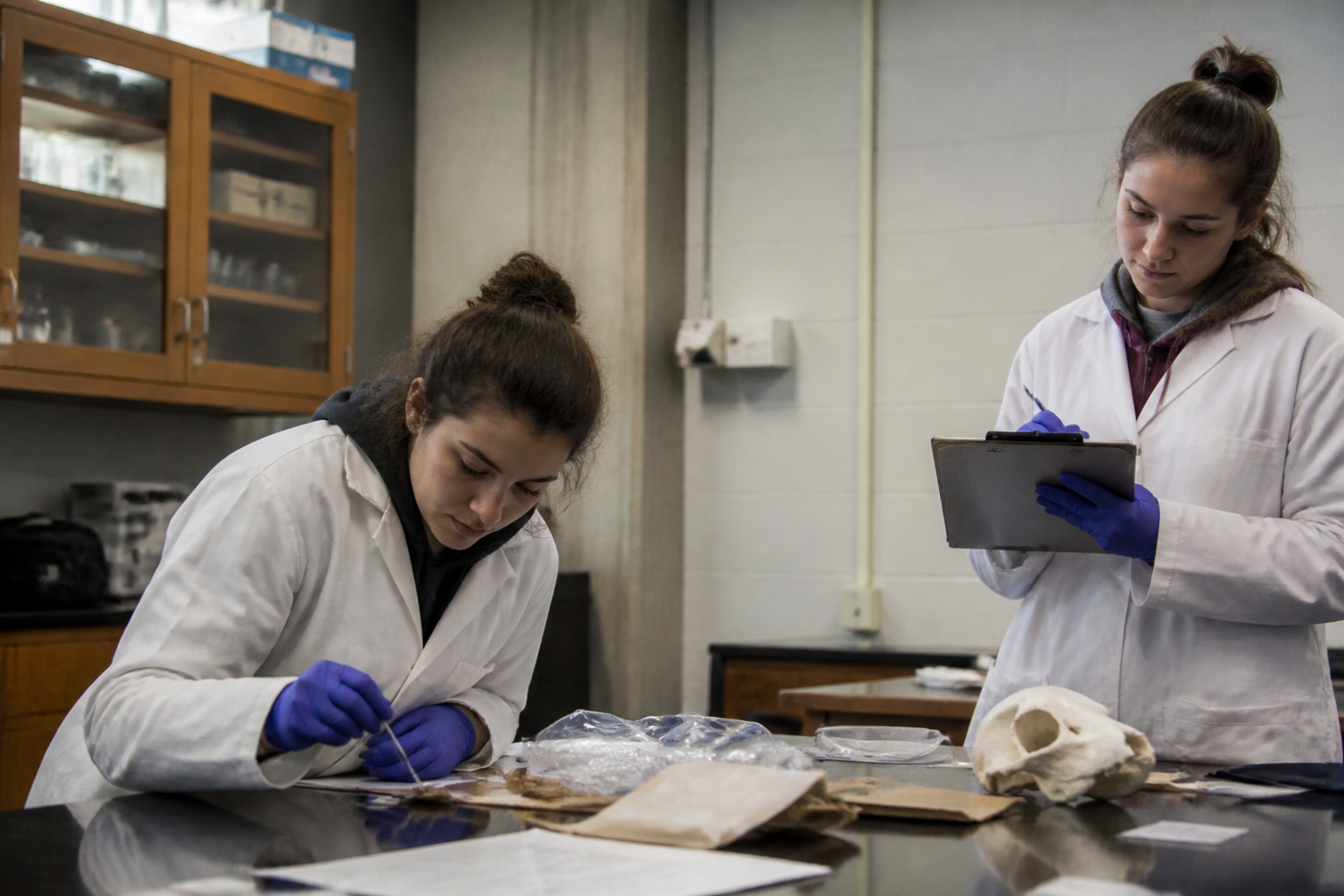
Forensic science in Pennsylvania splits between standalone B.S. programs and forensic tracks inside a chemistry major, and net price after aid varies widely across the schools ranked here. The credential is a Bachelor of Science (B.S.) or a Bachelor of Arts (B.A.) in Forensic Science; the chemistry-based route is the more common shape.
Campus footprints are shifting. Penn State and PennWest have both moved program locations in recent years, so verify a program's current status and start term before applying.
FEPAC accreditation is program-level, not institutional, and a well-known university name does not guarantee it.
Key Points
- Cedar Crest, La Roche and Penn State hold FEPAC program accreditation.
- Students can start Penn State's Forensic Science B.S. at any campus.
- Pennsylvania issues no occupational license for forensic scientists or crime lab analysts.
10 Best Schools for a Bachelor's Degree in Forensic Science in Pennsylvania
Every entry below awards a bachelor's degree in forensic science, whether as a standalone B.S. or as a forensic track inside a chemistry major. Each card pairs the program's distinctive features with the school's net price after aid, its institution-wide graduation rate and its acceptance rate, so you can read the whole institution rather than the major alone. Net price is a sector-conditional average for aided first-time, full-time students and will not match every student's bill.
West Chester University of Pennsylvania
#1West Chester, PA · $20,000 – $25,000/yr (est.)
Best for: Chemistry-minded students aiming at toxicology labs
West Chester University runs its forensic program as a Bachelor of Science in Forensic and Toxicological Chemistry, a FEPAC-accredited sequence built on analytical chemistry and the chemistry of physical evidence, with internships supplying lab hours beyond coursework. The university reports an overall graduation rate near 71% and an acceptance rate around 78%, the most selective of the public options on this list. It suits students who want a chemistry-first forensic degree and a laboratory or toxicology career rather than a criminal justice route.
- FEPAC-accredited forensic and toxicological chemistry curriculum
- Built on fundamental chemistry and analytical chemical skills
- Coursework in the chemistry of physical evidence and its analysis
- Laboratory experience through coursework and internships
- Prepares graduates for forensic, toxicology and analytical testing labs
- Also routes to graduate study and research or clinical laboratories
- Many forensic science positions require a background check
DeSales University
#2Center Valley, PA · $32,000/yr (est. net price)
Best for: Students blending chemistry with criminal justice
DeSales University houses forensic science as a track inside its chemistry major, so students complete the full chemistry sequence alongside criminal justice, forensic toxicology, crime lab and criminal investigation courses, with every required lab taken in person. The university graduates about 72% of students and accepts roughly 77% of applicants, and chemistry majors holding a 3.00 GPA can add a fifth-year MBA. It fits students who want a rigorous bench-science degree with room for law enforcement or business coursework.
- Forensic science track inside the chemistry major
- Combines the chemistry and criminal justice programs
- Required courses include Forensic Toxicology, Crime Lab and Criminal Investigation
- All required laboratories must be taken in person
- Students pick Forensic Psychology or Psychological Sleuthing
- 3.00 GPA chemistry majors may apply to the five-year BS/MBA
- Transfer courses without an in-person lab are not accepted
Commonwealth University of Pennsylvania
#3Bloomsburg, PA · ~$16,000/yr (est.)
Best for: Budget-conscious in-state chemistry majors
Commonwealth University of Pennsylvania offers a chemistry B.S. with a Forensics ACS concentration that follows the Forensic Sciences recommended curriculum, blends in criminal justice and physics, and finishes at the Bloomsburg campus under a 1+3 format. About 54% of students graduate and roughly 93% of applicants are admitted, so admission is close to open access. It is a strong fit for students who want an American Chemical Society approved chemistry degree at a public price and can begin on a partner campus.
- Approved by the American Chemical Society
- Follows the Forensic Sciences recommended curriculum
- Covers evidence collection, analysis, interpretation and presentation
- Four concentrations: biochemistry, forensics, pre-medicine, natural products
- Faculty-mentored research or an internship required
- Includes criminal investigation and procedure coursework
- 1+3 format, with students finishing at the Bloomsburg campus
Waynesburg University
#4Waynesburg, PA · ~$18,000/yr (est.)
Waynesburg University offers a standalone forensic science major that pairs modern biology and chemistry with hands-on instrument time on comparison microscopes, gas chromatograph-mass spectrometers, scanning electron microscopes and infrared spectrometers, plus a dedicated crime scene house for processing mock scenes. Students earn minors in both biology and chemistry and can take mock court proceedings, a CSI summer camp and the Forensic Science Club. The university graduates about 66% of students and admits roughly 90% of applicants. It suits students who want small-campus lab access and a trajectory toward agencies such as the FBI, DEA or EPA.
- Students earn minors in both biology and chemistry
- Hands-on work with comparison microscopes, GC/MS and infrared spectrometers
- Dedicated crime scene house for processing mock scenes
- Faculty research in arson, latent prints, drug identification and blood analysis
- Mock court proceedings cover common law and rules of evidence
- Forensic Science Club, CSI summer camp and community outreach
- Alumni paths into FBI, DEA and EPA laboratories
Seton Hill University
#5Greensburg, PA · ~$22,000/yr (est.)
Seton Hill University teaches forensic science as a Bachelor of Science with a full-sized ranch-style Crime Scene House on campus, a genetic analyzer for DNA work, and labs that run chain of custody, evidence analysis and crime lab reports as casework simulations. Students testify in a mock trial and attend real trials that turn on forensic evidence. The university reports roughly 67% graduation and 80% acceptance rates, and the program cites 98% career placement for its bachelor's graduates. It fits students who want repeated courtroom and crime-scene practice before applying to labs or graduate school.
- Full-sized ranch-style Crime Scene House on campus
- Labs simulate chain of custody, evidence analysis and crime lab reports
- Genetic analyzer used for DNA analysis
- Work with at least six microscope types and ten instruments
- Mock trial testimony plus attendance at real trials
- Internships at labs, crime labs and medical examiner offices
- Program reports 98% career placement for bachelor's graduates
Cedar Crest College
#6Allentown, PA · ~$19,000/yr (est.)
Cedar Crest College awards a Bachelor of Science in Forensic Science requiring at least 92 credits, spanning chemical principles, toxicology, trace evidence, forensic molecular biology, microscopy and expert witness testimony, taught in the Joni Berner Expert Witness Training Center with access to tandem mass spectrometry and Raman microscopy. About 60% of students graduate and roughly 84% of applicants are admitted. The college is a good match for students who want a heavily instrumented lab curriculum and a documented record of sending graduates into master's and doctoral programs, with employers that include state police and city crime labs.
- Requires at least 92 credits
- Coursework in toxicology, trace evidence and forensic molecular biology
- Joni Berner Expert Witness Training Center simulation spaces
- Access to tandem mass spectrometry and Raman microscopy
- Undergraduate and master's forensic programs both FEPAC accredited
- Double major option in biochemistry, biology or chemistry
- Three faculty hold American Board of Criminalistics certification
- Since 2020, 74% of graduates entered or finished graduate study
Mercyhurst University
#7Erie, PA · $19,000/yr (est. net price)
Mercyhurst University created its Applied Forensic Sciences major in 2002 and splits it into criminalistics and forensic biology, forensic anthropology, and forensic chemistry tracks, backed by the Ted A. Rathbun Osteology Laboratory, an autopsy suite, a digital x-ray lab and mock crime scene spaces. Students must hold a 2.75 GPA overall and in the major, and internships have run through the DEA, NCIS and the Allegheny County Medical Examiner's Office. The university graduates about 60% of students and admits roughly 81% of applicants. It suits students who already know which forensic specialty they want.
- Covers fingerprint and ballistics pattern recognition
- Interpretation of hairs, fibers, paints, polymers, soil and glass
- DNA evidence collection in lecture and laboratory
- Minimum 2.75 GPA overall and in the major
- Only two major courses may be repeated
- No required major course may be taken pass-fail
- Internships with the DEA, NCIS and county medical examiner offices
- Ted A. Rathbun Osteology Laboratory on campus
- Autopsy suite and digital x-ray lab
- Bloodstain pattern analysis in the mock crime scene lab
- FORDISC 3.0 used for biological profiling
- Prepares students for graduate study in anthropology
- Forensic chemistry concentration in the Applied Forensic Sciences major
- Crime scene searches conducted with professors
- Mock crime scenes staged in the Criminalistics Lab
- Alumni placed in master's and Ph.D. programs
- Major founded in 2002, among the first of its kind
University of Pittsburgh-Bradford
#8Bradford, PA · ~$15,000/yr (est.)
Pitt-Bradford hosts the only forensic science program in the University of Pittsburgh system, a Bachelor of Science with a CSI House for evidence collection and offender profiling, a virtual dissection table for autopsy analysis, and a gas chromatograph-mass spectrometer for traces of drugs, poisons and explosives. The campus graduates about 48% of students and admits roughly 89% of applicants. It is a fit for students who want a large research university's name on the diploma while studying on a small campus, and the degree closes with an internship.
- Only forensic science program in the Pitt system
- CSI House for evidence collection and offender profiling
- Virtual dissection table used for autopsy analysis
- Gas chromatograph-mass spectrometer for drugs, poisons and explosives
- Courses include forensic chemistry, DNA analysis and toxicology
- The degree closes with an internship
- Graduates work as DNA analysts, serologists and crime scene investigators
Point Park University
#9Pittsburgh, PA · $25,000 – $30,000/yr (est.)
Point Park University awards a Bachelor of Science in Forensic Science in downtown Pittsburgh, with a crime scene investigation house on campus and an internship pipeline to the Allegheny County Medical Examiner's Office a short walk away. Faculty include a former chief forensic investigator for the county, coursework runs from criminalistics and criminal evidence to forensic photography and death investigation, and the department also offers an 18-credit minor. The university graduates about 59% of students and admits roughly 97% of applicants. It suits students who want urban access to real medical examiner and laboratory placements.
- Crime scene investigation house on campus
- Internships at the Allegheny County Medical Examiner's Office
- Courses include Forensic Photography and Accident/Suicide Death Investigation
- Faculty include a former county chief forensic investigator
- Also offers an 18-credit forensic science minor
- Forensic Science Club meets biweekly
- Past placements at UPMC Research, the VA Medical Center and Quest Diagnostics
Alvernia University
#10Reading, PA · ~$28,000/yr (est.)
Alvernia University's Bachelor of Science in Forensic Science sits in the natural and applied sciences department and leans on chemistry and biology, with instrument access that includes UV/Vis, infrared and fluorescence spectrometers, an HPLC, a GC/MS, a Raman spectrometer and a laser-induced breakdown spectroscopy system. The university also runs a partnership with Berks County that places students in paid investigative and forensic internships. About 56% of students graduate and roughly 58% of applicants are admitted, the lowest acceptance rate on this list. It fits students who want a regional justice-system connection alongside a science-heavy degree.
- Chemistry- and biology-based forensic science curriculum
- Paid investigative and forensic internships through a Berks County partnership
- Instrument access includes HPLC, GC/MS and Raman spectrometer
- Also uses UV/Vis, infrared, fluorescence and laser-induced breakdown spectroscopy
- Rolling admissions through the Alvernia portal or Common Application
- Graduates work in crime labs and at the DEA, FDA, EPA and OSHA
- Washington Center semester internship option
Cost & outcomes by school
Federal data for the highest-earning Forensic Science programs, independent of the ranking above. Earnings are this field's bachelor's graduates four years after completing where the Scorecard reports them, else the school's undergraduate median.
| School | Net price / yr | Grad rate | Earnings | Debt | Grads/yr | Format |
|---|---|---|---|---|---|---|
| Commonwealth University of Pennsylvania PA | $15,699 | 55% | $73,289 | $25,000 | 57 | Campus |
| University of Pittsburgh-Bradford PA | $15,350 | 48% | $66,125 | $24,250 | 2 | Campus |
| Pennsylvania State University PA | $32,875 | 86% | $66,084 | $27,000 | 60 | Campus |
| Pennsylvania State University PA | $19,550 | 34% | $63,435 | $25,000 | — | Campus |
| DeSales University PA | $31,643 | 72% | $61,295 | $25,788 | — | Campus |
| West Chester University of Pennsylvania PA | $23,331 | 71% | $61,258 | $23,500 | — | Campus |
| Cedar Crest College PA | $18,659 | 60% | $59,460 | $27,000 | 14 | Campus |
| Waynesburg University PA | $18,235 | 66% | $58,537 | $27,000 | 16 | Campus |
| Shippensburg University of Pennsylvania PA | $23,726 | 56% | $56,351 | $25,000 | — | Campus |
| Mercyhurst University PA | $19,444 | 60% | $55,665 | $25,305 | 16 | Campus |
| Alvernia University PA | $28,138 | 56% | $55,055 | $27,000 | 4 | Campus |
| La Roche University PA | $20,794 | 57% | $52,341 | $25,000 | — | Campus |
Sources: U.S. Department of Education. Net price, graduation rate, earnings and debt: College Scorecard (earnings and debt for this field's bachelor's graduates where reported, else school-wide); graduates: IPEDS. A dash means no figure is reported.
Cost, debt & payoff
Median earnings of this field's bachelor's graduates (4 yrs after completing, else the school's undergraduate median) vs. their median federal loan debt · U.S. College Scorecard
Across these programs the median graduate earns about $56,008 and finishes with roughly $25,305 in debt — a ratio that clears a common rule of thumb (keep debt below first-year salary). Net price and debt vary widely school to school, so check the per-school figures in the table above before you shortlist.
How We Ranked Them: FEPAC vs. Institutional Accreditation
A familiar university name or a low sticker price can mislead you if the program itself has never been reviewed by the field's accreditor. Among the schools ranked here, Cedar Crest College, La Roche University and Pennsylvania State University list bachelor's programs accredited by FEPAC, the Forensic Science Education Programs Accreditation Commission.2
Two Different Stamps
Regional institutional accreditation reviews the whole college: its finances, governance, faculty and student support.3 FEPAC reviews one program against discipline-specific standards. It looks for coursework in biology, chemistry, physics and math, hands-on work with forensic methods and instrumentation, professional-practice content and a capstone such as a research project or internship.1 A program must also sit inside a regionally accredited institution and have graduated at least two cohorts before it can apply.1
Regional accreditation alone does not make a forensic science bachelor's degree FEPAC-accredited. West Chester, DeSales, Commonwealth, Waynesburg, Seton Hill, Mercyhurst, Pitt-Bradford, Point Park, Alvernia, Shippensburg, PennWest and Lincoln are regionally accredited, but their forensic science programs are not listed with FEPAC.
Where It Counts
FEPAC status carries weight with crime labs and with forensic science graduate programs, since it confirms the program has been measured against the field's curriculum expectations. It matters less for entry-level roles filled through civil-service exams or for careers outside forensic science, where regional accreditation is the basic requirement. Cost and outcomes still matter, but institution-wide graduation rates and salaries cannot tell you whether the program you are applying to meets FEPAC standards.
Does Penn State Have a Forensic Science Bachelor's Degree? Campus Closures and Pennwest Changes
Does Penn State still offer a bachelor's degree in forensic science? Yes. Penn State lists a Forensic Science, B.S. that is accredited by the Forensic Science Education Programs Accreditation Commission (FEPAC). Students can begin at any Penn State campus and finish at University Park.
What the Campus Closures Mean
Seven campuses are scheduled to close after Spring 2027: DuBois, Fayette, New Kensington, Mont Alto, Shenango, Wilkes-Barre, and York. These campuses are not admitting new students. If you haven't enrolled yet, don't plan to start at one of them. The published program information does not say the forensic science degree itself is ending. It points to a start at an open Penn State campus and completion at University Park.
PennWest and Forensic Science
Pennsylvania Western University, based in California, Pennsylvania, offers a Chemistry degree with a Forensic Science Concentration. Whether that concentration is open to new students after the PennWest consolidation is unconfirmed, so check with the school before applying.
Confirm Before You Apply
Contact the admissions office at each school and ask three things:
- Status: Is the forensic science major open to new students for your entry term?
- Campus: Which campus can you start at, and where would you finish?
- Accreditation: Is the program still FEPAC-accredited?
The official program page for each school is the best place to check next.
Cheapest Forensic Science Bachelor's Programs in Pennsylvania
These Pennsylvania forensic science bachelor's programs carry the lowest average annual net price in the most recent federal IPEDS and College Scorecard data, listed from lowest to highest. Net price is what students pay after grants and scholarships, and it includes housing, books and other costs, so at public schools it can run higher than tuition alone. At private Waynesburg University, aid brings the $30,480 published tuition down to an $18,235 net price, a gap of more than $12,000 a year.
| School | Location | Program | In-State Tuition and Fees | Average Net Price After Aid | Median Debt at Graduation (School-Wide) |
|---|---|---|---|---|---|
| Lincoln University | Lincoln University, PA | Chemistry: Forensic Science Concentration | $12,512 | $14,977 | $28,250 |
| University of Pittsburgh-Bradford | Bradford, PA | Forensic Science | $14,770 | $15,350 | $24,250 |
| Commonwealth University of Pennsylvania | Bloomsburg, PA | Chemistry (Forensics ACS concentration) | $11,046 | $15,699 | $26,000 |
| Waynesburg University | Waynesburg, PA | Forensic Science | $30,480 | $18,235 | $27,000 |
| Pennsylvania Western University | California, PA | Chemistry, Forensic Science Concentration | $11,436 | $18,256 | $23,725 |
Online and Hybrid Bachelor's in Forensic Science Options at Pennsylvania Schools
A hybrid forensic science bachelor's would let you do most coursework remotely, with only limited time on campus. In Pennsylvania, that format is not what the ranked schools deliver: West Chester University of Pennsylvania, DeSales University, Commonwealth University of Pennsylvania, Waynesburg University, Seton Hill University, Cedar Crest College, Mercyhurst University, the University of Pittsburgh-Bradford, Point Park University, and Alvernia University all teach their programs on campus. Pennsylvania State University's B.S. in Forensic Science is also campus-based, with a 2+2 route that starts at any Penn State campus and finishes at University Park.
Can you earn a bachelor's degree in forensic science online in Pennsylvania?
Not as of 2026. We found no fully online or hybrid bachelor's in forensic science at a Pennsylvania school.
Online options that are not forensic science bachelor's degrees
Two nearby offerings can be confusing:
- Certificate: Pennsylvania Western University (PennWest) offers a 100% online Forensic Science Certificate (23 to 40 credits, typically one to two years). It is a certificate, not a bachelor's degree.
- Related field: Commonwealth University of Pennsylvania offers a B.S. in Digital Forensics and Cybersecurity in face-to-face, online, and hybrid formats. It covers digital evidence and cybersecurity, not laboratory forensic science.
The lab-access trade-off
Forensic science is built around hands-on chemistry and biology labs, instrumentation, and mock crime scenes. DeSales requires all of its labs in person, and Alvernia describes its labs as in-person and hands-on. A program that went fully remote would have to replace that bench time, which is why the campus format dominates here.
Admission Requirements for a Bachelor's Degree in Forensic Science in Pennsylvania
Which GPA and science courses do Pennsylvania forensic science programs actually require? The answer depends on the school, and the clearest published rules come from Penn State.
What Penn State publishes
Penn State's Forensic Science, B.S. lists two thresholds for entry to the major: a 2.00 cumulative GPA and a 2.50 aggregate GPA across eight entrance-to-major courses. Those courses are science-heavy: CHEM 110, 111, 112 and 210, plus FRNSC 210, MATH 140 and 141, and PHYS 211 or PHYS 250. A grade of C or better is required in each. These are major-entry requirements, not first-year admission standards, so expect the chemistry and math sequence to begin in your first semester.
Test scores and high school preparation
Penn State's forensic science admissions material lists no SAT or ACT policy for the program and names no high school science prerequisite; the published requirements are all college-level. Alvernia University, which offers a B.S. in Forensic Science, does not publish a GPA expectation, a testing policy or a high school science prerequisite on its program page. Confirm each school's current first-year rule on its own admissions site.
Transferring in
Penn State transfer applicants need at least 18 attempted credits from a regionally accredited college after high school and generally a 2.0 cumulative GPA, and 36 of the final 60 credits must be completed at Penn State. Use its Transfer Credit Tool to see which community college courses count; course-by-course equivalencies for the forensic science major are not spelled out.
Three practical tips
- Take chemistry and biology every year you can: general and organic chemistry carry real weight in these curricula.
- Stay in the math sequence: precalculus and calculus keep you eligible for the required statistics and physics courses.
- Check deadlines early: application dates and testing rules sit on each university's first-year admissions page, not the program page.
Cost of a Forensic Science Bachelor's Degree in Pennsylvania
The sticker price and the price you actually pay can be far apart, and that gap shapes how you compare schools. In-state tuition at public options such as West Chester, Shippensburg, Commonwealth and Pennsylvania Western is generally lower than at private schools like Cedar Crest, Seton Hill or DeSales. Private schools often discount heavily, though, so net price (cost after grants and scholarships) can narrow the difference. Treat any net price as an estimate, since your own aid offer will differ. Check each school's current tuition page and net price calculator before deciding.
PA State Grant and PHEAA
The Pennsylvania Higher Education Assistance Agency (PHEAA) runs the PA State Grant. The 2026-27 maximum is $6,000, up from $5,750 the year before.1 Your award can be lower depending on financial need and school type, and it stays conditional on eligibility and enrollment reviews.
To apply, file the FAFSA first. First-time applicants for 2026-27 also complete the PA State Grant Form and the High School Form.2 The deadline is May 1 for first-time four-year students and for renewing undergraduates. Anyone finishing supplemental paperwork has until April 1, 2027 for this award year.3 Late applications are handled differently by different sources: PHEAA says they may qualify if funds remain, while Penn State says it will not consider them. File early rather than test that.
Scholarships and Ways to Cut the Bill
Most schools here offer their own merit or need-based scholarships, and many are awarded automatically when you apply for admission. Ask each admissions office what is available for science majors.
The simplest way to lower the total is to take general education courses and introductory chemistry and biology at a community college, then transfer. Confirm in writing that your credits will count toward the forensic science major. Science sequences are the courses most likely to be rejected.
Related Articles
What Forensic Science Technicians Earn in Pennsylvania
Pay is a practical measure of what a bachelor's degree in forensic science can lead to once you enter the workforce.
Pennsylvania Forensic Science Licensure and Certification
Compare Forensic Science programs on the data that matters
Explore more Criminal Justice & Law majors or browse every field of study.
All Criminal Justice & Law programs Browse every field of study