Best Cybersecurity Schools in Michigan
Compare 24 accredited Cybersecurity programs in Michigan at 18 colleges, with net price after aid, graduation rates, earnings and debt from IPEDS and the U.S. College Scorecard.
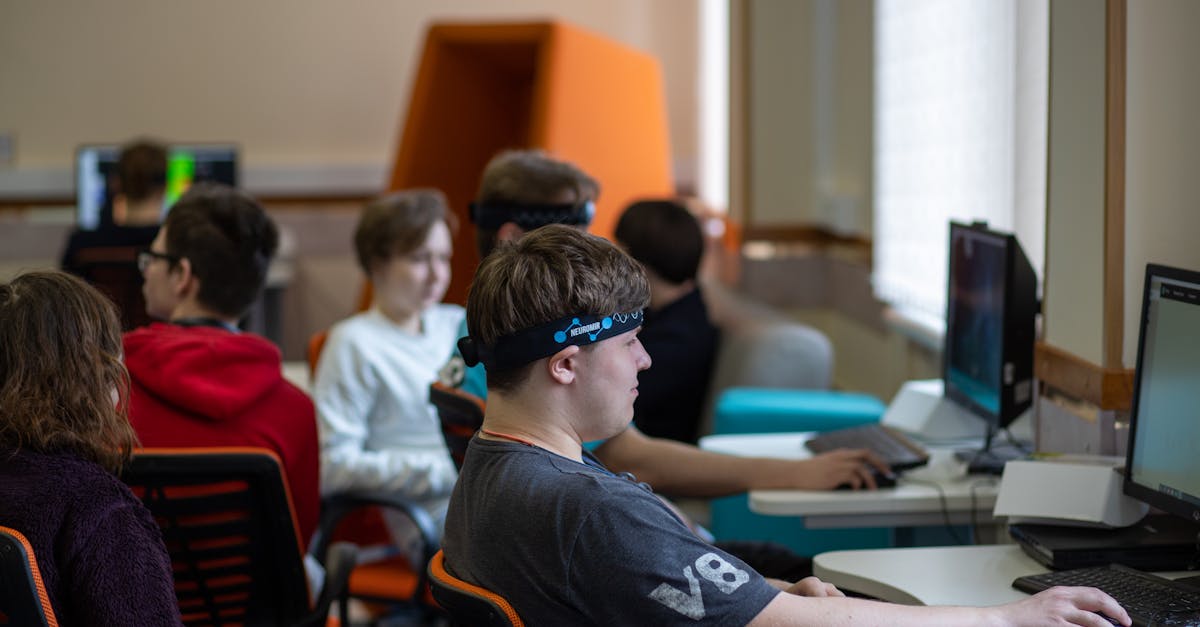
Michigan Technological University in Houghton and Oakland University in Rochester Hills both award a Bachelor of Science (B.S.) in Cybersecurity, but the two campuses could hardly feel more different. In Michigan, that degree can mean a large public research university, a small private college, or a fully online program from a Michigan-based school.
The degree title itself hides the real differences. Northern Michigan University calls its major Information Assurance/Cyber Defense, and Ferris State University frames its program around information security and intelligence. Price, format, and technical focus vary just as widely.
What a program teaches matters more than what it is called.
Key Points
- Compare net price after grants, not sticker tuition, to judge true cost.
- Most cybersecurity majors here follow their university's general admission standards.
- An NSA Center of Academic Excellence designation signals a vetted cybersecurity curriculum.
Best Schools for a Bachelor's Degree in Cybersecurity in Michigan
Ten Michigan colleges and universities award a bachelor's degree in cybersecurity, and they differ sharply in price, size, and the kind of security work they prepare you for. Each card below gives the shape of the school first: what the program covers, who it suits, and how the institution performs on completion. Use them to build a shortlist, then verify cost and aid directly with each campus.
Michigan Technological University
#1Houghton, MI · $10,000 – $15,000/yr (est.)
Best for: Hands-on learners eyeing federal cyber internships
Michigan Tech's cybersecurity bachelor's sits in the Department of Applied Computing and holds both NSA CAE-CD and CAE-R designations, with concentrations in Software Security or System and Network Security. Labs run on industry-standard tools, and students have interned at the NSA, FBI, Los Alamos, Tesla, Ford, and General Motors. The College of Computing reports 93% overall job placement, and the university graduates about 68% of its students overall.
- NSA CAE-CD and CAE-R designations
- Two concentrations: Software Security or System and Network Security
- Coursework in cryptography, digital forensics, ethical hacking
- Labs built on industry-standard security tools
- Published four-year plans for each concentration
- College of Computing reports 93% job placement
- Internships at NSA, FBI, Los Alamos, Tesla, Ford, GM
- Student-built cyber range and Top 50 RedTeam rankings
Madonna University
#2Livonia, MI · $15,000 – $20,000/yr (est.)
Best for: Career changers targeting certification exams
Madonna's B.S. in Cybersecurity runs in a hybrid format and was built with RIZE Education, so students take courses alongside peers from a national consortium of schools. Coursework prepares students for the Certified Ethical Hacker, CISSP, Certified Forensic Examiner, and CompTIA A+ exams, and a certificate of completion is offered alongside the degree. The university accepts roughly 63% of applicants and graduates about 60% of its students overall.
- Hybrid delivery built with RIZE Education
- Courses shared with a national consortium of schools
- Prepares for CEH, CISSP, and forensic examiner exams
- Also covers CompTIA A+ exam objectives
- Certificate of Completion offered alongside the degree
- Target roles: security analyst, network security specialist
- Coursework aligned to government, healthcare, finance employers
Northern Michigan University
#3Marquette, MI · $14,000 – $20,000/yr (est.)
Best for: Budget-minded students wanting a campus cyber lab
NMU's B.S. in Information Assurance/Cyber Defense sits in an AACSB-accredited business college and carries the NSA CAE-CDE designation. Hands-on work happens in a dedicated cyber lab built on a private cloud that replicates real business systems, and the department also offers a minor, an associate degree, and a certificate. The university graduates about 52% of its students overall.
- NSA CAE-CDE designation within an AACSB-accredited college
- Dedicated cyber lab on private cloud infrastructure
- Minor, associate degree, and certificate also offered
- Coursework spans ethical hacking, cybersecurity, and business
- No prior computer experience needed for the minor
- On-campus Upper Peninsula Cybersecurity Institute
- Internship opportunities available to majors
- Standard undergraduate admissions; tuition set by residency
University of Detroit Mercy
#4Detroit, MI · ~$15,000/yr (est.)
Detroit Mercy's B.S. in Cybersecurity requires 48 credits in the major inside 120 total credit hours, and the NSA has validated it as a Center of Academic Excellence in Cyber Defense. Coursework covers network security, ethical hacking, digital forensics, and risk management with hands-on learning throughout, and an accelerated five-year bachelor's to master's option is available. The university accepts roughly 75% of applicants and graduates about 67% of its students overall.
- 48 credits in the major within 120 total credit hours
- NSA-validated Center of Academic Excellence in Cyber Defense
- 42 required credits plus 6 elective credits
- Coursework in network security, ethical hacking, digital forensics
- Accelerated five-year bachelor's to master's option
- Minor in cybersecurity available
- Hands-on learning approach across the curriculum
Oakland University
#5Rochester Hills, MI · $9,000/yr (est. net price)
Oakland's B.S. in Cybersecurity sits in the School of Engineering and Computer Science and pairs technical depth with the social, ethical, legal, and policy side of the field. Students choose one of three professional tracks: Software Security, AI in Cybersecurity, or Cyber Physical System Security. The university accepts roughly 88% of applicants and graduates about 58% of its students overall.
- Tracks: Software Security, AI in Cybersecurity, Cyber Physical System Security
- Balances theoretical foundations with hands-on lab experience
- Covers social, ethical, legal, and policy dimensions
- Emphasizes technical communication, ethics, and teamwork
- Housed in the School of Engineering and Computer Science
- Also prepares students for advanced study in the field
Central Michigan University
#6Mount Pleasant, MI · $18,000/yr (est. net price)
CMU's B.S. in Cybersecurity requires 64 credit hours and delivers hands-on training through a modern virtual lab, covering cryptography, network security, and cybercrime forensics. Students join the Cybersecurity Club and hear from FBI and Army speakers at events like Cybersecurity Day, with rolling deadlines and spring and fall start dates. The university accepts roughly 90% of applicants and graduates about 59% of its students overall.
- 64 credit hours in the major
- Hands-on training in a modern virtual lab
- Coursework in cryptography, network security, cybercrime forensics
- Also covers governance, risk, compliance, and cloud security
- Rolling deadlines with spring and fall start dates
- Cybersecurity Club with FBI and Army guest speakers
- Prepares for security analyst and forensic investigator roles
Northwood University
#7Midland, MI · $27,000/yr (est. net price)
Northwood runs two routes into the field: a B.S. in Information Systems and Cybersecurity and a reduced-credit Bachelor of Applied Science in Cybersecurity that needs 90 credit hours instead of the traditional 120. Both stress practical skills such as ethical hacking, cryptography, scripting, and network defense, backed by a business core. The university accepts roughly 65% of applicants and graduates about 63% of its students overall.
- Reduced-credit Bachelor of Applied Science option at 90 credits
- Traditional 120-credit path also available
- Coursework in ethical hacking, cryptography, and network security
- Includes scripting, systems analysis, and a technology capstone
- Penetration testing and security auditing practice
- Business core with employers in government, healthcare, finance
- Seamless transition between the two degree programs
Davenport University
#8Grand Rapids, MI · ~$18,000/yr (est.)
Davenport's B.S. in Cyber Defense requires at least 120 credits and can be completed online, on campus in Grand Rapids, or in a hybrid mix. Students pick a specialty in information security or health care information and assurance, and the program holds a National Center of Academic Excellence designation, with full-tuition scholarships and an employment guarantee for qualifying students. The university accepts roughly 98% of applicants and graduates about 57% of its students overall.
- Online, on-campus, and hybrid formats
- Specialties: information security, health care information and assurance
- National Center of Academic Excellence designation
- Full-tuition scholarships and an employment guarantee
- Coursework in network security, digital forensics, and scripting
- Prepares students for CISSP and other industry exams
- 120 credit hours minimum
University of Michigan-Dearborn
#9Dearborn, MI · ~$9,000/yr (est.)
UM-Dearborn awards a dual B.S. in Computer and Information Science and Cybersecurity and Information Assurance, so graduates finish with two degrees in 138 credits, roughly one extra class most semesters over either single degree. Concentrations cover Cybersecurity and Privacy or Digital Forensics, the latter working with hard drives, phones, and tablets for court-admissible evidence. The university accepts roughly 56% of applicants, graduates about 58% of its students overall, and the Go Blue Guarantee can cover tuition for qualifying in-state students.
- Dual B.S.: computer and information science plus cybersecurity
- 138 credit hours, about one extra class most semesters
- Concentrations: Cybersecurity and Privacy, Digital Forensics
- Digital Forensics covers drives, phones, tablets for court evidence
- Core work in data structures, algorithms, software engineering
- Go Blue Guarantee can cover tuition for qualifying residents
- Rolling admissions; ACM student organization on campus
Western Michigan University
#10Kalamazoo, MI · $15,000 – $20,000/yr (est.)
WMU's B.S. in Cybersecurity requires 122 credit hours with no minor required, and students must own a laptop that meets program specifications. The curriculum moves from programming and system administration into cryptology, data analytics, and secure systems design before a capstone. The university accepts roughly 85% of applicants and graduates about 58% of its students overall.
- 122 credit hours, no minor required
- Students must supply a laptop meeting program specs
- Coursework in cryptology, data analytics, secure systems design
- Sequence starts with Foundations of Cybersecurity and Cryptology Concepts
- Capstone project courses in the final year
- No more than two grades below C count toward the degree
- Free electives and transfer options to related computing programs
Cost & outcomes by school
Federal data for the highest-earning Cybersecurity programs, independent of the ranking above. Earnings are this field's bachelor's graduates four years after completing where the Scorecard reports them, else the school's undergraduate median.
| School | Net price / yr | Grad rate | Earnings | Debt | Grads/yr | Format |
|---|---|---|---|---|---|---|
| Michigan Technological University MI | $14,182 | 68% | $78,198 | $24,990 | — | Campus |
| Walsh College MI | — | — | $72,081 | $16,217 | — | Campus |
| University of Detroit Mercy MI | $15,232 | 67% | $71,030 | $23,250 | — | Campus |
| Northwood University MI | $27,232 | 63% | $63,075 | $20,842 | 4 | Campus |
| University of Michigan-Dearborn MI | $9,492 | 58% | $59,649 | $22,500 | — | Campus |
| Madonna University MI | $17,755 | 60% | $59,058 | $23,000 | 15 | Hybrid |
| Oakland University MI | $9,120 | 58% | $58,612 | $22,750 | 2 | Campus |
| Siena Heights University MI | $17,124 | 39% | $57,529 | $18,750 | — | Campus |
| Central Michigan University MI | $17,597 | 59% | $55,874 | $27,000 | — | Campus |
| Adrian College MI | $25,368 | 48% | $55,504 | $27,000 | — | Campus |
| Ferris State University MI | $8,624 | 47% | $54,735 | $21,000 | — | Online |
| Western Michigan University MI | $15,273 | 58% | $53,562 | $26,188 | — | Hybrid |
Sources: U.S. Department of Education. Net price, graduation rate, earnings and debt: College Scorecard (earnings and debt for this field's bachelor's graduates where reported, else school-wide); graduates: IPEDS. A dash means no figure is reported.
Cost, debt & payoff
Median earnings of this field's bachelor's graduates (4 yrs after completing, else the school's undergraduate median) vs. their median federal loan debt · U.S. College Scorecard
Across these programs the median graduate earns about $55,689 and finishes with roughly $22,875 in debt — a ratio that clears a common rule of thumb (keep debt below first-year salary). Net price and debt vary widely school to school, so check the per-school figures in the table above before you shortlist.
Cheapest Bachelor's in Cybersecurity Programs in Michigan
Sticker tuition is what a school charges. Average net price is what students actually pay per year after federal, state and institutional grants and scholarships are subtracted, so it is the better number for comparing cost. The table below uses 2024 IPEDS and College Scorecard data from the U.S. Department of Education and sorts by net price, lowest first. Every school shown is a public university. Before choosing on price alone, weigh net price against graduation rate. The University of Michigan-Flint has the lowest net price at $7,007, but it also has a 40% graduation rate. Oakland University and the University of Michigan-Dearborn cost roughly $2,100 to $2,500 more per year and graduate 58% of students. Extra semesters or an unfinished degree can erase a lower annual price.
| School | Location | Sector | Program Format | Average Net Price (per year) | In-State Tuition and Fees | Graduation Rate |
|---|---|---|---|---|---|---|
| University of Michigan-Flint | Flint, MI | Public | Campus and hybrid/online | $7,007 | $14,704 | 40% |
| Ferris State University | Big Rapids, MI | Public | Online and campus | $8,624 | $14,778 | 47% |
| Oakland University | Rochester Hills, MI | Public | Campus | $9,120 | $15,262 | 58% |
| University of Michigan-Dearborn | Dearborn, MI | Public | Campus | $9,492 | $15,640 | 58% |
| Lake Superior State University | Sault Ste. Marie, MI | Public | Campus | $12,822 | $14,890 | 51% |
What a Cybersecurity Degree Costs in Michigan: Tuition, Net Price and State Aid
What a Michigan cybersecurity bachelor's degree costs is not the tuition number on a school's website. It is the net price you pay after grants and scholarships, and the gap between those two figures can be thousands of dollars a year.
Sticker Price Versus Net Price
Michigan Technological University lists $20,532 in tuition and fees for residents and $44,807 for nonresidents, with an average net price of $14,182. Oakland University lists $17,167 in-state and $24,735 out-of-state, with a net price near $9,120. Madonna University, a private option, lists $28,440 for all students and a net price around $17,755. These are the most recent published figures for these schools; state awards below are set for 2026-27.
Residency drives the widest gap at public universities. Michigan Tech's nonresident premium is more than $24,000, and University of Michigan-Dearborn charges $15,640 in-state versus $32,896 out-of-state. Private schools such as Madonna and University of Detroit Mercy charge one tuition rate, and their net prices can fall well below it after institutional aid.
Michigan Aid Programs
Michigan Achievement Scholarship: up to $5,500 a year, or $27,500 total, for recent Michigan high school graduates who are residents, enroll full-time at a Michigan four-year public or private school, file the FAFSA, and have a Student Aid Index of $30,000 or less. Pell-eligible students get an extra $1,000.
Tuition Incentive Program: for students the state identifies as Medicaid-eligible, with at least 24 months of coverage in a 36-month window between ages 9 and high school graduation. Phase I covers tuition and mandatory fees up to 80 semester or 120 term credits. Phase II adds up to $500 per semester, $2,000 total, after 56 transferable semester credits.
Michigan Competitive Scholarship: need- and merit-based aid for a first bachelor's degree, with a FAFSA by July 1, Michigan residency, at least half-time enrollment, an SAT score of at least 1200, and a 2.0 GPA. It is closed to students who graduated high school in 2023 or later and ends September 30, 2029.
CyberCorps Scholarship for Service funds cybersecurity students but requires a government service commitment after graduation. Ask the program for its current award amount.
What to Do Next
- File the FAFSA early: every state program above requires it, and some aid is limited.
- Compare net price: ask each aid office for a written estimate based on your FAFSA results.
- Confirm participation: the school and program must take part in the state program for the award to apply.
- Weigh the CyberCorps commitment: the service requirement is part of the deal, not an afterthought.
NSA/DHS-Designated Cybersecurity Schools in Michigan and Why It Matters
Two cybersecurity programs can run the same forensics labs and firewall exercises and still differ on one line of a resume: whether the school's name appears on the National Security Agency's Centers of Academic Excellence map. That line is worth understanding before you compare curricula.
What CAE-CD and CAE-CDE Mean
The National Centers of Academic Excellence in Cyber Defense program, run by the NSA with the Department of Homeland Security, reviews a school's curriculum against national cyber defense knowledge units. A program that passes earns a designation, valid for a set term and then either renewed or allowed to lapse. CAE-CD is the current label for a validated cyber defense curriculum. CAE-CDE is the older education-focused version of the same review and still shows up in archived listings. A separate CAE-R designation marks research activity, which matters mainly to students eyeing graduate work later.
Which Michigan Schools Hold One
Among the schools ranked here, Michigan Technological University holds CAE-CD through 2028 and CAE-R through 2029, Northern Michigan University holds CAE-CD through 2027, Central Michigan University and Davenport University each hold CAE-CD through 2026, and Baker College holds a CAE-CD designation.1 No Michigan entry on the current list carries CAE-CDE.1 Other schools ranked here do not appear on the map, and that is not a verdict on their teaching; the application is voluntary and takes sustained administrative work to prepare.
What the Designation Buys You
- Scholarship eligibility: CyberCorps: Scholarship for Service funding is restricted to students at designated institutions. It covers tuition plus a stipend in exchange for a federal service commitment after graduation.
- Hiring signal: Federal agencies and defense contractors often screen for graduates of designated programs, and the label gives a reviewer a quick shorthand for curriculum rigor.
- A reason to double-check: Designations expire on cycles. Central Michigan's and Davenport's terms both end in 2026, so status today may differ by the time you enroll. Confirm standing on the official NSA CAE institution list and ask the department whether a renewal is in progress.
Related Articles
Online and Hybrid Bachelor's in Cybersecurity Options at Michigan Schools
Can you finish a cybersecurity bachelor's degree entirely online from a Michigan school? Yes, but your choices narrow quickly once you separate true online degrees from campus programs that happen to post a few courses online.
Which Michigan programs are online, hybrid or campus-only
Davenport University's Bachelor of Science in Cyber Defense, 120 credits, is built for flexibility: the university lists fully online, on-campus and blended delivery, with coursework available through its Global Campus. Madonna University runs its cybersecurity B.S. in a hybrid format. Western Michigan University's 122-credit cybersecurity degree offers its courses both online and in person, which opens an online completion route. Among schools in our directory, Ferris State University delivers its Information Security and Intelligence degree online, on campus and in mixed formats, and University of Michigan-Flint's cybersecurity program is hybrid with in-person instruction required.
Several strong programs remain campus-based. Michigan Technological University, Northern Michigan University, University of Detroit Mercy, Oakland University, Central Michigan University, Northwood University and University of Michigan-Dearborn all run their cybersecurity majors on campus, though Northwood also offers online coursework that may be asynchronous, synchronous or a mix depending on the program.
Verify the delivery format before you commit
"Available online" is not a format. Ask the admissions office three specific questions: are lectures asynchronous (watch anytime) or synchronous (fixed live sessions), are labs completed in a virtual environment or on campus, and is there any residency, orientation or capstone that requires a visit. Cybersecurity coursework leans hard on virtualization, forensics and networking labs, so expect hardware requirements. Ferris students need a personally owned laptop and broadband that can handle virtualization; Western Michigan also requires a laptop meeting minimum specifications.
Who online and hybrid study actually suits
Online and blended formats fit working adults who cannot leave a job, transfer students bringing in credits from a community college, and out-of-state or international students who want a Michigan credential without relocating. Campus programs still hold an edge if you want in-person lab time, a student cyber range or face-to-face recruiting.
One budget note: online tuition rates frequently differ from posted on-campus rates, sometimes with a flat per-credit charge that ignores residency. Check the school's published online rate directly rather than assuming the in-state figure applies.
Questions to Ask Yourself
Do you need a fully online schedule, or can you attend classes on campus near Detroit, Grand Rapids or Flint?
Does an NSA CAE designation matter for the federal route or scholarship you are targeting?
Would you rather pay less up front, or pick a school whose graduates report higher earnings?
Do you plan to stay in Michigan after graduation?
Admissions for Michigan Cybersecurity Bachelor's Programs: GPA, Test Policy and Transfer Credit
What GPA and test scores do you need to get into a cybersecurity bachelor's program in Michigan? At most of the schools here, the cybersecurity major follows the university's general admission standards rather than a separate, tougher gate. That makes overall selectivity and transfer rules the details worth comparing.
How Selective Are These Schools?
These are university-wide admission rates, not cybersecurity-specific ones:
- More selective: University of Michigan-Dearborn admits about 56% of applicants, Madonna University about 63% and Northwood University about 65%.
- Moderately selective: University of Detroit Mercy (about 75%), Northern Michigan University (84%) and Western Michigan University (85%).
- Broad access: Oakland University (88%), Central Michigan University (90%), Michigan Technological University (92%) and Davenport University (98%).
GPA and Testing Expectations
UM-Dearborn's transfer planning materials list a 2.50 minimum cumulative GPA that applies to nearly all majors, though they do not tie that figure specifically to cybersecurity admission.1 UM-Flint admits cybersecurity students through its standard first-year and transfer process, with no added program requirements to declare the major. Northern Michigan also describes standard undergraduate admission for its Information Assurance/Cyber Defense degree.
For the other schools, the program and transfer materials we reviewed did not state a minimum GPA or confirm a current SAT/ACT policy. Many universities have moved to test-optional admission in recent years, but policies change, so check each admissions page before deciding whether to send scores. At Michigan Tech, a 3.50 GPA is the starting point for Presidential Scholars awards. That is a scholarship threshold, not an admission cutoff.
Transfer Credit Rules
- UM-Dearborn: Transfer courses need a C or better, there is no cap on transfer credits, and at least 30 credits must be earned at UM-Dearborn.1 Accepted courses are not guaranteed to apply to your chosen degree.
- Central Michigan: The cybersecurity B.S. requires at least 120 total credits, combining transfer and CMU credits, with at least 30 earned at CMU.
- Western Michigan: The university welcomes community college transfers, and its cybersecurity curriculum allows no more than two grades below C.
Tips for Community College Students
- Ask whether your community college has an articulation agreement covering cybersecurity or IT coursework with your target school, and save a copy.
- Complete the Michigan Transfer Agreement (MTA) if you can. UM-Dearborn's guide notes that transfer credits can apply through the MTA.1
- Keep grades at C or higher in every course you plan to transfer.
- Request a course-by-course evaluation before you enroll so you know which technical classes count toward the major rather than as general electives.
- Count the credits you must still take at the four-year school when you estimate your time to graduation.
Questions to Ask Yourself
Are you ready for the math and programming that fill the first two years?
Will your community college or earlier credits count toward the major?
Are you aiming for a Michigan employer or a federal role?
Cybersecurity Careers and Pay in Michigan
A cybersecurity job in Michigan usually means monitoring networks, triaging alerts, and closing the configuration gaps that let an attacker in. The state's labor outlook projects Information Security Analysts to grow 21.8% through 2034, with 260 openings, and the role typically calls for a bachelor's degree plus work experience.
What the Work Pays
Statewide, information security analysts recorded a median of $106,230 in 2025, with the top 10% above $165,730 and the bottom 10% near $64,150.1 Metro medians were $108,990 in Detroit-Warren-Dearborn, $105,010 in Ann Arbor, and $79,280 in Grand Rapids-Wyoming.1 Pay tracks the concentration of corporate security teams more than geography alone: Detroit-Warren-Dearborn's $108,990 sits above the state figure, and Ann Arbor's $105,010 comes in just below it.
Who Hires
Detroit's automotive and mobility sector anchors demand, with Ford, General Motors and Stellantis running security programs alongside their suppliers. Finance and health systems add Ally, Rocket, Flagstar, Blue Cross Blue Shield of Michigan, Henry Ford Health and Corewell Health. Grand Rapids and Ann Arbor bring manufacturers such as Stryker, Steelcase and Whirlpool, plus universities, state and local government, and managed security providers serving smaller clients. No published source ranks these employers by analyst headcount.
Credentials, Not Licenses
Michigan does not license cybersecurity professionals, so credentials come from certifications. CompTIA Security+ is the common entry-level credential and lines up with junior analyst, SOC and help-desk-to-security pathways. CISSP is aimed at experienced practitioners in engineering, architecture, governance and management, and it carries an experience requirement that new graduates do not yet meet. A bachelor's degree helps on that front: it builds the foundational knowledge and can shorten the runway to the certifications employers screen for.
A degree will not hand you a first job, but it clears the screening step and makes the entry certification easier to reach. Favor a program with a hands-on lab, a SOC simulation, or an internship line into a Michigan employer, because that practical piece is what turns a transcript into an offer.
Quick Answers Before You Choose a School
These are the questions readers ask most often when narrowing down a Michigan cybersecurity bachelor's program. Each answer points back to the ranking and the cost details in this guide.
What is the best school for cybersecurity in Michigan?
How much does a cybersecurity degree cost in Michigan?
Do you need programming experience to study cybersecurity in Michigan?
Compare Cybersecurity programs on the data that matters
Explore more Computers & IT majors or browse every field of study.
All Computers & IT programs Browse every field of study