Best Forensic Science Schools in Tennessee
Compare 9 accredited Forensic Science programs in Tennessee, with net price after aid, graduation rates, earnings and debt from IPEDS and the U.S. College Scorecard.
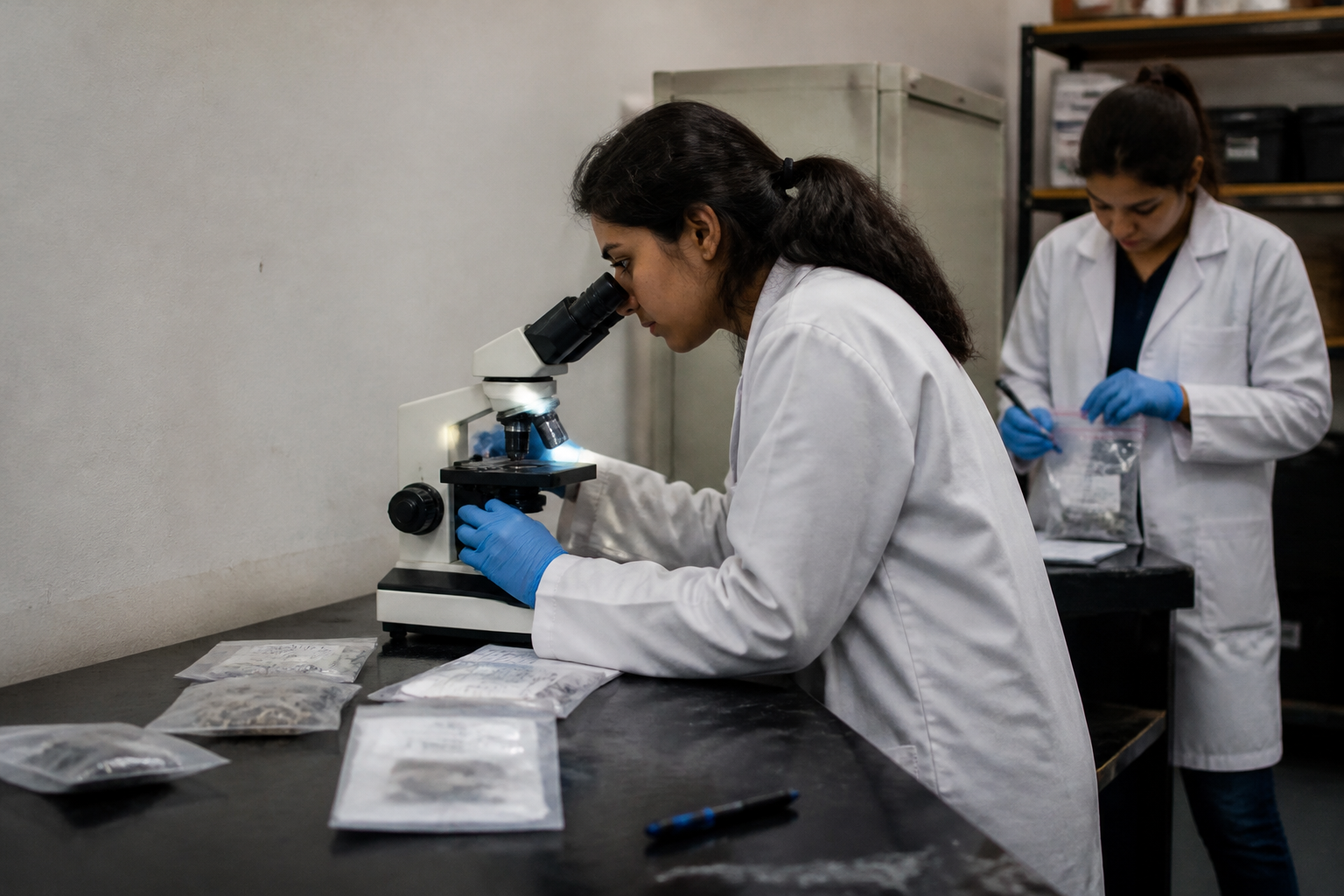
Forensic labs now hire for chemistry and biology coursework first, which has pushed the field away from general criminal justice degrees and toward lab-heavy science majors. In Tennessee, a bachelor's degree in forensic science is awarded as a Bachelor of Science (B.S.) or Bachelor of Arts (B.A.) in Forensic Science, though some schools deliver the same training through chemistry or criminal justice tracks.
That variety matters: programs differ in accreditation, lab depth and price, and the cheapest route is not always the one labs prefer.
Six minutes of reading covers FEPAC accreditation, cost, Tennessee aid and career paths, with clear takeaways at each step. Employers in this field weigh your science credits and lab record far more than the title printed on the diploma.
Key Points
- UT Martin has the lowest net price here at $10,701 (2024 data).
- Middle Tennessee State University wants a 3.2 GPA plus 22 ACT composite.
- Tennessee has no forensic scientist license; employers set hiring standards.
Best Forensic Science Schools in Tennessee, Ranked
Tennessee offers a narrower set of forensic science bachelor's programs than most states, and they differ sharply: one carries national accreditation, several sit inside chemistry departments, and others are criminal justice degrees with a forensic concentration. The list below runs from the largest and most laboratory-focused programs down to smaller private-college options. Where graduation rates appear on this page they describe the whole institution rather than the forensic science major, and net price is an average for aided students within each institution's sector, so read it as an estimate.
Middle Tennessee State University
#1Murfreesboro, TN · ~$13,000/yr (est.)
Best for: Aspiring crime-lab scientists seeking courtroom practice
Middle Tennessee State University in Murfreesboro runs the state's only forensic science bachelor's program accredited by the Forensic Science Education Programs Accreditation Commission, and it is structured as a direct pipeline into working crime laboratories. Coursework blends biology, chemistry and criminal justice, and every major completes an internship or a laboratory research project. Seniors testify as expert witnesses in a required mock trial held at the Rutherford County Courthouse, while practicing forensic scientists lead seminars throughout the year. Alumni have gone on to the Tennessee Bureau of Investigation, the Metro Nashville Police Department Crime Laboratory and LabCorp.
- Accredited by the Forensic Science Education Programs Accreditation Commission
- Capstone experience required for all majors
- Every major completes an internship or laboratory research project
- Required mock trial held at the Rutherford County Courthouse
- Seminars led by practicing forensic scientists
- Georgia residents may qualify for in-state rates
- Alumni hired by the Tennessee Bureau of Investigation and Metro Nashville crime lab
- Extensive background check required for laboratory work
Tennessee Wesleyan University
#2Athens, TN · ~$15,000/yr (est.)
Best for: Criminal justice majors adding forensic emphasis
Tennessee Wesleyan University in Athens houses its forensic training inside a criminal justice major, which suits students who want investigative and legal skills more than a bench-science curriculum. The forensic science emphasis adds at least three forensics courses and nine semester hours on top of a 45-hour major, with crime scene work and trial simulations built in. Students complete an internship with community agencies, and classes stay small enough for direct faculty mentorship. Graduates head into entry-level criminal justice roles, law school or graduate study.
- Emphasis adds 9 semester hours of forensic coursework
- At least three dedicated forensics courses
- Crime scene work and trial simulations
- Internship with criminal justice agencies and organizations
- Ethical decision-making emphasized throughout
- Full major requires 45 semester hours
- Prepares for law enforcement, law school or graduate study
The University of Tennessee-Martin
#3Martin, TN · $11,000/yr (est. net price)
Best for: Chemistry-focused students targeting regional labs
The University of Tennessee at Martin teaches forensic science as a chemistry-first degree, housed in the Department of Chemistry and Physics within the College of Engineering and Natural Sciences. Students take the traditional chemistry sequence alongside introductory and advanced forensic science courses, and the curriculum is built around what state and local crime laboratories actually ask of new analysts. That makes it the strongest fit in this list for readers who want instrumentation and bench work rather than a criminal justice framework.
- Bachelor of Science in forensic science
- Built around the coursework state and local crime labs require
- Traditional chemistry classes alongside forensic courses
- Both introductory and advanced forensic science coursework
- Housed in the Department of Chemistry and Physics
- Part of the College of Engineering and Natural Sciences
University of Memphis
#4Memphis, TN · $10,000 – $15,000/yr (est.)
The University of Memphis offers forensic training as a concentration inside a Bachelor of Science in Chemistry, so graduates leave with a chemistry credential that employers recognize. The forensic chemistry track adds 22 hours, including 12 hours of criminal justice and 10 hours of chemistry with a dedicated forensic chemistry lab. The major runs 51 to 54 hours on top of a 41-hour general education core, and Honors in Chemistry requires a 3.25 GPA overall and in science and math. Graduates target federal, state and local crime laboratories, private labs or graduate study.
- Forensic chemistry concentration totals 22 hours
- 12 hours of core criminal justice coursework
- 10 hours of chemistry, including the forensic chemistry lab
- Major totals 51 to 54 hours; degree requires 120 credits
- 41-hour University General Education Program
- Honors option requires a 3.25 GPA overall and in science courses
- Prepares for federal, state and local crime laboratory work
- One of six concentration options in the chemistry major
Union University
#5Jackson, TN · ~$27,000/yr (est.)
Union University in Jackson runs its forensic science major through the Department of Sociology and Family Studies, drawing on chemistry, biology and criminal justice rather than sitting in a single science department. Students train across the full arc of evidence handling, from collecting and analyzing material at a scene to presenting findings in court. The major appears in the 2026-27 catalogue, and the program prepares graduates for law enforcement, crime laboratories, legal systems and forensic research. It is the option on this list for readers who want a private, faith-based campus with an interdisciplinary science core.
Bryan College-Dayton
#6Dayton, TN · ~$21,000/yr (est.)
Bryan College in Dayton awards a Bachelor of Science in Forensic Science that combines biology, chemistry, law and criminal justice, with faculty who bring forensics field experience to the classroom. Students learn to interpret evidence and apply current scientific techniques, and the degree prepares them for graduate work or for roles such as crime lab analyst, evidence technician, crime scene investigator or expert witness. Instruction is presented from a Christian perspective, with justice, science and government examined through that worldview. It is a small-campus option for readers who want a science major with an explicit ethical and legal frame.
- Coursework spans biology, chemistry, law and criminal justice
- Faculty bring forensics field experience
- Trains students to interpret evidence with current techniques
- Prepares for graduate study in forensics or criminal justice
- Career paths include crime lab analyst and evidence technician
- Taught from a Christian worldview
Bethel University
#7McKenzie, TN · $13,000/yr (est. net price)
Bethel University in McKenzie builds its forensic science major on a full biology and chemistry sequence, so students take microbiology, genetics, organic chemistry, analytical chemistry and biochemistry before specializing. Forensic and criminal investigation courses run from an introductory survey through crime scene investigation, criminal investigations, advanced investigations and criminal evidence, tracing material from the scene to the courtroom. Laboratory work accompanies the science courses, and an internship provides approved experience in a forensic or science setting. Graduates aim at forensic scientist, DNA analyst, toxicologist and crime laboratory technician roles, or continue to graduate school.
- Full biology and chemistry sequence required
- Includes microbiology, genetics, organic, analytical and biochemistry
- Forensic and criminal investigation coursework from an introductory course through advanced investigations
- Evidence traced from crime scene to courtroom
- Laboratory work attached to the science courses
- Internship in an approved forensic or science setting
- Prepares for forensic scientist, DNA analyst and toxicologist roles
King University
#8Bristol, TN · ~$22,000/yr (est.)
King University in Bristol combines chemistry and biology with ethics, law, statistics, psychology, communications and mathematics, so forensic science majors graduate with a broad scientific and legal foundation. Students study the scientific method and statistics alongside courtroom presentation, and they join Northeast State Community College criminal justice students to investigate mock crime scenes. The program prepares graduates for crime laboratories, medical examiner and coroner offices, hospitals, government agencies and private labs, and for graduate, medical or dental school. Students need a laptop with Microsoft Office, wireless and webcam capability.
- Combines chemistry and biology with ethics, law and statistics
- Adds psychology, communications and mathematics coursework
- Mock crime scene investigations with Northeast State criminal justice students
- Prepares students for graduate, medical or dental school
- Career settings include crime labs, medical examiner offices and private labs
- Laptop with Microsoft Office, wireless and webcam required
Tusculum University
#9Greeneville, TN · ~$21,000/yr (est.)
Tusculum University in Greeneville awards a Bachelor of Science in Criminal Justice with a forensic investigation concentration, a 120-credit degree built on a traditional justice core. The concentration supplies six courses at three credits each, covering criminal investigations, criminal behavior and profiling, victimization, sexual deviance, death investigations and forensic psychology. The justice core runs through policing and critical incident response, criminal courts and procedures, ethical decision making, criminological theory and research methods. It is the most criminal-justice-weighted option on this list, best suited to readers aiming at investigative and death-investigation work rather than laboratory analysis.
- 120 credit hours total
- 39 general education, 27 major, 18 concentration and 36 elective credits
- Six concentration courses at 3 credits each
- Includes criminal investigations and death investigations
- Covers criminal behavior and profiling plus forensic psychology
- Justice core includes research methods for criminology
Cost & outcomes by school
Federal data for the highest-earning Forensic Science programs, independent of the ranking above. Earnings are this field's bachelor's graduates four years after completing where the Scorecard reports them, else the school's undergraduate median.
| School | Net price / yr | Grad rate | Earnings | Debt | Grads/yr | Format |
|---|---|---|---|---|---|---|
| King University TN | $22,347 | 48% | $59,831 | $22,750 | — | Campus |
| Bryan College-Dayton TN | $20,614 | 50% | $54,434 | $23,000 | — | Campus |
| Union University TN | $27,171 | 66% | $53,990 | $20,714 | — | Campus |
| Middle Tennessee State University TN | $13,359 | 54% | $48,541 | $20,000 | 27 | Campus |
| University of Memphis TN | $12,397 | 51% | $48,458 | $23,300 | — | Campus |
| Bethel University TN | $12,595 | 35% | $47,482 | $27,249 | — | Campus |
| Tennessee Wesleyan University TN | $14,836 | 48% | $45,989 | $20,000 | 7 | Campus |
| Tusculum University TN | $21,131 | 26% | $44,367 | $23,250 | — | Campus |
| The University of Tennessee-Martin TN | $10,701 | 53% | $44,213 | $21,024 | — | Campus |
Sources: U.S. Department of Education. Net price, graduation rate, earnings and debt: College Scorecard (earnings and debt for this field's bachelor's graduates where reported, else school-wide); graduates: IPEDS. A dash means no figure is reported.
Cost, debt & payoff
Median earnings of this field's bachelor's graduates (4 yrs after completing, else the school's undergraduate median) vs. their median federal loan debt · U.S. College Scorecard
Across these programs the median graduate earns about $48,458 and finishes with roughly $22,750 in debt — a ratio that clears a common rule of thumb (keep debt below first-year salary). Net price and debt vary widely school to school, so check the per-school figures in the table above before you shortlist.
Most Affordable Forensic Science Schools in Tennessee, Ranked
These schools are ordered by average annual net price, the cost after grants and scholarships, using 2024 federal data from IPEDS and the College Scorecard. UT Martin has the lowest net price here at $10,701. At the private schools, Bethel University and Tennessee Wesleyan University, the net price falls well below the published tuition, so check aid offers before ruling one out.
| Rank | School | City | Program | Average Net Price (after aid) | In-State Tuition and Fees | Format |
|---|---|---|---|---|---|---|
| 1 | The University of Tennessee-Martin | Martin | Forensic Science (B.S.) | $10,701 | $10,560 | Campus |
| 2 | University of Memphis | Memphis | Chemistry, Forensic Chemistry Concentration | $12,397 | $10,728 | Campus |
| 3 | Bethel University | McKenzie | Forensic Science, B.S. | $12,595 | $18,712 | Campus |
| 4 | Middle Tennessee State University | Murfreesboro | Forensic Science, B.S. | $13,359 | $10,266 | Campus |
| 5 | Tennessee Wesleyan University | Athens | Criminal Justice, Forensic Science Emphasis | $14,836 | $30,814 | Campus |
Choosing a Bachelor's Degree in Forensic Science: B.S. vs. Concentration vs. Minor, and FEPAC Accreditation
A bachelor's degree in forensic science is a four-year science degree that trains you to analyze physical evidence, and in Tennessee it comes in three forms: a standalone major, a concentration inside another degree, or a narrower emphasis attached to a criminal justice major. The label on the diploma shapes which jobs you can compete for.
Standalone Majors vs. Concentrations
Several Tennessee schools offer forensic science as its own major:
- Middle Tennessee State University: Forensic Science, B.S., with a capstone and an internship or research requirement.
- Bryan College-Dayton and Bethel University: Each awards a Forensic Science B.S. built on biology and chemistry.
- The University of Tennessee-Martin: A Forensic Science B.S. housed in the Chemistry and Physics department. It works like a chemistry degree with introductory and advanced forensic courses added.
- Union University and King University: Both list Forensic Science as a major. Union describes its program as interdisciplinary, drawing on chemistry, biology and criminal justice.
The rest take a concentration route. The University of Memphis offers a Forensic Chemistry concentration inside its chemistry degree. Tusculum University offers a Forensic Investigation concentration inside criminal justice. Tennessee Wesleyan University adds a Forensic Science Emphasis of nine credit hours to its criminal justice major, which is a lighter layer than a full science degree.
FEPAC Accreditation in Tennessee
FEPAC is the Forensic Science Education Programs Accreditation Commission, the main accreditor of forensic science degrees. Middle Tennessee State University is the only Tennessee undergraduate program we identified as FEPAC-accredited, and the state's 2025 crime-lab workforce assessment says so. Other schools' program pages do not establish FEPAC status. Accreditation directories change, so check the FEPAC directory before you apply.
In practice, this means most Tennessee options sit outside accreditation. That is not disqualifying, but you will need to show your coursework on your own.
Why It Matters for Crime-Lab Hiring
Crime labs hire people who can run chemical and biological analyses and defend the results in court. Accreditation tells an employer that the curriculum met a national standard. Many labs, though, care most about a strong foundation in chemistry or biology. A chemistry or biology degree with the right lab courses can still qualify you, which is why the Memphis concentration and the Martin program are credible routes into lab work.
A Rule of Thumb
If your goal is a crime lab or criminalistics, choose a standalone science-based B.S., and put the FEPAC-accredited program at Middle Tennessee State University first. If you lean toward law enforcement, investigation or keeping your options open, a criminal justice degree with a forensic concentration or emphasis, such as Tusculum's or Tennessee Wesleyan's, is the more flexible and usually lighter choice.
Online and Hybrid Forensic Science Options at Tennessee Schools
Flexibility is the draw of online study, but forensic science depends on hands-on lab time, and that is where the two collide. A fully online bachelor's degree in forensic science is not available at any of the schools here. Middle Tennessee State University, Tennessee Wesleyan University, the University of Tennessee-Martin, University of Memphis, Union University, Bryan College-Dayton, Bethel University, King University and Tusculum University all deliver their forensic programs on campus.
Why the Labs Keep These Programs on Campus
The coursework is built around chemistry, biology and evidence handling, none of which translates well to a screen. Tennessee Wesleyan's 2025-2026 catalog, for example, requires four-semester-hour lab courses in biology and chemistry (BIO 180/181, BIO 276/277 and CHE 430/431) for its Forensic Science Emphasis.1 Bethel describes extensive lab work plus an internship, and King includes mock crime scene investigations. Crime-scene practice and trial simulations, such as those at Tennessee Wesleyan, also need a physical setting. The schools' published program pages do not describe an approved online or hybrid lab arrangement, so none should be assumed.
Realistic Hybrid Routes
If you need flexibility, blend formats yourself rather than expect a packaged hybrid degree. Two approaches are worth asking admissions offices about:
- General education first: Courses outside the major, such as English, math and social science, are the likeliest to be offered online. Confirm that the credits count toward your degree before enrolling.
- Criminal justice coursework: Tennessee Wesleyan and Tusculum build their forensic options on a criminal justice core. Tusculum's Forensic Investigation Concentration is six three-credit courses within a 120-credit degree. Ask which of those courses can be taken online and which need you on site.
The lab sequences, capstones and internships will still require you to be physically present. Students who work full time may want to plan around daytime lab schedules, or choose a school within commuting distance, such as Middle Tennessee State University in Murfreesboro or University of Memphis in Memphis. Before applying, ask each school in writing which courses, if any, are offered online and how its lab sessions are scheduled.
Admissions for Forensic Science Bachelor's Programs: GPA, Test Policy, and Transfer Credit
Middle Tennessee State University publishes the most detailed freshman standard among the schools here: a 3.2 GPA through 11th grade plus an Enhanced ACT composite of at least 22 (or a comparable score) for applicants age 20 or younger. UT Martin and the statewide transfer pathway for Tennessee public universities both sort applicants by whether they have completed 12 college credit hours, so community college students should count their hours before applying. GPA, testing, and transfer rules for Union University, Bryan College, Bethel University, King University, Tusculum University, Tennessee Wesleyan University, and the University of Memphis did not appear in the admissions material reviewed for this guide, so confirm them directly with each admissions office.
| School | Minimum GPA / Admission Standard | ACT/SAT Policy | Science & Math Prerequisites | Transfer Credit Pathway |
|---|---|---|---|---|
| Middle Tennessee State University (Murfreesboro) | 3.2 minimum GPA on a 4.0 scale, based on grades 9, 10, and 11 | Applicants age 20 or younger must submit Enhanced ACT or SAT scores; the published standard includes an Enhanced ACT composite of at least 22 or a comparable score | Four math credits (Algebra I, Algebra II, Geometry, and a fourth higher-level math course) and three science credits (Biology, Chemistry or Physics, and a third laboratory course) | Official transcripts from every college previously attended; GPA on transferable courses must at least equal MTSU's readmission standard |
| The University of Tennessee-Martin (Martin) | 2.0 GPA for applicants who have completed 12 hours of college-level courses | Applicants with fewer than 12 college-level hours are considered on high school GPA and ACT/SAT scores | N/A | Applicants with 12 or more college-level hours are reviewed under the transfer standard; those with fewer than 12 hours are reviewed as high school applicants |
| Tennessee public universities (statewide transfer pathway) | 2.3 minimum high school GPA for transfer applicants with fewer than 12 attempted college credits | A valid official ACT score of 19 or an equivalent SAT score may be used by transfer applicants with fewer than 12 attempted college credits | Two Algebra units, one Geometry or other advanced math unit, one additional advanced math unit, and three natural or physical science units, including at least one lab unit in Biology, Chemistry, or Physics | Fewer than 12 credits: submit high school records and meet the 2.3 GPA or ACT 19 standard. More than 12 credits: submit transcripts from all institutions and meet the GPA standard tied to attempted credits |
Related Articles
Forensic Science Careers and Licensure in Tennessee
A state license and an employer's hiring standard are two different gates. In Tennessee, the second one does the work: there is no separate forensic scientist license to earn, so your degree, your chemistry credits and an agency's background screening decide whether you get hired.
No State License, but Firm Hiring Standards
Tennessee does not issue a standalone forensic scientist license.1 The Tennessee Bureau of Investigation takes a different route and commissions its forensic scientists as special agents1, which means the hiring process functions like a law enforcement background investigation on top of an academic review. Current Forensic Scientist 1 postings ask for a bachelor's degree in chemistry, another natural or physical science, forensic science or a related area, plus at least 24 semester hours (or 36 quarter hours) in chemistry2, and applicants upload a transcript listing every chemistry credit so eligibility can be evaluated. Forensic biology openings add molecular biology, biochemistry, genetics and statistics coursework.4 Expect fingerprints, references and a suitability review wherever you apply, whether that is a public lab or a private one.
Where the Jobs Are
Most entry-level openings sit with the TBI's crime laboratories, including its Nashville and Jackson labs and the Knoxville toxicology unit, alongside local and county agencies, medical examiner offices, private laboratories and law enforcement units that run their own evidence work. The realistic first title after graduation is forensic scientist 1 or evidence technician. Recent TBI postings for that classification listed roughly $5,647 to $9,005 per month2, with one Jackson crime lab posting at $5,703 to $9,0953, and application windows that closed in five to ten business days.
Certification Comes Later
Voluntary certification, such as the credentials offered by the American Board of Criminalistics, typically assumes a degree plus lab experience. It matters for advancement, specialty credibility and courtroom testimony, not for landing the first job.
The Bureau of Labor Statistics put the national median for forensic science technicians at $72,060 a year ($34.65 an hour) in May 2025. The most recent Tennessee-specific figure is far older: a May 2017 statewide average of $51,180 ($24.61 an hour), best read as a rough floor rather than a current median while you compare offers.5
How to Pick the Right Tennessee Forensic Science School
The right forensic science program depends less on the name on the diploma than on the work you want to do after graduation. Start from the job, then filter by lab access and price.
If You Want a Crime Lab Bench Job
Chemistry is the gatekeeper for most state and local laboratory positions, so weigh the required chemistry and biology hours before anything else. Middle Tennessee State University is the clearest fit for this goal: its forensic science B.S. is FEPAC accredited, and every major completes an internship or research project plus a capstone. The University of Tennessee-Martin houses its forensic science degree in the chemistry and physics department, which keeps the science sequence central. Bethel University runs a full biology and chemistry sequence through microbiology, genetics and biochemistry with an internship attached, and the University of Memphis offers a forensic chemistry concentration inside a chemistry-based degree. Ask each department how much hands-on instrument time undergraduates actually get.
If Crime Scene and Criminalistics Appeal
Scene work leans on criminal justice. Tusculum University's forensic investigation concentration sits on a criminal justice core with six concentration courses, and Tennessee Wesleyan University pairs a criminal justice major with a forensic science emphasis, crime scene work and trial simulations, though the forensic coursework itself is a modest slice of the degree. Middle Tennessee State University adds a mock trial held at the county courthouse and seminars from practicing forensic scientists, while King University includes mock crime scene investigations on a chemistry and biology base. Ask about fingerprint, photography and evidence-handling labs rather than lecture titles alone.
If Anthropology or Digital Evidence Is the Goal
Forensic anthropology is a graduate specialty, so build the strongest biology and chemistry foundation you can here and plan on a master's. For digital evidence, ask admissions directly whether any coursework in computer or digital forensics exists before you commit.
A Simple Decision Rule
Pick for lab access and cost first, campus fit second. Among the schools ranked here, UT Martin, Memphis and Bethel post the lowest net prices after aid, which matters if graduate school comes next. Then compare formats side by side and request information from the two or three programs that match your goal.
Compare Forensic Science programs on the data that matters
Explore more Criminal Justice & Law majors or browse every field of study.
All Criminal Justice & Law programs Browse every field of study