Best Forensic Science Schools in Wisconsin
Compare 6 accredited Forensic Science programs in Wisconsin at 4 colleges, with net price after aid, graduation rates, earnings and debt from IPEDS and the U.S. College Scorecard.
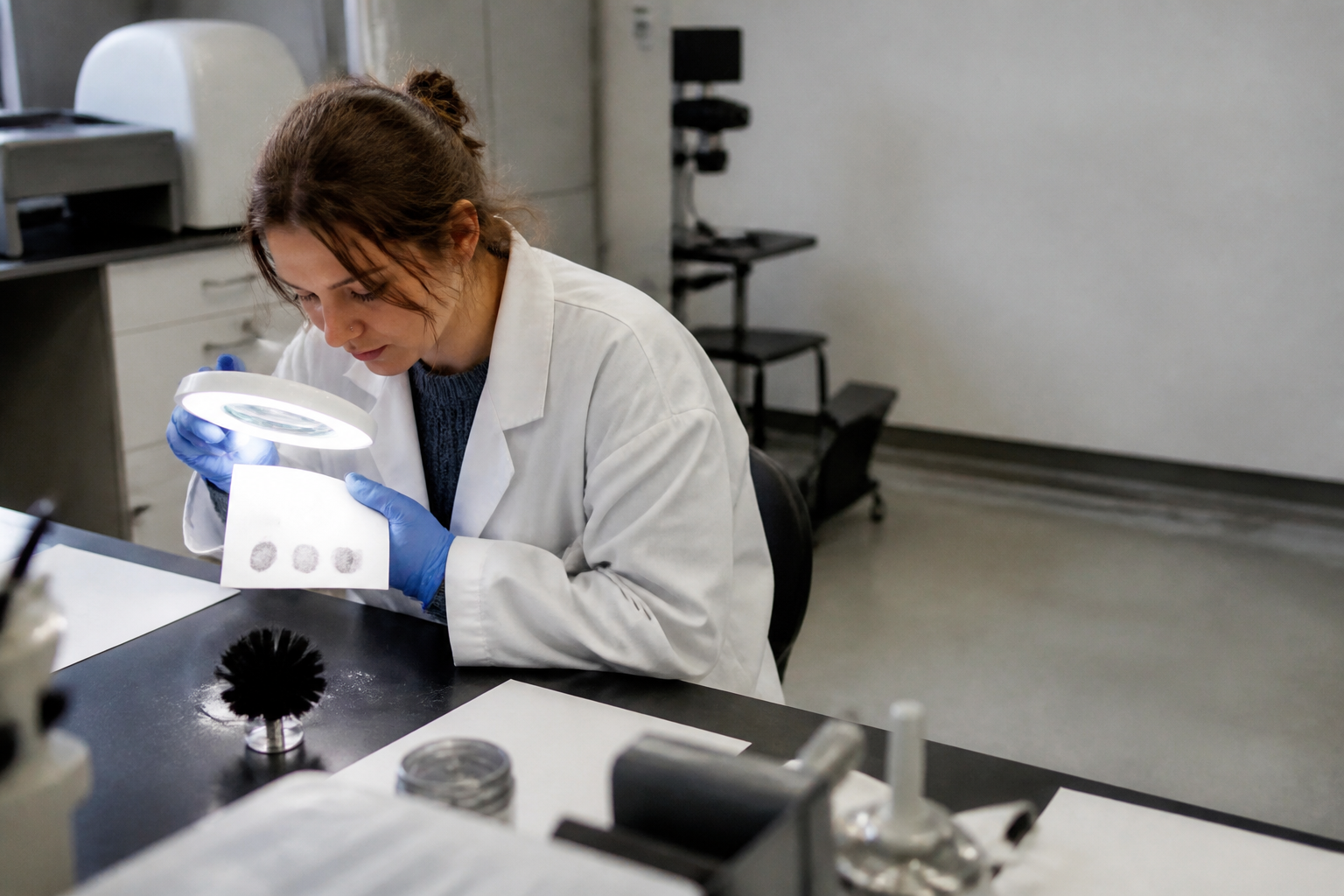
Wisconsin students can earn a bachelor's degree in forensic science at Wisconsin-based schools, on campus, awarded as a Bachelor of Science (B.S.). The coursework is science first: analytical chemistry, biology and instrumental analysis, with criminal justice layered on top.
The decision starts with the degree label. A natural-science track, a forensic investigation emphasis and a criminal justice major with a forensic concentration lead to different job titles, and hiring labs weigh accreditation and internship hours differently. Wisconsin issues no state license for the field, so program accreditation and supervised lab work carry the weight a license carries elsewhere.
Key Points
- UW-Platteville ranks first, with national accreditation across all three emphases.
- Bachelor's programs here are campus-based, though UW-Platteville's 19-credit minor runs online.
- Wisconsin requires no state license for forensic science technicians or analysts.
Best Bachelor's Degree in Forensic Science Programs in Wisconsin, Ranked
The University of Wisconsin-Platteville takes the top spot: it is the only public university in Wisconsin with a dedicated bachelor's degree in forensic investigation, and it now holds national program accreditation across all three of its emphasis areas. The other three schools take visibly different routes to the field, from a natural-science-based degree at a private university to a forensic track tucked inside a criminal justice major. Every program ranked here is delivered on campus, and the net price and graduation figures cited are school-wide, not program-level results.
University of Wisconsin-Platteville
#1Platteville, WI · $9,000 – $18,000/yr (est.)
Best for: Wisconsin residents wanting hands-on crime scene training
The University of Wisconsin-Platteville is the only public university in Wisconsin with a dedicated bachelor's degree in forensic investigation, and its three emphasis areas earned national program accreditation in 2026. Students choose Crime Scene, Laboratory, or Medicolegal Death Investigation and train in a dedicated crime scene house and a 1.5-acre research facility, with a nationally recognized internship program that has placed students with local, state, and federal agencies. Classes run on campus in Platteville. Across the whole institution, the graduation rate is 56 percent and the average net price after aid is about $16,032.
- One of just 49 dedicated forensic programs nationwide
- Only public university in Wisconsin to offer the degree
- Crime Scene House training facility
- Nationally recognized internship program
- Internships with federal agencies
- Drone-based aerial imaging training
- Alternate light source detection
- Mock crime scene practicals
- Fenced research facility spanning 1.5 acres
- Faculty with law enforcement experience
- Mock crime scene practicals indoors and outdoors
- Drone-based aerial imaging research
- Clandestine gravesite excavation practice
- Minor in forensic investigation offered
- Tracks toward autopsy technician work
Marian University
#2Fond Du Lac, WI · $20,000 – $25,000/yr (est.)
Best for: Future lab analysts wanting a science foundation
Marian University in Fond du Lac awards a Bachelor of Science in Forensic Science that it describes as Wisconsin's only bachelor's degree in the field built on a natural science foundation, pulling together biology, chemistry, criminal justice, and investigative science. Students can intern with medical examiner offices, investigative agencies, and criminal justice departments across Wisconsin, and coursework covers courtroom procedure and professional ethics alongside laboratory technique. Instruction is on campus, with small classes and faculty who bring professional forensic and criminal justice experience. Institution-wide, the graduation rate is 44 percent and the average net price after aid is about $21,937.
- Combines biology, chemistry and criminal justice
- Built on a natural science foundation
- Internships with medical examiner offices
- Small class sizes
- Faculty with professional forensic experience
- Coursework in courtroom procedures
- Scholarships and financial aid available
- Prepares students for advanced study
Carroll University
#3Waukesha, WI · $15,000 – $20,000/yr (est.)
Best for: Chemistry majors adding a forensic specialization
Carroll University in Waukesha does not award a standalone forensic science degree. Instead, forensic science is a specialization inside the chemistry major, noted on the transcript, which suits students who want a rigorous science core with forensic coursework layered on top. Chemistry also offers an ACS-approved track, the university lists more than 95 areas of study, and four-year plans are available on request, along with accelerated degree paths and Direct Admission options for select majors. The campus is in Waukesha. Institution-wide, the graduation rate is 71 percent and the average net price after aid is about $15,193.
- Forensic science specialization inside the chemistry major
- Specialization noted on the transcript
- Chemistry also offers an ACS-approved track
- More than 95 areas of study university-wide
- Four-year plans available on request
- Accelerated Carroll3 degree paths
- Direct Admission options for select majors
Wisconsin Lutheran College
#4Milwaukee, WI · $20,000 – $25,000/yr (est.)
Wisconsin Lutheran College in Milwaukee offers forensic science as one of three tracks inside its criminal justice major, alongside police science and legal studies, with a required internship typically completed in the junior year. Students work with ground penetrating radar and a total station to locate shallow graves, run ballistics analysis in campus labs, and take part in staged homicide investigations and fingerprinting drills. Past internships have been placed with the Milwaukee County Medical Examiner's Office, local law enforcement agencies, and the Milwaukee County District Attorney's Office. Institution-wide, the graduation rate is 64 percent and the average net price after aid is about $23,245.
- One of three tracks in the criminal justice major
- Required internship, typically junior year
- Ballistics analysis in campus labs
- Ground penetrating radar for shallow graves
- Staged homicide investigation practice
- Fingerprinting and crime scene processing drills
- Internships at Milwaukee County Medical Examiner
- Chemistry double major pairs toward toxicology
Cost & outcomes by school
Federal data for the highest-earning Forensic Science programs, independent of the ranking above. Earnings are this field's bachelor's graduates four years after completing where the Scorecard reports them, else the school's undergraduate median.
| School | Net price / yr | Grad rate | Earnings | Debt | Grads/yr | Format |
|---|---|---|---|---|---|---|
| Carroll University WI | $15,193 | 71% | $58,009 | $27,000 | — | Campus |
| Wisconsin Lutheran College WI | $23,245 | 64% | $54,664 | $26,000 | — | Campus |
| Marian University WI | $21,937 | 44% | $53,501 | $25,000 | 3 | Campus |
| University of Wisconsin-Platteville WI | $16,032 | 56% | $50,368 | $21,005 | 43 | Campus |
Sources: U.S. Department of Education. Net price, graduation rate, earnings and debt: College Scorecard (earnings and debt for this field's bachelor's graduates where reported, else school-wide); graduates: IPEDS. A dash means no figure is reported.
Cost, debt & payoff
Median earnings of this field's bachelor's graduates (4 yrs after completing, else the school's undergraduate median) vs. their median federal loan debt · U.S. College Scorecard
Across these programs the median graduate earns about $51,935 and finishes with roughly $23,003 in debt — a ratio that clears a common rule of thumb (keep debt below first-year salary). Net price and debt vary widely school to school, so check the per-school figures in the table above before you shortlist.
How We Ranked Wisconsin Forensic Science Schools
Four factors decide where a Wisconsin forensic science program lands in this ranking: accreditation, graduate outcomes, cost, and how closely the degree matches the jobs students actually want.
The Four Criteria in Plain Terms
- Accreditation: whether the forensic science program itself holds FEPAC recognition, and whether the college is regionally accredited. Crime labs that hire weigh a FEPAC-aligned curriculum heavily.
- Outcomes: graduation rates and post-graduation earnings, plus how many students actually finish what they start.
- Cost: published tuition alongside the net price students pay after grant and scholarship aid.
- Program fit: whether the credential is built as forensic science, as forensic investigation, or as criminal justice with forensic coursework. Those three paths lead to different entry-level jobs, and the ranking rewards programs whose coursework matches their title.
Which Numbers Describe the Program and Which Describe the School
Accreditation status and curriculum belong to the program itself. Earnings, graduation rates, and net price are reported for the entire institution, so treat them as a signal about the school rather than a prediction of what a forensic science graduate will earn. A focused program inside a larger university can perform quite differently from the institution's overall averages.
A Small, Wisconsin-Only Pool
The ranking covers only bachelor's programs at Wisconsin schools, campus-based or online, and the pool is small enough that one weak category can shift a school noticeably. Several of the schools here compete on very different strengths, which is why the criteria are published rather than folded into a single score.
Figures are refreshed annually from the federal College Scorecard, then checked against each program's own published requirements.
Forensic Science vs. Forensic Investigation: Which Bachelor's Degree Fits You, and Does FEPAC Matter?
Two forensic degrees can look alike in a course catalog and still lead to different jobs, so the program's label and emphasis deserve a close read before you apply.
Science Degree, Investigation Emphasis, or Criminal Justice
A natural-science forensic science degree is built on chemistry and biology, with heavy lab work. Marian University's B.S. in Forensic Science fits this model. It combines biology, chemistry, criminal justice, and investigative science, and the school describes it as Wisconsin's only bachelor's degree in forensic science built on a strong natural science foundation. Carroll University also offers a Forensic Science program in Waukesha.
UW-Platteville takes a different route with its B.S. in Forensic Investigation. Majors must pick one area of emphasis: Crime Scene, Laboratory, or Medicolegal Death Investigation. The program page names the three emphases but does not describe their coursework in detail, so ask the department how each one divides science and field training.
A criminal justice degree is broader still. Wisconsin Lutheran College's Criminal Justice major in Milwaukee centers on the justice system, not the chemistry and biology sequence that lab analyst roles usually call for.
Which Wisconsin Programs Are FEPAC-Accredited
FEPAC is the Forensic Science Education Programs Accreditation Commission. As of the February 2026 accreditation actions, UW-Platteville is the Wisconsin bachelor's program on the list.1 Its accreditation runs March 1, 2026 to March 1, 2031 and covers all three emphases. The university says it is the only program in the country with an accredited Medicolegal Death Investigation emphasis.
Marian University is not listed as FEPAC-accredited. The 2026 actions also do not identify Carroll or Wisconsin Lutheran as accredited.1 Because lists change, confirm current status on FEPAC's site or with the school before you commit.
What Accreditation Means in Practice
FEPAC accreditation is not a legal requirement for working in a crime lab. What it gives you is an outside review of the curriculum, including lab instruction and the science foundation. Hiring managers and graduate admissions committees often read it as a quick signal that a degree covered the basics. Graduates of unaccredited programs still get hired, but they may need to show through transcripts and lab experience that their coursework matches what a position asks for.
A Simple Rule of Thumb
If you want to be a lab analyst, choose a science-heavy degree and weigh FEPAC accreditation heavily. If you want to work scenes or death investigation, an investigation emphasis such as UW-Platteville's Crime Scene or Medicolegal Death Investigation track is the closer match.
Online and Hybrid Bachelor's Options at Wisconsin Schools
UW-Platteville's Forensic Investigation minor is 19 credits and can be completed online through its Distance campus, but the bachelor's degree it complements is campus-based. Every bachelor's program ranked here is campus-based, and none is listed as online or hybrid.
Delivery format by school
- UW-Platteville: The B.S. in Forensic Investigation is offered on campus, with an emphasis in Crime Scene, Laboratory, or Medicolegal Death Investigation.
- Marian University: The B.S. in Forensic Science is a campus program in Fond du Lac.
- Carroll University: Forensic Science is offered on campus in Waukesha, with the specialization noted on the transcript.
- Wisconsin Lutheran College: The Criminal Justice major with a Forensic Science concentration is campus-based in Milwaukee.
Can you earn the bachelor's degree fully online?
Based on what these schools publish, no. You cannot earn a bachelor's degree in forensic science fully online from the Wisconsin schools here. UW-Platteville does offer online bachelor's degrees in Criminal Justice, and its online minor can supplement one, but neither replaces the Forensic Investigation B.S.
The reason is the lab. Forensic science depends on chemistry and biology labs, instrumentation, and mock crime scene practicals. UW-Platteville's program, for example, trains students in a dedicated Crime Scene House. That hands-on work is hard to deliver remotely, so fully online science tracks are rare.
What about Milwaukee and the technical colleges?
Students often ask whether a large public university in Milwaukee offers a forensic science degree. The closest options there are a bachelor's in criminal justice and criminology plus undergraduate certificates, including one in forensic science. A certificate is not a bachelor's degree or a minor. Its online forensic offering is a graduate certificate in cybercrime forensics, which is not an undergraduate path.
Wisconsin's technical colleges, including Fox Valley, offer associate degrees in this area, and some of that coursework is available online. Those are two-year credentials, not bachelor's degrees, though they can serve as a lower-cost starting point if you plan to transfer credits later. Confirm with each school how those credits apply before you enroll.
Related Articles
Admission Requirements, Test Policies, and Transfer Credit
Admissions pages for Wisconsin forensic science programs tend to be far more explicit about transfer credit than about standardized test scores.
GPA and Testing
- University of Wisconsin-Platteville: Transfer applicants need a 2.00 cumulative GPA in transferable courses and must be in good standing; with fewer than 12 transferable credits, freshman guidelines apply instead. No test policy published. The transfer page does not state whether SAT or ACT scores are required, optional, or waived.
- Marian University: General transfer admission requires a 2.00 cumulative college GPA. Forensic science majors must then hold a 3.00 from program entry through the first semester of senior year, with standing reviewed each semester on the Marian GPA. No test policy published for freshman applicants.
- Carroll University and Wisconsin Lutheran College: No program-specific GPA or testing policy published on their admissions pages, so it is worth contacting admissions directly.
Transfer Credit Rules
Vocational, unapproved technical, remedial, and doctrinal credits are excluded.
Marian accepts up to 90 transfer credits at a 2.00 GPA, and only grades of C- or higher count. A WTCS Associate of Arts or Science satisfies Marian's general education requirements, subject to residency, proficiency, and program rules.
Applicants sit an academic skills assessment unless they hold a high school GPA of at least 2.75, an associate degree or higher, a 2014-series GED score of at least 165, or ACT or Accuplacer results that waive to general education level; the assessment fee is $15.
Neither Platteville nor Marian publishes a course-by-course agreement naming the Fox Valley forensic science associate, so confirm with an adviser which credits will satisfy major requirements before you enroll.
Forensic Science Careers, Pay, and Employers in Wisconsin
Wisconsin's forensic science job market is small and competitive, and pay is steady, so your internship record matters almost as much as your degree.
Roles Each Program Points Toward
Each of the four schools points toward a different set of jobs.
- Crime lab analyst: Carroll University offers a forensic science specialization, and its chemistry department has an ACS-approved track. Marian University's B.S. blends biology, chemistry, and criminal justice. Both fit lab-based work.
- Crime scene investigator: UW-Platteville's Forensic Investigation program has a crime scene concentration, a Crime Scene House, and mock crime scene practicals. Wisconsin Lutheran College's criminal justice major, with its forensic science concentration, stresses fingerprinting, ballistics, and scene processing.
- Medicolegal death investigator: Marian lists internships with medical examiner offices. Wisconsin Lutheran lists internships at the Milwaukee County Medical Examiner.
Wisconsin Employers
The Wisconsin Department of Justice runs the Wisconsin State Crime Laboratories in Madison, Milwaukee, and Wausau. Its forensic scientist recruitments can be posted at Entry, Senior, or Advanced level, and qualifications vary by discipline and are set for each opening. State law allows a college degree to be required for forensic scientists in state or regional crime labs.3 County medical examiner offices and municipal police labs also hire, though no source gives a complete statewide list or position counts.
Pay
The Bureau of Labor Statistics puts the national median for forensic science technicians at $72,060 a year ($34.65 an hour) as of May 2025.1 The Wisconsin figure, based on the same federal wage data, is $72,280 ($34.75 an hour), with about 310 jobs statewide. That is roughly 0.10 jobs per 1,000, which shows how few openings exist.
College Scorecard program-level earnings are thin. UW-Platteville bachelor's graduates in this field had median earnings of $50,211 five years after completion, and $38,013 one year out. Marian's program graduated only a handful of students in the Scorecard cohort, and no earnings figures are reported for Marian, Carroll, or Wisconsin Lutheran. Expect early-career pay below the technician median, which reflects experienced workers.
Competitiveness and Internships
BLS says technicians typically need a bachelor's in a physical science, biology, or forensic science, though an associate's can suffice for some jobs.2 No prior work experience is typically required, and moderate on-the-job training is common. Licensure is generally not required to start, but independent casework may require passing a state proficiency exam.
With so few positions, applicants with only a degree often lose out to those with lab or field exposure. Prioritize programs with internships built in. Wisconsin Lutheran requires one, typically in junior year, and UW-Platteville highlights a nationally recognized internship program. Pair that experience with strong chemistry or biology coursework if you want a job in a crime lab.
Wisconsin Forensic Science Licensure at a Glance
Compare Forensic Science programs on the data that matters
Explore more Criminal Justice & Law majors or browse every field of study.
All Criminal Justice & Law programs Browse every field of study